

OBD-II Code U0211: Lost Communication With Seat Control Module 'D'
What U0211 means, why it triggers, and how to fix it
- Code U0211 disables power seat functions but does not affect drivability, though a failing module drains a healthy battery in under 24 hours.
- Inspect the under-seat wiring harness first, as damaged wires or corroded connector pins cause over 50% of these communication failures.
- Test the battery and verify the module receives a steady 12.0V+ before spending $250 to $800 on a replacement seat control module.
- Replacing a seat control module is rarely a plug-and-play DIY job; most post-2010 vehicles require a dealer-level scan tool to program the new unit to the VIN.
What Does U0211 Mean?
Code U0211 means the vehicle's main computer lost connection with the Seat Control Module 'D'. This computer controls power adjustable seats, seat heaters, and seat memory. When communication drops, these seat functions stop working.
Technical definition: The SAE/OBD-II definition is "Lost Communication With Seat Control Module 'D'". This indicates the module is not receiving or transmitting messages on the Controller Area Network (CAN) or LIN bus. The code sets when expected data packets from the 'D' module are missing from the network.
Can I Drive With U0211?
Yes, But With Caution. Yes, you can drive the vehicle. This code affects comfort features like power seats and seat heaters, not the engine or transmission. However, a faulty module often fails to enter 'sleep mode' when the car is off, causing a parasitic battery drain. This leaves you with a dead battery, requiring a jump-start or a $150-$350 replacement, so diagnose it promptly.
Common Causes
- Damaged Wiring or Corroded Connectors (Very Common) — The under-seat wiring harness is highly susceptible to damage from seat movement or moisture from spills. Corroded, bent, or pushed-out connector pins interrupt the signal and are the most frequent cause.
- Blown Fuse or Loss of Power/Ground (Common) — The module requires a stable 12-volt power supply and solid ground. A blown fuse, bad ground strap, or weak battery shuts the module down.
- Failed Seat Control Module (Common) — Internal electronic components fail from heat, vibration, or short circuits. Water damage from spills or sunroof leaks is a primary reason for module failure.
- Network-Wide Fault (Gateway, Splice, or Ground) (Common) — A corroded central ground point, water-damaged CAN bus splice pack, or failing gateway module brings down network sections, triggering multiple 'U' codes simultaneously.
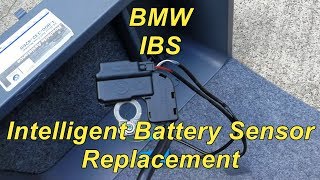
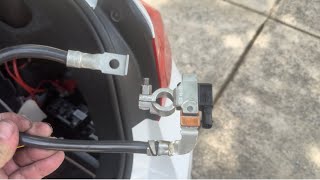
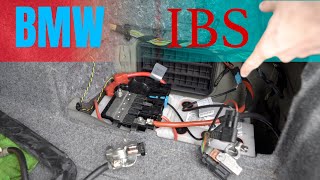
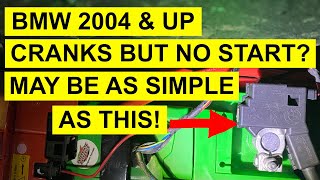
- Faulty Intelligent Battery Sensor (IBS) (Less Common) — On European makes like BMW, a failing IBS on the negative battery terminal causes erratic voltage. 🎬 Watch: How to replace a faulty BMW Intelligent Battery Sensor. This triggers random communication faults as modules unexpectedly shut down to save power.
- Corrupted Software (Rare) — Module software corrupts after a failed programming attempt, interrupted over-the-air update, or significant voltage drop, locking up communication.
Symptoms
- Power Seat Adjustments Fail — Switches to move the seat or adjust lumbar support are completely unresponsive.
- Seat Heater or Ventilation Fails — Buttons for heated or cooled seats do not activate, and indicator lights remain off.
- Seat Memory Inoperative — The system cannot recall saved seat positions, and the easy entry/exit feature fails.
- Dead Battery (Parasitic Draw) — The faulty module fails to sleep, draining the battery overnight and requiring a jump-start.
- Dashboard Warning Light — A 'Seat Module' warning, general BCM warning light, or infotainment message appears.
Diagnostic Flowchart
Tap your situation to follow the diagnostic path that matches what you're seeing on this code.
Common Fixes & Costs
- Repairing Damaged Wiring or Connectors — Parts: $10-$50, Labor: $150-$450, ~2.5 hr book time (Intermediate)
- Replacing a Blown Fuse — Parts: $1-$10, Labor: $0-$150, ~0.2 hr book time (DIY)
- Replacing the Seat Control Module
— Parts: $250-$800, Labor: $150-$300, ~1.5 hr book time
(Professional)
Jeep Grand Cherokee (1999-2004): OEM 56050151AB (Alt: N/A)
Ford F-150 (2015-2020): OEM FL3Z-15611B64-AA (Alt: Dorman 601-704)
Chevrolet/GMC (2007-2014): OEM 23338340 (Alt: Dorman) - Repairing a Corroded Ground Point or Splice Pack — Parts: $5-$25, Labor: $200-$500, ~3 hr book time (Intermediate)
- Reprogramming the Seat Control Module — Parts: $0, Labor: $150-$250, ~1 hr book time (Professional)
Used vs. New Parts: Buying Guide
When a used part is worth it: A used seat control module from a reputable salvage yard is cost-effective for older vehicles (10+ years) where a new OEM part is expensive or discontinued.
Donor-vehicle mileage cap: roughly under 100000 miles for the part to have meaningful remaining life.
Donor quality checklist:
- Match the part number exactly. A single digit difference means incompatibility.
- Source the part from a vehicle of the same model and year range.
- Inspect the used module for signs of water damage, corrosion, or physical damage.
- Buy from a seller with a return policy or short-term warranty.
Decision logic:
- If The vehicle requires the module to be programmed to the VIN → Buy a new or professionally refurbished module. A used module is locked to the donor car's VIN and cannot be reprogrammed.
- If The vehicle is older and the module is known to be 'plug-and-play' → A used part is a viable, low-risk option.
- If The cost of a new or refurbished module with a warranty is less than 50% higher than a used one → Buy new or refurbished for peace of mind and warranty protection.
Warranty tradeoff: Used parts typically have a 30-90 day warranty covering only the part. New aftermarket and refurbished modules come with a 1-year to lifetime warranty.
Worst-case if a used part fails: $300-$600 if a used part is faulty or incompatible, requiring a second repair and diagnostic fee.
What Happens If You Wait — Timeline
- Immediate: Code U0211 is set. Power seat adjustments, memory, and heating/cooling functions for the 'D' seat stop working. (MPG impact: 0%% · Added cost: $0)
- 1-4 weeks: If the module has failed with a parasitic draw, the battery drains when the car is off, requiring a jump-start. (MPG impact: 0%% · Added cost: $0-$50 in roadside assistance fees or lost time.)
- 1-3 months: Repeated deep-discharges cause permanent sulfation inside a standard lead-acid battery. The battery's ability to hold a charge is significantly reduced. (MPG impact: 0%% · Added cost: $50-$150 for a battery tender in an attempt to save the battery.)
- 3+ months: The battery is permanently damaged and must be replaced. The original fault remains. (MPG impact: 0%% · Added cost: $300-$650 for a new battery and professional parasitic draw diagnosis.)
Cost of Not Fixing It
- Immediate: Loss of all power seat functions, including adjustments, heating, ventilation, and memory. (Added cost: 0)
- 1-4 weeks: A faulty module creates a parasitic draw, draining the battery overnight and requiring jump-starts. (Added cost: $50-$150 for roadside assistance or a battery tender.)
- 1-6 months: Repeatedly jump-starting or deep-cycling a standard lead-acid battery permanently damages it, requiring premature replacement. (Added cost: $150-$350 for a new battery.)
- 6+ months: The primary long-term cost remains battery replacement and ongoing inconvenience. (Added cost: $300+)
Diagnosis Steps
- Read Codes and Perform a Network 'Ping' Test
Use a scan tool to confirm U0211. Perform a network test to see which modules are online. If only Seat Module 'D' is offline, the problem is isolated. If multiple modules are offline, you have a systemic network fault.
Tools: Professional OBD-II Scan Tool (Beginner) - Check Fuses and Battery Health
Locate the 'Power Seats' fuse and test it. Test the battery; voltage below 12.4V at rest causes communication codes.
Tools: Fuse puller, Multimeter or Battery Tester (Beginner) - Visually Inspect Wiring and Connectors
Look under the affected seat. Inspect the wiring harness for chafing or breaks. Unplug the main connector and check for corroded or bent pins and liquid spills.
Tools: Flashlight (Beginner) - Test for Power and Ground at the Module
Identify power and ground pins using a wiring diagram. With ignition on, check for 12V+ power. Measure resistance between the ground pin and chassis; it must be under 0.5 ohms.
Tools: Multimeter, Vehicle-specific wiring diagram (Intermediate) - Execute a Parasitic Draw Test
If the battery dies overnight, disconnect the negative terminal and connect a multimeter in series (Amps). Draw should be under 50mA. Pull the seat module fuse; if draw drops, the module is the drain source.
Tools: Multimeter with Amp setting (Advanced) - Check CAN Bus Lines at the Connector
With battery disconnected, measure resistance between CAN-H and CAN-L at the module connector. A healthy network reads ~60 ohms. 120 ohms indicates a missing terminating resistor.
Tools: Multimeter, Vehicle-specific wiring diagram (Advanced) - Check CAN Bus Voltages
With battery connected and ignition on, measure DC voltage. CAN-H should be 2.5V-3.5V; CAN-L should be 1.5V-2.5V. Voltages stuck at 0V, 5V, or 12V indicate a short.
Tools: Multimeter (Advanced) - Isolate the Fault with a Split-Half Resistance Test
If CAN resistance is abnormal, unplug a central module like the BCM to split the network. Measure resistance on one leg to isolate the wiring fault.
Tools: Multimeter, Vehicle-specific wiring diagram (Advanced) - Attempt Module Reprogramming
If wiring and power pass, a dealer must re-flash the module with the latest software. If this fails, replace the module.
Tools: Dealer-level scan tool (Professional)
When This Code Triggers (Freeze-Frame Conditions)
- Battery Voltage: 11.5V - 12.5V (During key-on, before engine start. A low voltage triggers communication faults.)
- Ignition Status: On/Run (The code sets moments after the ignition is turned on, as all modules perform a network check-in.)
- Module Status: No Communication (The primary ECU or Gateway module requests status from the Seat Control Module and receives no reply.)
- Vehicle Speed: 0 mph (Fault is logged when the vehicle is stationary during the initial power-up and network initialization sequence.)
Related Codes
- U0140 — Lost Communication with Body Control Module (BCM). If you have U0140 and U0211, the BCM is the source of the problem, or the network wiring between the BCM and gateway is faulty.
- U0210 — Lost Communication With Seat Control Module C. If you have both codes, the problem is in a shared power, ground, or network wire feeding both modules.
- U0212 — Lost Communication With Steering Column Control Module. These modules link for driver memory profiles. If both are present, suspect a broader network or gateway module issue.
- B1D9B — Seat Horizontal Front Stop Not Learned. The module lost its calibration after a battery disconnect or failure, requiring a scan tool re-learn procedure.
Climate & Environmental Factors
- Water Intrusion: Leaks from clogged sunroof drains, bad window seals, or spills directly onto the seat cause immediate short circuits and long-term corrosion in the under-seat module.
- Cold Climates / Road Salt: Salty slush splashes onto under-vehicle wiring and connectors. This highly corrosive mixture destroys exposed ground points and splice packs, leading to network codes.
- High Humidity: Moisture penetrates electrical connectors and seeps inside modules, accelerating pin corrosion and increasing resistance.
How to Talk to a Mechanic About This Code
Say this: "I have a U0211 code and my power seat isn't working. I'd like to book a diagnostic appointment. Please confirm your diagnostic fee. I want the technician to verify power, ground, and CAN bus integrity at the module connector before recommending a module replacement."
This directs the mechanic to perform a proper electrical diagnosis instead of jumping to the most expensive conclusion. It establishes that you are a cost-conscious and informed customer.
Avoid saying:
- 'My power seat is broken, can you fix it?'
- 'Just replace the seat module.'
- 'My car has an electrical problem.'
Questions to ask before authorizing the repair:
- Did you find power and ground at the module's connector?
- What were the CAN bus resistance and voltage readings at the module?
- If you recommend a module replacement, can you confirm the wiring and network are okay?
- Does the new module require programming, and is that included in the quote?
- What is the warranty on the parts and labor for this repair?
Where to Take It: Dealer vs Independent vs Chain
- Dealer:
A strong, but expensive, choice. The dealer is the best option if the diagnosis points to a software re-flash or a new module requiring programming.
Best for: Vehicles under warranty., Complex, multi-module network issues., Repairs requiring module programming or software updates.
Downsides: Highest labor rates, often 1.5-2x an independent shop., Defaults to replacing a whole module assembly when a simpler wiring fix is possible. (Typical cost: +50% vs. baseline) - Independent Shop:
Best fit for initial diagnosis. A good independent auto electric shop solves 80% of U0211 causes for less than a dealer.
Best for: Out-of-warranty vehicles where cost is a factor., Diagnosing common electrical faults like broken wires, bad grounds, or parasitic draws., Shops specializing in automotive electronics.
Downsides: Quality varies greatly; vet shops by reviews and ASE certifications., Lacks the expensive, manufacturer-specific tools to program a new module. (Typical cost: +0% vs. baseline) - Chain Shop:
AVOID. Network communication faults are outside the scope of most chain shops and result in misdiagnosis.
Best for: Simple, routine maintenance like oil changes, tires, and brakes.
Downsides: Technician skill for complex electrical diagnosis is highly variable., Lacks advanced scan tools and wiring diagrams needed for network codes., Pressures technicians to upsell unnecessary parts. (Typical cost: -10% vs. baseline)
When to Walk Away From the Repair
If the estimated repair cost exceeds 40-50% of the car's private-party value, consider not fixing it, especially on an older, high-mileage vehicle.
- Car worth $4000, fix is $1200: Walk away or live with it. The repair is a significant percentage of the car's value for a non-essential comfort feature.
- Car worth $15000, fix is $800: Fix it. The cost is a small fraction of the vehicle's value and restores full functionality.
- Car worth $6000, fix is $350: Fix it. A low-cost repair for a wiring or ground issue is well worth it.
What Scan Tool You Need for This Code
Minimum: A tool that performs a 'Network Test' or 'Module Status Scan' to see which computers are online. A basic code reader is not enough.
A $20 code reader only tells you the U0211 code exists. It cannot tell you if other modules are offline, which is the critical first step in diagnosing a network fault.
Budget: BlueDriver Pro (~$100) — Connects to a smartphone app and performs a full vehicle scan, showing the status of all modules. It reads and clears U-codes and provides live data.
Mid-range: Foxwell NT710 / Autel MaxiCOM MK808S (~$250-400) — Bi-directional tools that perform active tests, view network topology maps, and access manufacturer-specific codes to isolate the fault.
Professional: Autel MaxiSys MS906 Pro / Launch X431 Series (~$1000-2500) — Provides full, dealer-level functionality. Performs advanced coding and programming necessary if you replace the seat control module.
Rent vs buy: Renting is not ideal. Free 'loaner' tools at auto parts stores are basic code readers lacking network scanning functions. Buying a mid-range tool is a worthwhile investment.
How to Clear the Code After You Fix It
- Ensure the repair is complete.
- Reconnect the vehicle battery if it was disconnected.
- Use an OBD-II scan tool to select the 'Clear Codes' or 'Erase DTCs' function.
- Cycle the ignition off and then on, and verify that the U0211 code does not immediately return.
Drive cycle (~30 minutes): Start with a cold engine. Idle for 2-3 minutes. Drive for 15-20 minutes with a mix of city (stop-and-go) and highway (steady 55-60 mph for 5-10 minutes) driving. Allow the vehicle to cool down completely.
Readiness monitors affected: Clearing any code resets all emissions readiness monitors to 'Not Ready'., Monitors like Catalyst, EVAP, and Oxygen Sensor need to run and complete during the drive cycle.
Before emissions retest: drive at least 50 miles to fully set monitors.
Watch out for:
- Disconnecting the battery does not clear the code from all control modules and resets all readiness monitors.
- If the underlying fault is not fixed, the code returns immediately.
- Some vehicles require a specific manufacturer drive cycle to set all monitors.
Will This Fail Emissions / State Inspection?
Yes — this code typically fails an OBD-II emissions inspection.
- California: An active U-code that illuminates the Check Engine Light causes an automatic failure. After clearing the code, all readiness monitors must be set to 'Ready'.
- New York: Any active code that turns on the check engine light is an automatic failure. You cannot renew your registration without a valid inspection.
- Texas: In counties requiring emissions testing, an illuminated Check Engine Light from a U-code results in a failed OBD-II test.
Most Commonly Affected Vehicles
- Jeep Grand Cherokee (1999-2004) — Known for failures of the driver's side memory seat module located under the seat. The circuit board fails, or wiring gets damaged from seat movement.
- Ford F-150 (2015-2020) — Water intrusion in connectors and damage to the MS-CAN bus wiring are common causes. The heated seat module is a frequent failure point.
- Chevrolet / GMC Silverado, Sierra, Tahoe, Suburban (2007-2014) — Notorious for communication network failures due to corrosion in splice pack connectors (SP208) located under the driver's side door sill plate.
- Chrysler / Dodge 300, Grand Caravan, Journey (2005-2010) — Experience widespread 'U' codes due to internal failures of the Totally Integrated Power Module (TIPM), which acts as the central computer and fuse box.
- BMW 3-Series, 5-Series, X5 (2004-2013) — A failing Intelligent Battery Sensor (IBS) on the negative battery terminal disrupts power management, causing modules to drop off the network.
- Jeep Grand Cherokee L / Grand Wagoneer (2022-2023) — Subject to software issues. TSB 08-035-22 and RSU 23-048 require reprogramming the Memory Seat Module for inoperative memory recall.
- Volkswagen Passat, Jetta (2012-2018) — U0211 is often a straightforward case of a failed seat control module or a faulty seat heater switch.
- Toyota Tacoma, Land Cruiser (2016-2018) — Toyota issued TSBs for communication loss due to wiring and connector issues in exposed areas, affecting network codes.
Manufacturer-Specific Notes
- Ford: Communication codes are often caused by a faulty gateway module or corrosion in harness connectors in exposed areas like door sills, rather than the seat module itself.
- General Motors (GM): Trucks and SUVs from 2007-2014 suffer from corroded splice packs under the driver's door sill plate. Water ingress here causes network-wide communication failures.
- Chrysler/Dodge/Jeep: A failing Totally Integrated Power Module (TIPM) causes random communication codes, including U0211, and is difficult to diagnose without ruling out everything else first.
- BMW: Communication codes trace back to a faulty Intelligent Battery Sensor (IBS) on the negative battery terminal. Always investigate power management faults before replacing modules.
Real Owner Stories
2011 GMC Sierra 1500 at 135K miles
The power driver's seat, seat heater, and memory functions stopped working. Multiple 'U' codes for lost communication appeared, including U0211.
Outcome: The owner pulled up the driver's side door sill plate and found the blue CAN bus splice pack (SP208) was green with corrosion. After cutting out the corroded splice and soldering the wires together, all seat functions were restored.
Lesson: On GM trucks, multiple 'U' codes are a classic sign of a corroded splice pack under the driver's door sill. Check this common failure point before suspecting individual modules.
2008 BMW 535i (E60) at 110K miles
Owner experienced random electrical gremlins and communication codes, including U0211. The battery died if the car sat for more than two days.
Outcome: The owner replaced the Intelligent Battery Sensor (IBS) on the negative battery terminal. The failed sensor shut down modules randomly. Replacing the IBS fixed the codes and battery drain.
Lesson: On BMWs, a faulty IBS is a common cause of widespread communication codes and battery drain issues. Investigate the IBS before replacing expensive control modules.
2017 Ford F-150 at 75K miles
Passenger power seat stopped working and a U0211 code was stored. The carpet on the passenger side was damp after heavy rain.
Outcome: A clogged sunroof drain hose allowed water to run down the A-pillar, soaking the seat module connectors. Clearing the drain and drying the connectors restored seat function.
Lesson: Water intrusion is a top cause of electrical failures. If you get a communication code, check for damp carpets or condensation. Clogged sunroof drains are a frequent culprit.
2002 Jeep Grand Cherokee at 160K miles
The battery was dead every morning. The driver's memory seat module was inoperative, and a U0211 code was present.
Outcome: The driver's seat control module failed internally and was not entering 'sleep mode'. Replacing the module with a used salvage yard unit fixed the parasitic draw and restored power seat functions.
Lesson: If your primary symptom is a dead battery, a parasitic draw test confirms the problem. Pulling fuses one-by-one isolates the faulty circuit.
How to Prevent This Code From Triggering
- Clean Sunroof Drains Annually (Once per year, or twice if parked under trees) — Sunroof drains clog with debris, causing rainwater to overflow and leak into the cabin, dripping directly onto under-seat electronics.
- Apply Dielectric Grease to Connectors (When performing any related repair) — Applying non-conductive dielectric grease to connector seals creates a waterproof barrier that prevents moisture from causing pin corrosion.
- Inspect and Clean Under-Seat Area (Every 6 months) — Vacuuming under seats removes debris that chafes wires and absorbs moisture from spills, protecting the wiring harness.
- Address Water Leaks Immediately (As needed) — A damp carpet signals a water leak. Ignoring it allows moisture to saturate the carpet padding and corrode under-carpet modules and grounds.
Frequently Asked Questions
What is the most common misdiagnosis for a U0211 code?
The most common mistake is immediately replacing the seat control module without diagnosing the circuit. The actual problem is usually a blown fuse, bad ground, or broken wire under the seat. Always verify power, ground, and network integrity at the connector first.
Can a weak battery cause a U0211 code?
Yes. Control modules require a stable voltage above 12.0V to communicate. A weak or dying battery is a primary cause of random communication codes.
What is a parasitic draw test and how does it relate to U0211?
It measures electrical current used when the vehicle is off. A faulty seat module often fails to sleep, causing a continuous battery drain. Connecting a multimeter in series and pulling fuses isolates the faulty circuit.
Do I need to disconnect the battery before working on the seat module?
Yes. Disconnecting the battery prevents accidental short circuits and is a critical safety step because seats contain airbag components. Wait 15 minutes for capacitors to discharge before unplugging yellow airbag connectors.
Will the U0211 code clear itself?
If the problem was a temporary voltage drop, the code becomes a 'history' code and clears after several successful drive cycles. If there is a persistent physical problem, it remains active until repaired and cleared with a scan tool.
What does 'Module D' mean?
The letter 'D' is a generic SAE designation identifying a specific module on the network. Vehicles have multiple seat modules for different seats or functions. Consult a factory wiring diagram to identify which physical module 'D' refers to.
I spilled a drink on my seat, could that cause this code?
Yes. The seat control module sits under the seat, making it highly vulnerable to liquid spills. Liquid causes immediate short circuits and long-term pin corrosion, leading directly to a U0211 code.
Key Takeaways
- Code U0211 disables power seat functions but does not affect drivability, though a failing module drains a healthy battery in under 24 hours.
- Inspect the under-seat wiring harness first, as damaged wires or corroded connector pins cause over 50% of these communication failures.
- Test the battery and verify the module receives a steady 12.0V+ before spending $250 to $800 on a replacement seat control module.
- Replacing a seat control module is rarely a plug-and-play DIY job; most post-2010 vehicles require a dealer-level scan tool to program the new unit to the VIN.
Helpful Videos

The information in this article is provided for general reference and educational purposes only. Vehicle specifications, procedures, and part compatibility can vary by production date, trim level, and region. Always consult your vehicle's factory service manual and verify part numbers before purchasing or performing repairs. Safety-critical components such as airbags, seat belts, and braking systems should be installed by a qualified professional.
- 🎬 Helpful Videos
- What Does U0211 Mean?
- Can I Drive With U0211?
- Common Causes
- Symptoms
- Diagnostic Flowchart
- Common Fixes & Costs
- Used vs. New Parts: Buying Guide
- What Happens If You Wait — Timeline
- Cost of Not Fixing It
- Diagnosis Steps
- When This Code Triggers (Freeze-Frame Conditions)
- Related Codes
- Climate & Environmental Factors
- How to Talk to a Mechanic About This Code
- Where to Take It: Dealer vs Independent vs Chain
- When to Walk Away From the Repair
- What Scan Tool You Need for This Code
- How to Clear the Code After You Fix It
- Will This Fail Emissions / State Inspection?
- Most Commonly Affected Vehicles
- Manufacturer-Specific Notes
- Real Owner Stories
- 2011 GMC Sierra 1500 at 135K miles
- 2008 BMW 535i (E60) at 110K miles
- 2017 Ford F-150 at 75K miles
- 2002 Jeep Grand Cherokee at 160K miles
- How to Prevent This Code From Triggering
- Frequently Asked Questions
- What is the most common misdiagnosis for a U0211 code?
- Can a weak battery cause a U0211 code?
- What is a parasitic draw test and how does it relate to U0211?
- Do I need to disconnect the battery before working on the seat module?
- Will the U0211 code clear itself?
- What does 'Module D' mean?
- I spilled a drink on my seat, could that cause this code?
- Key Takeaways
- 🎟️ Get 5% Off