

OBD-II Code U0209: Lost Communication With Fuel Pump Control Module or Seat Control Module
What U0209 means, why it triggers, and how to fix it comprehensively
- Determine the faulty system immediately by checking the primary symptom: a crank-no-start condition points to the Fuel Pump Control Module (FPCM), while inoperative heated seats point to the Seat Control Module.
- On 2010-2016 General Motors vehicles, U0209 is almost always a software glitch in the Seat Heater Module requiring a 1-hour dealer reprogram per TSB PIC5954B, not a hardware replacement.
- For 2004-2014 Ford F-150s, this code frequently results from a corroded Fuel Pump Driver Module (FPDM) mounted above the spare tire, requiring a $60-$200 aftermarket replacement.
- Never drive a vehicle displaying U0209 if it relates to the fuel system, as the loss of communication causes unpredictable engine stalling at highway speeds.
What Does U0209 Mean?
Code U0209 means the Powertrain Control Module (PCM) or Body Control Module (BCM) lost connection to a specific control module. While the generic definition points to the Fuel Pump Control Module (FPCM), many vehicles use this code for the Seat Control Module. If it is the FPCM, the fuel pump stops running, preventing the engine from starting or causing it to stall. If it is the seat module, the heated or ventilated seats fail to operate.
Technical definition: The SAE/OBD-II definition is "Lost Communication With Fuel Pump Control Module A". This indicates the FPCM stopped broadcasting on the Controller Area Network (CAN) bus. However, General Motors and others use this specific code to designate "Lost Communication with Seat Control Module B". The vehicle's primary symptom dictates which module is offline.
Can I Drive With U0209?
No — Do Not Drive. If the code relates to the Fuel Pump Control Module, driving is dangerous. A sudden loss of communication causes the engine to stall at any time, including at highway speeds, leading to a complete loss of power. If the code relates only to a seat module (common on GM vehicles), the vehicle is safe to drive as only comfort features are affected.
Common Causes
- Software Glitch (GM Seat Heater Module) (Very Common) — On 2010-2016 GM vehicles, the root cause is a software glitch in the Seat Heater Module. The module becomes unresponsive and triggers U0209. This requires a dealer software update, not a hardware replacement.
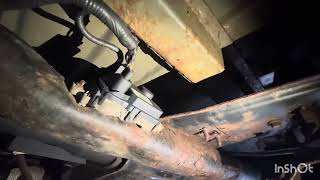
- Failed Fuel Pump Control Module (FPCM) (Very Common) — The module fails due to internal electronic faults, overheating, or water intrusion. This is highly prevalent on Ford and GM trucks where the FPCM mounts to the frame and suffers severe galvanic corrosion from road salt.
- Damaged wiring or corroded connectors (Common) — Wiring harnesses located under the vehicle or seats are exposed to moisture and physical damage. This causes wires to break or connector pins to corrode, physically severing the CAN bus connection.
- Blown fuse or faulty relay (Common) — The FPCM or seat module relies on a dedicated fuse and relay. A blown fuse immediately cuts power to the module, taking it offline.
- Poor power or ground connection (Common) — Modules require a stable 12-volt supply and a solid chassis ground. A loose or rusted ground wire (e.g., ground G307 on GM models) causes the module to drop offline intermittently.
- CAN bus network failure or interference (Rare) — A short circuit in the main CAN bus wiring, or another failing module 'shouting' corrupted data onto the network, blocks communication. This typically triggers 🎬 Watch this expert breakdown on troubleshooting CAN bus network faults. multiple 'U' codes simultaneously.
Symptoms
- Engine cranks but will not start — The starter turns the engine over, but it refuses to fire because the offline FPCM prevents the fuel pump from delivering fuel.
- Engine stalls unexpectedly — The vehicle starts and runs, then suddenly shuts off while driving or idling when the FPCM drops offline, creating an immediate safety hazard.
- Heated or ventilated seats are inoperative — The heated or ventilated seats refuse to turn on. The dashboard indicator light flashes briefly and then turns off.
- Check Engine Light is on — The Malfunction Indicator Lamp (MIL) illuminates for a fuel-related fault. Seat module faults often trigger a general service warning message instead.
- No sound from the fuel pump — Turning the key to the 'on' position fails to produce the standard 2-second hum from the rear fuel tank, confirming the pump is inactive.
Diagnostic Flowchart
Tap your situation to follow the diagnostic path that matches what you're seeing on this code.
Common Fixes & Costs
- Reprogram the Seat Heater Module (GM Vehicles) — Parts: $0, Labor: $125-$250, ~1.0 hr book time (Professional)
- Replace the Fuel Pump Control Module (FPCM) — Parts: $60-$250, Labor: $75-$200, ~0.5 hr book time (Intermediate)
- Replace a blown fuse — Parts: $1-$5, Labor: $0-$125, ~0.1 hr book time (DIY)
- Clean or repair a faulty ground connection — Parts: $5-$20, Labor: $75-$200, ~0.8 hr book time (DIY)
- Repair damaged wiring or connectors — Parts: $10-$50, Labor: $200-$500, ~2.5 hr book time (Professional)
DIY vs Professional
- Replace a blown fuse — Beginner:
Tools: Fuse puller, owner's manual. - Clean or repair a faulty ground connection — Beginner:
Tools: Socket set, wire brush, sandpaper, dielectric grease. - Replace the Fuel Pump Control Module (FPCM) — Beginner:
Tools: Socket set, safety glasses. - Reprogram the Seat Heater Module (GM Vehicles) — Beginner:
Tools: GM Service Programming System (SPS), J2534 interface tool. - Repair damaged CAN bus wiring — Beginner:
Tools: Soldering iron, wire strippers, multimeter, wiring diagrams.
Used vs. New Parts: Buying Guide
When a used part is worth it: Buy used only if a new FPCM exceeds $400 and you source the part from a dry, non-rust-belt state. Never buy a used GM seat module, as the issue is software-based.
Donor-vehicle mileage cap: roughly under 80000 miles for the part to have meaningful remaining life.
Donor quality checklist:
- Verify the exact part number matches.
- Reject any FPCM showing white powdery corrosion on the aluminum housing.
- Confirm with the seller if the module requires VIN programming.
Decision logic:
- If The fix is a known software update (GM TSB PIC5954B) → Do not buy parts; pay the dealer for the reprogram.
- If The new part is under $150 and plug-and-play (Ford F-150) → Buy new aftermarket. They feature redesigned housings that prevent future corrosion.
- If The new part is over $400 and requires programming → Buy used to save money, but budget $150 for professional programming.
Warranty tradeoff: Salvage yard parts carry 30-day warranties. New aftermarket FPCMs offer limited lifetime warranties.
Worst-case if a used part fails: $300 if a used, programmed module fails, requiring a second part and a second programming fee.
What Happens If You Wait — Timeline
- 0-1 month (FPCM Fault): Intermittent hard starts. Code U0209 stores in the background without triggering a Check Engine Light. (MPG impact: 0%% · Added cost: $0.)
- 1-3 months (FPCM Fault): Stalling occurs randomly. 'Crank, no-start' conditions become frequent when the engine is warm. Check Engine Light illuminates. (MPG impact: 0%% · Added cost: $150 for a tow.)
- 3+ months (FPCM Fault): The FPCM fails completely. The vehicle refuses to start. Repeated cranking destroys the starter motor. (MPG impact: N/A% · Added cost: $400-$800 for a new starter.)
- Immediate (Seat Module Fault): Heated seats fail. The crashed module creates a parasitic battery drain of 200-500mA while the car is parked. (MPG impact: 0%% · Added cost: $200 for a replacement battery if repeatedly drained.)
Cost of Not Fixing It
- Immediate (FPCM Fault): The vehicle stalls at highway speeds, causing a total loss of power steering and braking assist. (Added cost: $150-$300 for an emergency tow, plus severe accident risk.)
- Immediate (Seat Module Fault): Heated seats remain inoperative. The crashed module fails to enter 'sleep' mode, creating a parasitic battery drain. (Added cost: $150-$250 for a new battery if repeatedly drained to zero.)
- 1-3 months (FPCM Fault): Repeatedly cranking a fuel-starved engine overheats and destroys the starter motor. (Added cost: $400-$800 for starter replacement.)
Diagnosis Steps
- Identify the Faulty System via Primary Symptom
Use an OBD-II scanner to read codes. If the car won't start, diagnose the fuel system (FPCM). If the heated seats fail, diagnose the seat module. Note which master module (PCM, BCM, or HVAC) logged the U0209 code.
Tools: OBD-II Scanner (Beginner) - Check for Technical Service Bulletins (TSBs)
Before touching any hardware, check TSBs. For 2010-2016 GM vehicles with seat issues, TSB PIC5954B dictates a software update. For Ford trucks with fuel issues, check for known FPDM corrosion patterns.
Tools: Online service information (Beginner) - Inspect Fuses and Relays
Locate the fuse for the FPCM or Seat Module (e.g., under-hood FUSE 27 for 2009-2014 F-150s). Replace it if blown. Swap the relay with an identical non-critical relay to rule it out.
Tools: Owner's manual, fuse puller (Beginner) - Visually Inspect the Module and Wiring
Locate the module. FPCMs sit near the spare tire or frame rail; seat modules sit under the front seats. Inspect for cracked housings, white powdery corrosion (galvanic corrosion on FPCMs), or liquid spill damage.
Tools: Flashlight, safety glasses (Intermediate) - Check for Power and Ground at the Module
Disconnect the module. Using a multimeter, verify the harness provides battery voltage (11-14V) on the power pin with the ignition on, and shows less than 0.5 ohms of resistance on the ground pin to the chassis.
Tools: Multimeter, vehicle wiring diagram (Intermediate) - Check FPCM Command and Fuel Pressure
For fuel issues, use a scan tool to monitor 'Fuel Pump Control Module Commanded Duty Cycle' and 'Fuel Rail Pressure'. If the PCM commands a duty cycle but pressure remains at 0 PSI, the FPCM or pump is dead.
Tools: Professional scan tool (Advanced) - Test CAN Bus Network Resistance
Disconnect the battery. Measure resistance between OBD-II Pin 6 (CAN-H) and Pin 14 (CAN-L). A healthy network reads 60 ohms. A 120-ohm reading indicates an open circuit or missing termination resistor.
Tools: Multimeter (Advanced) - Analyze CAN Bus Voltage with an Oscilloscope
Connect a lab scope to Pins 6 and 14. A healthy bus shows a mirroring square wave pattern (CAN-H rising to ~3.5V, CAN-L falling to ~1.5V). Missing patterns confirm a severed communication line.
Tools: Automotive oscilloscope, breakout leads (Professional) - Substitute the Module
If power, ground, and CAN lines test good, the module is internally failed. Install a replacement. Note: Many modern FPCMs and seat modules require VIN programming by a dealer to function.
Tools: Replacement module, basic hand tools (Advanced)
When This Code Triggers (Freeze-Frame Conditions)
- Engine Coolant Temp: 180-200°F (82-93°C) (Faults occur at any temperature, but FPCM failures frequently trigger after the module heat-soaks during extended driving.)
- RPM: 700-2500 RPM (The code sets during idle or steady cruising. A sudden drop to 0 RPM in the freeze frame confirms an FPCM-induced stall.)
- Module Voltage: 11.5-14.5V (Freeze frame shows system voltage at the exact moment communication dropped. Voltages below 10V indicate a failing alternator or battery caused the module to shut down.)
Related Codes
- U0109 — Identical definition: 'Lost Communication With Fuel Pump Control Module A'. Manufacturers use U0109 and U0209 interchangeably for the exact same fault.
- P069E — Means 'Fuel Pump Control Module Requested MIL Illumination'. U0209 means the FPCM is dead/offline; P069E means the FPCM is alive, detected a fuel pump fault, and asked the PCM to turn on the Check Engine Light.
- U0073 — Means 'Control Module Communication Bus A Off'. Seeing U0073 alongside U0209 proves the entire CAN bus network crashed, ruling out a single faulty module.
- U0208 — Means 'Lost Communication With Seat Control Module A'. Often appears with U0209 if both driver and passenger seat modules lose communication simultaneously.
Climate & Environmental Factors
- Road Salt and Humidity (Rust Belt): The aluminum housing of the Fuel Pump Driver Module on Ford trucks corrodes severely when mounted directly against the steel frame. This galvanic corrosion cracks the housing, allowing water to destroy the circuit board.
- Low Battery Voltage (Cold Weather): Extreme cold reduces battery power. During cranking, voltage drops low enough to cause modules to fail their startup sequence, setting spurious 'U' codes. A weak battery is the primary cause of intermittent cold-weather communication codes.
- Liquid Spills (Interior): Seat modules located under the front seats are highly vulnerable to spilled drinks or snow melting off boots. Liquid seeps into the connectors, causing immediate short circuits and long-term pin corrosion.
How to Talk to a Mechanic About This Code
Say this: "I have a U0209 code. My main symptom is [a no-start issue OR inoperative heated seats]. If it's the seat issue on my GM vehicle, please investigate reprogramming the module per TSB PIC5954B before quoting a replacement."
Directs the shop to the correct system immediately and prevents them from quoting an expensive, unnecessary module replacement for the known GM software flaw.
Avoid saying:
- 'My check engine light is on, can you look at it?'
- 'Just fix whatever's wrong with it.'
- 'My car won't start, I need a new fuel pump.'
Questions to ask before authorizing the repair:
- For a GM seat issue: Did you confirm that reprogramming the module per TSB PIC5954B failed?
- For a fuel issue: Did you test for power, ground, and CAN signals at the FPCM connector before condemning the module?
- Does the new module require VIN programming, and is that included in the quote?
Where to Take It: Dealer vs Independent vs Chain
- Dealer:
Mandatory for the GM seat module software update. Excellent for complex wiring faults.
Best for: GM vehicles requiring the TSB PIC5954B seat module software update., Complex CAN bus network diagnostics.
Downsides: Highest labor rates., Service advisors may push for hardware replacement if you don't explicitly mention the TSB. (Typical cost: +50% vs. baseline) - Independent Shop:
Perfect for fuel-related hardware failures. Call ahead to confirm they possess GM Service Programming System (SPS) capabilities before bringing in a seat module issue.
Best for: Replacing corroded Ford FPCMs., Diagnosing broken ground wires or blown fuses.
Downsides: May lack the J2534 passthrough tools required for GM software updates. (Typical cost: +0% vs. baseline) - Chain Shop:
Avoid. Chain shops lack the OEM software and oscilloscope tools required to diagnose CAN bus communication codes accurately.
Best for: Tires and oil changes.
Downsides: Technicians lack specialized network diagnostic training., High likelihood of misdiagnosing an FPCM failure as a dead fuel pump. (Typical cost: -10% vs. baseline)
When to Walk Away From the Repair
If the repair cost exceeds 40% of the vehicle's private-party value, reconsider the repair.
- Car worth $3000, fix is $1500: Walk away. A complex wiring harness replacement on an older vehicle isn't financially viable.
- Car worth $10000, fix is $250: Fix it. Replacing a Ford FPCM is a cheap, permanent fix that restores reliability.
What Scan Tool You Need for This Code
Minimum: A scanner capable of reading manufacturer-specific codes from Body (B), Chassis (C), and Network (U) modules.
Basic $20 code readers only scan the Engine (Powertrain) module. They will display 'No Codes Found' even when the Body Control Module is actively logging a U0209 seat fault.
Budget: BlueDriver Pro (~$100) — Reads codes from all modules (BCM, HVAC, PCM) to confirm exactly which system logged the U0209 code.
Mid-range: Foxwell NT510 Elite (~$180) — Offers bidirectional control. Allows you to manually command the FPCM to turn the fuel pump on, instantly proving whether the module or the pump is dead.
Professional: Autel MaxiSys MS906 Pro (~$1200) — Provides CAN bus topology mapping to visually pinpoint communication breaks. Supports J2534 passthrough for flashing GM software updates.
Rent vs buy: Buy a budget-tier scanner. Parts store loaner scanners rarely read Body or Network codes, making them useless for diagnosing U0209.
How to Clear the Code After You Fix It
- Use an OBD-II scan tool to clear the U0209 code.
- For a seat module fault, test the heated/ventilated seat function immediately.
- For a fuel module fault, perform a complete drive cycle to ensure the FPCM maintains communication under load.
Drive cycle (~30 minutes): Perform a cold start, idle for 3 minutes, drive in stop-and-go traffic for 15 minutes, and maintain a steady 55-60 mph on the highway for 10 minutes.
Readiness monitors affected: Clearing any code resets all emissions readiness monitors to 'Not Ready'.
Before emissions retest: drive at least 50 miles to fully set monitors.
Watch out for:
- Disconnecting the battery fails to clear permanent codes from modern modules.
- Clearing a GM seat module code without performing the TSB software update guarantees the code returns within days.
Will This Fail Emissions / State Inspection?
Yes — this code typically fails an OBD-II emissions inspection.
- California: Any active U0209 code illuminating the Check Engine Light causes an automatic smog check failure.
- New York: If the code only affects a seat module and does not illuminate the MIL, the vehicle passes the OBD-II inspection.
- Texas: Active codes with an illuminated MIL fail the test. After repair, 2001+ vehicles must have all but one readiness monitor set to 'Ready' to pass.
Most Commonly Affected Vehicles
- Ford F-150 (2004-2014) — FPCM failures are rampant due to frame-mounting above the spare tire. Aftermarket modules include standoffs to create an air gap, preventing future galvanic corrosion. Always check fuse #27 for melting (TSB 15-0137).
- Chevrolet / GMC Silverado / Sierra (2007-2013) — FPCM failures cause no-start conditions. The module sits above the spare tire. Bypassing the module with jumper wires at the connector temporarily forces the fuel pump on for diagnostic verification.
- Chevrolet Cruze, Malibu, Sonic, Equinox (2010-2016) — U0209 exclusively refers to the Seat Heater Module. The fix is a software reprogram per TSB PIC5954B. Do not replace the hardware.
- Buick / GMC LaCrosse, Regal, Terrain, Acadia (2010-2016) — Shares the identical GM software glitch as Chevrolet models. U0209 points to the Seat Heater Module and requires a dealer software update.
- Subaru Outback, Ascent (2015-Present) — U0209 defines as 'Lost Communication With Seat Ventilation Control Module', affecting seat cooling functions rather than heating or fuel delivery.
Manufacturer-Specific Notes
- General Motors (Chevrolet, Buick, GMC, Cadillac): On 2010-2016 models, U0209 means 'Lost Communication With Seat Heater Module'. GM issued TSB PIC5954B explicitly advising dealers to reprogram the module, not replace it. Replacing the module wastes money and fails to solve the underlying software flaw.
- Ford: Ford mounts the Fuel Pump Driver Module (FPDM) directly to the steel frame. The dissimilar metals cause rapid galvanic corrosion in rust-belt states. Aftermarket replacements solve this by including rubber standoffs to isolate the aluminum module from the steel frame.
- Chrysler/Dodge/Jeep: On models with active suspension, U0209 occasionally refers to a damping valve circuit fault, completely unrelated to fuel or seats. Always use a scanner with OEM-specific definitions.
Real Owner Stories
2013 Chevy Cruze - Heated Seats Inoperative
Both front heated seats stopped working. The indicator light flashed for a second then shut off. A U0209 code was stored in the HVAC module.
What they tried:
- Checked the heated seat fuse (#33), which was intact.
- Priced out a replacement Seat Heater Control Module.
Outcome: The owner discovered GM TSB PIC5954B. A dealership reprogrammed the existing K29 Seat Heater Control Module for $140, permanently fixing the issue without replacing parts.
Lesson: Always check TSBs for GM seat issues. Replacing the hardware wastes money when a software flash is the manufacturer-mandated fix.
2006 Ford F-150 - Crank No-Start
The truck cranked but refused to start. The fuel pump failed to prime when turning the key.
What they tried:
- Checked the inertia switch and fuel pump relay.
- Replaced the fuel filter.
Outcome: The owner inspected the Fuel Pump Driver Module (FPDM) above the spare tire and found it cracked open by severe corrosion. Installing a $65 Dorman aftermarket module with rubber standoffs restored fuel pressure immediately.
Lesson: Visual inspection of the FPDM is mandatory for Ford trucks with fuel-related U0209 codes. Corrosion destroys these modules predictably.
How to Prevent This Code From Triggering
- Inspect and Protect Frame-Mounted Modules (Every 2 years (Rust Belt states)) — Unbolting the Ford FPDM, cleaning the frame, and installing rubber standoffs prevents the galvanic corrosion that destroys the module housing.
- Clean Key Chassis Ground Points (Every 50,000 miles) — Modules require solid grounds to communicate. Cleaning chassis ground contacts to bare metal prevents intermittent voltage drops.
- Prevent Liquid Spills in the Cabin (Daily habit) — Seat Control Modules sit directly beneath the seats. Preventing spilled drinks and melting snow from reaching the floorboards stops connector corrosion.
Frequently Asked Questions
Can a weak battery cause a U0209 code?
Yes. Low battery voltage during startup causes communication modules to drop off the network, setting spurious U0209 codes. Always ensure your battery tests at 12.6V before beginning complex diagnostics.
What is the most common misdiagnosis for U0209?
On GM vehicles, mechanics frequently replace the Seat Heater Control Module unnecessarily. Per TSB PIC5954B, the module simply requires a software update. Replacing the hardware wastes money and rarely fixes the issue.
The code U0209 appears intermittently. What should I check first?
Intermittent codes stem from poor connections. Inspect the main electrical connector at the suspect module for corrosion or loose pins. Clean the module's chassis ground wire to bare metal and tighten it securely.
I replaced the FPCM and the code is still there. What now?
Verify if the new module requires VIN programming; unprogrammed GM modules refuse to communicate. If programming is complete, the fault lies in a broken CAN bus wire between the FPCM and the main computer.
Why does my scanner say 'Seat Control Module' when my car won't start?
Cheap scanners default to the common GM definition. If your car refuses to start, the U0209 code points to the Fuel Pump Control Module, regardless of the scanner's text. Always diagnose based on the primary physical symptom.
Can I bypass the Fuel Pump Control Module to get home?
On older trucks, jumping the power and ground pins at the FPCM connector forces the fuel pump to run continuously. This is strictly a diagnostic test, not a driving solution, as running the pump at 100% capacity causes dangerous fuel pressure spikes.
How much does it cost to fix code U0209?
Costs range from $5 for a fuse to $250 for a professional FPCM replacement on a Ford. A GM dealer reprogram for the seat module software issue typically costs $125-$250. Complex wiring repairs average $200-$500 depending on diagnostic time.
Key Takeaways
- Determine the faulty system immediately by checking the primary symptom: a crank-no-start condition points to the Fuel Pump Control Module (FPCM), while inoperative heated seats point to the Seat Control Module.
- On 2010-2016 General Motors vehicles, U0209 is almost always a software glitch in the Seat Heater Module requiring a 1-hour dealer reprogram per TSB PIC5954B, not a hardware replacement.
- For 2004-2014 Ford F-150s, this code frequently results from a corroded Fuel Pump Driver Module (FPDM) mounted above the spare tire, requiring a $60-$200 aftermarket replacement.
- Never drive a vehicle displaying U0209 if it relates to the fuel system, as the loss of communication causes unpredictable engine stalling at highway speeds.
Helpful Videos

The information in this article is provided for general reference and educational purposes only. Vehicle specifications, procedures, and part compatibility can vary by production date, trim level, and region. Always consult your vehicle's factory service manual and verify part numbers before purchasing or performing repairs. Safety-critical components such as airbags, seat belts, and braking systems should be installed by a qualified professional.
- 🎬 Helpful Videos
- What Does U0209 Mean?
- Can I Drive With U0209?
- Common Causes
- Symptoms
- Diagnostic Flowchart
- Common Fixes & Costs
- DIY vs Professional
- Used vs. New Parts: Buying Guide
- What Happens If You Wait — Timeline
- Cost of Not Fixing It
- Diagnosis Steps
- When This Code Triggers (Freeze-Frame Conditions)
- Related Codes
- Climate & Environmental Factors
- How to Talk to a Mechanic About This Code
- Where to Take It: Dealer vs Independent vs Chain
- When to Walk Away From the Repair
- What Scan Tool You Need for This Code
- How to Clear the Code After You Fix It
- Will This Fail Emissions / State Inspection?
- Most Commonly Affected Vehicles
- Manufacturer-Specific Notes
- Real Owner Stories
- 2013 Chevy Cruze - Heated Seats Inoperative
- 2006 Ford F-150 - Crank No-Start
- How to Prevent This Code From Triggering
- Frequently Asked Questions
- Can a weak battery cause a U0209 code?
- What is the most common misdiagnosis for U0209?
- The code U0209 appears intermittently. What should I check first?
- I replaced the FPCM and the code is still there. What now?
- Why does my scanner say 'Seat Control Module' when my car won't start?
- Can I bypass the Fuel Pump Control Module to get home?
- How much does it cost to fix code U0209?
- Key Takeaways
- 🎟️ Get 5% Off