

U0198 on 2017-2019 Lincoln Continental: Fix for Lost Communication With TCU
On a 2017-2019 Lincoln Continental, code U0198 almost always means the Telematics Control Unit (TCU) has a software glitch, disabling Lincoln Way app features. The fix is usually free and takes five minutes: pull the TCU fuse to reset the module. For 2017-2018 models, this can also indicate an obsolete 3G modem that needs a 4G upgrade.
- U0198 on a 2017-2019 Continental means your Lincoln Way app won't work, but the car is safe to drive.
- Before paying for any diagnosis, try the easiest fix first: pull fuse F30 in the engine bay fuse box for 5 minutes to reset the TCU.
- If the reset fails on a 2017-2018 model, the issue is almost certainly an obsolete 3G modem that needs to be upgraded to a 4G unit.
- Do not replace the APIM (SYNC screen) or other unrelated modules; the fault lies with the TCU.
- If the TCU module must be replaced or upgraded, it will require programming (and a new antenna for 3G-to-4G swaps) to work with your vehicle.
What's Unique About the 2017-2019 Lincoln CONTINENTAL
For this generation of Lincoln Continental, the U0198 code is exceptionally straightforward thanks to manufacturer-issued documents. Lincoln Technical Service Bulletins (TSBs) point directly to a software lock-up in the TCU as the overwhelming cause. Unlike many other vehicles where this code could trigger a complex wiring or module diagnosis, the problem on the Continental is well-documented and the fix is typically a simple power reset. This issue is also common across other Ford/Lincoln vehicles on the CD4 platform, such as the Lincoln MKZ and Ford Fusion.
Diagnostic Flowchart
Tap your situation to follow the diagnostic path that matches what you're seeing on this vehicle.
Symptoms You May Notice
- Lincoln Way app features do not work (remote start, lock/unlock, vehicle location).
- An 'Incomplete user authorization' message may appear in the Lincoln Way app.
- The modem's Electronic Serial Number (ESN) is missing from the SYNC 'About' screen.
- SOS system warning light or message may appear on the instrument cluster.
- Telematics warning light or message on the dash or infotainment display.
- Replacing the APIM (SYNC Module)
- Replacing the vehicle's main 12V battery (unless it is failing other tests)
- Blaming the smartphone or Lincoln Way app itself
- Replacing the Gateway Module (GWM)
Most Likely Causes
- TCU Software Lock-Up 🔴 High Probability This specific issue is documented by Lincoln in Technical Service Bulletin #SSM 48267, indicating a known tendency for the module to become unresponsive. This is the most common cause across many Ford and Lincoln models of this era.
How to confirm: The presence of U0198 along with non-functional Lincoln Way app features is the primary confirmation. The issue often appears intermittently or after the vehicle has been sitting.
Typical fix: Perform a hard reset of the TCU by removing its fuse for 5 minutes and then reinstalling it. The fuse is located in the engine compartment fuse box, in position F30 (10A).
Est. part cost: $0 - 3G Network Shutdown 🔴 High Probability Many 2017 and some 2018 models were equipped with 3G modems. As cellular carriers shut down their 3G networks in 2022, these modems can no longer connect, which may cause communication faults and the U0198 code.
How to confirm: If a fuse pull does not resolve the issue on a 2017-2018 model, the vehicle almost certainly has an obsolete 3G TCU. A 4G TCU can be identified by its external FAKRA antenna ports, which the 3G unit lacks.
Typical fix: The TCU must be upgraded to a 4G version. This was covered for some vehicles under Customer Satisfaction Program 21B09, but this program expired on July 31, 2023. The upgrade is now a customer-pay repair. The new module requires an external antenna and programming via FORScan or a dealer.
Est. part cost: $150-$700 - Outdated TCU Software 🟡 Medium Probability As noted in TSB #SSM 47160, pending software updates or Field Service Actions (FSAs) can address underlying bugs that cause the lock-up. TSB #SSM 48267 also recommends programming the TCU to the latest level after a successful fuse pull reset.
How to confirm: A Lincoln dealer can check your vehicle's VIN for any open FSAs related to the TCU. Advanced DIYers can use tools like FORScan to check the module's firmware version.
Typical fix: Dealer performs a software update on the TCU. Some updates may be delivered Over-The-Air (OTA) if the modem is functional.
Est. part cost: $0 - $200 - Faulty Telematics Control Unit (TCU) ⚪ Low Probability
How to confirm: The U0198 code returns immediately after a fuse pull, all available software updates have been performed, and the vehicle has a 4G modem. This indicates a potential internal hardware failure.
Typical fix: Replace the Telematics Control Unit. The new module will require programming by a dealer or qualified technician using FDRS or FORScan software.
Est. part cost: $150-$500
Rare But Worth Checking
- Wiring or Connector Issue: While possible, this is unlikely on this platform given the known TSBs. A visual inspection of the TCU wiring for damage is a final diagnostic step if all other causes are ruled out.
- Weak 12V Battery: Low battery voltage can cause communication issues between various modules. If the vehicle's battery is old or failing, it can trigger spurious communication codes like U0198.
Diagnosis Steps
- Confirm the symptoms: Lincoln Way app features are inoperative and/or an SOS warning is displayed.
- Use an OBD-II scanner capable of reading manufacturer-specific codes to confirm U0198 is stored in the APIM.
- Locate the fuse for the Telematics Control Unit (TCU). On the 2017-2019 Continental, this is fuse F30 (a 10A fuse) in the engine compartment fuse box.
- With the vehicle turned completely off, remove the F30 fuse.
- Wait for at least 5 full minutes. This allows the module's internal capacitors to fully discharge and reset its memory.
- Reinstall the fuse securely.
- Start the vehicle and allow a few minutes for the system to re-initialize. Check the SYNC 'About' screen to see if the Modem ESN has reappeared. Test the Lincoln Way app features.
- If the problem persists on a 2017-2018 model, the vehicle likely has an obsolete 3G modem that must be upgraded to a 4G unit to restore functionality.
- If the problem persists on a 2019 model (which should have a 4G modem), contact a Lincoln dealer to check for open Field Service Actions (FSAs) or software updates for your VIN, as mentioned in TSBs #SSM 47160 and #SSM 48267.
- If all else fails and the code returns immediately after a reset, the TCU module itself may have an internal fault and require replacement.
Parts You'll Likely Need
- Telematics Control Unit (TCU) - 4G Upgrade
(OEM #HJ5T-14G087-UF / JL3T-14G229-AJ (and similar variants))— This is the module that fails or requires an upgrade. If the vehicle has an older 3G unit (common in 2017-2018 models), it must be replaced with a 4G version to restore connected features. Replacement requires programming and a separate 4G antenna. 'J' series part numbers are generally recommended for this vehicle generation.
Trusted brands: Motorcraft, Visteon, Continental
OEM price range: $400-$700
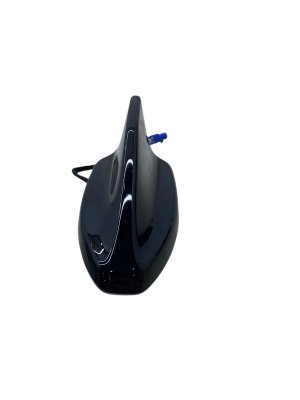
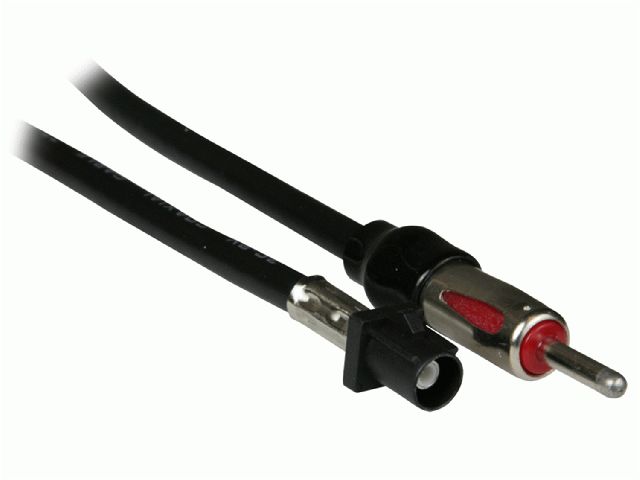
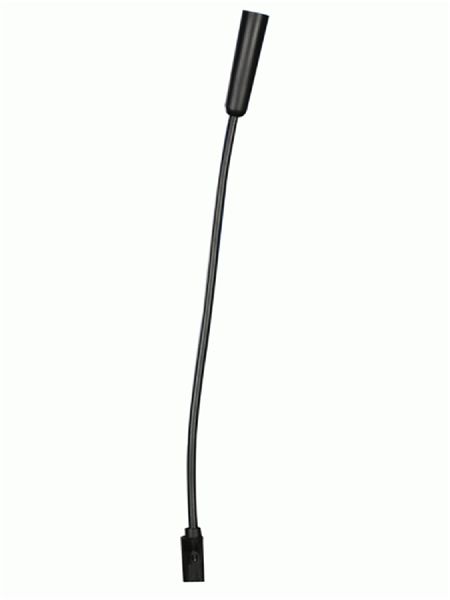
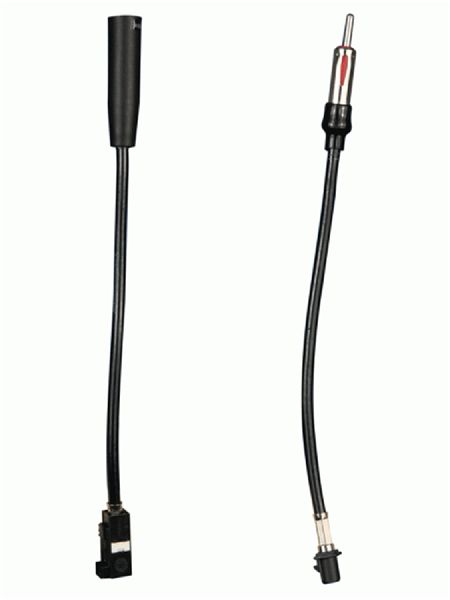
Aftermarket price range: $150-$400 (Used/Remanufactured) - FAKRA Cellular Antenna — Required when upgrading from a 3G TCU (which has an internal antenna) to a 4G TCU (which requires an external antenna).
Trusted brands: Bingfu, Eightwood
OEM price range: $20-$40
Aftermarket price range: $10-$20
Technical Service Bulletins (TSBs) & Recalls
- SSM 48267: Notes inoperative remote features and APIM DTC U0198, advising to correct the condition by removing the TCU fuse for 5 minutes, then reprogramming the TCU to the latest software level.
- SSM 47160: Describes the same symptoms for 2017 Continentals and directs technicians to perform any open TCU Field Service Actions (FSAs) first, and if the code remains, to perform the fuse pull before reprogramming.
Platform-Specific Known Issues
- This platform is subject to Technical Service Bulletin #SSM 48267, which explicitly calls out U0198 and recommends a TCU fuse pull as the primary corrective action.
- An earlier TSB, #SSM 47160, also documents this issue and advises checking for open Field Service Actions (software updates) before proceeding with other repairs.
- Many 2017-2018 models were built with 3G telematics modems which are now obsolete due to the shutdown of 3G cellular networks, requiring an upgrade to a 4G modem to restore functionality.
- Customer Satisfaction Program 21B09 was issued to cover the labor for upgrading from 3G to 4G for some vehicles, but the program expired on July 31, 2023, and the repair is now fully customer-paid.
Mechanic-Grade Diagnostic Values
- HS-CAN Bus Resistance — expected: Approximately 60 Ω between CAN-H and CAN-L pins at the DLC with the battery disconnected.. Failure: A reading of 120 Ω indicates an open circuit or a fault in one of the two terminating modules. A reading significantly lower than 60 Ω (e.g., 40-45 Ω) could indicate a shorted module or an unintended third terminating resistor on the network.
- HS-CAN Bus Voltage (Oscilloscope) — expected: Idle state at ~2.5V. During communication, CAN-H should toggle to ~3.5V and CAN-L should toggle to ~1.5V.. Failure: Voltages that are stuck high, low, or at 0V indicate a short to power or ground. A multimeter is not suitable for this measurement and will only show an average voltage.
- TCU Power Supply Voltage — expected: Greater than 10.5 V at the TCU power supply pin with the key on.. Failure: Voltage below 10.5 V indicates a problem with the power supply circuit or a weak vehicle battery.
- TCU Ground Circuit Resistance — expected: Less than 0.2 Ω between the TCU ground pin and a clean chassis ground point.. Failure: A reading above 0.2 Ω indicates a high-resistance ground connection, which can cause intermittent module operation.
Hidden / Shadow Codes Worth Checking
- U0198:00: The ':00' is a Failure Type Code (FTC) indicating a generic 'No Sub Type Information' failure. Its presence confirms the DTC was set by a Ford-specific module but doesn't add much diagnostic detail beyond the base code. (see via A professional scan tool like Ford IDS/FDRS or advanced DIY software like FORScan that can read manufacturer-specific FTCs.)
Scan Tool Commands That Help
- FORScan: TCU On-Demand Self-Test — After a fuse pull or reset, this command can be used to ask the module to check its own internal status and report any immediate faults.
- FORScan: TCU Module Reset — This is a software-based alternative to pulling the fuse. It forces the module to reboot, which can clear software lock-ups.
- FORScan / FDRS: TCU Authorization / Programmable Module Installation (PMI) — This is required when installing a new or used TCU. The process involves putting the TCU into 'Factory Mode' by modifying As-Built data, adding the vehicle in the Lincoln Way app, and waiting for the authorization handshake between the module and Ford's servers. The 'TCU_AUTHSTATE' PID is monitored during this process.
Wiring & Ground Locations
- Telematics Control Unit (TCU) — Located in the trunk. On the similar Lincoln MKZ, it is behind the right-side trim panel. On some Continentals, it may be accessed by removing the C-pillar trim panel and left-side loadspace trim.. This is the module that has lost communication. Physical access is required for replacement, wiring checks, or to read the part number directly from the module's sticker.
- TCU Main Connector — The main power and data connector on the TCU module itself. It is referenced by the pigtail part number WPT-242, corresponding to Ford connector C4803A.. This is the primary connector to inspect for corrosion, damage, or poor pin fitment if a wiring fault is suspected.
- Factory Ground Point — A dedicated bolt or stud connecting directly to the vehicle's bare metal chassis, often found behind trim panels in the trunk or cabin.. The TCU requires a clean, solid ground connection to operate. A loose or corroded ground is a potential, though rare, cause of communication failures.
Real Owner Repair Stories
- CyanLabs Forum User (2017 Lincoln MKC (platform mate to the Continental)) — Aftermarket 4G TCU upgrade was installed, but it was not being detected by the vehicle.
❌ Tried (didn't work) Installing an 'L' series TCU (Part No. LB5T-14G087-SG).
✅ What actually fixed it The 'L' series TCU was incompatible because it was designed for the newer HS4 CAN bus network. The problem was solved by replacing it with a 'J' series TCU, which is compatible with the CGEA 1.3 architecture of the 2017 vehicle. The 'J' series TCU worked immediately.
OEM Part Supersession History
GP5T-14G087-DF (and similar 'G' series)→HJ5T-14G087-UF, JL3T-14G229-AJ (and other 'H' or 'J' series)— Upgrade from obsolete 3G cellular technology to 4G LTE technology following the 3G network shutdown.
Heads up: Part numbers starting with 'G' are 3G and will no longer function. Part numbers starting with 'L' or newer are for a different vehicle network (HS4 CAN) and are not compatible with this generation of Continental.14G087 (Base P/N)→14G229 (Base P/N)— Change in manufacturer. 14G087 is typically made by Continental, while 14G229 is made by Visteon.
Heads up: Modules with either base part number are functionally identical and interchangeable, provided the prefix (e.g., 'J' series) is correct for the vehicle's model year and network architecture.
Model Year Variations Within This Range
- 2017 - early 2018: These vehicles were equipped from the factory with a 3G TCU. This module is now obsolete and must be upgraded to a 4G unit to restore connected services. The 3G TCU has an internal antenna and no external FAKRA ports.
- late 2018 - 2019: These vehicles were equipped from the factory with a 4G TCU. These modules should not be obsolete but are still subject to the software lock-up issue fixed by a fuse pull. The 4G TCU has one or two external FAKRA antenna ports.
Helpful Videos
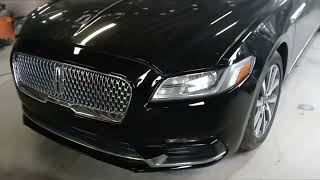
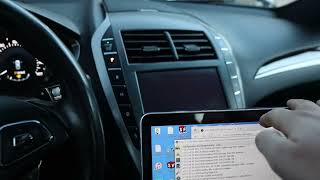
Used OEM Parts in Stock
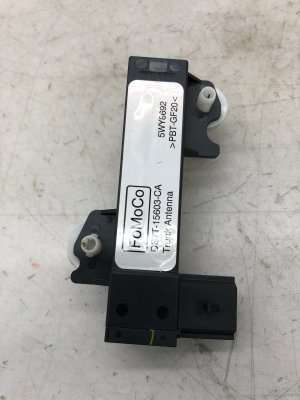
New Aftermarket Parts Available


The information in this article is provided for general reference and educational purposes only. Vehicle specifications, procedures, and part compatibility can vary by production date, trim level, and region. Always consult your vehicle's factory service manual and verify part numbers before purchasing or performing repairs. Safety-critical components such as airbags, seat belts, and braking systems should be installed by a qualified professional.
- Lincoln CONTINENTAL:
- 🎬 Helpful Videos
- 🛍️ Shop This Part
- What's Unique About the 2017-2019 Lincoln CONTINENTAL
- Diagnostic Flowchart
- Symptoms You May Notice
- Most Likely Causes
- Rare But Worth Checking
- Diagnosis Steps
- Parts You'll Likely Need
- Technical Service Bulletins (TSBs) & Recalls
- Platform-Specific Known Issues
- Mechanic-Grade Diagnostic Values
- Hidden / Shadow Codes Worth Checking
- Scan Tool Commands That Help
- Wiring & Ground Locations
- Real Owner Repair Stories
- OEM Part Supersession History
- Model Year Variations Within This Range
- 🎟️ Get 5% Off