

OBD-II Code U0194: Lost Communication With Digital Audio Control Module 'B'
What U0194 means, why it triggers, and how to fix it
- Code U0194 disables your radio, navigation, and Bluetooth because the Digital Audio Control Module B stopped communicating on the CAN bus.
- Always test your 12V battery first; a voltage drop below 12.4V during startup is the number one cause of false U-prefix communication codes.
- Perform a free hard reset by disconnecting the negative battery terminal for 15 minutes before paying a $150+ diagnostic fee.
- Replacing the audio module costs $550 to $1,500 and requires dealer-level software to program the new unit to your vehicle's VIN.
What Does U0194 Mean?
Your car's computer stored the U0194 code because it lost communication with the 'Digital Audio Control Module B'. This module controls your radio, amplifier, navigation, and infotainment features. When communication drops, these features stop working. The 'B' designation often points to a secondary module, like a separate amplifier or satellite radio unit, rather than the main head unit.
Technical definition: The official SAE/OBD-II definition is 'Lost Communication With Digital Audio Control Module B'. This indicates the module is not responding to requests on the vehicle's Controller Area Network (CAN) bus.
Can I Drive With U0194?
Yes. You can still drive your car. This code disables the audio and entertainment systems but does not impact the engine, transmission, or safety systems like ABS and airbags. The loss of hands-free calling or navigation is the only immediate consequence.
Common Causes
- Low Battery Voltage (Very Common) — A weak battery causes random communication (U-prefix) codes, including U0194. Modern vehicles require stable voltage; a drop below 12V during cranking forces sensitive modules offline.
- Blown Fuse or Relay (Common) — A blown fuse or a bad relay supplying power to the audio module prevents it from turning on and communicating.
- Faulty Digital Audio Control Module (DACM) (Very Common) — The audio module itself is the most frequent hardware failure. Internal components like microprocessors, CAN transceivers, or solder joints fail from heat, vibration, and age.
- Water Intrusion or Corrosion (Common) — Water leaking into the cabin from a clogged sunroof drain or bad window seal seeps into the audio module or its connectors. This causes corrosion and short circuits.
- Wiring Harness or Connector Issues (Common) — Damaged wires and connectors linking the audio module to the CAN bus interrupt the signal. Look for corroded pins, loose connections, or chafed wires.
- Software Corruption or Mismatched Calibration (Less Common) — The module's software corrupts after a failed over-the-air (OTA) update, a dead battery, or aftermarket accessory installation, preventing network communication.
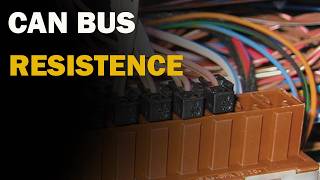
- General Vehicle Network (CAN-Bus) Problems (Rare) — A fault in another module (like the BCM or Gateway) or the main network wiring prevents the 🎬 See how to test CAN bus resistance with a multimeter audio module from talking to the car's main computer.
Symptoms
- Blank or frozen infotainment screen — The center display for radio and navigation is black, unresponsive, or stuck on a manufacturer logo.
- No sound from speakers — The radio or infotainment screen appears on, but no audio outputs from the speakers.
- Radio, Bluetooth, or Navigation inoperative — You cannot tune the radio, connect a phone via Bluetooth, or route navigation.
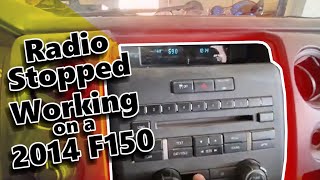
- Steering wheel audio controls dead — The steering wheel buttons for volume, 🎬 Watch: Troubleshooting a Ford radio that has stopped working track selection, or voice commands do not respond.
- Infotainment warning light on dash — An icon, often a speaker with a diagonal line through it, illuminates on the instrument cluster.
Diagnostic Flowchart
Tap your situation to follow the diagnostic path that matches what you're seeing on this code.
Common Fixes & Costs
- Perform a Hard Reset — Parts: $0, Labor: $0, ~0.1 hr book time (DIY)
- Replace Blown Fuse — Parts: $1-$5, Labor: $0, ~0.1 hr book time (DIY)
- Replace the Digital Audio Control Module (DACM) — Parts: $400-$1200, Labor: $150-$300, ~1.5 hr book time (Professional)
- Repair Wiring or Connectors — Parts: $20-$100, Labor: $150-$400, ~2.5 hr book time (Intermediate)
- Reprogram the Digital Audio Control Module — Parts: $0, Labor: $100-$250, ~1 hr book time (Professional)
Used vs. New Parts: Buying Guide
When a used part is worth it: Only if you have a specialist who can 'clone' your original module's data. High-risk for DIYers as dealers often refuse to program used parts.
Donor-vehicle mileage cap: roughly under 60000 miles for the part to have meaningful remaining life.
Donor quality checklist:
- Match part number exactly.
- Verify donor vehicle's RPO option codes.
- Avoid parts with water damage.
Decision logic:
- If You want a plug-and-play solution with no programming headaches → Send your original module to a reputable repair service.
- If Budget is the top priority and you accept the risk of programming failure → A used part may be an option, but factor in the potential for it to be unusable.
- If You want the highest reliability and a part warranty backed by the manufacturer → Buy a new OEM module and have it professionally installed and programmed.
Warranty tradeoff: Used parts have 30-90 day warranties. New OEM parts have 1-2 years. Repair services often offer lifetime warranties.
Worst-case if a used part fails: $300-$600 if a used part fails, covering the dud part and double labor.
What Happens If You Wait — Timeline
- 0-4 weeks: Code U0194 sets. Infotainment screen freezes, audio stops. Hands-free calling and navigation are lost. Car remains driveable. (MPG impact: 0%% · Added cost: $0)
- 1-3 months: Faulty module fails to enter 'sleep' mode, creating a parasitic battery drain. Engine cranks slower in the morning. (MPG impact: 0%% · Added cost: $0)
- 3-6 months: Parasitic drain completely kills the battery if the vehicle sits for a few days. Repeated deep-cycling permanently damages the battery. (MPG impact: 0%% · Added cost: $50-$150 for a service call/roadside assistance.)
- 6+ months: Battery is permanently destroyed and requires replacement. The initial U0194 fault has caused a secondary failure. (MPG impact: 0%% · Added cost: $150-$300 for a new battery, plus diagnostic costs.)
Cost of Not Fixing It
- Immediate: Complete loss of audio, screen, navigation, and hands-free phone functions. (Added cost: $0)
- 1-4 weeks: Faulty module fails to enter 'sleep' mode, creating a parasitic battery drain. (Added cost: $150-$300 for a new battery if it's repeatedly drained and damaged.)
- Long-term: No direct mechanical damage occurs. Primary cost is ongoing inconvenience and potential stranding from a dead battery. (Added cost: $0)
Diagnosis Steps
- Check Battery Voltage and Scan All Codes
Ensure the battery is fully charged (12.4-12.6V engine off). A weak battery causes false communication codes. Use an advanced OBD-II scanner to read codes from ALL modules. If multiple modules report lost communication, diagnose the overall vehicle network first.
Tools: OBD-II Scanner (advanced), Multimeter (Beginner) - Inspect Fuses and Relays
Locate the fuse box using your owner's manual. Inspect all fuses related to the radio, amplifier, and infotainment. Replace any blown fuses with an identical amperage rating.
Tools: Owner's Manual, Fuse Puller (Beginner) - Perform a Hard Reset
Disconnect the negative battery terminal for 15-20 minutes. This forces all modules to power down completely and clears temporary software glitches. Reconnect and check functionality.
Tools: Wrench (for battery terminal) (Beginner) - Visually Inspect the Module and Wiring
Locate the Digital Audio Control Module (often behind the dash, under a seat, or in the trunk). Inspect connectors for corrosion (green/white powder), loose pins, or physical damage. Check surrounding wiring for breaks or chafing.
Tools: Flashlight, Trim Removal Tools (Intermediate) - Check for Power and Ground at the Module
Using a multimeter and wiring diagram, back-probe the module's connector. Verify battery voltage (12.4V+) at the power wire. Measure resistance between the ground pin and chassis; it must be under 0.5 ohms.
Tools: Multimeter, Vehicle Wiring Diagram (Intermediate) - Test the CAN Bus Network Resistance
With the battery disconnected, measure resistance between Pin 6 (CAN High) and Pin 14 (CAN Low) on the OBD-II port. A healthy network reads 60 ohms. A 120-ohm reading means a terminating resistor is offline; 0 ohms indicates a short.
Tools: Multimeter (Advanced) - Check CAN Bus Voltages
With ignition on (engine off), measure DC voltage at the OBD-II port. Pin 6 (CAN High) to Pin 4/5 (Ground) should read 2.5V to 3.5V. Pin 14 (CAN Low) to Ground should read 1.5V to 2.5V.
Tools: Multimeter (Advanced) - Isolate the Faulty Module
If CAN bus resistance is incorrect (e.g., 120 ohms), unplug modules on the network one by one. When resistance returns to 60 ohms, the last disconnected module is causing the network fault.
Tools: Trim Removal Tools, Multimeter, Vehicle Wiring Diagram (Advanced) - Scope the CAN Bus Signal Waveform
Connect an oscilloscope to an OBD-II breakout box. CAN High and CAN Low must mirror each other. Recessive state is 2.5V. During communication, CAN High toggles to ~3.5V and CAN Low to ~1.5V.
Tools: Oscilloscope, OBD-II Breakout Box (Advanced) - Attempt to Reprogram the Module
If power, ground, and network test good, a dealership or specialized shop must reflash the module's software to fix corruption issues, especially if a Technical Service Bulletin (TSB) exists.
Tools: Professional Programming Tool (Professional)
When This Code Triggers (Freeze-Frame Conditions)
- Module Voltage: 11.5-14.5V (Logged when the module fails to respond to a network request during any key cycle.)
- Vehicle Speed: 0-75 mph (Occurs at any speed, as communication checks are continuous.)
- Engine State: Off / On (Sets with the key on and engine off, or while running.)
- Time Since Engine Start: 0 - 3600+ seconds (Communication loss happens immediately at key-on or intermittently during a drive.)
Related Codes
- U0140 — Lost Communication With Body Control Module. If present with U0194, the BCM is failing, causing widespread network collapse.
- U0195 — Lost Communication With Subscription Entertainment Receiver Module. Specific to SiriusXM. If only satellite radio is dead, U0195 is the culprit.
- U0198 — Lost Communication With Telematic Control Module. Handles OnStar/FordPass. If the app fails but radio works, suspect U0198.
- B-codes (e.g., B2241, B2244) — Body codes for audio components. Provide specific clues about communication breakdowns between the head unit and amplifier.
Climate & Environmental Factors
- High Humidity / Water Intrusion: Moisture entering connectors or the module's circuit board causes corrosion on pins and solder joints, directly leading to high resistance or short circuits.
- Extreme Cold: Cold temperatures reduce battery efficiency. A weak battery provides insufficient voltage during a cold start, causing sensitive modules to fail startup initialization and post code U0194.
- Thermal Cycles (Hot to Cold): Repeated heating and cooling cycles from vehicle operation and ambient temperature swings cause microscopic cracks in solder joints on the module's internal circuit board.
How to Talk to a Mechanic About This Code
Say this: "I have a U0194 code and a dead infotainment system. I've checked fuses and tried a hard reset. Please verify power, ground, and CAN bus integrity at the audio module before quoting a replacement."
Signals you are informed. Directs technician to perform electrical diagnosis first, preventing immediate upsell to an expensive module.
Avoid saying:
- 'My radio is broken, how much for a new one?'
- 'The screen is black, just fix it.'
- 'I have a U-code, what does that mean?'
Questions to ask before authorizing the repair:
- Did you find proper power and ground at the module's connector?
- What was the CAN bus resistance reading? Was it 60 ohms?
- If you're recommending a module replacement, can you confirm it needs programming? What is the all-in cost for the part, labor, and programming?
- Is there a Technical Service Bulletin (TSB) for this issue on my vehicle?
- What is the warranty on this repair, including both the part and the labor?
Where to Take It: Dealer vs Independent vs Chain
- Dealer:
Strong choice if programming is needed. Guaranteed access to correct software.
Best for: Vehicles under warranty, Complex, manufacturer-specific programming is required, A known Technical Service Bulletin (TSB) exists for the issue
Downsides: Highest labor rates and part costs., Defaults to module replacement rather than attempting a wiring repair. (Typical cost: +50% vs. baseline) - Independent Shop:
Best for out-of-warranty diagnosis. Can find wiring issues dealers miss. Ensure they can program modules.
Best for: Out-of-warranty vehicles where cost is a factor., Diagnosing wiring or network-wide faults., Shops specializing in automotive electronics.
Downsides: Quality and diagnostic capabilities vary widely; vet them carefully., May lack the latest OEM programming tools for all makes/models. (Typical cost: +0% vs. baseline) - Chain Shop:
AVOID. U0194 requires specialized electrical skills beyond chain shops.
Best for: Simple jobs like battery replacement or oil changes.
Downsides: Technicians lack training for complex network diagnostics., High pressure to upsell services., No module programming capabilities. (Typical cost: -10% vs. baseline)
When to Walk Away From the Repair
If repair cost exceeds 25-40% of vehicle value, walk away. Since the car is driveable, the threshold is lower than mechanical failures.
- Car worth $4000, fix is $1500: Walk away. The repair cost is nearly 40% of the car's value for a non-essential feature. Sell the car as-is with full disclosure or just drive without a radio.
- Car worth $15000, fix is $1800: Fix it. The cost is only 12% of the vehicle's value and restoring full functionality will preserve resale value.
- Car worth $2500, fix is $1000: Borderline. At 40% of the car's value, it's a tough call. Consider how much the lack of a radio bothers you versus the cost.
What Scan Tool You Need for This Code
Minimum: Reads manufacturer-specific and network codes (B, C, U-codes) from all modules, not just generic engine P-codes.
A $20 reader only checks the engine computer and won't see U0194 in the Body Control Module. You must see all systems to identify network-wide problems.
Budget: BlueDriver Pro Scan Tool (~$100) — Reads enhanced codes (ABS, BCM) to determine if U0194 is isolated or part of a larger network failure.
Mid-range: THINKCAR ThinkScan 689BT / Foxwell NT Series (~$250-400) — Full system diagnostics with basic bidirectional controls for active component testing.
Professional: Autel MaxiCOM MK808 / Launch X431 Series (~$500-1200) — Dealer-level diagnostics, network topology mapping, and ECU coding/programming capabilities.
Rent vs buy: Free AutoZone scans only read engine codes. Buying a budget scanner is essential. Renting advanced scanners is rarely an option.
How to Clear the Code After You Fix It
- Fix the underlying hardware or wiring fault.
- Use an OBD-II scan tool to erase the Diagnostic Trouble Code from the controlling module (e.g., BCM or Gateway).
- Perform a complete drive cycle to ensure the code does not return and to allow vehicle systems to re-initialize.
Drive cycle (~30 minutes): Start with a cold-soak (off for 8+ hours). Idle for 3 minutes. Drive steady at 55 mph for 10 minutes. Perform stop-and-go city driving for 10 minutes.
Readiness monitors affected: Clearing U0194 resets all emissions readiness monitors (Catalyst, Evap, O2) to 'Not Ready'.
Before emissions retest: drive at least 100 miles to fully set monitors.
Watch out for:
- Clearing the code without fixing the root cause results in immediate return.
- Disconnecting the battery resets readiness monitors, causing automatic emissions failure.
Will This Fail Emissions / State Inspection?
Yes — this code typically fails an OBD-II emissions inspection.
- California: U-code may not fail if CEL is off, but clearing it resets monitors. BAR-OIS requires monitors 'Ready', causing failure until drive cycle completes.
- New York: Active communication codes can result in failure. Clearing codes resets readiness, causing automatic failure.
- Texas: OBD-II scan fails if readiness monitors are not set. U0194 indicates a system fault that complicates inspection.
Most Commonly Affected Vehicles
- Ford F-150 (2015-2020) — Audio Control Module (ACM) is a common failure point. Faulty Telematics Control Unit (TCU) or Gateway Module (GWM) also causes this.
- Dodge Ram 1500 (2013-2018) — Uconnect 8.4 systems prone to head unit failure. Hard reset temporarily restores function, but replacement is usually required.
- Jeep Grand Cherokee (2014-2019) — Uconnect main radio unit fails. Failing Transfer Case Control Module occasionally disrupts the CAN bus, causing this code.
- Chevrolet Silverado (2014-2019) — MyLink systems suffer Human Machine Interface (HMI) module failures, often from water intrusion behind the dash.
- GMC Sierra, Yukon (2014-2019) — IntelliLink systems susceptible to HMI module failure or wiring breaks in the low-speed LAN network.
- Hyundai Sonata, Elantra (2011-2016) — Internal failure of the head unit or external amplifier triggers this code.
- Subaru Outback, Forester (2015-2019) — Starlink Cockpit Control Unit fails. Low battery voltage is a frequent trigger for random communication codes.
- Volkswagen Jetta, Golf (2012-2018) — Main radio/navigation unit (RNS/MIB) or CAN Gateway module failure.
Manufacturer-Specific Notes
- Ford: A faulty Gateway Module (GWM) or Telematics Control Unit (TCU) causes multiple U-codes. Disconnect the TCU to see if audio module communication restores.
- Chrysler/Dodge/Jeep: Uconnect screen delamination (bubbling) often precedes total failure and the U0194 code. Software updates (TSB 08-033-18) sometimes resolve glitches.
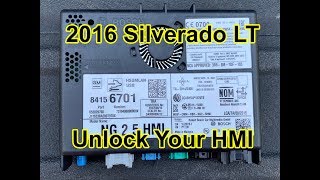
- General Motors (GM): The Human Machine Interface (HMI) module is the 'Digital Audio Control Module'. Technicians check the low-speed GMLAN circuit, as a single wire break takes down the radio.
- Subaru: Extremely sensitive to battery voltage. A weak battery causes a flurry of communication codes after a slow crank. Always test the charging system first.
Real Owner Stories
2014 Ford F-150 XL at 100K miles
Radio died after a battery change. Screen stuck on logo.
What they tried:
- Checked all related fuses.
- Performed a hard reset by disconnecting the new battery for 12 hours.
- Used FORScan to reset the APIM and BCM modules.
- Physically removed the radio unit, unplugged it, and plugged it back in.
Outcome: The owner suspected a power surge fried the radio because a door was open during reconnection.
Lesson: Ensure all doors are closed and accessories off during battery replacement to prevent voltage spikes to sensitive modules.
2022 Ford F-150 Lightning with inoperative audio
Total audio failure on a relatively new vehicle.
What they tried:
- Took the vehicle to the dealership for diagnosis.
Outcome: Dealership found water intrusion into the Audio Control Module (ACM) per TSB 23-2116, caused by a leaking dash seam. The fix involved replacing the ACM and applying seal tape.
Lesson: Always check for Technical Service Bulletins (TSBs) on newer vehicles before assuming spontaneous module failure.
2014 Jaguar F-Type with multiple intermittent U-codes
Multiple intermittent U-codes persisted even after installing a new battery.
What they tried:
- Replaced the old battery with a new aftermarket one.
- Cleared the codes with a scanner.
- Charged the new battery fully with an external charger.
Outcome: The root cause was the new battery not being fully charged off the shelf. Jaguars are extremely sensitive to voltage drops during startup.
Lesson: Fully charge and load-test any battery, even a new one, before diagnosing complex network codes.
How to Prevent This Code From Triggering
- Maintain Battery Health (Every 6 months) — A weak battery causes low voltage, triggering random communication codes. Clean terminals and load-test annually after 3 years.
- Clear Sunroof Drains and Cowls (Annually) — Clogged drains force water into the cabin, dripping onto electronic modules under seats or behind the dashboard, causing corrosion.
- Inspect Door and Window Seals (Annually) — Damaged weatherstripping allows water to seep into the vehicle, damaging wiring harnesses and modules inside door panels.
- Avoid Using Electronics with Engine Off (Daily habit) — Running the radio or charging devices without the engine running depletes the battery, causing voltage drops that trigger communication faults on the next startup.
Frequently Asked Questions
Can I fix the U0194 code myself?
You can check fuses, inspect connections, and perform a battery hard reset. However, replacing modules requires specialized programming software, making it a professional repair.
Will the U0194 code go away on its own?
It clears if caused by a temporary voltage drop that is resolved. If caused by a failed module or broken wire, it remains active until repaired.
Is it safe to drive with a U0194 code?
Yes. This code only disables the entertainment system and does not affect engine performance, braking, or safety systems.
How much does it cost to fix a U0194 code?
Costs range from $5 for a fuse to $1,500 for a new module and programming. Diagnostic fees typically add $150 to $250.
What is the 'Digital Audio Control Module B'?
It is the computer controlling your radio, amplifier, navigation, and Bluetooth. The 'B' designation indicates a secondary unit like an amplifier, or the main infotainment head unit itself.
What are the most common misdiagnoses for a U0194 code?
Replacing an expensive head unit without testing the 12V battery first. Technicians must rule out low voltage and software glitches before condemning hardware.
My scanner shows multiple 'U' codes along with U0194. What does that mean?
Multiple communication codes indicate a systemic network failure, not a broken radio. This points to a weak battery, a failed central gateway module, or damaged CAN bus wiring.
Can a bad battery cause a U0194 code?
Yes. A weak battery dropping below 12 volts during engine cranking forces sensitive electronic modules offline, triggering communication faults.
Key Takeaways
- Code U0194 disables your radio, navigation, and Bluetooth because the Digital Audio Control Module B stopped communicating on the CAN bus.
- Always test your 12V battery first; a voltage drop below 12.4V during startup is the number one cause of false U-prefix communication codes.
- Perform a free hard reset by disconnecting the negative battery terminal for 15 minutes before paying a $150+ diagnostic fee.
- Replacing the audio module costs $550 to $1,500 and requires dealer-level software to program the new unit to your vehicle's VIN.
Helpful Videos
![How To Test CAN BUS With A Multimeter [CAN Bus Resistance Check] Mechanic Mindset](https://img.youtube.com/vi/JPE42HSJxAk/mqdefault.jpg)

The information in this article is provided for general reference and educational purposes only. Vehicle specifications, procedures, and part compatibility can vary by production date, trim level, and region. Always consult your vehicle's factory service manual and verify part numbers before purchasing or performing repairs. Safety-critical components such as airbags, seat belts, and braking systems should be installed by a qualified professional.
- 🎬 Helpful Videos
- What Does U0194 Mean?
- Can I Drive With U0194?
- Common Causes
- Symptoms
- Diagnostic Flowchart
- Common Fixes & Costs
- Used vs. New Parts: Buying Guide
- What Happens If You Wait — Timeline
- Cost of Not Fixing It
- Diagnosis Steps
- When This Code Triggers (Freeze-Frame Conditions)
- Related Codes
- Climate & Environmental Factors
- How to Talk to a Mechanic About This Code
- Where to Take It: Dealer vs Independent vs Chain
- When to Walk Away From the Repair
- What Scan Tool You Need for This Code
- How to Clear the Code After You Fix It
- Will This Fail Emissions / State Inspection?
- Most Commonly Affected Vehicles
- Manufacturer-Specific Notes
- Real Owner Stories
- 2014 Ford F-150 XL at 100K miles
- 2022 Ford F-150 Lightning with inoperative audio
- 2014 Jaguar F-Type with multiple intermittent U-codes
- How to Prevent This Code From Triggering
- Frequently Asked Questions
- Can I fix the U0194 code myself?
- Will the U0194 code go away on its own?
- Is it safe to drive with a U0194 code?
- How much does it cost to fix a U0194 code?
- What is the 'Digital Audio Control Module B'?
- What are the most common misdiagnoses for a U0194 code?
- My scanner shows multiple 'U' codes along with U0194. What does that mean?
- Can a bad battery cause a U0194 code?
- Key Takeaways
- 🎟️ Get 5% Off