

U0184 on 2011-2018 Ram 1500: Lost Communication With Radio Causes and Fixes
On a 2011-2018 Ram 1500, code U0184 often indicates an intermittent software glitch or a wiring issue, not necessarily a failed radio. A TSB for 2016 models advises against replacing the radio for this code if it's not a hard fault. Common symptoms include a black screen and unresponsive controls. Always check for software updates, perform a hard reset by disconnecting the battery, and inspect wiring before considering radio replacement.
- U0184 means your truck's radio has stopped communicating with other modules; this does not affect driving safety.
- Do not rush to replace the radio. A manufacturer bulletin (TSB #68258392A) warns this code is often a temporary software glitch, especially on 2016 models.
- The most common fixes are a simple 'hard reset' (disconnecting the battery), checking for loose wiring behind the radio, or getting a software update from a dealer.
- If you have an aftermarket radio, the U0184 code is almost certainly caused by an incorrect or missing CAN bus wiring adapter.
- Only consider replacing the radio after a professional has confirmed the wiring is good, the software is up-to-date, and the code remains active.
What's Unique About the 2011-2018 Ram 1500

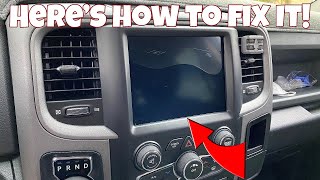
For this generation of Ram 1500, which features various Uconnect radio systems (5.0, 8.4A, 8.4AN), this code is frequently a temporary glitch rather than a permanent failure. A specific Technical Service Bulletin (TSB 08-066-15 REV. A) highlights that the code can be set erroneously and warns technicians not to replace the radio for an intermittent fault. This suggests a known propensity for software-related communication hiccups. Additionally, the 8.4-inch screens are known for physical issues like delamination ('screen bubbling'), which can cause 'ghost touches' and may sometimes be associated with communication errors.
Diagnostic Flowchart

Tap your situation to follow the diagnostic path that matches what you're seeing on this vehicle.
Symptoms You May Notice
- Radio display is blank, black, or frozen.
- No sound from the audio system.
- Radio functions intermittently, turning on and off by itself.
- Steering wheel audio controls do not work.
- Bluetooth or USB media functions are unavailable.
- A warning light related to the infotainment system may appear on the dash.
- Flashing odometer mileage, which on FCA vehicles indicates a communication issue or module configuration mismatch on the CAN bus. 🎬 See how to fix a flashing odometer on Dodge vehicles.
- Uconnect system experiences 'ghost touches' or phantom inputs, sometimes related to screen delamination.
- Replacing the radio immediately. The provided TSB explicitly warns against this, as software glitches or wiring issues are more common causes for intermittent faults.
- Replacing fuses in the main fuse box. While a blown fuse will cause the radio to lose power, the primary fuse may be in a separate location near the battery. If the radio powers on at all, even intermittently, the fuse is not the root cause of the communication code.
Most Likely Causes

- Intermittent Software Glitch / Erroneous Code 🔴 High Probability A manufacturer TSB (#08-066-15 REV. A, superseding #68258392A) specifically calls out that 2016 models with RA3/RA4 radios can set this code erroneously. This behavior is common across many modern vehicles where modules can temporarily lock up. Forum users frequently report that a battery disconnect resolves the issue, at least temporarily.
How to confirm: Clear the code with a scan tool. If the code is 'stored' or 'historic' and does not return immediately as an 'active' fault, it was likely a temporary glitch. A 'hard reset' by disconnecting the negative battery terminal for 15-30 minutes may also temporarily restore function, pointing to a software lock-up. 🎬 Watch: How to perform a hard reset on your screen.
Typical fix: If the code is intermittent and not causing persistent symptoms, the TSB recommends no repair. If symptoms are present, a radio software update performed by a dealer is the first step. A hard reset is a common DIY fix.
Est. part cost: $0-$250 - Wiring or Connector Issue 🟡 Medium Probability FCA has documented issues with terminal tension at the radio and Security Gateway Module (SGW) connectors. Vibrations and previous dash work can lead to loose connections or chafed wires. The main 52-pin connector at the back of the radio is a primary point of failure.
How to confirm: Visually inspect the wiring harness and the large 52-pin connector at the back of the radio. Check for pushed-out pins, corrosion, or loose connections. A 'wiggle test' on the harness while monitoring bus activity with a scan tool can help identify intermittent faults. The CAN-IHS wires can be specifically checked for proper voltage (around 2.3-2.5V).
Typical fix: Repairing the damaged wire or re-seating the connector. In some cases, a specific terminal pin needs to be replaced or have its tension adjusted. Ensure the main connector is fully seated and locked.
Est. part cost: $5-$50 - Aftermarket Radio Installation 🟡 Medium Probability If the factory radio is replaced, this code will set if the aftermarket unit is not installed with the correct CAN bus integration adapter. The vehicle's modules expect to see the factory radio and will log a fault when it's missing.
How to confirm: Check if an aftermarket radio is installed. If so, verify the type of wiring harness adapter used. If it's a basic harness without a CAN bus module (e.g., PAC RP4-CH11, Metra Axxess), this is the cause.
Typical fix: Install the correct wiring harness adapter that includes a CAN bus module designed for the vehicle, such as a PAC RP4-CH11. This module communicates with the truck's computers, tricking them into thinking the factory radio is still present and retaining features like steering wheel controls. Note: Some users have reported issues with these adapters failing over time or requiring specific wiring modifications to work correctly.
Est. part cost: $50-$150 - Failing Radio/Audio Control Module (ACM) ⚪ Low Probability While possible, internal radio failure is less common than software or wiring issues. The TSB specifically warns against replacing the radio unless all other possibilities have been exhausted. However, the Uconnect 8.4 units are known for hardware failures like screen delamination, which can introduce other problems.
How to confirm: This is a process of elimination. If software updates, hard resets, and wiring checks do not resolve a persistent, 'active' U0184 code, and the radio has proper power and ground, the module itself is likely faulty. One diagnostic trick is to tap on the radio housing after reconnecting it; if it comes to life, it points to an internal hardware issue.
Typical fix: Replace the radio unit or send it to a specialist for repair. For issues like screen delamination, the digitizer can be replaced separately without replacing the entire radio. A replacement radio may need to be programmed by a dealer to function correctly with the vehicle's options.
Est. part cost: $200-$1200
Rare But Worth Checking
- Low Battery Voltage: A weak or failing battery can cause random communication codes to be set by various modules during vehicle startup. If the code appeared after a jump-start or with a known old battery, test the battery and charging system before diagnosing the radio.
- TIPM / BCM Fault: While very rare, the module that *sets* the code (like the Totally Integrated Power Module or Body Control Module) could be at fault. This is unlikely unless multiple other unrelated communication codes are also present, such as a U0140.
- Blown Radio Fuse: On some Ram trucks of this generation, the main radio fuse is not in the primary fuse box under the hood but is a separate 20A fuse located on the back side of the battery. If the radio is completely dead, this fuse should be checked.
Diagnosis Steps
- Connect a scan tool and check if the U0184 code is 'Active' or 'Stored'/'History'.
- If the code is 'Stored', clear it, cycle the ignition, and see if it returns. If it does not, it was likely a one-time glitch.
- If the code is 'Active' or returns immediately, perform a 'hard reset' by disconnecting the negative battery terminal for 15-30 minutes to reset all modules.
- Check for any available Technical Service Bulletins (TSBs) for your specific model year and radio type. Note TSB 08-066-15 REV. A for 2016 models.
- If an aftermarket radio is installed, verify it uses the proper CAN bus integration adapter (e.g., PAC RP4-CH11). Check for known issues or workarounds for the adapter.
- Remove the dash trim to access the radio. Visually inspect the main 52-pin wiring connector at the back of the radio. Check for loose plugs, pushed-out pins, or chafed wires. Perform a 'wiggle test' on the harness.
- If accessible, inspect the CAN bus star connector/hub (often located under the dash near the steering column) for similar connector issues.
- Using a digital multimeter, verify the radio has consistent battery power (12V+) and a solid ground connection at the main connector.
- Check the CAN-IHS bus integrity. With the key on, voltage on the CAN-IHS (+) and (-) wires should be around 2.3-2.5V.
- If all wiring is intact, consult a dealer or qualified shop to check for and apply any available software updates for the radio module.
- As a final step, if the radio has power/ground and the network is verified, the radio module itself is the most likely cause of failure. Tapping the radio housing to see if it responds can be an informal test for internal hardware faults.
Parts You'll Likely Need
- Radio / Head Unit — This is only needed if the unit has an in
Related Codes That Often Appear With This One
- U0140 — Lost Communication With Body Control Module. If seen with U0184, it could indicate a wider network problem rather than just an isolated radio issue, possibly pointing towards a faulty TIPM or a CAN bus wiring problem.
Technical Service Bulletins (TSBs) & Recalls
- 08-066-15 REV. A: Flash: Improvements To Messages Displayed In The Cluster. This TSB, while for a Jeep Renegade, discusses IPC software updates and erroneous messages, and its predecessor was cited for the Ram U0184 issue, indicating related software logic across FCA platforms.
- 68258392A: Original TSB number cited by NHTSA for 2016 Ram models with RA3/RA4 radios setting erroneous U0184 codes. This was superseded by later bulletins.
Platform-Specific Known Issues
- TSB #08-066-15 REV. A (supersedes 68258392A): States that for 2016 Ram trucks with RA3 or RA4 radios, a U0184 code can be set erroneously by the BCM or IPC. It advises against replacing the radio if the fault is stored and cannot be reproduced.
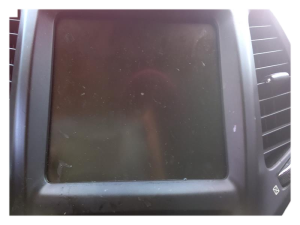
- Uconnect 8.4 Screen Delamination: The adhesive behind the touchscreen digitizer fails, causing bubbles and 'ghost touches'. This is a very common hardware failure on these units and can be repaired by replacing the digitizer.
- Hidden Radio Fuse: A 20A fuse for the radio may be located outside the main fuse box, on the back of the battery tray, which can be missed during basic checks.
Mechanic-Grade Diagnostic Values
- CAN-IHS Bus Voltage (Key On, Engine Off) — expected: CAN-IHS (+) wire should be ~2.6V. CAN-IHS (-) wire should be ~2.4V.. Failure: Voltages significantly different from this range, or a short to voltage (above 5.0V) or ground (0V) on either line indicates a wiring fault.
- CAN Bus Terminating Resistance (Ignition Off) — expected: ~60 Ohms. Failure: A reading of ~120 Ohms indicates an open in the bus or that one of the two terminating resistors is offline. A reading near 0 Ohms indicates a short between the CAN High and CAN Low wires.
- Radio Power Supply Voltage — expected: 10V - 16V, typically matching battery voltage (~12.6V with engine off).. Failure: Low or no voltage indicates a blown fuse, wiring issue, or problem with the TIPM.
Scan Tool Commands That Help
- wiTECH (FCA Dealer Tool): Restore Vehicle Configuration / Proxy Alignment — This procedure is required after replacing the radio or another major module to ensure all modules on the network recognize the new component. A flashing odometer is a key symptom that a proxy alignment is needed. The tool realigns the configuration of all modules on the bus.
- wiTECH (FCA Dealer Tool): Network Diagnostics - View Active Modules — To verify if the Radio module is visible on the CAN bus network at all. If the radio is not listed as active, it confirms a communication breakdown, which could be due to power loss, a wiring fault, or an internal radio failure.
- High-End Aftermarket (e.g., Launch X431): Reset Vehicle Configuration Profile / Force Resync Broadcast — Some advanced aftermarket tools offer functions similar to the dealer's proxy alignment. This can be used to force the BCM and radio to re-establish their handshake and synchronize, potentially clearing a software-based communication lockup without a trip to the dealer.
Wiring & Ground Locations
- Radio Connector C1 (52-pin) — The main large, black, 52-pin connector on the back of the radio head unit.. This is the primary interface for the radio. The CAN-IHS bus wires are located here. Pin 2 is CAN IHS (+) (Dark Blue wire) and Pin 1 is CAN C (+) (Gray wire), though some diagrams show Pin 2 as CAN IHS (+) and Pin 27 as CAN IHS (-). Pinouts can vary slightly by year and radio option, so verifying wire colors is critical.
- CAN-IHS Star Connector / Hub — Located under the driver's side dash, often taped to a harness near the steering column. It's a small block where multiple CAN bus wire pairs converge. There may be more than one (one for CAN-C, one for CAN-IHS).. This is a central junction for the interior CAN bus. A bad connection or short within this hub can take down multiple modules, including the radio. It's a key diagnostic point to isolate sections of the network.
- Ground G300 / G301 — Common instrument panel ground points. Typically located on the metal support structure behind the driver's or passenger's side kick panels or under the center console.. The radio requires a solid ground to function and communicate properly. While the main ground is in the radio connector, a poor chassis ground at one of these primary locations can cause intermittent electronic issues, including communication codes.
- Battery to Body Ground — A 10-gauge wire running from the negative battery terminal to the body, typically located on the fender or radiator support near the battery/headlight.. Corrosion at this main body ground can create floating voltages and unstable grounds for all interior electronics, leading to a host of random communication codes, including U0184.
Real Owner Repair Stories
- Reddit user in r/MechanicAdvice (2014 Ram 1500) — Uconnect system went to a red/black screen saying 'startup failure', then got stuck in an endless boot loop after attempting a software update.
❌ Tried (didn't work) Software updates via USB., Disconnecting plugs for 2 days., Formatting USB drive.
✅ What actually fixed it Replaced the original VP3 radio with a used VP4 (with GPS) purchased from eBay. The replacement unit was from a Jeep. The owner bought a $10 unlock code from an eBay seller, entered it when prompted on the screen, and the radio worked without needing a dealer proxy alignment. The radio automatically re-themed itself from 'Jeep' to 'Ram' after starting. - YouTube video by Automotive Diagnostics & Programming (Ram 1500 (year not specified, 4th Gen)) — Multiple modules on the CAN-IHS bus were not communicating, including the radio and driver door module.
❌ Tried (didn't work) Initial scan showed a widespread communication failure on the interior bus.
✅ What actually fixed it The technician isolated the fault by disconnecting modules one by one at the star connector. The fault was traced to the heated seat module under the driver's seat. Wiggling the connector on the heated seat module caused the other modules on the network to come back online, indicating a short or internal fault in that module was bringing down the entire bus.
Model Year Variations Within This Range
- 2013-2018: The introduction of the Uconnect 8.4 radios (RA3/RA4) in 2013 brought more complex software and hardware. The TSB #68258392A specifically mentions MY2016 RA3/RA4 radios being susceptible to setting this code erroneously, suggesting a software or hardware revision in that period was particularly prone to this glitch.
- 2018+: Starting in 2018 on some models, a Security Gateway Module (SGW) was introduced. While the main vehicle in this article is up to 2018, later models in this year range may have an SGW. The SGW acts as a firewall between the OBD-II port and the internal vehicle networks. Diagnosing CAN bus issues on these vehicles requires a bypass cable or a scan tool with proper authentication to communicate with modules like the radio.
Helpful Videos


We Have This Part in Stock




The information in this article is provided for general reference and educational purposes only. Vehicle specifications, procedures, and part compatibility can vary by production date, trim level, and region. Always consult your vehicle's factory service manual and verify part numbers before purchasing or performing repairs. Safety-critical components such as airbags, seat belts, and braking systems should be installed by a qualified professional.
- Ram 1500:
- 🎬 Helpful Videos
- 🛍️ Shop This Part
- What's Unique About the 2011-2018 Ram 1500
- Diagnostic Flowchart
- Symptoms You May Notice
- Most Likely Causes
- Rare But Worth Checking
- Diagnosis Steps
- Parts You'll Likely Need
- Related Codes That Often Appear With This One
- Technical Service Bulletins (TSBs) & Recalls
- Platform-Specific Known Issues
- Mechanic-Grade Diagnostic Values
- Scan Tool Commands That Help
- Wiring & Ground Locations
- Real Owner Repair Stories
- Model Year Variations Within This Range
- 🎟️ Get 5% Off