

OBD-II Code U0167: Lost Communication With Vehicle Immobilizer Control Module
What U0167 means, why it triggers, and how to fix it
- Code U0167 triggers an immediate engine lockout because the Engine Control Module (ECM) cannot verify your key's security chip.
- Test your battery first; voltage drops below 12.0V are the leading cause of U0167 communication failures.
- Do not attempt to drive or bypass the system; the factory immobilizer physically cuts fuel or ignition and cannot be hotwired.
- Save $600 to $1,200 in unnecessary module replacements by verifying CAN bus wiring integrity and fuse box connections before buying parts.
- DIYers can check fuses and batteries, but replacing the immobilizer module requires an OEM-level scan tool with bidirectional programming capabilities.
What Does U0167 Mean?

Trouble code U0167 means your car's main computer, the Engine Control Module (ECM), lost its connection to the Vehicle Immobilizer Control Module. The immobilizer is the anti-theft system; it scans for a verified security chip inside your key. When this communication fails, the ECM denies the ignition request and locks out the engine to prevent theft.
Technical definition: The SAE/OBD-II definition is "Lost Communication With Vehicle Immobilizer Control Module." This indicates the serial data link (typically the CAN bus) between the ECM and the Immobilizer Control Module dropped for a specific period, usually a few seconds. Manufacturers also call this module the Keyless Operation System (KOS), Wireless Ignition Node (WIN), or integrate it directly into the Body Control Module (BCM) or Instrument Panel Cluster (IPC).
Can I Drive With U0167?
No — Do Not Drive. When this code is active, your vehicle's anti-theft system cannot verify your key. The Engine Control Module (ECM) will immediately disable the fuel or ignition systems, preventing the engine from starting.
Common Causes

- Low Battery Voltage or Power/Ground Issues (Very Common) — Control modules require a steady 12-volt power supply and a solid ground connection. A weak car battery, a blown immobilizer fuse, or a corroded ground strap causes the module to shut down and drop off the network.
- Damaged Wiring, Corroded Connectors, or Water Intrusion (Very Common) — Moisture from leaks (like clogged sunroof drains) or road salt corrodes connectors, fuse boxes, and CAN bus wiring. This physical damage increases electrical resistance and blocks the communication signal between the immobilizer and the ECM.
- Faulty Immobilizer Control Module (Common) — The immobilizer module itself fails internally due to water damage, component burnout from voltage spikes, or age. A dead module cannot send or receive CAN bus signals.
- Faulty Key or Dead Key Fob Battery (Less Common) — A dead battery in the key fob or a damaged transponder chip inside the key prevents it from sending the correct security code to the immobilizer, which the system interprets as a communication failure.
- Software Corruption or Failed Update (Less Common) — An incomplete software update, a failed re-flash, or corrupted data within the immobilizer module's memory causes it to stop communicating correctly with the ECM.
- Aftermarket Alarm or Remote Start Interference (Rare) — Improperly installed aftermarket security systems or remote starters that splice into the vehicle's CAN bus create signal conflicts, forcing the factory immobilizer offline.
Symptoms

- Engine cranks but will not start (or starts and immediately stalls) — The starter motor turns the engine over, but it never fires because the ECM disabled the fuel injectors or ignition coils. In some vehicles, it fires for one second and immediately shuts off.
- Security or Immobilizer light remains on or flashes — A dashboard warning light (shaped like a key or a car with a padlock) stays illuminated steadily or flashes rapidly, indicating an active anti-theft system fault.
- Key Not Detected message — Vehicles with push-button start display a "Key Not Detected" message on the instrument panel, even when the smart key is inside the cabin.
- Intermittent no-start that resolves temporarily — The vehicle fails to start, but starts normally hours later or after disconnecting the battery. This indicates an intermittent wiring fault, a loose ground, or a failing module.
Diagnostic Flowchart

Tap your situation to follow the diagnostic path that matches what you're seeing on this code.
Common Fixes & Costs
- Replacing a Weak or Dead Car Battery — Parts: $150-$250, Labor: $0-$50, ~0.5 hr book time (DIY)
- Replacing Key Fob Battery or Reprogramming Key — Parts: $5-$250, Labor: $0-$175, ~0.8 hr book time (DIY)
- Repairing Damaged Wiring or Connectors — Parts: $20-$80, Labor: $150-$500, ~1.5 hr book time (Intermediate)
- Replacing the Immobilizer Control Module
— Parts: $400-$900, Labor: $200-$300, ~2.0 hr book time
(Professional)
Ford Focus (2008-2011): OEM 8S4Z-15607-A (Transceiver) (Alt: N/A - OEM Recommended)
Chrysler Town & Country (2008-2016): OEM Mopar 68210151AB (WIN Module) (Alt: Dorman 601-025, 601-082)
Honda Civic (2016-2018): OEM Honda 39730-TBA-A01 (Immobilizer Unit) (Alt: N/A - OEM Recommended) - Module Reprogramming or Software Update — Parts: $0, Labor: $100-$250, ~1.0 hr book time (Professional)
Used vs. New Parts: Buying Guide
When a used part is worth it: Buying a used immobilizer or BCM is extremely risky. It only makes sense if purchasing a complete 'kit' from a single donor vehicle (ECU, immobilizer module, and matching keys) or if a specialized refurbisher guarantees the module is 'virginized' (reset to factory state).
Donor-vehicle mileage cap: roughly under 80000 miles for the part to have meaningful remaining life.
Donor quality checklist:
- Part numbers must match exactly.
- Seller must offer a warranty and clear return policy.
- Seller must confirm the part is 'unlocked' or 'virginized' for reprogramming.
Decision logic:
- If The part is a security module (Immobilizer, BCM, WIN, KOS). → Buy a new OEM part or a professionally refurbished unit. The risk of a used part rejecting programming is too high.
- If You are on a tight budget and accept the risk. → Only buy from a reputable automotive recycler that provides a warranty.
Warranty tradeoff: Junkyard parts offer 30-90 day warranties, which rarely cover programming failures. New OEM or refurbished parts offer 1-year warranties and guarantee programmability.
Worst-case if a used part fails: $500-$1000. If the used module rejects programming, you lose the part cost plus 1-2 hours of non-refundable shop labor.
What Happens If You Wait — Timeline
- First Occurrence: An intermittent no-start condition occurs. The security light stays on. The car starts after a few tries or after wiggling fuses. Triggered by temperature changes or humidity. (MPG impact: 0%% · Added cost: $75-$250 (Potential towing fee))
- Weeks to Months: The no-start condition becomes frequent and unpredictable. The underlying cause (corroded connector or failing module) worsens, making the vehicle highly unreliable. (MPG impact: 0%% · Added cost: $150-$500 (Multiple towing events, diagnostic fees))
- 2-6 Months: The fault becomes permanent, resulting in a consistent crank-no-start. If caused by water intrusion, corrosion spreads, damaging the fuse box or other CAN network modules. (MPG impact: N/A (Vehicle is undrivable)% · Added cost: $800-$1500 (Requires replacement of BCM or TIPM))
- 6+ Months: The vehicle is completely inoperable. A shorted module damages the Engine Control Module (ECM). Repair involves multiple expensive electronic components and significant diagnostic labor. (MPG impact: N/A (Vehicle is undrivable)% · Added cost: $1500-$3000+ (Replacement of ECM, BCM, and instrument cluster))
Cost of Not Fixing It
- Immediate: The vehicle fails to start, leaving you stranded. The primary cost is inconvenience and towing fees. (Added cost: $75-$250 (Towing))
- 1-6 Months: If caused by an intermittent short or water intrusion, the electrical fault spreads, damaging other modules on the CAN network like the BCM or instrument cluster. (Added cost: $500-$1500+)
- 6+ Months: The vehicle becomes completely undrivable. A persistent no-start condition renders the car useless and destroys its resale value. (Added cost: Significant loss of vehicle value.)
Diagnosis Steps
- Check the Car Battery
A low battery is the leading cause of communication codes. Measure battery voltage; it must be above 12.4 volts with the car off. A reading below 12.0V indicates a discharged battery causing modules to malfunction.
Tools: Multimeter (DIY) - Try a Spare Key and Check the Key Fob Battery
Attempt to start the car with a spare key. If it works, your primary key's transponder chip is damaged. If not, replace the battery in your key fob as a low-cost diagnostic step.
Tools: Spare key, small screwdriver (DIY) - Scan for Other Codes
Check for other trouble codes. U-codes rarely appear alone. Other communication codes (like U0100, U0140, U0155) point to a wider CAN bus network problem rather than a single immobilizer module failure.
Tools: OBD-II Scanner (DIY) - Inspect Fuses
Locate the fuse box and pull the fuses related to the anti-theft system, immobilizer, or keyless entry. Visually inspect the metal strip inside for a break, and check the fuse terminals for green or white corrosion.
Tools: Fuse puller, flashlight (DIY) - Visually Inspect Wiring and Connectors
Find the immobilizer module (usually under the dashboard near the steering column). Inspect its wiring harness and connector for broken wires, melted insulation, or loose pins.
Tools: Flashlight (DIY) - Check for Power and Ground at the Module
Measure voltage and ground at the immobilizer module's connector. With the ignition on, the power pin must read between 11.8V and 12.6V. Check the ground pin for resistance to a known good chassis ground; it must be below 0.1 Ω.
Tools: Multimeter, vehicle-specific wiring diagram (Intermediate) - Perform a Bidirectional Communication Test
Attempt to communicate directly with the Immobilizer Control Module. Request live data. If the scan tool cannot establish communication with the immobilizer but sees other modules, the immobilizer module or its direct wiring is faulty.
Tools: Advanced/OEM Scan Tool (Professional) - Perform a CAN Bus Integrity Test
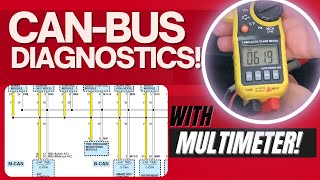
With the battery disconnected, measure resistance between CAN High (Pin 6) and CAN Low (Pin 14) at the OBD-II port. A healthy network reads 60 ohms. 120 ohms indicates a broken wire; near 0 ohms indicates a short circuit.
Tools: Multimeter (Advanced) - Perform a CAN Bus Voltage Check
With the key on and engine off, measure DC voltage at the OBD-II port. CAN High (Pin 6) to ground should be 2.5V to 3.0V. CAN Low (Pin 14) to ground should be 2.5V to 2.0V. Deviations point to a faulty module transceiver or shorted wiring.
Tools: Multimeter (Advanced) - Isolate the Module from the Network
If the CAN bus resistance test shows a short (near 0 ohms), unplug modules one by one. Start with the immobilizer. If resistance jumps back to 60 ohms upon disconnection, that module contains the internal short.
Tools: Multimeter, vehicle-specific wiring diagram (Advanced) - Check for Fuel Pressure (Symptom Confirmation)
The immobilizer disables the engine by cutting power to the fuel pump. At key-on, engine-off, listen for the fuel pump prime. Connect a fuel pressure gauge; a reading of 0 PSI confirms the immobilizer is actively disabling the fuel system.
Tools: Fuel Pressure Gauge (Intermediate)
When This Code Triggers (Freeze-Frame Conditions)
- Vehicle Speed: 0 mph (The fault logs during the initial key-on network check before the vehicle moves.)
- Engine RPM: 0 (The communication check triggers with the key in the 'ON' position, before the engine cranks.)
- Battery Voltage: 8.0V - 12.5V (A low voltage reading (below 12.0V) in the freeze frame strongly indicates a weak battery is the root cause of the communication drop.)
- Ignition Status: ON (This code sets when the ignition switches to 'ON' or 'RUN' as the vehicle's modules perform their initial communication handshake.)
Related Codes
- U0100 — Lost Communication With ECM/PCM 'A'. If present with U0167, the main engine computer is offline. Diagnose the ECM's power, ground, and CAN connections first.
- U0140 — Lost Communication With Body Control Module (BCM). The BCM acts as a gateway for the immobilizer. If the BCM and its controlled functions (windows, lights) are offline, the fault is the BCM, not the immobilizer.
- U0155 — Lost Communication With Instrument Panel Cluster (IPC). On Ford and Mazda, the immobilizer is integrated into the IPC. If U0155 is present and the odometer displays dashes (---), the IPC failed.
- B10D7 — PATS Target Identifier Does Not Match (Ford). The immobilizer read the key, but the key ID is unauthorized. B10D7 means the key is bad; U0167 means the module or wiring is bad.
Climate & Environmental Factors
- High Humidity / Road Salt: Moisture and salt accelerate corrosion on wiring, connectors, and fuse box terminals. This corrosion increases resistance and blocks communication signals, directly causing U0167.
- Extreme Cold: Cold weather weakens marginal batteries, causing voltage to drop below the operating threshold of control modules during startup.
- Extreme Heat: High engine bay temperatures degrade wiring insulation over time, leading to shorts or breaks in the CAN bus harness.
How to Talk to a Mechanic About This Code
Say this: "My car has a crank-no-start and is showing a U0167 code. I'd like to schedule a diagnostic appointment to trace the communication failure. Please check for power, ground, and CAN bus integrity at the immobilizer module before recommending a module replacement."
This directs the technician to check for cheaper, common failures (wiring, power) before jumping to the most expensive conclusion (module replacement), saving you from a costly misdiagnosis.
Avoid saying:
- 'Just fix whatever's wrong'
- 'My check engine light is on, can you look at it?'
- 'The internet said it's the immobilizer, so just replace it.'
Questions to ask before authorizing the repair:
- Did you confirm the immobilizer module has correct power and ground at the connector?
- What was the CAN bus resistance reading at the diagnostic port? Was it 60 Ohms?
- If recommending a module replacement, were you able to communicate with all other modules on the network?
- Does the estimate for the new module include the cost of programming it to my vehicle and keys?
Where to Take It: Dealer vs Independent vs Chain
- Dealer:
A strong, reliable, but expensive option. They possess the exact tools and software needed for immobilizer programming.
Best for: Vehicles under warranty, Complex manufacturer-specific issues (Chrysler WIN module, Ford PATS), When you want a guaranteed fix with OEM parts and programming
Downsides: Highest labor rates and part costs, May replace a module when a cheaper wiring repair or re-flash was possible (Typical cost: +75% vs. baseline) - Independent Shop:
Best choice, but verify they have experience with U-codes and immobilizer programming for your specific car.
Best for: Out-of-warranty vehicles where cost is a major factor, Shops specializing in electrical diagnostics or auto locksmithing
Downsides: Not all shops have the expensive OEM-level scan tools or software subscriptions required for immobilizer programming. (Typical cost: +0% vs. baseline) - Chain Shop:
AVOID. This repair is outside their expertise. They cannot diagnose a U0167 code.
Best for: Basic battery testing and replacement
Downsides: Technicians lack training for complex network diagnostics or security programming., High risk of misdiagnosis and unnecessary part sales. (Typical cost: -10% vs. baseline)
When to Walk Away From the Repair
If the estimated repair cost exceeds 40-50% of the car's Kelley Blue Book (KBB) private-party value, seriously consider selling the car as-is or trading it in.
- Car worth $4000, fix is $1800: Walk away. The repair cost is nearly half the car's value for a high-risk electrical issue. Use the money for a down payment on a reliable vehicle.
- Car worth $12000, fix is $1800: Fix it. The repair cost is well below the 50% threshold and restores a valuable asset.
- Car worth $2500, fix is $1500: Walk away. The repair is not economically viable. The car's value as a non-running vehicle equals its scrap value.
What Scan Tool You Need for This Code
Minimum: A scan tool that reads manufacturer-specific codes and views the status of all control modules on the network (CAN bus topology).
A basic $20 code reader only confirms the U0167 code exists. It cannot see which other modules are online or offline, which is critical to diagnose a communication fault.
Budget: BlueDriver Pro (~$100) — Reads enhanced codes from systems like ABS, Airbag, and BCM. Shows if other codes are present, but lacks bidirectional control for full diagnosis.
Mid-range: Foxwell NT510 Elite (~$180) — Offers full system diagnostics and bidirectional control to manually query the immobilizer module. Performs key programming functions for specific makes.
Professional: Autel MaxiCOM MK808S (~$450) — Provides full bidirectional control, views network topology, and features dedicated IMMO (immobilizer) service functions to guide key and module programming.
Rent vs buy: Renting a basic scanner is insufficient. Serious DIYers must buy a midrange or pro-level tool with bidirectional capabilities to diagnose this issue.
How to Clear the Code After You Fix It
- Reconnect the car battery if disconnected during repair.
- Use a compatible OBD-II scan tool to clear the U0167 code from the ECM's memory.
- Turn the ignition off for 60 seconds to allow modules to reset.
- Start the engine and re-scan to confirm the U0167 code does not return.
Drive cycle (~30 minutes): A drive cycle is not required to clear U0167, but is necessary to run emissions readiness monitors after a battery disconnect. Cold start, idle for 3 minutes, drive in mixed traffic for 20 minutes, and allow the vehicle to cool.
Readiness monitors affected: Evaporative System, Catalyst Monitor, O2 Sensor Monitor, O2 Sensor Heater
Before emissions retest: drive at least 50 miles to fully set monitors.
Watch out for:
- Disconnecting the battery does not clear a hard fault like U0167 from permanent memory.
- The code returns instantly upon the next key cycle if the root cause (bad wire, faulty module) remains unfixed.
Will This Fail Emissions / State Inspection?
Yes — this code typically fails an OBD-II emissions inspection.
- California: An active U0167 code is an automatic failure. If the battery was disconnected during diagnosis, all readiness monitors reset, requiring a 50-100 mile drive cycle before retesting.
- New York: The NYS DMV inspection fails any vehicle with an active diagnostic trouble code that illuminates a warning light.
- Texas: Vehicles fail the OBD-II inspection if any communication codes like U0167 are present.
Most Commonly Affected Vehicles
- Ford Focus / Fiesta (2008-2015) — Often related to Instrument Cluster (IPC) or Body Control Module (BCM) failures. On pre-2011 models, the immobilizer (PATS) is inside the IPC. On 2011+ models, it is in the BCM.
- Chrysler/Dodge Town & Country / Grand Caravan (2008-2016) — Known for failures in the Totally Integrated Power Module (TIPM) and the Wireless Ignition Node (WIN), causing communication drops and no-start conditions.
- Honda Civic (2016-2018) — Communication issues are frequently resolved by software updates for the VSA modulator or audio unit, which disrupt network traffic when outdated.
- Chevrolet Malibu (2008-2012) — The code points to a failing Body Control Module (BCM), which acts as the central hub for immobilizer and security functions.
- Nissan Altima (2002-2006) — Failures link to the NATS (Nissan Anti-Theft System) immobilizer antenna ring around the ignition cylinder or its wiring to the BCM.
- Mitsubishi Lancer / Outlander (2008-2015) — Problems stem from a failing Keyless Operation System (KOS) or Wireless Control Module (WCM). Technicians must perform a full CAN bus diagnostic before replacing the module.
- Toyota Rush (2014-2018) — Indicates an internal failure of the main ECU preventing communication with the immobilizer system.
- Land Rover LR3 / Discovery (2005-2015) — Code appears intermittently due to water intrusion from clogged sunroof drains corroding the Central Junction Box (CJB) or wiring.
Manufacturer-Specific Notes
- Ford: The immobilizer system (PATS) integrates into the Instrument Panel Cluster (IPC) on models before 2011. A failing IPC causes U0167 and displays dashes on the odometer.
- Chrysler/Dodge/Jeep: The code is caused by a faulty Wireless Ignition Node (WIN) or a failing fuel pump relay inside the Totally Integrated Power Module (TIPM). Check for expired WIN module recalls (N23, N38).
- Mitsubishi: The immobilizer module is the KOS-ECU or WCM. Diagnosis requires the proprietary M.U.T.-III scan tool to check CAN bus line integrity before condemning the module.
- Honda: Network problems are often fixed by applying software updates to related modules per service bulletins. Outdated modules cause CAN bus conflicts.
- Dodge: The code is defined as "Lost Communication With Intrusion Transceiver Control Module (ITM)," which communicates over the CAN bus.
Real Owner Stories
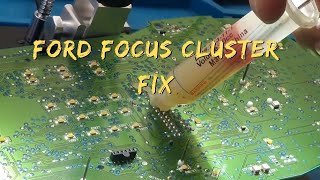
2010 Ford Focus with 110K miles - Intermittent No-Start & 'Key Not Detected'
Owner experienced intermittent no-start issues. The car occasionally started after hitting the dashboard above the instrument cluster. The message 'Key Not Detected' appeared.
Outcome: The root cause was an internal failure of the Instrument Panel Cluster (IPC), which contains the immobilizer logic. The owner sent the original cluster to a repair service for £150. Re-installing the repaired cluster permanently cleared the fault.
Lesson: On Ford models, U0167 combined with an odometer showing dashes (---) or a temporary fix by hitting the dashboard points to a faulty instrument cluster. A cluster repair service ($150-$350) is cheaper than a dealer replacement.
2007 Land Rover LR3 with 183K miles - Sudden No-Start & Flashing Lights
The vehicle intermittently failed to start, accompanied by flashing hazard lights and multiple CAN bus errors on the dash, including U0167.
Outcome: The owner discovered wet carpet around the Central Junction Box (CJB) due to clogged sunroof drains. Cleaning the water-stained CJB temporarily helped. The final solution was sending the original instrument cluster to a professional repair service to fix intermittent CAN bus faults.
Lesson: Intermittent electrical chaos on Land Rovers is often caused by water intrusion from clogged sunroof drains corrupting modules. Repairing your original unit is more reliable than buying used security modules.
2009 Chrysler Town & Country - Crank-No-Start & Security Light
The vehicle cranked but would not start, and the red security light stayed illuminated. The issue progressed to a permanent no-start condition.
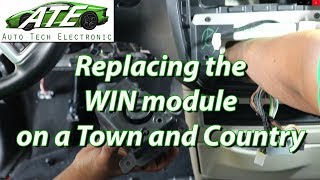
Outcome: Diagnosed as a failed Wireless Ignition Node (WIN) module. The owner removed the WIN module and sent it to a repair service for $290. The repaired original module required no reprogramming and solved the no-start problem.
Lesson: On Chrysler/Dodge/Jeep vehicles, a crank-no-start with a security light indicates a failed WIN module or TIPM. Repairing the original module ($290-$400) avoids expensive dealer replacements and key reprogramming.
How to Prevent This Code From Triggering
- Perform Regular Battery and Terminal Maintenance (Every 6 months) — A weak battery or corroded terminals cause low voltage, triggering communication codes. Clean terminals with baking soda and apply anti-corrosion gel to ensure stable power for all modules.
- Apply Dielectric Grease to Key Connectors (During any related repair or inspection) — Dielectric grease blocks moisture and oxygen from connector pins. Applying it to the seals of critical connectors (immobilizer, BCM, IPC) prevents corrosion that causes communication dropouts.
- Regularly Clean Sunroof and Cowl Drains (Annually, especially before rainy seasons) — Clogged drains cause water to overflow into the cabin, dripping onto sensitive electronics like the BCM or fuse box. This leads to short circuits and severe corrosion.
- Visually Inspect Wiring Harnesses for Chafing (During routine service (e.g., oil change)) — Vibrations cause wiring harnesses to rub against sharp edges, wearing through insulation and causing shorts in the CAN bus wires. Securing loose harnesses with zip ties prevents damage.
Frequently Asked Questions
What is the most common misdiagnosis for a U0167 code?
The most common mistake is immediately replacing the key fob or the immobilizer module. The actual problem is frequently a cheaper fix, like a corroded wire, a bad ground connection, or a weak battery. Always test power, ground, and CAN bus integrity first.
Can I just reset the code to start my car?
No. U0167 is a 'hard' fault. Clearing the code does not fix the communication problem, and the code returns immediately upon the next start attempt.
My car started after I wiggled some fuses. Am I in the clear?
No, you temporarily restored a poor connection. This indicates the problem is corrosion or a loose pin in the fuse box, not a failed module. The fuse box requires professional cleaning or repair to prevent the fault from returning.
Can a faulty instrument cluster cause a U0167 code?
Yes. On many vehicles (especially Ford), the instrument cluster contains the immobilizer circuitry. An internal failure of the cluster causes it to lose communication with the ECM, triggering U0167 and a no-start condition.
What is the difference between a U0167 and a bad key?
A bad key triggers a 'Key Not Detected' message or a specific code like B10D7, meaning the immobilizer works but rejects the key. Code U0167 means the immobilizer module itself is offline and cannot communicate with the car.
How do you bypass the immobilizer for a U0167 code?
You cannot bypass the factory immobilizer system. It is deeply integrated into the vehicle's electronics and physically cuts fuel or ignition. The only solution is to diagnose and repair the communication failure.
Do I have to go to the dealer to fix this?
Not necessarily, but the fix requires special equipment. Replacing and programming an immobilizer module requires advanced scan tools that independent shops or specialized auto locksmiths must possess.
Could a jump start have caused this code?
Yes. An improper jump-start causes a voltage spike that damages sensitive electronics like the immobilizer module. However, the code likely appeared because the battery was already too low to power the modules correctly.
Key Takeaways
- Code U0167 triggers an immediate engine lockout because the Engine Control Module (ECM) cannot verify your key's security chip.
- Test your battery first; voltage drops below 12.0V are the leading cause of U0167 communication failures.
- Do not attempt to drive or bypass the system; the factory immobilizer physically cuts fuel or ignition and cannot be hotwired.
- Save $600 to $1,200 in unnecessary module replacements by verifying CAN bus wiring integrity and fuse box connections before buying parts.
- DIYers can check fuses and batteries, but replacing the immobilizer module requires an OEM-level scan tool with bidirectional programming capabilities.
Helpful Videos

The information in this article is provided for general reference and educational purposes only. Vehicle specifications, procedures, and part compatibility can vary by production date, trim level, and region. Always consult your vehicle's factory service manual and verify part numbers before purchasing or performing repairs. Safety-critical components such as airbags, seat belts, and braking systems should be installed by a qualified professional.
- 🎬 Helpful Videos
- What Does U0167 Mean?
- Can I Drive With U0167?
- Common Causes
- Symptoms
- Diagnostic Flowchart
- Common Fixes & Costs
- Used vs. New Parts: Buying Guide
- What Happens If You Wait — Timeline
- Cost of Not Fixing It
- Diagnosis Steps
- When This Code Triggers (Freeze-Frame Conditions)
- Related Codes
- Climate & Environmental Factors
- How to Talk to a Mechanic About This Code
- Where to Take It: Dealer vs Independent vs Chain
- When to Walk Away From the Repair
- What Scan Tool You Need for This Code
- How to Clear the Code After You Fix It
- Will This Fail Emissions / State Inspection?
- Most Commonly Affected Vehicles
- Manufacturer-Specific Notes
- Real Owner Stories
- 2010 Ford Focus with 110K miles - Intermittent No-Start & 'Key Not Detected'
- 2007 Land Rover LR3 with 183K miles - Sudden No-Start & Flashing Lights
- 2009 Chrysler Town & Country - Crank-No-Start & Security Light
- How to Prevent This Code From Triggering
- Frequently Asked Questions
- What is the most common misdiagnosis for a U0167 code?
- Can I just reset the code to start my car?
- My car started after I wiggled some fuses. Am I in the clear?
- Can a faulty instrument cluster cause a U0167 code?
- What is the difference between a U0167 and a bad key?
- How do you bypass the immobilizer for a U0167 code?
- Do I have to go to the dealer to fix this?
- Could a jump start have caused this code?
- Key Takeaways
- 🎟️ Get 5% Off