

U0146 on 2019-2020 Chevy Silverado 1500: Causes for Lost Gateway Communication
U0146 on a 2019-2020 Silverado most often indicates a software glitch in the Brake System Control Module (BSCM) that requires a dealer to reprogram it, as detailed in TSB 20-NA-155. It can also be caused by a chafed engine wiring harness near the ECM bracket or a loose ground connection (G110/G114). Diagnosis is key, as a software update is simple, while a wiring issue can be complex.
- U0146 on this truck is a network problem, not a single component failure.
- The first diagnostic step is crucial: check if the communication codes are isolated to the Brake System Control Module (BSCM). If so, it's likely a software issue.
- If codes are widespread, thoroughly inspect all major ground connections and look for chafed wiring harnesses before considering module replacement.
- This is not a simple DIY fix for most people. A dealer or well-equipped independent shop is recommended due to the need for advanced diagnostic and programming tools.
- Do not immediately replace the ECM or TCM if you see U0100 or U0101; they are almost always symptoms, not the root cause.
What's Unique About the 2019-2020 Chevrolet SILVERADO 1500

On this generation of Silverado (T1 platform) and its sibling the GMC Sierra, the U0146 code is frequently triggered by one of two very distinct issues documented by GM. The first is a specific software bug where the Brake System Control Module (BSCM) wakes up after shutdown if the truck rolls slightly, causing it to set numerous communication codes because other modules are asleep. The second is a physical wiring harness chafing problem, detailed in consolidated service bulletin 21-NA-149, with known chafe points at the ECM/TCM bracket and driver's side upper control arm. Unlike many vehicles where this code points directly to a failed module, on the 2019-2020 Silverado, the root cause is very often a specific software update or a targeted wiring repair.
Diagnostic Flowchart

Tap your situation to follow the diagnostic path that matches what you're seeing on this vehicle.
Symptoms You May Notice
- Check Engine Light (MIL) is on.
- Multiple warning messages on the instrument panel, such as for the brake, airbag, or lane departure systems.
- Vehicle may not start or may stall while driving.
- Loss of power steering assist.
- Instrument panel gauges may sweep, fluctuate erratically, or go blank.
- Remote start may be disabled (as it is inhibited by an active Check Engine Light).
- Radio display may go blank or not shut off when the door is opened.
- Replacing the Engine Control Module (ECM) or Transmission Control Module (TCM). When U0100 or U0101 appear alongside U0146, it's easy to blame the ECM or TCM. However, on this platform, these are usually symptom codes set by the BSCM due to a software flaw, not the root cause.
- Replacing the Body Control Module (BCM) unnecessarily. While the BCM can be the gateway, the more common issues are software, wiring, or grounds. A full network scan should be performed before condemning any single module.
Most Likely Causes

- Brake System Control Module (BSCM) Software Anomaly 🔴 High Probability A documented software glitch causes the BSCM to stay awake after shutdown. If the vehicle rolls slightly (e.g., on an incline after being put in park), a wheel speed sensor input triggers the module to set multiple communication codes (U0146, U0100, etc.) because the other modules are asleep. This is detailed in TSBs PIT5735B and 20-NA-155.
How to confirm: Use an advanced scan tool. If codes U0146, U0100, U0101, etc., are stored *only* in the Brake System Control Module (BSCM) and the ECM has code P25A2, this is the likely cause. No other modules will have communication codes stored.
Typical fix: Reprogram the BSCM with the latest software calibration available from GM. This must be done by a dealer or a qualified shop with access to GM's TIS2Web system. TSB 20-NA-155 is the primary document for this repair.
Est. part cost: $0 - Engine Wiring Harness Chafing 🔴 High Probability GM has identified several locations where the engine harness can rub against sharp edges, eventually wearing through insulation and shorting CAN bus wires. TSB 21-NA-149 consolidates previous bulletins and points to chafe points on the ECM/TCM bracket, driver's side upper control arm, and shock tower.
How to confirm: Visually inspect the engine wiring harness, particularly where it passes over the left front of the cylinder head and near the ECM/TCM bracket. This may require removing the driver's side wheel and wheelhouse liner for full access. Look for any signs of abrasion, exposed wires, or improper routing.
Typical fix: Repair the damaged wires using approved methods. Protect the harness from future damage using anti-abrasion tape or a protective sleeve (Kevlar Velcro Sleeve PN 84826758 is specified in related TSBs). Reroute the harness to ensure proper clearance from sharp edges.
Est. part cost: $10-$50 - Loose or Corroded Ground Connection 🟡 Medium Probability Multiple owners and GM documents report issues with main ground connections vibrating loose or corroding, causing widespread electrical and communication problems. GM specifically requested field reports via TSB PIE0548 for loose grounds at points G110 (Body Harness) and G114 (Engine Harness) on these trucks.
How to confirm: Check the main battery-to-frame and engine-to-chassis ground straps for tightness and corrosion. A key ground to inspect is located on the back of the cylinder head. A voltage drop test between the battery negative post and the chassis/engine block is the most effective way to confirm a bad ground.
Typical fix: Disconnect the ground, clean the contact surfaces of the terminal and the vehicle chassis until they are bare metal, then securely tighten the bolt or nut. Apply a dielectric grease or protective coating to prevent future corrosion.
Est. part cost: $0-$25 - Faulty Serial Data Gateway Module (SDGM) or Connectors ⚪ Low Probability While less common than software or wiring, the gateway module itself can fail. TSB 20-NA-212 describes two failure modes: an internal microcontroller error ('logic lock') that can sometimes be reset by pulling the fuse, or poor pin connections at its main X1 and X2 connectors.
How to confirm: After confirming all wiring, grounds, and the BSCM software are good, this is the next step. A technician would inspect the X1 and X2 connectors at the SDGM for any bent, loose, or backed-out terminals. A temporary fix for a logic lock is to pull the SDGM fuse (e.g., F26 in the instrument panel fuse block) for a minute and reinstall.
Typical fix: If connector terminals are damaged, they must be repaired. If the module has a software-related logic lock, reprogramming it with the latest software may be a permanent fix. If the module itself has an internal hardware fault, it must be replaced and programmed to the vehicle.
Est. part cost: $250-$450
Diagnosis Steps
- Perform a full vehicle scan with a tool that can read codes from all modules (ECM, TCM, BSCM, BCM, etc.).
- Analyze the results: Are the U-codes (U0146, U0100, U0101) stored ONLY in the Brake System Control Module (BSCM), accompanied by a P25A2 in the ECM? If yes, proceed to step 3. If multiple modules have communication codes, skip to step 4.
- (BSCM Only) The cause is almost certainly the software anomaly described in TSB 20-NA-155. The fix is to have a dealer or qualified shop reprogram the BSCM.
- (Multiple Modules) Check battery health and charging system voltage. Low or unstable voltage can cause widespread communication errors.
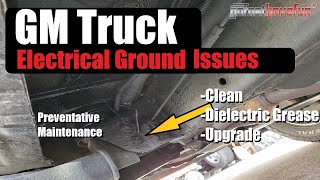
- Inspect main ground connections. Per TSB PIE0548, pay close attention to grounds G110 and G114. 🎬 See this guide for ground maintenance and preventative electrical care. Also check the main battery-to-chassis and engine-to-chassis straps for tightness and corrosion.
- Inspect the engine wiring harness for chafing. Following TSB 21-NA-149, remove the driver's side wheel and wheelhouse liner to get a clear view of the harness routing near the ECM/TCM bracket, upper control arm, and shock tower.
- If wiring and grounds are confirmed to be good, inspect the connectors at the Serial Data Gateway Module (SDGM) for loose or damaged pins as per TSB 20-NA-212.
- As a final diagnostic step before replacement, a technician may attempt to reprogram the SDGM. If no physical faults are found and reprogramming fails, the SDGM itself may be faulty and require replacement.
Parts You'll Likely Need
- Body Control Module / Serial Data Gateway Module — This part is only needed if all wiring, ground, and software issues have been ruled out. It is the central communication hub and can fail internally, as described in TSB 20-NA-212.
Trusted brands: ACDelco
OEM price range: $250-$450
Aftermarket price range: $200-$350 - Anti-Abrasive Harness Sleeve
(OEM #84826758)— Needed to repair and protect a chafed wiring harness, which is a very common cause of this code on these trucks. This specific part is a Kevlar sleeve called out in GM service bulletins.
Related Codes That Often Appear With This One
- P25A2 — This code means 'Brake System Control Module Requested MIL Illumination'. It is set by the ECM when the BSCM detects a fault (like the communication codes) and wants to turn on the Check Engine Light. It's a key indicator of the BSCM software issue.
- U0100 — Lost Communication with ECM/PCM. This is a symptom of the network failure; the BSCM is logging that it can't hear from the engine computer because it woke up while the ECM was powered down.
- U0101 — Lost Communication with TCM. This is another symptom of the network failure; the BSCM is logging that it can't hear from the transmission computer for the same reason.
- U0140 — Lost Communication with Body Control Module. This often appears in the cluster of codes, indicating a widespread network shutdown or a fault logged by the BSCM.
Technical Service Bulletins (TSBs) & Recalls
- 20-NA-155: Supersedes PIT5735C. The definitive bulletin for the BSCM software anomaly. Details the condition where the BSCM wakes up and sets false communication codes. The fix is reprogramming the BSCM.
- 21-NA-149: Supersedes multiple previous bulletins (PIT5713A, etc.). Details the engine wiring harness chafing issue at multiple points, including the ECM/TCM bracket and upper control arm.
- PIT5735B/C: Earlier versions of the BSCM software issue bulletin. Confirms the issue has been known for some time and that GM has released updated calibrations.
- 20-NA-212: Addresses issues with the Serial Data Gateway Module (SDGM) itself, including internal microcontroller errors (logic lock) and connector pin issues.
- PIE0548: An Engineering Information bulletin where GM requested dealers to submit photos and reports of loose ground connections at G110 and G114, confirming these are known problem areas.
Platform-Specific Known Issues
- TSB PIT5735B / 20-NA-155: Details a software issue in the Brake System Control Module (BSCM) that causes it to set multiple communication codes (including U0146) after the vehicle is shut down and rolls slightly. The fix is a software update.
- TSB PIT5713A: Describes how the engine wiring harness can short out at the left front of the cylinder head, causing a host of communication DTCs, including U0146.
- TSB 20-NA-212: Points to either an internal microcontroller error in the Serial Data Gateway Module (SDGM) or loose/bent connector pins as a cause for widespread communication loss and codes like U0146.
Mechanic-Grade Diagnostic Values
- CAN Bus Network Resistance — expected: With the battery disconnected, measure resistance between Pin 6 (CAN-H) and Pin 14 (CAN-L) at the DLC. 2019 models should read ~60 Ohms. 2020+ models with the newer gateway architecture may read ~120 Ohms at the DLC. A reading of 120 Ohms on a 2019 model (or OL on any model) suggests a missing terminating resistor or a break in the wiring. A reading of ~40 Ohms or less suggests additional, unwanted resistance (e.g., a third terminating resistor).. Failure: Open Line (OL) indicates a break in the circuit. 120 Ohms on a parallel system indicates one of the two terminating resistors is offline. 0 Ohms indicates a direct short between the CAN High and Low wires.
- CAN Bus Voltage (Key On, Engine Off) — expected: With the system powered on, measure DC voltage from CAN pins to a known good chassis ground. CAN High (Pin 6 at DLC) should be between 2.5V and 3.5V. CAN Low (Pin 14 at DLC) should be between 1.5V and 2.5V. The two voltages should be a mirror image of each other, totaling about 5V.. Failure: CAN High voltage below 2.5V or CAN Low voltage above 2.5V indicates a problem. If either line is shorted to ground, it will read 0V. If shorted to power, it could read 5V or 12V.
Scan Tool Commands That Help
- GM GDS2 (Global Diagnostic System 2): Data Bus Diagnostic Tool — This function, used with an MDI/MDI2 interface, can poll the various CAN buses on the vehicle to see which modules are actively communicating and which are not. This helps create a network topology map to quickly identify which module or branch of the network is offline, which is essential for a code like U0146.
- GM GDS2 (Global Diagnostic System 2): Module Diagnostics > Control Functions — After identifying a potentially faulty module, a technician can use bidirectional controls to command specific functions (e.g., 'Headlights On/Off' for the BCM). If the module responds to commands but won't communicate on the network, it points towards a network wiring or gateway issue. If it doesn't respond at all, it suggests a power, ground, or internal module fault.
Wiring & Ground Locations

- G110 (Body Harness Ground) — Located on the rear of the cylinder head. GM's numbering scheme indicates a ground in the front portion of the vehicle (engine compartment).. This is a critical ground point for multiple components. GM issued bulletin PIE0548 specifically requesting technicians to document and report any issues with looseness or corrosion at G110 and G114, indicating it's a known problem area that can cause widespread electrical faults, including communication codes.
- G114 (Engine Harness Ground) — Also located in the engine compartment, likely on the engine block or cylinder head.. Like G110, this is a primary ground for the engine harness. A poor connection here can disrupt communication for critical modules like the ECM and TCM, leading directly to codes like U0100, U0101, and the gateway code U0146.
- X500 / X600 Connectors — Large body harness-to-door harness connectors located in the driver and passenger side 'A' pillars, behind the kick panels.. Though not directly related to the engine, water intrusion into these connectors is a known GM issue that can cause CAN bus wiring to corrode. A fault here can disrupt network communication throughout the vehicle, potentially triggering a U0146 code. This is often caused by a leaking antenna base or bad seam seals.
- SDGM Connectors X1 / X2 — At the Serial Data Gateway Module itself. On many Silverados, this is located under the driver's side dash, sometimes requiring removal of a lower vent duct for access.. TSB 20-NA-212 specifically calls out checking these connectors for bent, backed out, or loose terminals as a cause for a host of communication DTCs, including U0146. All communication passes through these two main connectors.
Real Owner Repair Stories
- Reddit user post in r/Autos (2019 Chevrolet Silverado) — No crank, no start, with a completely dead instrument cluster. The diagnostic scanner had difficulty communicating with the vehicle network.
❌ Tried (didn't work) A previous shop had already replaced unspecified parts without success.
✅ What actually fixed it Using a scan tool with a network topology map, a technician identified that the blind spot module was dropping off the high-speed CAN bus. Unplugging the electrical connector to the faulty blind spot module allowed the rest of the network to communicate again, and the truck started and ran normally.
"I Checked Everything" — The Actual Cause
- A common scenario for this code is that all primary wiring harnesses (like the engine harness) and ground points (G110/G114) will test perfectly for continuity and voltage drop. However, the actual cause is a single outlying module on the network, like a blind spot monitor or trailer brake controller, that has failed internally and is shorting or 'chattering' on the CAN bus, bringing the entire network down. Unplugging modules one by one is the only way to find the culprit in this situation.
Model Year Variations Within This Range
- 2019 vs. 2020+: The CAN bus architecture changed. When testing resistance between pins 6 and 14 of the DLC, a 2019 model should read approximately 60 ohms because the network is terminated in parallel. A 2020 model with the newer Serial Data Gateway may read 120 ohms at the DLC because the diagnostic port is no longer situated between the two main terminating resistors. This is a critical difference for a technician performing initial network health checks.
Helpful Videos
We Have This Part in Stock



The information in this article is provided for general reference and educational purposes only. Vehicle specifications, procedures, and part compatibility can vary by production date, trim level, and region. Always consult your vehicle's factory service manual and verify part numbers before purchasing or performing repairs. Safety-critical components such as airbags, seat belts, and braking systems should be installed by a qualified professional.
- Chevrolet SILVERADO 1500:
- 🎬 Helpful Videos
- 🛍️ Shop This Part
- What's Unique About the 2019-2020 Chevrolet SILVERADO 1500
- Diagnostic Flowchart
- Symptoms You May Notice
- Most Likely Causes
- Diagnosis Steps
- Parts You'll Likely Need
- Related Codes That Often Appear With This One
- Technical Service Bulletins (TSBs) & Recalls
- Platform-Specific Known Issues
- Mechanic-Grade Diagnostic Values
- Scan Tool Commands That Help
- Wiring & Ground Locations
- Real Owner Repair Stories
- "I Checked Everything" — The Actual Cause
- Model Year Variations Within This Range
- 🎟️ Get 5% Off