

U0141 on 2018 Mitsubishi Outlander PHEV: Causes and Fixes for Lost ETACS Communication
On a 2018 Mitsubishi Outlander PHEV, code U0141 means the main body computer (ETACS-ECU) has lost communication. While this can be a complex network issue, check for simple causes like a weak battery or loose fuses first. Professional diagnosis is highly recommended as module replacement requires dealer programming and 'variant coding'.
- U0141 means your Outlander PHEV's Body Control Module (ETACS-ECU) has gone offline, which can cause a wide variety of electrical problems.
- This is a complex network code. Professional diagnosis is strongly recommended to avoid replacing expensive parts unnecessarily.
- Before condemning the ETACS-ECU, a technician should always rule out simpler causes like a weak battery, blown fuses, and faults in the CAN bus wiring.
- If the ETACS-ECU needs to be replaced, it must be programmed to your vehicle's VIN and options by a dealer or a specialist with Mitsubishi-specific tools.
What's Unique About the 2018-2018 Mitsubishi OUTLANDER PHEV

For the 2018 Outlander PHEV, Mitsubishi found it necessary to issue multiple Technical Service Bulletins (TSBs) specifically to update the factory diagnostic procedures for code U0141. [TSB1942B003, TSB1952B005, TSB1954008] This indicates that standard diagnostic methods were proving insufficient and could lead to misdiagnosis. The TSBs cover the Body, SRS, and Chassis Electrical systems, showing how widespread the effects of this single communication code can be. [TSB1942B003, TSB1952B005, TSB1954008] The ETACS in this platform acts as a gateway for four different communication busses, making it a critical and complex component.
Diagnostic Flowchart
Tap your situation to follow the diagnostic path that matches what you're seeing on this vehicle.
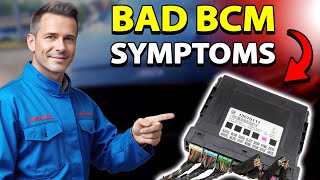
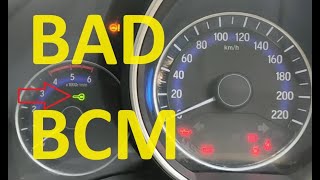
Symptoms You May Notice
- Warning lights on the dashboard (Check Engine, SRS, ABS/ASC)
- Exterior or interior lights not working or acting erratically
- Windshield wipers not functioning
- Power windows, power door locks, or remote keyless entry failing
- Air conditioning (A/C) not working
- Issues with the infotainment system, reverse camera, or parking sensors
- In some cases, a no-start or no-crank condition
- Vehicle stuck in Park
- Replacing the module that *reported* the code (e.g., the Engine Control Module or SRS module) instead of diagnosing the ETACS-ECU and its network connection. The reporting module is simply stating it can't hear from the ETACS-ECU.
- Replacing the ETACS-ECU without first thoroughly checking all related wiring, connectors, fuses (especially the IOD fuse), and ground points.
- Attempting to install a used ETACS-ECU from another vehicle. This often fails because it cannot be correctly reprogrammed by the dealer and will result in a mismatch of features, potentially causing a no-start or the vehicle to be stuck in park.
Most Likely Causes

- CAN Bus Wiring or Connector Issues 🔴 High Probability Wiring is susceptible to damage from vibrations, moisture intrusion, or chafing. Aftermarket installations, like a new radio, can also interfere with the CAN bus and trigger this code. Water leaks into the driver's side footwell or kick panel area are known to corrode connectors.
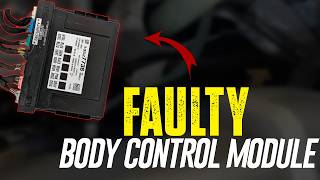
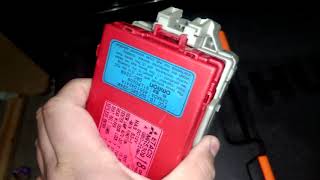
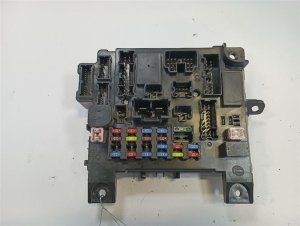
How to confirm: Perform a visual inspection of the wiring harness to and from the ETACS-ECU, which is located behind the driver's side lower dash panel, integrated with the fuse box. 🎬 Watch: Overview of the Mitsubishi ETACS unit and its location. Pay close attention to junction connectors like C-309, C-310, and C-313. With the battery disconnected, use a multimeter to check for ~60 ohms of resistance between CAN High (Pin 6) and CAN Low (Pin 14) at the OBD-II port. A reading of 120 ohms suggests a break in the circuit, while 0 ohms indicates a short. 🎬 See this guide on how to troubleshoot CAN bus faults.
Typical fix: Repair the damaged section of wiring or clean/re-seat the corroded or loose connector. Disconnect any aftermarket electronics to see if the code clears.
Est. part cost: $5-$50 - Failed ETACS-ECU (Body Control Module) 🟡 Medium Probability While not as common as wiring faults, internal failure of the ETACS-ECU can occur. A recall for this part on some older Mitsubishi models highlights a history of potential manufacturing defects.
How to confirm: This is a process of elimination. If all power, ground, and CAN bus wiring to the module are confirmed to be good (operating voltage between 10-16.5V), and a professional scan tool cannot communicate with the ETACS-ECU, the module itself is the likely culprit.
Typical fix: Replace the ETACS-ECU. The new module must be programmed ('variant coding') to the vehicle's VIN and specific features by a dealer or a qualified independent shop with a Mitsubishi M.U.T.-III tool.
Est. part cost: $400-$800 - Poor Power or Ground Supply to ETACS-ECU 🟡 Medium Probability Ground connections can corrode over time, and fuses can become loose or blow, cutting power to the module and preventing it from communicating. A poorly seated IOD (Ignition Off Draw) fuse is a known issue on Outlanders that can cause this code.
How to confirm: Check all fuses related to the BCM/ETACS, paying special attention to the IOD fuse in the engine compartment fuse box. Use a multimeter to verify stable battery voltage (10V-16.5V required) and a solid ground connection (less than 1-2 ohms resistance) at the ETACS-ECU's electrical connector, using a factory wiring diagram for pin locations.
Typical fix: Clean and tighten corroded ground points, replace blown fuses, or repair the power supply wire. Ensure the IOD fuse is fully seated. 🎬 Watch: Quick tip on identifying signs of a blown IOD fuse.
Est. part cost: $1-$25 - Weak or Failing Battery ⚪ Low Probability Modern vehicles are highly sensitive to system voltage. A weak battery can cause unpredictable communication errors between modules as they may drop off the network if voltage falls below the required threshold of ~10V.
How to confirm: Test the battery with a digital battery tester. Ensure the resting voltage is above 12.4V and that it maintains voltage under load.
Typical fix: Recharge or replace the vehicle's 12V battery.
Est. part cost: $150-$300
Rare But Worth Checking
- Another Faulty Module on the CAN Bus: A different module on the network (e.g., instrument cluster, ABS module, or even an aftermarket radio) can fail in a way that it floods the network with erroneous data or shorts the bus, preventing other modules from communicating. This is rare but can be difficult to diagnose, often requiring disconnecting modules one by one.
Diagnosis Steps

- Check the vehicle's 12V battery to ensure it is fully charged (above 12.4V) and the terminals are clean and tight.
- Inspect the IOD (Ignition Off Draw) fuse in the engine compartment fuse box. Remove it and re-seat it firmly, as this is a known cause of U0141 on Outlanders.
- Using a professional scan tool (like M.U.T.-III), perform a full network scan and record all DTCs from all modules. Note which modules are logging U0141.
- Attempt to communicate directly with the ETACS-ECU (Body Control Module). If communication fails, this points toward a problem with the module or its power/ground/network wiring.
- Locate the ETACS-ECU behind the driver's side lower dash panel/fuse box area and visually inspect its connectors and nearby wiring for signs of corrosion, water intrusion, or physical damage.
- Following a wiring diagram, test for proper power (10V-16.5V) and ground (less than 1 ohm) at the ETACS-ECU connector using a multimeter.
- If power and ground are good, diagnose the CAN bus itself. Disconnect the battery and measure the resistance between Pin 6 (CAN-H) and Pin 14 (CAN-L) at the OBD-II port. A healthy network will read approximately 60 Ohms.
- If you have any aftermarket electronics (radio, alarm, remote start), temporarily disconnect them to see if communication is restored.
- If all wiring and power sources are confirmed to be good, the ETACS-ECU is the most likely failed component.
Parts You'll Likely Need

- ETACS-ECU (Body Control Module)
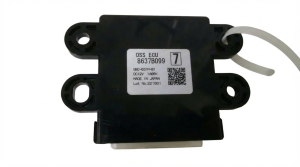
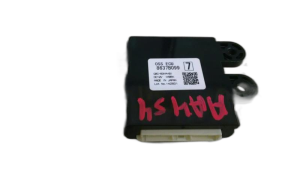
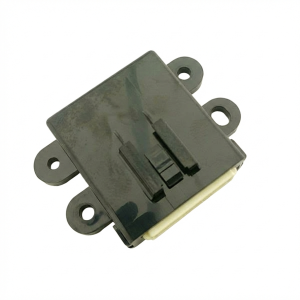
(OEM #8637B690 (Verify with dealer using VIN))— If all wiring and power/ground tests pass, the module itself has likely failed internally and is no longer able to communicate on the network. This is the central component for body electronics.
Trusted brands: Mitsubishi (OEM)
OEM price range: $400-$800
Aftermarket price range: $250-$500 (Remanufactured, but programming is still required)
Related Codes That Often Appear With This One
- U-series codes (e.g., U0100, U0121, U0155) — If the CAN bus network has a major fault, multiple modules may lose communication with each other, resulting in a variety of U-codes being stored across the vehicle's systems.
- B1762 — This code for an 'IOD FUSE Circuit Malfunction' can appear alongside U0141 on some Outlander models, pointing directly to an improperly seated IOD fuse as the root cause.
Technical Service Bulletins (TSBs) & Recalls
- TSB-19-42B-003: Updates diagnostics for ETACS-ECU CAN timeout with DTC U0141 in the Body section of the service manual. [TSB1942B003, 1]
- TSB-19-52B-005: Updates diagnostics for ETACS-ECU CAN timeout diagnostics with DTC U0141 in the Supplemental Restraint System (SRS) section. [TSB1952B005]
- TSB-19-54-008: Updates diagnostics for ETACS-ECU CAN timeout diagnostics with DTC U0141 in the Chassis Electrical section. [TSB1954008, 1]
Platform-Specific Known Issues
- Mitsubishi issued three TSBs in March 2019 (TSB-19-42B-003, TSB-19-52B-005, TSB-19-54-008) to update the service manuals with revised diagnostic procedures for DTC U0141 on the 2018 Outlander PHEV, indicating this is a known and potentially complex issue. [TSB1942B003, TSB1952B005, TSB1954008, 1]
- Another TSB for the general Outlander family (TIN-16-36-001) points to an improperly seated IOD fuse as a primary cause for U0141, making it a critical first check.
Mechanic-Grade Diagnostic Values
- ETACS-ECU Operating Voltage — expected: 10V to 16.5V. Failure: Voltage below 10V can cause the module to drop off the network.
- CAN Bus Communication Timeout — expected: Signal received continuously. Failure: DTC U0141 is set if the signal from the ETACS-ECU is not received for 4 seconds.
- ETACS-ECU Ground Circuit Resistance — expected: 1V or less (measured as voltage drop) or < 2 Ohms resistance to chassis ground. Failure: Higher voltage or resistance indicates a poor ground connection.
Scan Tool Commands That Help
- Mitsubishi M.U.T.-III: Variant Coding (On Vehicle Coding / Copy Coding) — This is mandatory when replacing the ETACS-ECU. It reads the vehicle-specific configuration from the old unit (if possible) and writes it to the new one. It is also used to write the VIN.
- Mitsubishi M.U.T.-III: ECU Reprogramming — Used to apply software updates (firmware) to the ETACS-ECU. TSBs may require reprogramming to fix underlying software bugs that could cause network instability.
- Mitsubishi M.U.T.-III: Coding Information & Copy — Used to view the current coding data on an ECU to verify it matches the vehicle's factory configuration before starting troubleshooting.
Wiring & Ground Locations

- ETACS-ECU — Integrated into the back of the interior fuse box, located behind the driver's side lower dash panel.. This is the central module that has lost communication. All power, ground, and network connections terminate here.
- C-309, C-310, C-313 — These are three of the main multi-pin connectors that plug into the ETACS-ECU/junction block assembly.. These connectors carry the CAN bus, power, and ground signals. A loose pin or corrosion in one of these connectors can directly cause code U0141.
- Driver's Kick Panel Grounds — Multiple ground points are typically located on the chassis metal behind the driver's side kick panel and lower dash.. The ETACS-ECU relies on a solid ground connection. Corrosion at these points can create high resistance, causing intermittent module resets and communication loss.
Real Owner Repair Stories
- MHH AUTO Forum (2018 Mitsubishi Outlander 4WD) — Door locks not working, leading to ETACS replacement.
❌ Tried (didn't work) Installed a used ETACS-ECU with the same part number (8637B690)., Could not copy coding from the original unit due to active DTCs., Attempted to re-VIN the used module using MUT-III, which resulted in a no-start and immobilizer codes., Flashed the used module with the donor vehicle's VIN and configuration file. This allowed the car to start but caused it to be stuck in Park and triggered ABS and 4WD system DTCs.
✅ What actually fixed it The forum thread documents a failed repair attempt, serving as a cautionary tale. The resolution requires either successfully coding a new OEM ETACS-ECU with the vehicle's original configuration file or cloning the data from the original module's memory chip to the replacement, a highly specialized procedure. The story highlights that even with dealer tools, using salvaged modules is extremely risky and can introduce more problems.
When the Usual Fixes Don't Work
- A common assumption is that a used ETACS-ECU with a matching part number can be a cost-effective fix. However, a real-world case on a 2018 Outlander demonstrated this is a significant pitfall. A shop attempted to install a used module (8637B690) but was unable to perform the required 'variant coding' because the original module was too damaged to copy from. Their attempts to manually program the used module with the dealer tool (MUT-III) led to a cascade of new, more severe problems, including a no-start condition and the vehicle being stuck in Park with multiple new warning lights. This proves that for this specific component, simply matching the part number is insufficient; the ability to correctly program the module with the vehicle's unique configuration is the critical, and often impassable, hurdle with used parts.
OEM Part Supersession History
8637B690→8637B698— Part revision or update by the manufacturer.
Heads up: While the part may be physically compatible, it will always require VIN and variant coding with a MUT-III tool to function correctly.8637B690→Software Update 8637C094— A software update was released via TSB-17-31-001 to address issues with TPMS control on some models using this ETACS.
Heads up: This is a software, not hardware, update. It indicates that the firmware on this part number can be updated by a dealer to resolve known bugs, which could potentially improve system stability.
Helpful Videos
We Have This Part in Stock


The information in this article is provided for general reference and educational purposes only. Vehicle specifications, procedures, and part compatibility can vary by production date, trim level, and region. Always consult your vehicle's factory service manual and verify part numbers before purchasing or performing repairs. Safety-critical components such as airbags, seat belts, and braking systems should be installed by a qualified professional.
- Mitsubishi OUTLANDER PHEV:
- 🎬 Helpful Videos
- 🛍️ Shop This Part
- What's Unique About the 2018-2018 Mitsubishi OUTLANDER PHEV
- Diagnostic Flowchart
- Symptoms You May Notice
- Most Likely Causes
- Rare But Worth Checking
- Diagnosis Steps
- Parts You'll Likely Need
- Related Codes That Often Appear With This One
- Technical Service Bulletins (TSBs) & Recalls
- Platform-Specific Known Issues
- Mechanic-Grade Diagnostic Values
- Scan Tool Commands That Help
- Wiring & Ground Locations
- Real Owner Repair Stories
- When the Usual Fixes Don't Work
- OEM Part Supersession History
- 🎟️ Get 5% Off