

U0141 on 2010-2014 Mitsubishi Lancer Sportback: ETACS Communication Loss Causes and Fixes
This code means a loss of communication with the Body Control Module, which Mitsubishi calls the ETACS-ECU. The most common causes are a failing ETACS-ECU, often due to water damage or internal failure, or wiring issues. A replacement ETACS-ECU can cost between $200 and $500 for a used or remanufactured part and requires specific programming to the vehicle's VIN, which can be complex.
- U0141 means the ETACS-ECU (the car's main body computer) is offline.
- Check for water leaks in the cabin, as this is a primary cause of ETACS-ECU failure.
- Always check battery voltage and main fuses before condemning the expensive ETACS-ECU.
- Replacing the ETACS-ECU is not a simple plug-and-play job; it requires special programming to match your car's VIN and features.
- Due to the complexity, professional diagnosis with a Mitsubishi-specific scan tool (M.U.T.-III) is highly recommended.
What's Unique About the 2010-2014 Mitsubishi LANCER SPORTBACK
For the Lancer platform, the ETACS-ECU is a highly integrated hub that manages everything from the power windows to communication with the all-wheel-drive (AWC/ACD) system and keyless entry. Its failure can cause a cascade of seemingly unrelated issues. Mitsubishi has issued several Technical Service Bulletins (TSBs) to update the diagnostic procedures for this specific code, which suggests that pinpointing the exact cause can be complex. These TSBs cover the electrical system, supplemental restraint system (SRS), and body sections, highlighting how a failure in ETACS communication can have wide-ranging effects. The ETACS is located behind the fuse panel in the driver's side kick panel area, making it susceptible to water intrusion but relatively accessible for replacement.
Diagnostic Flowchart
Tap your situation to follow the diagnostic path that matches what you're seeing on this vehicle.
Symptoms You May Notice
- Check Engine Light or other warning lights on the dashboard (e.g., 'Service AWD System')
- Malfunction of interior or exterior lights (e.g., dome light flickering, hazards turning on randomly).
- Power windows, door locks, or keyless entry not working
- Climate control (A/C and heat) failure.
- Instrument cluster gauges behaving erratically or freezing
- Turn signals or hazard lights not functioning correctly
- Vehicle may not start if the immobilizer system is affected.
- Parasitic battery drain caused by modules not going to sleep, such as the throttle body motor continuing to run after the key is off. 🎬 Watch: How to perform a parasitic draw test on a Lancer.
- Replacing other modules (like the ECM or TCM) before confirming the ETACS-ECU is the source of the communication loss. The U0141 code specifically points to a problem with the ETACS-ECU or its connection to the network.
- Assuming a used ETACS-ECU is plug-and-play. Failure to properly VIN-write and code the replacement module will lead to persistent errors or a no-start condition.
Most Likely Causes
- Failing ETACS-ECU 🔴 High Probability The ETACS-ECU can fail internally due to age, electrical stress, or more commonly, from water intrusion. Leaks from the windshield seal, sunroof drains, or A/C evaporator drain can drip onto the module, which is located in the driver's side kick panel area, causing corrosion and failure. 🎬 See this guide on finding and fixing interior water leaks. Forum users report finding corroded units after experiencing these symptoms. A safety recall (SR-15-002) was issued for some 2009-2010 models due to internal components with high electrical resistance causing voltage instability.
How to confirm: After ruling out wiring and power issues, the module itself is the likely culprit. A diagnostic scan with a tool like M.U.T.-III will show multiple modules reporting a loss of communication with the ETACS. Visual inspection for water damage, corrosion, or burnt components on the unit and its connectors is critical. In some cases, the unit may be visibly burnt internally.
Typical fix: Replace the ETACS-ECU. The new or used unit must be programmed with the vehicle's VIN and specific configuration data (coding) from the old unit. This can be done by a dealer or with specialized aftermarket tools like ETACS Decoder or a licensed M.U.T.-III setup. 🎬 Watch: How to program a replacement ETACS using MMCodingWriter.
Est. part cost: $100-$500 (Used or Remanufactured) - CAN Bus Wiring or Connector Issue 🟡 Medium Probability Wires in the CAN bus harness can become chafed, broken, or corroded over time, especially in areas where the harness passes through the firewall, under carpets, or near sharp metal edges. Connectors can also become loose or corroded.
How to confirm: Visually inspect the wiring harness leading to the ETACS-ECU. Use a multimeter to check for continuity and resistance on the CAN High and CAN Low wires. A proper CAN bus should have a resistance of approximately 60 ohms between the two lines (with the battery disconnected). This test confirms the integrity of the main bus and its two 120-ohm terminating resistors.
Typical fix: Repair the damaged section of the wiring harness or clean/replace the corroded connector.
Est. part cost: $5-$50 - Low Battery Voltage or Poor Ground ⚪ Low Probability Like any modern vehicle, Lancers are sensitive to system voltage. A weak battery or failing alternator can cause modules to drop off the communication network intermittently, triggering communication codes.
How to confirm: Test the battery voltage with the car off (should be ~12.4V or higher) and while running (should be ~13.5-14.5V). Check the main ground connections for the ETACS-ECU to ensure they are clean and tight.
Typical fix: Charge or replace the battery, or replace the failing alternator. Clean and secure ground connections.
Est. part cost: $150-$400
Rare But Worth Checking
- Poorly Installed Aftermarket Electronics: Remote starters, alarms, or aftermarket Android head units that are improperly tapped into the vehicle's wiring can interfere with the CAN bus network, causing communication errors. A forum user traced their U0141 issue to an aftermarket radio; the problem ceased when the radio's fuse was pulled.
- Failure of another ECU on the network: Rarely, a different faulty module (like the ABS, A/C, or combination meter) can broadcast corrupt data onto the CAN bus, causing other modules to set communication codes. This usually requires a full network scan with an advanced tool to identify the offending module by disconnecting modules one by one.
Diagnosis Steps
- Check the battery and charging system to ensure voltage is stable and within specification (~12.4V off, 13.5-14.5V running).
- Use a high-quality scan tool (ideally a M.U.T.-III or equivalent) to perform a full network scan and see which other modules are reporting communication loss with the ETACS-ECU.
- Inspect the fuses related to the ETACS-ECU / BCM. A Polish forum user noted pulling fuse #22 (20A) temporarily resolved a parasitic drain related to the U0141 code.
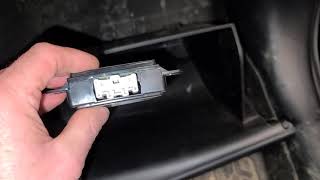
- Locate the ETACS-ECU. It is behind the interior fuse box in the driver's side kick panel. Visually inspect its connectors and surrounding area for any signs of water intrusion, corrosion, or physical damage.
- Inspect the CAN bus wiring harness for any visible signs of chafing, breaks, or pinched wires.
- With the battery disconnected, use a multimeter to measure the resistance between the CAN High (Pin 6) and CAN Low (Pin 14) pins at the OBD-II port. A reading of approximately 60 ohms indicates the main bus wiring and terminating resistors are likely intact.
- If aftermarket electronics are installed (radio, alarm), inspect their wiring. Try disconnecting them to see if the code disappears.
- If wiring, power, and grounds are confirmed to be good, the ETACS-ECU is the most likely failed component.
Parts You'll Likely Need
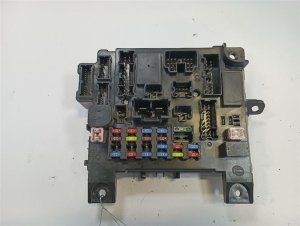
- ETACS-ECU (Body Control Module)
(OEM #8637A825, 8637A644, 8637A826)— This is the central module that has lost communication. It is a common failure point, especially due to water damage or internal faults. Part number 8637A825 is noted as ideal for pre-2011 Lancers, while 8637A644 is a higher-spec unit for 2011+ models but may require a connector extension if used on older cars.
Trusted brands: Mitsubishi (OEM)
OEM price range: $200-$500 (Used or Remanufactured)
Aftermarket price range: N/A
Related Codes That Often Appear With This One
- U0100 — Lost Communication with ECM/PCM. This can appear alongside U0141 if the ETACS-ECU is the central gateway and its failure prevents communication with the engine computer.
- U0121 — Lost Communication with ABS Control Module. If the ETACS-ECU acts as a gateway for the ABS module, its failure can trigger this code.
- U0155 — Lost Communication with Instrument Panel Cluster (IPC) Control Module. The instrument cluster relies on data from the ETACS for many of its indicators and gauges.
- U0101 — Lost Communication with TCM. Often seen on SST-equipped models like the Ralliart and Evo, where the transmission computer is in constant communication via the ETACS.
Technical Service Bulletins (TSBs) & Recalls
- TSB-19-54-008: Updates diagnostics for ETACS-ECU CAN timeout in the Chassis Electrical section.
- TSB-19-52B-005: Updates diagnostics for ETACS-ECU CAN timeout in the Supplemental Restraint System (SRS) section.
- TSB-19-42B-003: Updates diagnostics for ETACS-ECU CAN timeout in the Body section.
- TSB-18-54-003: Instructs dealers to reprogram the ETACS ECU with updated software to fix flickering dome lights on affected vehicles.
Platform-Specific Known Issues
- Mitsubishi issued TSB-19-54-008, TSB-19-52B-005, and TSB-19-42B-003 to update service manual diagnostics for DTC U0141, indicating it can be a complex code to diagnose correctly on this platform. These TSBs apply to the Lancer, Lancer Sportback, Lancer Evolution, Outlander, and Outlander Sport.
- A safety recall campaign (SR-15-002) was issued for certain 2009-2010 Lancer and Lancer Sportback models due to a manufacturing defect in the ETACS-ECU that could cause high electrical resistance, voltage instability, and failure of headlights or wipers.
Mechanic-Grade Diagnostic Values
- CAN Bus Resistance — expected: ~60 Ω. Failure: A reading of ~120 Ω indicates an open circuit or a missing terminating resistor. A reading significantly lower than 60 Ω (e.g., 40-45 Ω) could indicate a third resistor on the network or a shorted module.
- CAN High Voltage to Ground — expected: ~2.6V (average). Failure: The voltage should fluctuate rapidly between 2.5V and 3.5V. A static voltage or one outside this range indicates a fault.
- CAN Low Voltage to Ground — expected: ~2.4V (average). Failure: The voltage should fluctuate rapidly between 2.5V and 1.5V. A static voltage or one outside this range indicates a fault.
Scan Tool Commands That Help
- M.U.T.-III: CAN Bus Diagnosis — This is the primary function to check the status of the entire CAN network and see which ECUs are not communicating. It should be the first step in diagnosing a U0141 code.
- M.U.T.-III: Coding Information & Copy — This function is critical before replacing the ETACS-ECU. It allows you to save the vehicle's specific configuration (variant coding) and customization settings from the old unit.
- M.U.T.-III: On Vehicle Coding — After installing a new ETACS-ECU, this function is used to write the vehicle's VIN and the saved coding file to the new module, making it operational.
- ETACS Decoder / MMCodingWriter: Read/Write Variant and Custom Coding — These aftermarket software tools, used with a J2534 adapter, provide a powerful alternative to the dealer's M.U.T.-III for saving, editing, and writing the ETACS configuration. This is essential for DIY replacement or for enabling hidden features.
Wiring & Ground Locations
- ETACS-ECU Connectors — Behind the interior fuse box in the driver's side kick panel. Key connectors include C-309, C-315, and C-317.. These are the main data and power connectors for the ETACS-ECU. Corrosion or loose pins on these connectors, particularly the CAN lines within them, will directly cause a U0141 code.
- Body Ground Points — Multiple ground points are located in the driver and passenger kick panel areas, under the center console, and in the engine bay. Specific ground distribution diagrams are available in the service manual.. A poor ground connection for the ETACS-ECU can cause intermittent voltage drops and communication failures, leading to a U0141 code.
- C-301 Connector — A large connector at the ETACS-ECU. Its physical location on the ETACS unit changed on post-2011 models.. This connector's location change is a key detail when swapping ETACS units between different model years, as an extension harness may be required.
Real Owner Repair Stories
- EvolutionM forum user (2011 Mitsubishi Lancer Ralliart) — Multiple communication codes including U0141, 'Service AWD System' warning, non-functional accessories.
❌ Tried (didn't work) Checking fuses, Testing battery
✅ What actually fixed it The ETACS-ECU was found to have significant corrosion from a water leak originating from the sunroof drain. Replacing the ETACS-ECU and programming the new unit with the vehicle's original coding resolved all issues.
OEM Part Supersession History
Various pre-2011 PNs (e.g., 8637A465)→8637A825— Updated design, often used as a replacement for earlier models.
Heads up: 8637A825 is considered the ideal, direct-fit replacement for most Lancer models up to 2010.8637A825→8637A644, 8637A826— Hardware revision for 2011+ models with potentially more features.
Heads up: Part 8637A644 is a higher-spec unit for 2011+ cars. If used on a pre-2011 Lancer, it may require a wiring extension for connector C-301, which was relocated on the newer module. 8637A826 is specified for Lancer Sedan/Ralliart/Evo, while 8637A825 is for the Sportback.
Model Year Variations Within This Range
- 2009-2010: Certain vehicles within this range were subject to Safety Recall SR-15-002 for a faulty ETACS-ECU with high internal resistance, causing potential failure of lights and wipers.
- 2011+: The ETACS-ECU hardware was revised (e.g., part 8637A644). The physical layout of connector C-301 was changed, requiring a harness extension if fitting this newer module into a pre-2011 car.
- 2014-2017: The dash trim and radio removal procedure changed significantly from the 2008-2013 models. This is relevant because aftermarket radio installations are a potential cause of CAN bus faults.
Helpful Videos




We Have This Part in Stock

The information in this article is provided for general reference and educational purposes only. Vehicle specifications, procedures, and part compatibility can vary by production date, trim level, and region. Always consult your vehicle's factory service manual and verify part numbers before purchasing or performing repairs. Safety-critical components such as airbags, seat belts, and braking systems should be installed by a qualified professional.
- Mitsubishi LANCER SPORTBACK:
- 🎬 Helpful Videos
- 🛍️ Shop This Part
- What's Unique About the 2010-2014 Mitsubishi LANCER SPORTBACK
- Diagnostic Flowchart
- Symptoms You May Notice
- Most Likely Causes
- Rare But Worth Checking
- Diagnosis Steps
- Parts You'll Likely Need
- Related Codes That Often Appear With This One
- Technical Service Bulletins (TSBs) & Recalls
- Platform-Specific Known Issues
- Mechanic-Grade Diagnostic Values
- Scan Tool Commands That Help
- Wiring & Ground Locations
- Real Owner Repair Stories
- OEM Part Supersession History
- Model Year Variations Within This Range
- 🎟️ Get 5% Off