

U0141 on 2008-2012 Mitsubishi Lancer Evolution: Lost Communication with ETACS-ECU Fixes
This code means your Lancer Evolution has lost communication with its Body Control Module, called the ETACS-ECU. This often causes electrical glitches like failing lights, wipers, or keyless entry. The most common causes are a faulty ETACS-ECU, wiring problems, or simply a blown fuse. A recall was issued for some 2010 models for this exact issue.
- U0141 on your Lancer Evo means the ETACS-ECU (the body control module) is offline.
- Symptoms are almost always electrical: failing lights, wipers, locks, or keyless entry.
- Before condemning the expensive ETACS-ECU, thoroughly check all related fuses and inspect the wiring for damage or corrosion.
- Due to the risk of losing headlights or wipers, this issue should be addressed immediately and is best left to a professional with the correct diagnostic tools.
- If the ETACS-ECU needs replacement, it must be programmed to your car's VIN.
What's Unique About the 2008-2012 Mitsubishi LANCER EVOLUTION

For the Lancer Evolution X platform, the ETACS-ECU is a known point of failure. Mitsubishi issued a specific safety recall (NHTSA Campaign ID: 10V149000, Mitsubishi Campaign C1502T) for 2010 models due to an internal manufacturing defect in the ETACS-ECU that could cause a loss of headlights or wipers. This was due to components with high electrical resistance causing voltage instability. Mitsubishi also issued multiple Technical Service Bulletins (TSBs) to update dealer diagnostic procedures for this specific code, suggesting it was a common and sometimes misdiagnosed issue. Owners on forums like EvolutionM.net frequently discuss issues stemming from this module, sometimes caused by accidental short circuits during other electrical work or leading to a complete no-start condition.
Diagnostic Flowchart
Tap your situation to follow the diagnostic path that matches what you're seeing on this vehicle.
Symptoms You May Notice
- Check Engine Light or other warning lamps illuminated on the dashboard.
- Headlights, taillights, or turn signals not working or behaving erratically.
- Windshield wipers not functioning or turning on by themselves.
- Power windows and door locks failing to operate.
- Keyless entry remote (FOB) not working.
- Issues with the security alarm or immobilizer system, potentially leading to a no-start condition.
- Instrument cluster gauges or displays acting up.
- ACD (Active Center Differential) or 4WD warning light may appear, as it communicates via the ETACS.
- A/C system may not function correctly.
- Complete no-start, where the engine only cranks.
- Replacing other ECUs (like the SRS, ABS, or AWC module) that are reporting the U0141 code, when the actual fault lies with the ETACS-ECU or the network wiring. The module reporting the code is the one that *isn't* hearing from the ETACS; the ETACS itself is the silent module.
Most Likely Causes

- Faulty ETACS-ECU 🔴 High Probability A safety recall (NHTSA 10V149000) was issued for 2010 models for defective ETACS-ECUs manufactured between October 2008 and August 2010. Internal components can fail due to high electrical resistance, leading to voltage instability or a complete communication breakdown. It is a widely discussed failure point 🎬 Watch: A quick look at repairing a faulty ETACS unit. in owner forums for the platform.
How to confirm: After confirming power, ground, and CAN bus wiring are intact, the module itself is the likely culprit. A dealer-level scan tool (M.U.T.-III) can attempt to communicate directly with the ETACS; a 'no response' or the presence of internal fault codes points to a failure. The diagnostic procedure often involves checking for codes in other modules; if multiple systems report a timeout for the ETACS, the ETACS itself is suspect.
Typical fix: Replace the ETACS-ECU. The new module must be programmed ('variant coding') to the vehicle's VIN and specific configuration using a tool like the M.U.T.-III. This involves copying the coding from the old unit or obtaining the correct file from Mitsubishi. 🎬 Watch: How professionals clone the ETACS and PCM programming.
Est. part cost: $650-$950 - CAN Bus Wiring or Connector Issues 🟡 Medium Probability Wiring can be damaged near the fuse box, under the dash, or at the ETACS-ECU connector itself. Corrosion at connectors can also disrupt the sensitive CAN signals. Intermittent faults are common with wiring issues.
How to confirm: Perform a visual inspection of the wiring harness leading to the ETACS-ECU. Check for chafed wires, loose pins, or corrosion in the connectors. A multimeter can be used to check for continuity and proper resistance on the CAN High and CAN Low wires (should be around 60 ohms between the two lines at the OBD-II port). Mitsubishi's diagnostic procedure emphasizes checking the CAN bus line first.
Typical fix: Repair the damaged section of wiring or clean/replace the corroded connector.
Est. part cost: $10-$50 - Blown Fuse or Power Supply Issue ⚪ Low Probability While not specific to this car, it's a fundamental check for any module communication failure. Mitsubishi's official troubleshooting hints list a failure in the ETACS-ECU power supply system as a probable cause.
How to confirm: Check all fuses related to the Body Control Module / ETACS in the interior and engine bay fuse panels. Use a multimeter to verify that the ETACS-ECU is receiving proper battery voltage (10-16.5V) and has a solid ground connection.
Typical fix: Replace the blown fuse. If the fuse blows again, diagnose the circuit for a short.
Est. part cost: $1-$5
Rare But Worth Checking
- Faulty Engine Control Module (ECM): While rare, the ECM itself can fail in a way that disrupts CAN bus communication, leading other modules to report a loss of communication. Mitsubishi's own diagnostic tree lists 'Replace the ECM' as a potential final step if all other diagnostics pass.
- Low Battery Voltage: A weak or dying battery can cause widespread, intermittent communication codes across various modules as they fail to power on correctly. The DTC set condition requires battery voltage to be between 10 and 16.5 volts; voltages outside this range can cause unpredictable behavior. Always ensure the battery is fully charged and the charging system is working before diving into complex diagnostics.
Diagnosis Steps
- Check Battery Health: Ensure the battery voltage is above 12.4V with the engine off and that the charging system is functioning correctly. Low voltage can cause numerous communication codes.
- Scan for All Codes: Use a high-quality OBD-II scanner capable of reading codes from all vehicle modules (ECM, TCM, ETACS, SRS, etc.). Note which modules are reporting the U0141 code. The Mitsubishi M.U.T.-III is the factory tool.
- Check Fuses: Inspect all fuses related to the ETACS-ECU / BCM in both the interior and engine compartment fuse boxes.
- Inspect ETACS-ECU Wiring: Visually inspect the wiring and connectors at the ETACS-ECU (located behind the driver's side lower dash/fuse box area) for any signs of damage, looseness, or corrosion.
- Diagnose the CAN Bus: Using a Mitsubishi-specific scan tool (M.U.T.-III) is the recommended method to diagnose the CAN bus line directly. Alternatively, an advanced technician can check for correct voltage (~2.5V on both CAN High and CAN Low) and resistance (should measure 60 ohms between CAN_H and CAN_L pins at the OBD-II port) with a multimeter.
- Test ETACS-ECU Power and Ground: Using a multimeter and wiring diagram, confirm the ETACS-ECU has a stable power supply and a clean ground connection at its harness connector.
- Isolate the Module: If the CAN bus wiring, power, and ground are all verified to be good, the ETACS-ECU itself is the most likely cause of the failure. Replacement is the next step.
Parts You'll Likely Need
- ETACS-ECU (Body Control Module)
(OEM #8637A653 (example for 2008-2015 Lancer, verify by VIN))— This module is the most common point of failure for this code on this specific vehicle, as evidenced by a safety recall and multiple TSBs.
Trusted brands: Mitsubishi (OEM)
OEM price range: $650-$950
Aftermarket price range: $100-$300 (Used, requires programming)
Related Codes That Often Appear With This One
- U0100 — Lost Communication with ECM/PCM. If the CAN bus has a major fault, or if the ETACS/ECM themselves are failing, communication can be lost with multiple modules simultaneously.
- U0155 — Lost Communication With Instrument Panel Cluster (IPC) Control Module. The instrument cluster is another key module on the CAN bus, and a network-wide issue can cause this code to appear alongside U0141.
- U0431 — Invalid Data Received From Body Control Module. This code can appear on Lancer Evolutions when the ACD ECU receives implausible data from the ETACS, often pointing to a problem with the ETACS itself.
- U0101 — Lost Communication with TCM. On models with the TC-SST transmission, a CAN bus issue can trigger communication loss with the transmission control module as well.
Technical Service Bulletins (TSBs) & Recalls
- TSB-19-42B-003: Updates the Body section of the service manual for U0141 diagnostics.
- TSB-19-52B-005: Updates the Supplemental Restraint System (SRS) section for U0141 diagnostics.
- TSB-19-54-008: Updates the Chassis Electrical section for U0141 diagnostics.
- SR-15-002 / C1502T: The campaign number for the 2010 model year ETACS-ECU safety recall.
Platform-Specific Known Issues
- Safety Recall SR-15-002 (NHTSA 10V149000): For certain 2010 Lancer Evolution models (built July 14, 2009 - August 26, 2010), Mitsubishi recalled the ETACS-ECU due to an internal manufacturing defect. High electrical resistance within the unit could lead to voltage instability, causing a loss of headlight and/or windshield wiper function, directly triggering the U0141 code.
Mechanic-Grade Diagnostic Values
- CAN Bus Timeout Period — expected: Signal must be received in under 2500 milliseconds (2.5 seconds). Failure: If a signal is not received from the ETACS-ECU within this timeframe, other modules will log DTC U0141.
- System Voltage for ETACS Operation — expected: 10V - 16V. Failure: If system voltage drops below 10V, communication can become unstable and trigger fault codes.
- CAN High / CAN Low Voltage (Key On, Engine Off) — expected: Approximately 2.5V on each line relative to ground.. Failure: A significant deviation from 2.5V on either line, or one line being shorted to ground (0V) or power (12V), indicates a wiring fault.
- CAN Bus Resistance (Key Off, Battery Disconnected) — expected: Approximately 60 Ohms. Failure: A reading of ~120 Ohms indicates one of the two terminating resistors is offline (possible ECU or wiring issue). A reading near 0 Ohms indicates a short between the CAN High and Low lines.
Scan Tool Commands That Help

- Mitsubishi M.U.T.-III: CAN bus diagnostics — This is the first step recommended in the official service manual when U0141 is present. It performs an automated check of the entire network to confirm the integrity of the communication lines before condemning a specific module.
- Mitsubishi M.U.T.-III: Variant Coding — This function is mandatory after replacing the ETACS-ECU. It programs the new module with the vehicle's specific options (like KOS/FAST-key, auto headlights, etc.) and VIN. Failure to perform variant coding will result in features not working and potential communication errors.
- Mitsubishi M.U.T.-III or equivalent: Erase DTCs — Used after a repair attempt to clear the stored U0141 code. The technician then cycles the ignition to see if the code returns, which helps differentiate between a hard fault and an intermittent issue.
Wiring & Ground Locations

- ETACS-ECU — Located behind the driver's side lower dashboard, integrated with the interior fuse box assembly.. This is the module that has lost communication. Physical access is required to test its power, ground, and CAN connections at its connectors (e.g., C-302, C-303, C-312).
- G12 — Under the front passenger's seat, according to a 2008 Lancer Evolution wiring diagram.. This is a chassis ground point shared by the ETACS-ECU. A loose or corroded ground at this location can cause intermittent or total failure of the ETACS-ECU, leading to code U0141.
- OBD-II Port — Under the driver's side dashboard, to the left of the steering column.. This port provides direct access to the CAN High and CAN Low lines (typically pins 6 and 14) for diagnostic resistance and voltage measurements without needing to access the ETACS-ECU directly.
OEM Part Supersession History
Various (e.g., 8637A332)→8637A653 (Covers multiple years including 2008-2015)— Part consolidation and potential revisions to address reliability issues.
Heads up: Part numbers must be verified by VIN. A replacement ETACS-ECU is not plug-and-play. It requires 'variant coding' with Mitsubishi-specific software (M.U.T.-III or MMCodingWriter) to program it to the car's features and immobilizer system.
Model Year Variations Within This Range
- 2008: 2008 models featured a red multi-function display, a richer factory engine tune, and were more susceptible to timing chain stretch issues (unrelated to U0141).
- 2010: A major safety recall (10V149000) was issued for the ETACS-ECU on some 2010 models. This year also saw an upgrade to a color multi-function display and blacked-out taillights similar to the Ralliart model.
- 2011-2012: Later models received an updated timing chain from the factory. Interior trim changed from a faux carbon fiber to piano black in 2012. These changes are cosmetic and do not affect the diagnosis of U0141.
Helpful Videos

We Have This Part in Stock

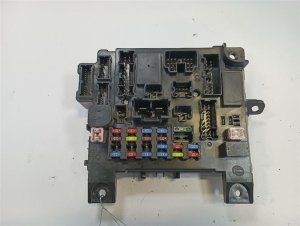

The information in this article is provided for general reference and educational purposes only. Vehicle specifications, procedures, and part compatibility can vary by production date, trim level, and region. Always consult your vehicle's factory service manual and verify part numbers before purchasing or performing repairs. Safety-critical components such as airbags, seat belts, and braking systems should be installed by a qualified professional.
- Mitsubishi LANCER EVOLUTION:
- 🎬 Helpful Videos
- 🛍️ Shop This Part
- What's Unique About the 2008-2012 Mitsubishi LANCER EVOLUTION
- Diagnostic Flowchart
- Symptoms You May Notice
- Most Likely Causes
- Rare But Worth Checking
- Diagnosis Steps
- Parts You'll Likely Need
- Related Codes That Often Appear With This One
- Technical Service Bulletins (TSBs) & Recalls
- Platform-Specific Known Issues
- Mechanic-Grade Diagnostic Values
- Scan Tool Commands That Help
- Wiring & Ground Locations
- OEM Part Supersession History
- Model Year Variations Within This Range
- 🎟️ Get 5% Off