

U0141 on 2016-2017 Mitsubishi Lancer: ETACS-ECU Communication Loss Causes and Fixes
This code means the Body Control Module, which Mitsubishi calls the ETACS-ECU, has stopped communicating. This often causes strange electrical problems like failing lights, wipers, or locks. The most common cause is a failed ETACS-ECU itself, which is a known weak point and requires professional diagnosis and programming to replace.
- U0141 means your Lancer's Body Control Module (ETACS-ECU) has gone offline and is not communicating with other vehicle systems.
- The most common cause is a failure of the ETACS-ECU itself, which is a known issue for this platform.
- Do not replace any other modules (like airbag or engine computers) that report this code until the ETACS-ECU and its wiring have been professionally tested.
- Replacement of the ETACS-ECU is not a DIY-friendly job, as it requires special equipment to program the new part to your car's VIN and features.
What's Unique About the 2016-2017 Mitsubishi LANCER
For the Lancer platform and its relatives on the Mitsubishi GS platform (like the Outlander and Outlander Sport), the ETACS-ECU is a known weak point. Mitsubishi has issued multiple Technical Service Bulletins (TSBs) to update dealer diagnostic procedures specifically for DTC U0141, which points to this being a common and sometimes misdiagnosed issue. [TSB1942B003, TSB1954008, TSB1952B005] While earlier Lancers were subject to a safety recall for defective ETACS units due to internal manufacturing flaws, the persistence of TSBs for later models like the 2016-2017 year range suggests that diagnosing this communication failure remains a key issue for this vehicle. Forum discussions frequently cite water intrusion from clogged sunroof drains as a cause of ETACS failure due to its location.
Diagnostic Flowchart
Tap your situation to follow the diagnostic path that matches what you're seeing on this vehicle.
Symptoms You May Notice
- Check Engine Light is on
- Warning lights for other systems (ABS, Airbag/SRS, Traction Control, 'Service AWD System') may illuminate.
- Headlights, tail lights, or turn signals not working or behaving erratically (e.g., turning on by themselves).
- Windshield wipers not working or activating randomly.
- Power windows, door locks, or keyless entry system failure.
- Climate control (A/C and heat) not functioning correctly.
- Instrument cluster gauges acting strangely or going dark.
- In some cases, a no-start or no-crank condition if the immobilizer system is affected.
- Remote key fob is inoperative.
- Replacing other control modules (like the ECM or SRS unit) that are reporting the U0141 code. These modules are correctly identifying that they cannot hear from the ETACS-ECU; they are the messenger, not the source of the problem.
Most Likely Causes
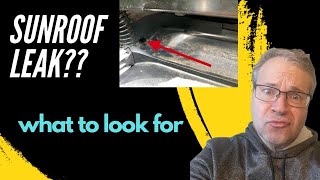
- Failed ETACS-ECU (Body Control Module) 🔴 High Probability This is a documented weak point on the Lancer platform. TSBs were issued to refine diagnostics, and earlier models had recalls for defective ETACS units. A common real-world cause of failure is water damage from clogged sunroof drains leaking onto the module. 🎬 Watch: How to find and clean your sunroof drains
How to confirm: After verifying power, ground, and CAN bus wiring to the module, a professional scan tool will be unable to establish communication with the ETACS-ECU. This is the most definitive test. Visually inspect the module and its connectors for signs of corrosion or water damage.
Typical fix: Replace the ETACS-ECU and program the new module to the vehicle's VIN and specific configuration using a Mitsubishi M.U.T.-III tool or equivalent.
Est. part cost: $350-$700 - Poor Power or Ground Connection to ETACS-ECU 🟡 Medium Probability General vehicle age and exposure to moisture can lead to corrosion on power and ground connections. The IOD (Ignition Off Draw) fuse is a known point of issue on related platforms and should be checked.
How to confirm: Use a multimeter to test for battery voltage at the power input pins and for low resistance (under 1 ohm) on the ground circuit pins of the ETACS-ECU connector. Check for a properly seated IOD fuse in the fuse box.
Typical fix: Clean or repair the corroded or damaged wiring and connectors. Ensure ground points are clean and tight. Reseat or replace the IOD fuse.
Est. part cost: $0-$50 - CAN Bus Wiring Fault ⚪ Low Probability Wiring can be damaged from physical impact, chafing, or improper installation of aftermarket accessories.
How to confirm: Inspect the wiring harness for visible damage. A technician would perform a CAN bus resistance test (should be around 60 ohms between pin 6 and 14 of the OBD-II port with the battery disconnected) and check for voltage on the CAN High and CAN Low lines.
Typical fix: Repair the specific section of the damaged wiring harness.
Est. part cost: $5-$100 - Low Battery Voltage or Failing Alternator ⚪ Low Probability All modern vehicles are sensitive to low voltage, which can cause random communication codes between modules. Mitsubishi service documents specify an operating voltage of 10V-16.5V for the ETACS-ECU.
How to confirm: Test the battery with the engine off (should be ~12.4-12.6V) and the charging system with the engine running (should be ~13.5-14.5V). A voltage drop below 10V can trigger the U0141 code.
Typical fix: Charge or replace the battery, or replace the failing alternator.
Est. part cost: $150-$400
Rare But Worth Checking
- Aftermarket Electronics Interference: Poorly installed aftermarket alarms, remote starters, or audio equipment can tap into CAN bus wires improperly, causing network interference that can trigger a U0141 code.
Diagnosis Steps
- Check the battery and charging system to ensure voltage is stable and within the correct range (12.4V+ engine off, 13.5-14.5V engine on). Ensure voltage does not drop below 10V.
- Use a professional scan tool (like Mitsubishi's M.U.T.-III) to attempt to communicate with all modules on the vehicle. Note which modules are logging the U0141 code.
- Attempt to communicate directly with the ETACS-ECU (Body Control Module). If the scan tool cannot connect, this points strongly toward a problem with the ETACS itself or its primary wiring.
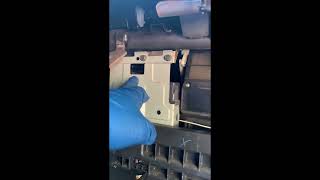
- Visually inspect the wiring and connectors at the ETACS-ECU. It is located behind the glove box, integrated into the back of the interior fuse panel. 🎬 Watch: How to locate and remove the Lancer ECU Check for any signs of water intrusion or corrosion, especially if the vehicle has a sunroof.
- If wiring appears intact, use a multimeter to verify that the ETACS-ECU is receiving proper power and has a solid ground connection. Check the IOD fuse.
- If power and ground are good, perform a CAN bus integrity test. This involves checking for ~60 ohms of resistance across the CAN High (Pin 6) and CAN Low (Pin 14) pins at the OBD-II port with the battery disconnected.
- If all wiring, power, and grounds are confirmed to be good, and communication with the ETACS-ECU is still not possible, the ETACS-ECU is almost certainly the faulty component.
Parts You'll Likely Need
- ETACS-ECU (Body Control Module)
(OEM #8637B131 (verify with VIN))— This module is the most frequent point of failure for this specific code on this vehicle, as supported by TSBs, recall history, and numerous owner forum reports.
Trusted brands: Mitsubishi (OEM)
OEM price range: $450-$700
Aftermarket price range: $350-$550 (Remanufactured)
Related Codes That Often Appear With This One
- U0100 — Lost Communication with ECM/PCM. A widespread network failure originating from the ETACS can disrupt communication with the engine computer as well.
- U0155 — Lost Communication With Instrument Panel Cluster (IPC) Control Module. The instrument cluster is another major hub on the CAN network, and a failing ETACS can disrupt its communication as well.
- U0164 — Lost Communication With HVAC Control Module. The climate controls are often managed by the ETACS, so this code can appear simultaneously.
- U0184 — Lost Communication With Radio. The radio is also on the network and its communication can be disrupted by a failing ETACS.
Technical Service Bulletins (TSBs) & Recalls
- TSB1942B003: Updates the Body section of the service manual for diagnostics related to ETACS-ECU CAN timeout and DTC U0141.
- TSB1954008: Updates the Chassis Electrical section of the service manual for diagnostics related to ETACS-ECU CAN timeout diagnostics with DTC U0141.
- TSB1952B005: Updates the Supplemental Restraint System (SRS) section of the service manual for diagnostics related to ETACS-ECU CAN timeout diagnostics with DTC U0141.
Platform-Specific Known Issues
- Mitsubishi issued multiple TSBs to update service manual diagnostics for DTC U0141, indicating it was a common issue requiring clarification for technicians. [TSB1942B003, TSB1954008, TSB1952B005]
- Water intrusion is a commonly cited cause of ETACS-ECU failure in owner forums, often traced back to clogged sunroof drains that allow water to drip onto the module located behind the dashboard.
Mechanic-Grade Diagnostic Values
- CAN Bus Network Resistance — expected: ~60 Ω. Failure: A reading of ~120 Ω indicates an open circuit or a missing terminating resistor. A reading significantly lower than 60 Ω suggests a shorted module or wiring.
- CAN High Voltage to Ground — expected: ~2.6V, fluctuating between 2.5V and 3.5V. Failure: A static voltage or one outside this range indicates a line fault (short to power/ground or open).
- CAN Low Voltage to Ground — expected: ~2.4V, fluctuating between 2.5V and 1.5V. Failure: A static voltage or one outside this range indicates a line fault (short to power/ground or open).
- ETACS-ECU Ground Circuit Resistance — expected: 2 Ω or less. Failure: Resistance higher than 2 Ω indicates a poor ground connection, which can cause intermittent communication.
- ETACS-ECU Power Supply Voltage — expected: System Voltage (approx. 12.0-12.6V with engine off). Failure: Voltage below 10V or no voltage indicates a fault in the power supply wire, fuse, or fusible link.
Hidden / Shadow Codes Worth Checking
- B1762: 'IOD FUSE NOT SEATED FULLY'. While not a sub-code of U0141, its presence on related platforms strongly points to a simple, often overlooked cause for the ETACS communication loss. (see via A professional scan tool capable of reading Body Control Module codes, such as the Mitsubishi M.U.T.-III.)
Scan Tool Commands That Help
- Mitsubishi M.U.T.-III: CAN bus diagnosis — This is the first diagnostic step recommended in service manuals. It performs a network-wide check to see which ECUs are online and which are not, quickly confirming if the ETACS-ECU is the source of the timeout.
- Mitsubishi M.U.T.-III: Variant Coding (Copy/Read/Write) — This is a mandatory step when replacing the ETACS-ECU. It is used to read and save the vehicle's specific configuration (VIN, keyless entry type, auto headlights, etc.) from the old module and write it to the new one to ensure all features work correctly.
- Aftermarket (ETACS Decoder, MMCodingWriter): Read/Write Variant and Custom Coding — Used by advanced DIYers or independent shops as an alternative to the dealer tool for backing up the configuration from a failing ETACS-ECU and restoring it to a new or used replacement module.
Wiring & Ground Locations
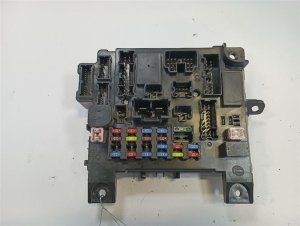
- ETACS-ECU / Junction Block — Located behind the glove box, integrated into the interior fuse panel assembly.. This is the physical location of the module itself. It is crucial for visual inspection (especially for water damage), connector checks, and performing power/ground tests directly at the unit.
- Connectors C-309, C-315, C-317 — These are specific multi-pin connectors that plug directly into the ETACS-ECU.. Service manual procedures reference these specific connectors for power and ground tests. For example, Pin 1 of C-309 is a power input, while Pin 17 of C-315 and Pin 15 of C-317 are ground circuits.
- IOD Fuse — Located in the engine compartment fuse box, often with a distinct white or yellow pull-tab housing.. This fuse provides constant power to the ETACS-ECU. On related Mitsubishi platforms, an improperly seated IOD fuse is a very common cause of code U0141 and should be checked before any other diagnosis.
Model Year Variations Within This Range
- 2016-2017: While there were trim and feature differences between 2016 and 2017 models (e.g., engine options, availability of sunroofs, standard backup camera), there is no evidence of changes to the core electrical system, ETACS-ECU design, or CAN bus architecture that would alter the diagnosis or common causes for code U0141. The relevant TSBs from Mitsubishi cover both model years.
Helpful Videos

We Have This Part in Stock

The information in this article is provided for general reference and educational purposes only. Vehicle specifications, procedures, and part compatibility can vary by production date, trim level, and region. Always consult your vehicle's factory service manual and verify part numbers before purchasing or performing repairs. Safety-critical components such as airbags, seat belts, and braking systems should be installed by a qualified professional.
- Mitsubishi LANCER:
- 🎬 Helpful Videos
- 🛍️ Shop This Part
- What's Unique About the 2016-2017 Mitsubishi LANCER
- Diagnostic Flowchart
- Symptoms You May Notice
- Most Likely Causes
- Rare But Worth Checking
- Diagnosis Steps
- Parts You'll Likely Need
- Related Codes That Often Appear With This One
- Technical Service Bulletins (TSBs) & Recalls
- Platform-Specific Known Issues
- Mechanic-Grade Diagnostic Values
- Hidden / Shadow Codes Worth Checking
- Scan Tool Commands That Help
- Wiring & Ground Locations
- Model Year Variations Within This Range
- 🎟️ Get 5% Off