

U0140 on 2008-2017 Volvo XC60: Lost Communication with CEM Causes and Fixes
This code means a communication failure with the Central Electronic Module (CEM), which controls most of the car's body electronics. The most common cause is a failing CEM itself, often due to water damage from clogged sunroof drains or a leaking windshield. Other causes include wiring issues or a weak battery. Expect to pay $800-$1500 for a replacement and programming at a dealer or independent shop, or around $400-$600 for a repair/cloning service.
- U0140 on a Volvo XC60 means the Central Electronic Module (CEM) has stopped communicating.
- The most common cause is a failed CEM, often due to water damage from clogged sunroof drains.
- Symptoms are widespread and intermittent, affecting lights, windows, locks, wipers, and even starting the car.
- This is not a DIY-friendly fix. The replacement CEM must be professionally programmed to the vehicle.
- Before replacing the CEM, a technician should rule out simpler issues like a weak battery, blown fuses, or damaged wiring.
What's Unique About the 2008-2017 Volvo XC60
On this generation of Volvo XC60 (P3 platform), the Central Electronic Module (CEM) is notoriously prone to failure, often caused by water intrusion. The CEM is located in the passenger footwell, under the glovebox. Design issues like clogged sunroof drains or leaking windshield seals can allow water to soak the module, causing corrosion and electrical shorts. This leads to a wide array of bizarre, intermittent electrical problems that can be difficult to diagnose without suspecting the CEM first. A parasitic battery drain is a very common symptom of a failing CEM.
Symptoms You May Notice
- Multiple, unrelated warning lights on the dashboard (e.g., ABS, SRS, Brake Failure, DTSC temporarily off).
- Erratic or non-functional interior and exterior lights.
- Power windows, door locks, or radio stop working intermittently or completely.
- Wipers turn on randomly or not at all.
- Instrument cluster gauges stop working or go blank.
- No-start or crank-no-start condition, sometimes with an 'Immobilizer' message.
- Key fob not being recognized.
- Parasitic battery drain that kills the battery, sometimes overnight.
- Inability for a scan tool to communicate with the CEM.
- Air conditioning system not working.
- Water sloshing sound heard from under the dashboard or floor area.
- Replacing other modules that are reporting communication loss codes. The U0140 code set in the Brake Control Module (BCM), for example, does not mean the BCM is bad; it means the BCM is not hearing from the CEM.
- Replacing individual components like window motors, light bulbs, or wiper motors when the root cause is the CEM not commanding them to activate.
- Fixing a symptom (like a parasitic drain) without identifying the root cause. A failing CEM is a known cause of parasitic drain on these vehicles.
Most Likely Causes
- Internal Failure of the Central Electronic Module (CEM) due to Water Damage 🔴 High Probability The CEM on the P3 platform is located under the passenger side of the dashboard, directly in the path of water from two common leak points: clogged panoramic sunroof drains 🎬 Watch: How to clear clogged sunroof drains and poorly sealed windshields. Debris clogs the drains, causing water to back up and overflow from the A-pillar tube, dripping directly onto the CEM and its connectors.
How to confirm: Check for dampness in the passenger footwell carpet. Remove the panel under the glovebox to access the CEM. Visually inspect the CEM, its connectors, and surrounding wiring for green/white corrosion, water stains, or a burnt smell. After drying the connectors, it is recommended to pack them with dielectric grease to prevent future moisture intrusion. A professional scan tool will show no communication with the CEM, while other modules log U0140.
Typical fix: Replace the Central Electronic Module. The new module must be programmed to the vehicle by a dealer or a qualified independent shop. Alternatively, the original module can be sent to a specialist service (like XeMODeX or Volvo Diagnostic) for repair and data cloning, which avoids the need for software reloading. The source of the water leak (clogged drains or windshield seal) MUST be repaired to prevent repeat failure.
Est. part cost: $700-$1100 (New OEM), $400-$600 (Repair/Cloning Service) - CAN Network Wiring Issues 🟡 Medium Probability Wiring harnesses can experience chafing, especially in areas where they pass through the firewall or behind the dashboard. A 2017 XC60 with similar symptoms was traced to a CAN wire shorting to a metal bracket behind the radio.
How to confirm: Visually inspect the wiring harnesses connected to the CEM for damage, corrosion, or loose pins. A technician can use a multimeter to test the CAN bus wires for proper resistance (should be around 60 ohms between CAN-High and CAN-Low at the DLC with the battery disconnected). An oscilloscope can be used to check for a clean square wave signal on both CAN lines.
Typical fix: Repair the damaged section of the wiring harness. Clean or replace corroded connectors and apply dielectric grease. In one documented case, insulating a chafed wire behind the radio with foam padding restored communication.
Est. part cost: $10-$150 - Poor Power or Ground Connection to CEM ⚪ Low Probability
How to confirm: Using a multimeter, verify that the CEM has a stable 12V power supply on the correct pins and a solid ground connection (<0.1 Ω resistance to chassis ground). Check for blown fuses related to the CEM in both the engine bay and interior fuse panels. A user on a Volvo forum fixed a U0140 code on a similar car by replacing a blown fuse after incorrectly jump-starting the vehicle.
Typical fix: Clean or repair the ground connection point (e.g., ground points 31/3 or 31/4). Replace any blown fuses and diagnose the cause of the overcurrent. Repair the power supply wire if it is damaged.
Est. part cost: $5-$50
Rare But Worth Checking
- Weak or Failing Vehicle Battery: Low system voltage (<12.4V) can cause unpredictable communication errors between modules. Before diagnosing complex network faults, always ensure the battery is fully charged, passes a load test, and has clean, tight terminals.
Diagnosis Steps
- Scan all vehicle modules for Diagnostic Trouble Codes (DTCs). Use a Volvo-specific scanner like VIDA to check for communication with the CEM and for any CEM-specific codes (e.g., CEM-1Axx).
- Check the vehicle's battery. Ensure it is fully charged (12.6V+ at rest, 13.7-14.7V engine running) and passes a load test. Terminals must be clean and tight.
- Check fuses for the Central Electronic Module (CEM) in the fuse boxes located in the engine bay and passenger compartment.
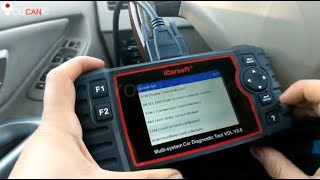
- Access the CEM, located in the passenger footwell 🎬 See this step-by-step CEM diagnostic guide under the glovebox area.
- Perform a thorough visual inspection. Disconnect the CEM connectors and look for any signs of water damage, blue or green corrosion on the module's pins or in the connector terminals. Check for damp carpets or water stains in the area.
- If no damage is visible, use a multimeter to verify that the CEM is receiving proper battery voltage and has a solid ground connection on the appropriate connector pins (refer to a vehicle-specific wiring diagram). Ground resistance should be less than 0.1 Ohms.
- Test the CAN network wiring. With the battery disconnected, measure the resistance between CAN-High (Pin 6) and CAN-Low (Pin 14) at the OBD-II port. It should be approximately 60 Ohms. A reading of 120 Ohms indicates an open in the circuit or a terminating resistor is offline. A reading near 0 Ohms indicates the wires are shorted together.
- If wiring, power, and ground are all confirmed to be good, the CEM itself is the most likely culprit. The module should be sent to a specialist for testing and repair/cloning, or replaced with a new unit that is then programmed by a dealer.
Parts You'll Likely Need
- Central Electronic Module (CEM)
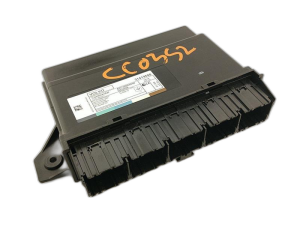
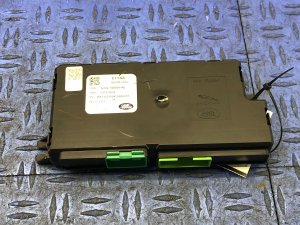
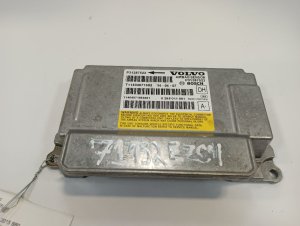
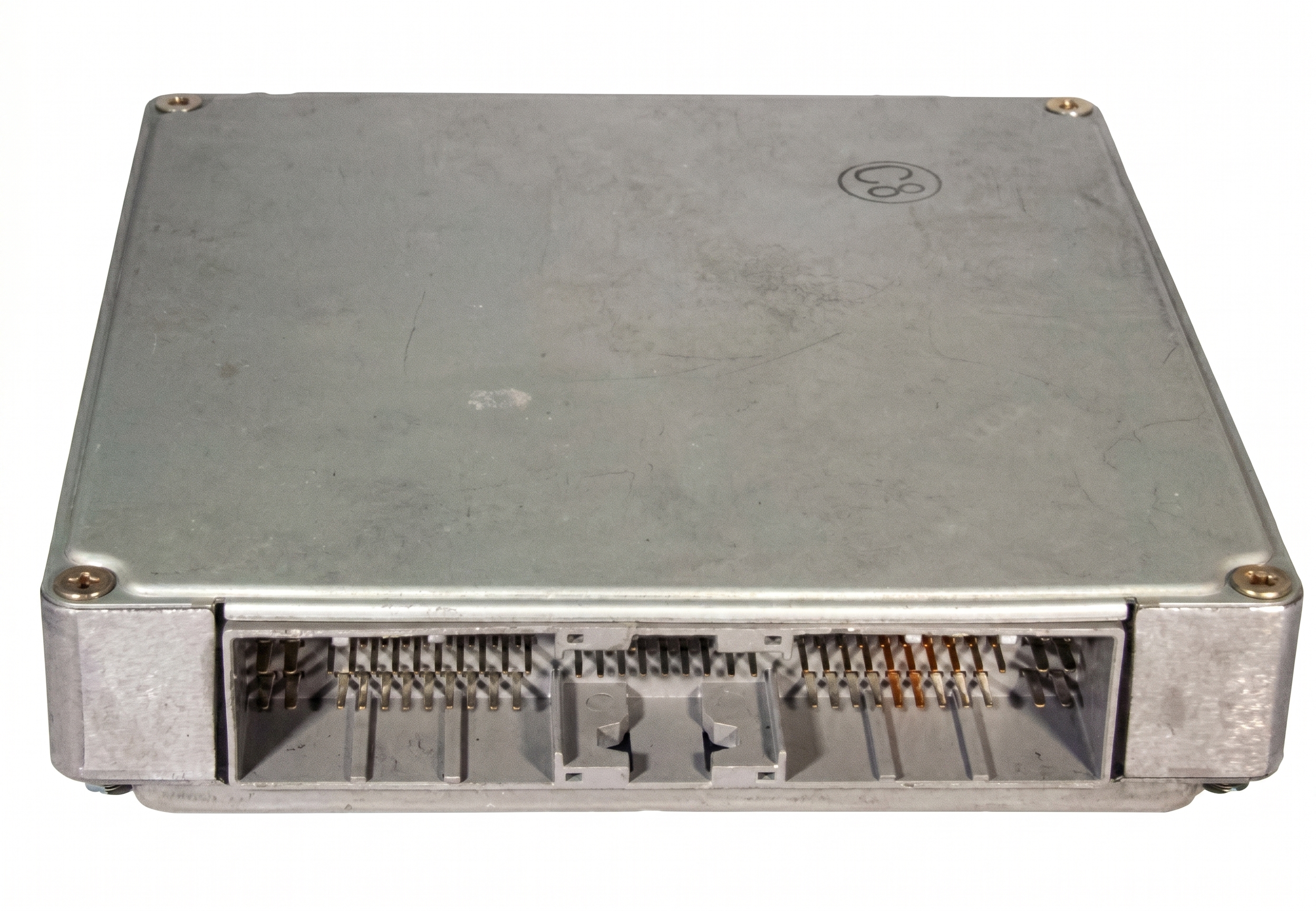
(OEM #31394157 (Example, part number varies by year and vehicle options, always verify with VIN))— This module is the primary cause of code U0140 on this platform, often failing due to its vulnerable location and susceptibility to water damage from clogged sunroof drains.
Trusted brands: Volvo (OEM), XeMODeX (Remanufacturing/Cloning Service), Volvo Diagnostic (Remanufacturing/Cloning Service)
OEM price range: $700-$1100
Aftermarket price range: $400-$600 (for repair/cloning service)
Related Codes That Often Appear With This One
- U0073 — Control Module Communication Bus 'A' Off. This is another general network code that often appears alongside U0140, indicating a broader communication system failure.
- Multiple U-codes — When the CEM goes offline, many other modules in the car will lose communication with it and set their own 'U' codes (e.g., U0100, U0155, U0101), indicating they are not receiving expected signals from the CEM.
- CEM-1A5F — This is a Volvo-specific code stored in the CEM itself, meaning 'Communication with BCM control module signal missing'. This often points towards an issue with the ABS/Brake Control Module, but when seen with U0140 in other modules, it indicates a wider network problem.
- CEM-1A51 through CEM-1A64 — This is a range of Volvo-specific codes visible in VIDA that indicate the CEM has lost communication with a specific module. For example, CEM-1A52 means 'Communication with DDM (Driver Door Module) signal missing'. Seeing multiple codes in this range points to a network-wide issue.
Technical Service Bulletins (TSBs) & Recalls
- While no specific TSB for U0140 was found, several TSBs exist for related water leak issues that cause it. For example, GM TSB 23-NA-087 discusses how a leaking sunroof drain can cause communication loss with control modules, illustrating a common industry problem. A Volvo TSB for parasitic battery drain (TJ 25733) involves a CEM software update (PN 31270560 for XC60), indicating Volvo is aware of CEM-related electrical issues.
Platform-Specific Known Issues
- The location of the CEM in the passenger footwell makes it extremely vulnerable to water damage from clogged sunroof drains, a common problem on the XC60.
- A YouTube video by user 'Fixing cars and stuff' shows the exact process of testing the sunroof drain and finding it disconnected inside the A-pillar, leading to water ingress.
Mechanic-Grade Diagnostic Values
- CAN Bus Network Resistance — expected: ~60 Ω. Failure: A reading of ~120 Ω indicates an open circuit or a missing terminating module/resistor. A reading near 0 Ω indicates a short between the CAN High and CAN Low wires.
- CEM Ground Connection Resistance — expected: < 0.1 Ω. Failure: A higher resistance value indicates a poor ground connection, which can cause intermittent module operation.
- System Voltage — expected: ~12.6V (engine off), 13.7V - 14.7V (engine running). Failure: Low voltage can cause random communication faults between modules.
- CAN Bus Wire Colors (Medium Speed) — expected: CAN High: White, CAN Low: Green (General Volvo) OR CAN High: Grey/Orange, CAN Low: Violet/Orange (Specific to '09 XC60 Intermediate Bus).. Failure: Incorrectly identifying wires can lead to improper diagnosis. Always verify with a vehicle-specific diagram.
Hidden / Shadow Codes Worth Checking
- CEM-1A51 to CEM-1A64: This range of Volvo-specific DTCs indicates the CEM has lost communication with another specific module on the network. For example, CEM-1A52 is 'Communication with DDM control module Signal missing'. These are more specific than a generic U0140. (see via A Volvo-specific diagnostic tool like VIDA/DICE is required to read these codes from the CEM.)
Scan Tool Commands That Help
- Volvo VIDA: CEM Reload — This function is required after replacing the CEM. It is a complete software installation that downloads vehicle-specific data, configuration, and security information (including keys) to a new, virgin module. It is not a simple update.
- Volvo VIDA: Hardware Changes — After physically installing a new module, this function is used to perform a vehicle readout. VIDA then identifies the new hardware and adds the necessary 'Reload' software to the download queue.
- OBDStar / Advanced Scan Tools: CEM Crash Reset — If the vehicle has been in an accident, the CEM may store crash data and lock itself. This function can reset the crash flag, potentially saving the module without needing a full replacement.
Wiring & Ground Locations
- CAN Bus Chafe Point — Behind the radio/infotainment unit. The medium-speed CAN bus wires can rub against a metal support bracket.. A short-to-ground on either CAN wire at this location can bring down the entire medium-speed network, causing the CEM to lose communication with multiple modules and triggering U0140.
- Ground Point 31/4 — Located on the A-pillar.. This is a key grounding point for components in the dashboard area. Corrosion or a loose connection here can cause intermittent power issues for the CEM or other nearby modules.
- Ground Point 31/3 — Located on the firewall in the engine compartment.. A primary ground point for systems passing through the firewall. A bad connection here can cause a host of electrical issues, including module communication problems.
- CEM Connectors C1, C2, C3, C4 — The four large multi-pin connectors that plug into the Central Electronic Module itself, under the passenger side dashboard.. These are the direct interface for all power, ground, and network signals to the CEM. They are highly susceptible to corrosion from water intrusion from clogged sunroof drains.
Real Owner Repair Stories
- Snap-on Diagnostic Case Study (2017 Volvo XC60 2.0L (B4204T11)) — Multiple intermittent electrical failures related to the body system, including faults in the Driver and Passenger Door Modules.
❌ Tried (didn't work) Inspecting wiring looms at the doors.
✅ What actually fixed it A medium-speed CAN bus wire was found to be chafed and shorting to a metal bracket behind the radio. The wire was repaired and insulated with a foam pad to prevent recurrence. - Swedespeed Forum User (2009 Volvo XC60) — Instrument cluster, infotainment, seats, windows, and locks were all broken (blank cluster). Scan tool could not communicate with CEM. Car would run and drive.
❌ Tried (didn't work) Initial assumption was a failed CEM.
✅ What actually fixed it The owner diagnosed a short circuit on the intermediate-speed CAN bus. By unplugging a large harness connector (74-504) located above the CEM, the short was isolated to the wiring harness running towards the rear of the vehicle, proving the CEM itself was likely not the source of the short.
OEM Part Supersession History
30786890, 30786579, 31282455→31394157 (example)— Part revision and update by the manufacturer.
Heads up: Part numbers are highly specific to the vehicle's model year and installed options (e.g., sunroof, premium audio). The wrong part number may physically fit but will not function correctly. Always verify the correct part number for your VIN. A used CEM cannot be programmed by a Volvo dealer; it must be cloned.
Model Year Variations Within This Range
- 2014-2017 (Facelift models): The 2014 model year introduced a major facelift. The Blind Spot Information System (BLIS) was changed from a camera-based system in the mirrors to a radar-based system in the rear bumper. The instrument cluster was also updated to a digital TFT display. These changes mean the associated control modules, wiring, and software are different from pre-2014 models, which can affect network diagnostics.
Diagnostic Flowchart
Other Known Issues on This Vehicle
Issues unrelated to this code that are worth knowing about as an owner of this generation:
- Excessive Oil Consumption (2.0L & 2.5L Engines) 🔴 High — Common on 2014-2016 models, particularly T5 engines. Often caused by faulty piston rings from the factory. Can start at low mileage (under 10,000 miles in some cases). (Ref: Volvo issued a warranty extension for some vehicles to cover piston ring replacement.)
- Automatic Transmission Problems (Powershift & Geartronic) 🟠 Medium — Issues like hesitation, rough/jerky shifting, or slipping can occur. The earlier 6-speed Geartronic can be less smooth than the later 8-speed. Problems can be caused by fluid degradation, electronic faults, or internal wear.
- Clogged Sunroof Drains Leading to Water Leaks 🔴 High — Very common across the entire generation. Debris easily clogs the four drain tubes, causing water to overflow into the cabin, damaging electronics and soaking carpets. (Ref: No recall, but it is a widely documented problem. Regular cleaning is recommended as preventative maintenance.)
- Leaking Windshield Seal 🟠 Medium — Reported on earlier models of the generation. The factory bonding of the windscreen can fail, allowing water to leak into the cabin, often affecting the CEM.
- Clogged EGR Valve (Diesel Engines) 🟠 Medium — Common on Euro 6 diesel models (especially D4). Soot buildup can clog the EGR system, leading to a check engine light and performance issues.
- Failing Power Tailgate Struts/Motor 🟡 Low — The powered tailgate struts can weaken or fail, causing the tailgate to not open/close properly. A recall was issued for some model years due to the tailgate lifting arm potentially separating. (Ref: Recall issued for certain model years for tailgate lifting arm separation.)
Used vs. New Parts: Buying Guide for This Vehicle
When a used part is the smart pick: A used CEM is a smart choice ONLY if you send it, along with your original failed CEM, to a specialized electronics repair service. These services can clone the immobilizer data, VIN, and vehicle configuration from your old module to the used one, making it plug-and-play.
Donor-vehicle mileage cap: roughly under 150000 miles for the part to have meaningful remaining life.
What to inspect on the donor part:
- Verify the part number on the used CEM EXACTLY matches a compatible number for your vehicle's VIN and options.
- Inspect the donor vehicle's history if possible. Avoid parts from flood-damaged cars.
- Visually inspect the pins on the used CEM for any signs of corrosion, bending, or water damage before purchasing.
OEM-only on this vehicle (don't cheap out):
- New Central Electronic Module (CEM): If you intend to have a Volvo dealership perform the repair, they will only install and program a brand-new, virgin module that they source themselves. They cannot and will not program a used CEM.
Aftermarket brands forum-validated for this vehicle:
- XeMODeX (Repair/Cloning Service)
- Volvo Diagnostic (Repair/Cloning Service)
Brands owners have reported issues with on this vehicle:
- No specific brands to avoid, but be wary of any seller offering a 'plug-and-play' used CEM without performing a cloning service from your original module, as it will not work.
Real Owner Stories
Aggregated from forums and TSBs cited above. Mileages and costs reflect what owners reported in those sources.
2017 Volvo XC60
Symptoms: The vehicle experienced communication issues traced to a CAN wire shorting against a metal bracket located behind the radio.
What fixed it: Insulating the chafed section of the wiring harness with foam padding to prevent it from shorting against the bracket.
Source hint: Article context common_causes section
Volvo S60 (P3 Platform)
Symptoms: Owner received a U0140 code and an 'Immobilizer' error message immediately after an incorrect jump-start attempt.
What fixed it: Replacing a blown fuse that was damaged during the jump-start, which restored power to the CEM.
Source hint: volvoforums.com thread 'cem communication lost 92210'
Volvo XC70 (P3 Platform)
Symptoms: Multiple communication codes including CEM-1A5F appeared after the vehicle was exposed to heavy rain.
What fixed it: The issue was identified as a BCM/CEM network failure likely caused by water ingress affecting the module communication.
Source hint: volvoforums.org.uk thread regarding CEM-1A5F after heavy rain
Volvo XC60
Symptoms: Water found in all four footwells of the vehicle, leading to concerns about electrical module damage.
What fixed it: Unclogging the front sunroof drains to stop the water ingress into the cabin and footwell areas.
Source hint: SwedeSpeed forum thread 'water in all four wells of xc60'
Related OBD-II Codes
Frequently Asked Questions
Is there a Volvo TSB for the parasitic battery drain I'm experiencing on my XC60?
I hear a water sloshing sound under my dashboard; could this cause the U0140 code?
Can I use a repair service for my CEM instead of buying a new one from the dealer?
Where is the Central Electronic Module (CEM) located on my 2008-2017 XC60?
How can I check if my sunroof drains are the cause of my electrical issues?
Will a standard OBD-II scanner tell me if the CEM is failing?
Helpful Videos
We Have This Part in Stock



The information in this article is provided for general reference and educational purposes only. Vehicle specifications, procedures, and part compatibility can vary by production date, trim level, and region. Always consult your vehicle's factory service manual and verify part numbers before purchasing or performing repairs. Safety-critical components such as airbags, seat belts, and braking systems should be installed by a qualified professional.
- Volvo XC60:
- 🎬 Helpful Videos
- 🛍️ Shop This Part
- What's Unique About the 2008-2017 Volvo XC60
- Symptoms You May Notice
- Most Likely Causes
- Rare But Worth Checking
- Diagnosis Steps
- Parts You'll Likely Need
- Related Codes That Often Appear With This One
- Technical Service Bulletins (TSBs) & Recalls
- Platform-Specific Known Issues
- Mechanic-Grade Diagnostic Values
- Hidden / Shadow Codes Worth Checking
- Scan Tool Commands That Help
- Wiring & Ground Locations
- Real Owner Repair Stories
- OEM Part Supersession History
- Model Year Variations Within This Range
- Diagnostic Flowchart
- Other Known Issues on This Vehicle
- Used vs. New Parts: Buying Guide for This Vehicle
- Real Owner Stories
- 2017 Volvo XC60
- Volvo S60 (P3 Platform)
- Volvo XC70 (P3 Platform)
- Volvo XC60
- Related OBD-II Codes
- Frequently Asked Questions
- 🎟️ Get 5% Off