

U0140 on 2019-2024 Dodge Durango: Lost Communication with BCM Fixes
On a 2019-2024 Dodge Durango, code U0140 means the Body Control Module (BCM) has lost communication with other vehicle computers. The most common fixes involve checking for software updates as per manufacturer bulletins, inspecting wiring connections and grounds to the BCM for corrosion, or addressing a weak or failing battery before considering BCM replacement.
- U0140 on a Dodge Durango indicates a communication failure with the Body Control Module (BCM).
- Before replacing any parts, test the battery and check for BCM software updates, as these are common and less expensive fixes.
- Thoroughly inspect the BCM's wiring and connectors for corrosion or damage, as directed by a manufacturer TSB.
- Due to the complexity of vehicle networks, professional diagnosis with a proper scan tool is highly recommended.
- If the BCM must be replaced, it will require programming to the vehicle's VIN and specific options.
What's Unique About the 2019-2024 Dodge DURANGO

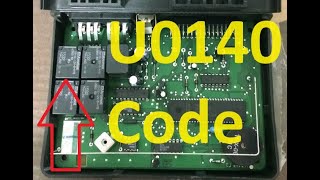
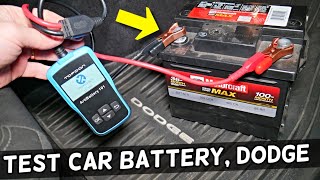
For modern Dodge vehicles like the Durango, the electrical system is highly integrated, making the BCM a critical communication hub. The manufacturer, Stellantis (formerly FCA), has issued specific Technical Service Bulletins (TSBs) for this exact code, acknowledging it as a known issue that is often software-related. [Bulletin #S2308000138, Bulletin #9100215] This indicates that the problem is frequently related to specific software logic or connection integrity rather than just random component failure. 🎬 Watch: Common causes and fixes for the U0140 BCM code. The platform's sensitivity to voltage drops also makes battery and ground checks a crucial first step. 🎬 See how to properly load test your Dodge Durango battery. All 2018 and newer models, including this Durango range, are equipped with a Secure Gateway Module (SGW) that blocks certain diagnostic commands from the OBD-II port, requiring a specific bypass cable or an authenticated scan tool for full diagnosis and programming.
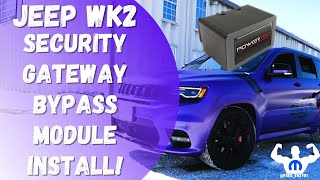
🎬 Watch: How to install a Security Gateway bypass module.Diagnostic Flowchart
Tap your situation to follow the diagnostic path that matches what you're seeing on this vehicle.
Symptoms You May Notice
- Check Engine Light is on
- Warning messages on the instrument cluster (e.g., for stability control, security system).
- Interior or exterior lights not working, flickering, or staying on.
- Power windows, door locks, or remote keyless entry not functioning.
- Wipers behaving erratically or not working.
- Vehicle may not start or has a crank-no-start condition.
- Poor acceleration or rough running if communication loss affects engine-related data.
- Unexplained battery drain overnight.
- Instrument panel going blank or resetting intermittently.
- ABS and Traction Control lights illuminated, as these systems rely on BCM data.
- Replacing the BCM without first checking for software updates, testing the battery, or inspecting wiring and ground connections.
- Replacing the Powertrain Control Module (PCM) or other modules when the fault lies with the BCM's communication line.
- Ignoring a weak battery because the vehicle still starts, not realizing the low voltage is causing module communication to drop out intermittently.
- Focusing only on the BCM and its wiring, without considering that another faulty module on the network could be the root cause of the communication failure.
Most Likely Causes

- Wiring or Connector Issues 🔴 High Probability TSB #9100215 explicitly directs technicians to check module connections, suggesting this is a primary point of failure. The BCM connectors or CAN bus wiring can suffer from corrosion, moisture, or backed-out pins.
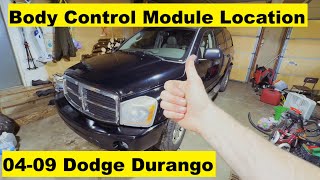
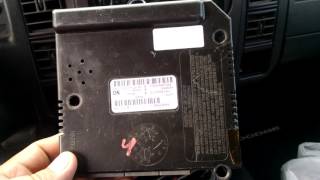
How to confirm: Visually inspect the wiring harnesses and connectors at the BCM for any signs of damage, corrosion, moisture, or loose pins. The BCM is typically located in the driver's side footwell area, under the dashboard. A multimeter can be used to check for continuity and shorts on the CAN bus wires (typically a twisted pair).
Typical fix: Clean any corrosion from connectors using an electrical contact cleaner and apply dielectric grease. Repair or replace any damaged wires and ensure all connectors are fully seated.
Est. part cost: $5-$50 - BCM Software Glitch 🟡 Medium Probability TSB #S2308000138 mentions modules setting this fault, which is often resolved with a software update to improve communication logic. This is a common fix for many modern Dodge/Chrysler/Jeep vehicles.
How to confirm: A Dodge dealership or a qualified shop with a wiTECH scan tool can check if there are any available software updates for the Body Control Module or related modules by comparing the vehicle's current software version to the latest available from the manufacturer.
Typical fix: Reprogramming ('flashing') the BCM or related modules with the latest manufacturer software. This must be done by a dealer or properly equipped independent shop and often requires a stable power supply during the process.
Est. part cost: $0-$250 (Labor for flashing) - Weak or Failing Battery / Poor Grounds 🟡 Medium Probability All modern vehicles with complex networks are sensitive to low voltage, which can cause modules to randomly drop off the communication network. Forum users frequently report that a weak battery caused a cascade of communication codes, including U0140.
How to confirm: Test the battery with a digital multimeter or a load tester. A healthy, fully charged battery should read approximately 12.6 volts with the engine off and 13.7-14.7 volts when running. Inspect battery terminals and main chassis ground points for corrosion or looseness. A common ground point is from the battery negative to the chassis; another critical one runs from the chassis to the engine block.
Typical fix: Clean battery terminals and ground points with a wire brush. If the battery fails a load test, it must be replaced. Ensure the new battery meets or exceeds OEM specifications.
Est. part cost: $150-$350 - Failed Body Control Module (BCM) ⚪ Low Probability While less common than wiring or software issues, the BCM itself can fail internally due to moisture intrusion, vibration, or electronic component failure.
How to confirm: This is typically diagnosed by exclusion. If the battery, wiring, grounds, and software are all confirmed to be good, the BCM is the likely culprit. An advanced scan tool may show the BCM as completely offline and unresponsive. A technician may also check for power and ground directly at the BCM connector; if both are present but the module is dead, it has failed.
Typical fix: Replace the Body Control Module. The new module must be programmed to the vehicle's specific VIN and options, a task for a dealer or specialized shop.
Est. part cost: $300-$500
Rare But Worth Checking
- CAN Bus Network Fault: Damage to the CAN bus wiring anywhere in the vehicle (not just at the BCM) can disrupt the entire network. This could be from rodent damage, previous accident repairs, or corrosion in an unrelated harness. A technician can test the resistance between pins 6 and 14 of the OBD-II port, which should be around 60 ohms if the main network is intact. A fault in a central 'Star Connector' where multiple CAN branches meet can also cause this issue.
- Aftermarket Device Interference: Improperly installed aftermarket accessories like remote starters, alarms, audio equipment, or even cheap phone chargers can introduce electrical noise or draw excessive power, interfering with the CAN bus network and causing communication codes.
- Faulty Module on the Network: A different module on the same CAN bus can fail in a way that it 'screams' gibberish onto the network, preventing other modules from communicating. A documented case on a similar platform showed a faulty Electronic Shifter Module (ESM) was the true cause of a U0140 code by bringing down the entire network. This is diagnosed by isolating modules one by one at the Star Connector.
Diagnosis Steps
- Check and record all diagnostic trouble codes (DTCs) from all vehicle modules using a capable scan tool. Note if the U0140 code is 'active' or 'stored'/'permanent'.
- Test the battery's state of charge and health. Ensure voltage is stable (above 12.4V engine off, 13.7-14.7V engine running). A simple voltage check is not enough; a load test is required.
- Inspect the battery terminals and main chassis ground points for cleanliness and tightness. Key ground straps include the main battery-to-chassis and engine-to-chassis straps.
- Check fuses related to the BCM and other control modules in the Power Distribution Center (PDC).
- Visually inspect the BCM and its electrical connectors for corrosion, moisture, or damage. The BCM is usually located under the dashboard on the driver's side.
- Consult with a dealer to see if TSBs #S2308000138 or #9100215 apply and if a software update is available for your VIN.
- If wiring and software are good, perform advanced network diagnostics. This includes checking CAN bus resistance (should be ~60Ω between pins 6 and 14 on the DLC) and voltages to isolate the fault. This may require a Secure Gateway (SGW) bypass cable.
- If all other possibilities are eliminated and the BCM has confirmed power and ground but still won't communicate, the BCM itself is the likely point of failure and requires replacement and programming.
Parts You'll Likely Need

- Body Control Module (BCM)
(OEM #68438337AE (supersedes 68438337AB, 68438337AC, 68438337AD). Part numbers vary by year and options, must verify with VIN.)— This is the module that has lost communication. It is replaced only after wiring, grounds, and software issues have been ruled out.
Trusted brands: Mopar
OEM price range: $330-$480
Aftermarket price range: $200-$400 - Battery Ground Jumper Cable
(OEM #68252094AC (Example for 3.6L, verify by VIN))— Ground cables can corrode or break, leading to intermittent voltage and communication issues. Replacing a suspect ground is an inexpensive and common fix.
Trusted brands: Mopar
OEM price range: $25-$50
Aftermarket price range: $15-$30
Related Codes That Often Appear With This One
- U-series codes (e.g., U0100, U0155) — Multiple U-codes indicate a widespread network communication problem, not just an issue with a single module. This often points towards a central issue like a bad battery, a fault in the main CAN bus wiring, or a faulty gateway module.
- P0335 (Crankshaft Position Sensor) — In some cases, a major electrical fault or communication breakdown can trigger seemingly unrelated sensor codes. A user on DodgeForum.com reported P0335 appearing alongside U0140 after a difficult start, which was suspected to be caused by a low voltage event.
Technical Service Bulletins (TSBs) & Recalls

- S2308000138: Addresses modules setting U0140-00 Loss of Communication with the Body Control Module, often resolved by a software update.
- 9100215: Advises following standard diagnostic procedures for U0140 and emphasizes checking that all module connections are secure.
Platform-Specific Known Issues
- TSB S2308000138 - Software Update: Dodge has issued Technical Service Bulletin #S2308000138 for a condition where one or more modules set the U0140-00 fault code. The prescribed fix is often a software reflash of the affected module(s) to improve communication stability. [Bulletin #S2308000138]
- TSB 9100215 - Check Connections: Dodge has also issued TSB #9100215, which advises technicians to follow published diagnostic information for U0140 and to specifically ensure all module connections are secure, highlighting that physical connection integrity is a known problem area. [Bulletin #9100215]
- Battery Voltage Sensitivity: Owners on forums for the Durango and its platform-mate, the Jeep Grand Cherokee, frequently report that a flurry of communication codes, including U0140, appeared when the battery was starting to fail, even if it could still start the car. A load test of the battery is a critical first step.
Mechanic-Grade Diagnostic Values
- CAN Bus Voltage (Key On, Engine Off) — expected: CAN High wire should be ~2.6V and CAN Low wire should be ~2.4V in the recessive state (idle). During data transmission (dominant state), CAN High goes to ~3.5V and CAN Low drops to ~1.5V.. Failure: Voltages stuck high or low, or shorted to ground/power indicate a wiring fault. No voltage suggests a module or power issue.
- CAN Bus Network Resistance — expected: ~60 Ohms between Pin 6 (CAN-H) and Pin 14 (CAN-L) of the OBD-II port with the battery disconnected.. Failure: A reading of ~120 Ohms indicates a missing terminating resistor or an open in the circuit. A reading near 0 Ohms indicates a short between the CAN High and Low wires.
Hidden / Shadow Codes Worth Checking
- U0140-00: This is the most common sub-code for U0140 on this platform, as seen in TSB #S2308000138. The '-00' suffix typically means 'No Subtype Information,' indicating a general timeout where a module expected a message from the BCM but did not receive it in the calibrated time frame. (see via A professional scan tool like Mopar's wiTECH or other high-end scanners capable of reading manufacturer-specific codes.)
Scan Tool Commands That Help
- wiTECH 2.0: Vehicle Topology View — This is the primary diagnostic screen for a U-code. It displays a network map of all vehicle modules, color-coding them to show which are active (blue), have faults (yellow), or are non-responsive (red). For U0140, a technician would check if the BCM is red or if other modules are also offline, which helps pinpoint the scope of the network failure.
- wiTECH 2.0: View All Flashes — Used to check for available software updates for any module on the vehicle. As per TSB #S2308000138, a software glitch is a known cause for U0140. This function allows a technician to see if a corrective flash is available for the BCM or a related module.
Wiring & Ground Locations

- Body Control Module (BCM) — Located under the driver's side of the dashboard, often behind the lower trim panel or kick panel.. This is the module that has lost communication. Its connectors are a primary inspection point for corrosion, moisture, or loose pins.
- Star Connector / CAN Bus Junction — Typically located behind the dashboard, often near the radio or glove box area. On many Chrysler products, there is a brown connector for the interior (IHS) bus and a green one for the powertrain (CAN-C) bus.. This is a central diagnostic point where multiple network branches connect. A technician can disconnect branches one by one to isolate which part of the network (or which module) is causing the communication fault, which is essential if the BCM itself is not the root cause.
- Secure Gateway Module (SGW) Connectors — For 2018+ models, the SGW is located behind the dash, often near the Star Connector or radio. A bypass cable is typically plugged in here.. The SGW must be bypassed to perform many advanced diagnostics, such as bidirectional commands or module flashing. Without a bypass, a technician's ability to diagnose the network is limited.
- Engine/Chassis Ground — A critical ground strap runs from the chassis to the engine block. On the 5.7L V8, a key ground is located on the passenger side of the engine block, near the alternator.. A poor ground connection at this point can cause unstable voltage across the entire vehicle, leading to intermittent communication failures between modules.
Real Owner Repair Stories
- Go-Parts Blog, documented repair (2019 Dodge Charger (shared platform/architecture)) — No-start condition with multiple communication codes, including U0140.
❌ Tried (didn't work) Initial diagnosis focused on the BCM, its power, and its ground, which all checked out as good.
✅ What actually fixed it The root cause was a faulty Electronic Shifter Module (ESM) that was internally shorted, bringing down the entire CAN C network. The fault was identified by isolating modules at the central star connector and finding that the network came back online when the ESM was disconnected. Replacing the ESM resolved all codes. - Reddit user post (2014 Dodge Durango SXT (similar principle)) — Instrument cluster blinking, multiple ABS, power steering, and shifter failure warnings, and code U0140 after driving through water.
❌ Tried (didn't work) Letting the vehicle dry out, but the problem returned.
✅ What actually fixed it The owner suspected a connector got wet. After locating the relevant connector, they cleaned it and applied WD-40, which resolved the issue. This highlights the system's sensitivity to moisture in connectors.
"I Checked Everything" — The Actual Cause
- In a documented case on a similar platform (2019 Charger), a U0140 code was present with a no-start condition. Standard diagnostic checks on the BCM's power, ground, and direct wiring connections would have passed inspection. The actual cause was an internally shorted Electronic Shifter Module (ESM) located elsewhere on the CAN network. The fault was only found after using the Star Connector as a diagnostic point to disconnect network branches one by one, which revealed the ESM was the component bringing the entire network down.
OEM Part Supersession History
68438337AB, 68438337AC, 68438337AD→68438337AE— Standard part revision by the manufacturer to address potential hardware or logic issues.
Heads up: The newest part number (68438337AE) is the correct service replacement for the previous versions. Always verify the correct part number with the vehicle's VIN before ordering.
Model Year Variations Within This Range
- 2019-2024 (and all 2018+ FCA models): All vehicles in this range are equipped with a Secure Gateway Module (SGW). This module prevents direct communication and commands (like clearing codes in certain modules, running bidirectional tests, or programming) from the OBD-II port using non-authenticated tools. A technician requires either an authenticated OEM scan tool (wiTECH 2.0) with a valid subscription or a specific SGW bypass cable that connects directly to the internal network wiring to perform full diagnostics.
Helpful Videos


We Have This Part in Stock



The information in this article is provided for general reference and educational purposes only. Vehicle specifications, procedures, and part compatibility can vary by production date, trim level, and region. Always consult your vehicle's factory service manual and verify part numbers before purchasing or performing repairs. Safety-critical components such as airbags, seat belts, and braking systems should be installed by a qualified professional.
- Dodge DURANGO:
- 🎬 Helpful Videos
- 🛍️ Shop This Part
- What's Unique About the 2019-2024 Dodge DURANGO
- Diagnostic Flowchart
- Symptoms You May Notice
- Most Likely Causes
- Rare But Worth Checking
- Diagnosis Steps
- Parts You'll Likely Need
- Related Codes That Often Appear With This One
- Technical Service Bulletins (TSBs) & Recalls
- Platform-Specific Known Issues
- Mechanic-Grade Diagnostic Values
- Hidden / Shadow Codes Worth Checking
- Scan Tool Commands That Help
- Wiring & Ground Locations
- Real Owner Repair Stories
- "I Checked Everything" — The Actual Cause
- OEM Part Supersession History
- Model Year Variations Within This Range
- 🎟️ Get 5% Off