

U0140 on 2007-2014 Chevrolet Suburban: Lost Communication with BCM Causes and Fixes
U0140 on a 2007-2014 Suburban means the Body Control Module (BCM) has stopped communicating. Before replacing the expensive BCM, inspect for corroded wiring, poor ground connections, and blown fuses, as these are very common causes on this platform and are often referenced in GM's own service bulletins. Key areas to check are wiring harnesses near the transmission and under the driver's side fuse block.
- U0140 on a 2007-2014 Suburban indicates a loss of communication with the Body Control Module, causing widespread electrical problems.
- Do not immediately replace the BCM. The most common cause on this specific vehicle platform is a wiring or ground fault, as documented in GM's own service bulletins.
- A thorough inspection of wiring harnesses for damage, connector pins for corrosion, and chassis grounds for tightness is the critical first step.
- This is not a simple DIY fix. Diagnosing network issues is complex and replacing the BCM requires special programming tools.
- Driving with this code is unsafe due to the potential for stalling, loss of lights, and other unpredictable failures.
What's Unique About the 2007-2014 Chevrolet SUBURBAN

The 2007-2014 Suburban belongs to the GMT900 platform, which is known for electrical issues related to wiring and grounding. General Motors has issued a detailed Technical Service Bulletin (TSB #08-07-30-021H) that directly links code U0140 and other communication failures to problems like chafed wiring harnesses and corrosion in connectors, particularly the 16-way transmission harness connector. Another bulletin, #PIT4730B, notes that the BCM can appear offline intermittently on the high-speed bus, reinforcing that this is often a transient wiring or connection issue, not a hard BCM failure. This means that on these specific trucks, a U0140 code is very often a wiring or connection problem, not necessarily a failed BCM.
Diagnostic Flowchart

Tap your situation to follow the diagnostic path that matches what you're seeing on this vehicle.
Symptoms You May Notice

- Multiple warning lights on the instrument panel (Check Engine, ABS, Traction Control).
- Vehicle may not crank or start.
- Transmission may not shift correctly or may be stuck in one gear ("limp mode"). [⭐]
- Power windows, door locks, and mirrors stop working.
- Interior and exterior lights may flicker, stay on, or not work at all.
- Instrument panel gauges fluctuate wildly or go dead. [⭐]
- Audible chimes operate erratically. [⭐]
- HVAC/Blower motor becomes inoperative.
- "Service Traction System" message appears on the Driver Information Center (DIC).
- Replacing the Engine Control Module (ECM) or Transmission Control Module (TCM) when they are simply reporting a communication loss with the BCM.
- Replacing the battery or alternator without confirming they are the root cause of the low voltage that may have triggered the code.
- Replacing the BCM without first thoroughly inspecting all related wiring and grounds as outlined in GM's TSBs.
Most Likely Causes

- Chafed, Corroded, or Damaged Wiring Harness 🔴 High Probability As documented in TSB #08-07-30-021H, wiring harnesses on this platform can rub against chassis or engine components, leading to shorts or open circuits in the GMLAN communication network. [⭐] A common failure point mentioned in forums is the harness that runs down from the underhood fuse block, across the frame rail, where it can chafe through and short wires. Water intrusion into the 16-pin transmission connector is also a primary cause identified by GM. [⭐]
How to confirm: Visually inspect major wiring harnesses, especially where they pass through the firewall, under the fuse block near the battery, and near the transmission. Check major connectors for green or white corrosion. A multimeter can be used to check for continuity and shorts on the CAN bus wires (Pins 6 and 14 at the OBD-II port should show ~60 Ohms of resistance with the battery disconnected).
Typical fix: Repairing the damaged section of wire or cleaning/replacing the corroded connector. The TSB advises protecting the repaired harness from sharp edges with butyl tape and PET electrical tape. [⭐]
Est. part cost: $10-$50 - Poor Ground Connections 🔴 High Probability GM vehicles of this era are susceptible to poor grounds, which can cause floating voltages and disrupt module communication. GM TSB #07-08-47-004E specifically warns that disconnecting a BCM ground while the battery is connected can damage the module. This highlights their sensitivity to ground issues.
How to confirm: Locate the main BCM ground points. On GMT900 trucks, key grounds are G201 (under the driver's side dash near the A-pillar), G102 (engine block), and G300 (under the vehicle at the driver door on a body mount). Disconnect the battery, then unbolt, clean all contact surfaces to bare metal, and securely re-tighten the ground terminals. Resistance from the BCM ground pin to the chassis should be less than 0.1 Ω.
Typical fix: Cleaning and securing ground connections.
Est. part cost: $0-$5 - Failed Body Control Module (BCM) 🟡 Medium Probability While less common than wiring issues, the BCM itself can fail internally due to electrical surges, vibration, or moisture intrusion from a leaking cowl or windshield.
How to confirm: This is typically diagnosed by exclusion. If all power, ground, and network wiring to the BCM tests good (stable 12V power, solid ground, ~60 Ohm CAN resistance), but the module still will not communicate with a professional scan tool, the BCM is condemned.
Typical fix: Replacing the Body Control Module. The new BCM must be programmed to the vehicle's VIN and specific options (RPO codes) using GM's Service Programming System (SPS) or a pre-programmed unit can be purchased.
Est. part cost: $250-$450 - Blown Fuse or Power Supply Issue ⚪ Low Probability A simple blown fuse can cut power to the BCM, causing it to go offline. These fuses are located in the instrument panel fuse blocks on both the driver's and passenger's side of the dashboard.
How to confirm: Check all fuses related to the BCM (often labeled BCM, BODY, or ELEC) in the interior fuse panels. Use a multimeter to test for 12V power at the appropriate pins on the BCM connector with the key on.
Typical fix: Replacing the blown fuse. If the fuse blows again immediately, it indicates a short circuit in the wiring that must be found.
Est. part cost: $1-$10
Rare But Worth Checking
- Faulty Data Link Resistor: The GMLAN network uses two 120-Ohm terminating resistors in parallel, creating a total network resistance of 60 Ohms. If one of these fails, it can bring down the entire network. TSB #08-07-30-021H mentions this as a possible, though less common, cause. [⭐]
- Interference from Aftermarket Devices: Poorly installed remote starters, alarms, or audio equipment tied into the vehicle's data network can disrupt communication and trigger a U0140 code.
Diagnosis Steps
- Connect a professional scan tool capable of reading all vehicle modules. Confirm U0140 is present and note which other 'U' codes are stored. Attempt to communicate directly with the BCM.
- Check battery voltage and charging system health. System voltage should be between 12.2-12.8V with the engine off. Low voltage can cause modules to drop off the network.
- Inspect all fuses related to the Body Control Module in the fuse boxes located at both ends of the dashboard. Specifically check fuses #9 and #15 in the driver's side interior panel.
- Disconnect the negative battery terminal. This is critical before disconnecting any module grounds to prevent damage.
- Locate and inspect the primary BCM ground connections G201, G102, and G300. Clean and tighten them as a preventative measure.
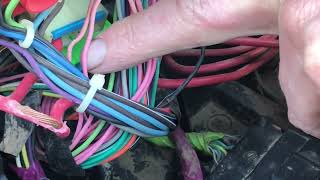
- Following the guidance in TSB #08-07-30-021H, inspect the main vehicle wiring harnesses for signs of chafing, rubbing, or corrosion, particularly near the transmission, under the underhood fuse block, and at the firewall. 🎬 Watch: How to find and fix common GMT900 wiring issues. [⭐]
- Inspect the electrical connectors at the BCM (located behind the lower driver's side dash panel) for corrosion or backed-out pins.
- With the battery disconnected, test the CAN bus wiring for proper resistance. Measure between Pin 6 (CAN High) and Pin 14 (CAN Low) at the OBD-II diagnostic port. A healthy network should read approximately 60 ohms.
- If no visible issues are found and wiring integrity is confirmed, the BCM is the likely point of failure.
Parts You'll Likely Need
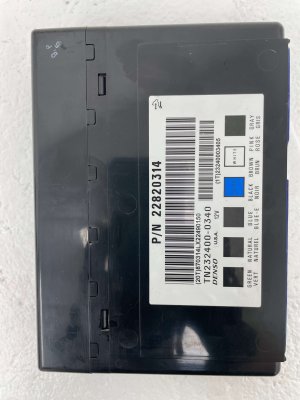
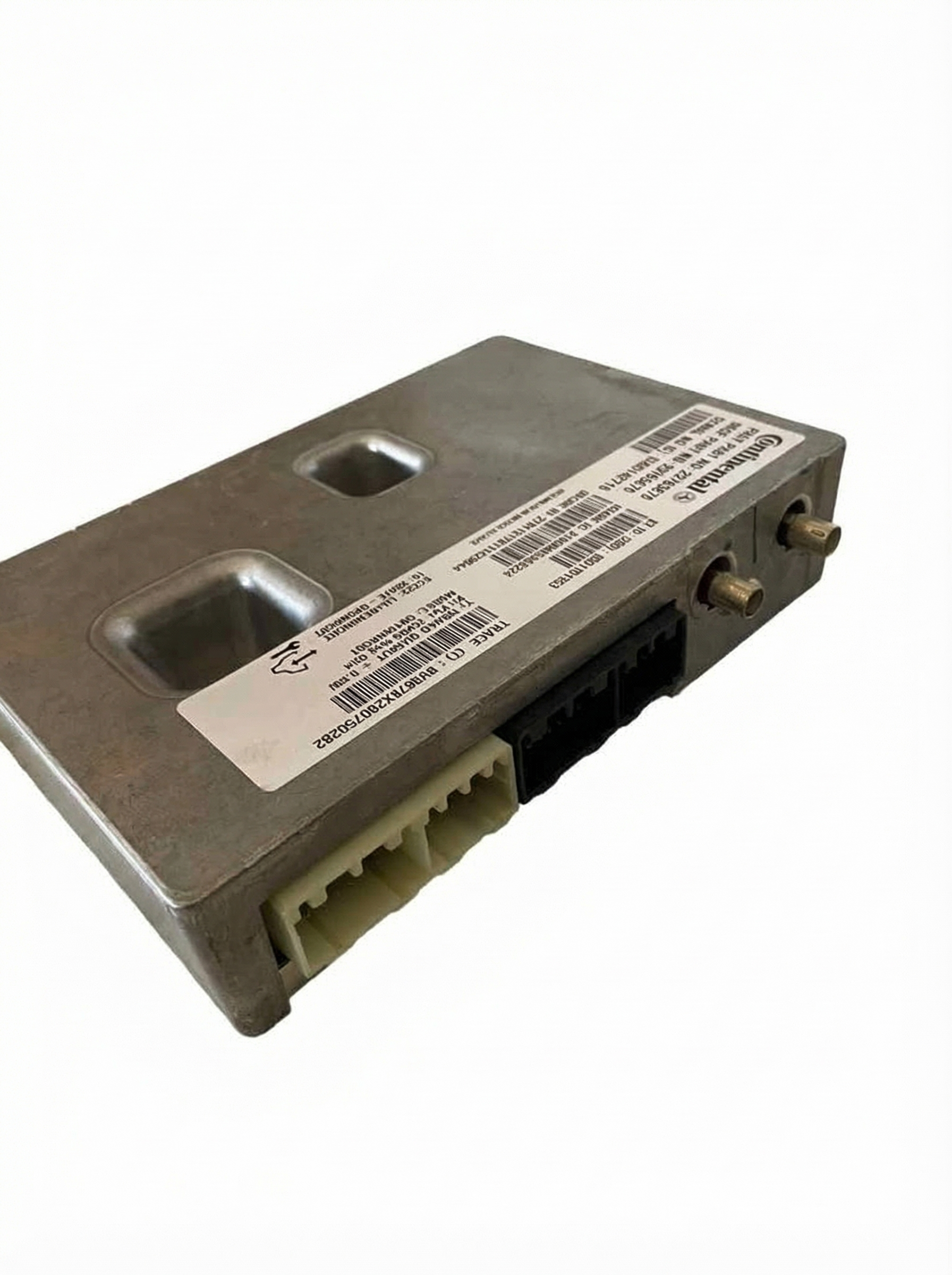
- Body Control Module (BCM)
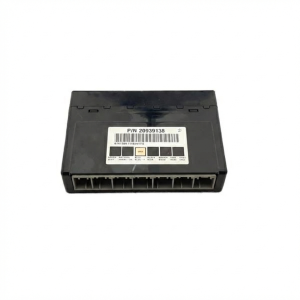
(OEM #13508761, 15263363 (Part number can vary by year and options, always verify with VIN))— If all wiring and grounds are good, the internal circuitry of the BCM itself has likely failed. This is the final step after ruling out more common connection issues. Replacement requires programming.
Trusted brands: ACDelco (OEM)
OEM price range: $300-$450
Aftermarket price range: $200-$350 - Wiring Harness Pigtail / Connector — Often, the problem is not the module but the connector attached to it, which may have suffered from water damage, corrosion, or backed-out pins.
Related Codes That Often Appear With This One
- U0073 — Control Module Communication Bus 'A' Off. This is a general network failure code often set alongside U0140. [⭐]
- U0100 — Lost Communication With ECM/PCM. Often set by other modules when the BCM, acting as a gateway, goes offline.
- U0101 — Lost Communication with TCM. The transmission controller is on the same network and its communication is often routed through the BCM. [⭐]
- U0121 — Lost Communication With Anti-Lock Brake System (ABS) Control Module. The ABS module is also on the high-speed network. [⭐]
Technical Service Bulletins (TSBs) & Recalls
- Bulletin #08-07-30-021H: Addresses loss of high-speed GMLAN communications, which sets codes including U0140, and points to wiring and connector faults as the primary cause.
- Bulletin #07-08-47-004E: Warns technicians that the BCM can be damaged if a ground path is removed while the battery is still connected, emphasizing the importance of disconnecting the battery first.
- Bulletin #PIT4730B: A diagnostic tip noting that the BCM can appear offline intermittently, causing U0140, even when other modules on the high-speed network are communicating, suggesting a transient fault.
Platform-Specific Known Issues
- TSB #08-07-30-021H explicitly details a pattern of GMLAN communication loss on 2007-2014 Suburbans. It points to chafed wiring, corrosion in the transmission harness connector, and poor connections in various module connectors as primary causes for codes like U0140.
- Owner Experience: Intermittent Electrical Chaos: An owner on TahoeYukonForum.com described their 2007 model experiencing intermittent gauge cluster failure and multiple 'lost communication' codes (U0140, U0100, U0101, U0102). The solution was found in a chafed wiring harness located directly under the underhood fuse block where it had rubbed against the frame, shorting several wires including the battery positive wire.
Mechanic-Grade Diagnostic Values
- High-Speed GMLAN Bus Resistance — expected: ~60 Ω (measured between Pin 6 and Pin 14 of OBD-II port with battery disconnected). Failure: A reading of ~120 Ω indicates an open in one of the two terminating resistors. A reading of 0 Ω indicates the CAN High and CAN Low wires are shorted together.
- High-Speed GMLAN Bus Voltage (Key On, Engine Off) — expected: Both CAN High (Pin 6) and CAN Low (Pin 14) lines are biased to 2.5V. During data transmission, the High line toggles to ~3.5V and the Low line toggles to ~1.5V.. Failure: Voltages stuck at 0V, 12V, or not toggling indicate a short to ground, short to power, or module failure.
- BCM Power Fuses — expected: Continuity (less than 1 Ω) across the fuse.. Failure: An open or high resistance reading indicates a blown fuse.
Hidden / Shadow Codes Worth Checking
- U0140 00: Lost Communication With Body Control Module, with a symptom byte of '00' indicating 'No Additional Symptom Information'. (see via A professional scan tool like a GM Tech 2 or GDS2 is required to view symptom bytes.)
- U0073 71: Control Module Communication Bus 'A' Off, with a symptom byte of '71' indicating 'Invalid Serial Data Received'. This often points to data corruption on the bus rather than a complete module failure. (see via A professional scan tool like a GM Tech 2 or GDS2 is required to view symptom bytes.)
Scan Tool Commands That Help
- GM Tech 2 / GDS2: Output Control Tests — Navigate to Body > Body Control Module > Special Functions > Output Control. This allows a technician to command the BCM to activate specific outputs (e.g., door locks, lights, wipers). If the commands work, it proves the BCM has power, ground, and some internal logic is functioning, pointing the diagnosis more toward a communication wiring issue.
- GM Tech 2 / GDS2: Module Setup / SDM Primary Key Setup — After replacing and programming a new BCM, this function must be run. It establishes the security handshake between the new BCM and the existing Sensing and Diagnostic Module (SDM, the airbag computer). Failure to do this will result in an airbag warning light and stored DTCs.
- GM SPS (Service Programming System): Replace and Program ECU — This is the mandatory procedure when installing a new, blank BCM. It uses a J2534 device to connect to GM's servers, downloads the correct firmware and RPO configuration for the vehicle's VIN, and flashes it to the new module.
Wiring & Ground Locations

- Corroded Splice Pack — Under the driver's side front door sill plate, inside the plastic wiring channel. It is a block where multiple (often orange) GMLAN wires are joined.. This is a notoriously common failure point. Water, often from wet shoes or a minor leak, wicks into the channel and corrodes this splice, causing intermittent or total loss of network communication. This is a top suspect for U0140 on GMT900 trucks.
- Underhood Fuse Block Harness — The large wiring harness that exits the bottom of the underhood fuse block (near the battery) and makes a sharp bend downwards toward the frame rail.. This harness is under stress and can chafe against the frame or other components, leading to broken or shorted GMLAN wires. This is another very common, real-world failure location.
- BCM Connectors (X1-X7) — Behind the driver's side lower dashboard, to the left of the steering column. The connectors are often color-coded (Light Green, White, Blue, Black, Brown, Pink, Gray).. These are the direct interface to the BCM. A loose pin, corrosion from a windshield leak, or damage can cause a loss of power, ground, or communication directly at the module.
- G201 — Under the driver's side of the instrument panel, typically near the A-pillar kick panel area.. This is a primary interior ground point for the BCM and other dash components. A loose or corroded G201 can cause a host of bizarre electrical issues, including communication codes.
Real Owner Repair Stories
- Consensus from multiple threads on TahoeYukonForum.com and other GM truck forums (2007-2014 Chevrolet Suburban/Tahoe/Silverado/GMC Yukon/Sierra (GMT900 Platform)) — Sudden no-start, dash lights flashing erratically, multiple "Service" messages (Stabilitrak, Traction Control), gauges dead, power locks/windows inoperative, U0140 and a cascade of other 'U' codes.
❌ Tried (didn't work) Replacing the battery., Checking all fuses in interior and underhood panels., Cleaning battery terminal grounds., Replacing the BCM (in some cases, the new BCM also failed to communicate, leading to the real cause).
✅ What actually fixed it The most common confirmed fix is locating and repairing a corroded splice pack located in the wiring trough under the driver's door sill plate. Water ingress causes the GMLAN bus wires within the splice to corrode and lose connection. The fix involves cutting out the compromised splice block, soldering the wires directly by color, and sealing with heat shrink tubing.
"I Checked Everything" — The Actual Cause
- A very common scenario for U0140 on this platform involves all standard wiring checks (visual inspection of main harnesses, continuity tests at the OBD-II port) appearing normal. The root cause is often corrosion hidden inside a splice pack located under the driver's door sill plate. Unless a technician specifically knows to remove the sill plate and inspect this splice, they will miss the fault, leading them to incorrectly condemn the BCM. The intermittent nature of this corroded connection can also make it difficult to diagnose with simple continuity checks.
When the Usual Fixes Don't Work
- A significant body of evidence from professional technicians and DIY repair forums strongly counters the immediate replacement of the Body Control Module. In many documented cases, owners were quoted over $1,000 for a BCM replacement at a dealership, only to permanently fix the U0140 code themselves for minimal cost. The successful repair almost always involved tracing the GMLAN wires (typically orange or orange/black) and finding a point of corrosion or a break, most commonly in the splice pack under the driver's sill plate or in the harness below the underhood fuse box. This suggests that for the 2007-2014 Suburban, U0140 should be treated as a wiring fault until proven otherwise.
OEM Part Supersession History
Varies significantly by year and RPO codes (e.g., 15263363)→Varies (e.g., 13508761 may be a service replacement for some applications)— Part consolidation and updates.
Heads up: It is absolutely critical to verify the correct BCM part number using the vehicle's VIN. Installing the wrong part number, even if it physically fits, will result in features not working or the vehicle not starting. Some suppliers offer pre-programming services where they flash the module with the vehicle's VIN and RPO data before shipping, which can simplify DIY replacement.
Model Year Variations Within This Range
- 2007-2014: While specific BCM part numbers and software calibrations changed throughout the generation, the fundamental electrical architecture and common failure points (wiring chafe under the fuse box, splice pack corrosion in the driver's sill) are consistent across the entire 2007-2014 GMT900 platform.
Helpful Videos
We Have This Part in Stock


The information in this article is provided for general reference and educational purposes only. Vehicle specifications, procedures, and part compatibility can vary by production date, trim level, and region. Always consult your vehicle's factory service manual and verify part numbers before purchasing or performing repairs. Safety-critical components such as airbags, seat belts, and braking systems should be installed by a qualified professional.
- Chevrolet SUBURBAN:
- 🎬 Helpful Videos
- 🛍️ Shop This Part
- What's Unique About the 2007-2014 Chevrolet SUBURBAN
- Diagnostic Flowchart
- Symptoms You May Notice
- Most Likely Causes
- Rare But Worth Checking
- Diagnosis Steps
- Parts You'll Likely Need
- Related Codes That Often Appear With This One
- Technical Service Bulletins (TSBs) & Recalls
- Platform-Specific Known Issues
- Mechanic-Grade Diagnostic Values
- Hidden / Shadow Codes Worth Checking
- Scan Tool Commands That Help
- Wiring & Ground Locations
- Real Owner Repair Stories
- "I Checked Everything" — The Actual Cause
- When the Usual Fixes Don't Work
- OEM Part Supersession History
- Model Year Variations Within This Range
- 🎟️ Get 5% Off