

U0140 on 2007-2014 Cadillac Escalade ESV: Lost BCM Communication Causes and Fixes
U0140 on a 2007-2014 Escalade ESV means the Body Control Module (BCM) is offline. This causes widespread electrical issues. Before replacing the expensive BCM, check for wiring damage near the transmission and other common chafe points, poor ground connections (especially G201), clogged sunroof drains causing water damage, and low battery voltage, as these are common and cheaper fixes.
- U0140 means the Body Control Module (BCM) is offline, causing widespread and unpredictable electrical problems.
- Do NOT immediately replace the BCM. The most common cause on this Escalade is a wiring issue, as detailed in GM TSB #08-07-30-021H.
- Thoroughly inspect the wiring harness for damage, especially near the transmission, and check all major ground connections before buying any parts.
- If the BCM does need to be replaced, it is not a plug-and-play part. It requires professional programming to your vehicle's VIN.
What's Unique About the 2007-2014 Cadillac ESCALADE ESV
On this generation of Escalade (GMT900 platform), the U0140 code is frequently linked to network-wide communication failures rather than just an isolated BCM failure. A key GM Technical Service Bulletin (TSB #08-07-30-021H) points to common issues like chafed wiring harnesses, particularly near the transmission, above the transfer case, and at harness clips on the engine. Another bulletin, PIT4730B, warns that a brief, intermittent short circuit can make the BCM appear completely dead for an entire ignition cycle, often leading to misdiagnosis.
Diagnostic Flowchart
Tap your situation to follow the diagnostic path that matches what you're seeing on this vehicle.
Symptoms You May Notice
- Multiple, seemingly random warning lights on the instrument panel.
- Transmission may not shift correctly or may default to a single gear (limp mode).
- Power windows, door locks, or interior lights work intermittently or not at all.
- Engine may not crank or start.
- Instrument panel gauges may fluctuate wildly, freeze, or go completely blank.
- "Service StabiliTrak" message may appear on the Driver Information Center (DIC).
- Door locks may cycle on their own while driving.
- Replacing the BCM without first thoroughly inspecting all related wiring and grounds. TSBs PIT4730B and 08-07-30-021H explicitly warn that wiring faults are a common cause and should be ruled out before condemning the module.
- Replacing other control modules (like the ECM or TCM) that have stored the U0140 code. The code is logged by a working module that has lost contact with the BCM; the fault is with the BCM or its network connection, not the module that stored the code.
- Condemning the BCM when it is temporarily offline. TSB PIT4730B explains that an intermittent short can cause the BCM to not communicate for the rest of an ignition cycle. Cycling the ignition off and letting the vehicle sit for up to 20 minutes may restore communication, proving the BCM itself is not faulty.
Most Likely Causes
- Wiring Harness Damage 🔴 High Probability TSB #08-07-30-021H specifically calls out chafed, pinched, or shorted wiring as a primary cause. Common problem areas include the harness near the transmission, above the transfer case where a boss can cut into the wiring, and on both sides of the engine where plastic clips can wear through the conduit.
How to confirm: Visually inspect the wiring harnesses in known trouble spots for signs of rubbing, melting, or corrosion. Pay close attention to where the harness is secured by clips or passes over components. Perform a continuity and short-to-ground test on the CAN bus wires (typically tan and tan/black stripe) at the BCM connector.
Typical fix: Repair the damaged section of the wiring harness. This involves cutting out the bad section, splicing in new wire, and protecting the repair with heat shrink tubing and loom. Secure the harness away from sharp edges.
Est. part cost: $10-$50 - Poor Ground Connection 🟡 Medium Probability GM vehicles of this era are known for ground issues. The BCM and other modules rely on clean ground points. Key grounds to inspect are G201 (behind the driver's side dash near the A-pillar), G102/G103 (on the cylinder heads), and G300 (under the driver's door area on the frame). Corrosion or factory-applied undercoating can interrupt the connection.
How to confirm: Locate the primary BCM and chassis grounds. Disassemble, clean all contact surfaces (eyelet and frame) to bare metal, and re-secure them tightly. A voltage drop test on the ground circuit should read less than 0.1V.
Typical fix: Clean and tighten the affected ground connection. It may be beneficial to add a star washer to ensure a good bite into the metal.
Est. part cost: $0-$10 - Failed Body Control Module (BCM) due to Water Intrusion 🟡 Medium Probability The BCM is located under the driver's side dashboard, directly in the path of water from clogged or disconnected sunroof drain tubes that run down the A-pillar. Forum and YouTube videos frequently document this exact failure mode, where water drips onto the BCM or its connectors, causing corrosion and internal failure.
How to confirm: Inspect the BCM, its connectors, and the carpet below for signs of moisture, water stains, or green/white corrosion. Pour a small amount of water into the sunroof drain channel and check if it exits properly behind the front wheel; if it backs up or leaks inside, the drain is clogged.
Typical fix: First, fix the water leak by cleaning the sunroof drains with compressed air or trimmer line. If the BCM is damaged, it must be replaced. The new module MUST be programmed by a dealer or a qualified shop with GM-specific software. 🎬 Watch: A guide to BCM replacement and programming requirements.
Est. part cost: $250-$500 - Low Battery Voltage or Charging System Fault ⚪ Low Probability All control modules are sensitive to voltage. A weak battery or failing alternator can cause modules to drop off the communication network, setting various 'U' codes, especially during engine cranking.
How to confirm: Test the battery with a digital multimeter; it should read above 12.4V with the engine off. Have the battery and alternator tested under load at an auto parts store.
Typical fix: Replace the battery and/or alternator if they fail testing.
Est. part cost: $150-$400
Rare But Worth Checking
- Backed-out Terminals in Transmission Connector: TSB #08-07-30-021H specifically mentions that the GMLAN communication terminals can back out of the 16-way transmission harness connector, causing a loss of communication that can mimic a BCM failure.
- Faulty Data Link Resistor: The CAN bus network uses two 120-ohm terminating resistors. If one of these resistors fails or has a poor connection, it will disrupt the network resistance (which should be 60 ohms) and can bring down the entire network. TSB #08-07-30-021H lists this as a possible cause.
Diagnosis Steps
- Check Battery Health: Ensure the battery voltage is stable and above 12.4 volts. Test the charging system.
- Perform a Full Vehicle Scan: Use a professional-grade scan tool to check all modules for codes. Note which other modules are reporting a loss of communication with the BCM. If the BCM doesn't respond, proceed with caution, as this could be temporary.
- Consult TSBs: Review TSB #08-07-30-021H and PIT4730B for known wiring and connection issues. Note the possibility of a temporary shutdown from an intermittent short.
- Inspect for Water Intrusion: Check for dampness in the driver-side footwell and on/around the BCM. Test the sunroof drains by pouring water into the sunroof tray and ensuring it drains out behind the front wheels, not into the cabin.
- Inspect Wiring Harnesses: Visually and physically inspect the main engine and chassis harnesses for chafing, especially around the transmission, above the transfer case, and at engine mounting points as detailed in service bulletins.
- Check Grounds: Locate, remove, clean, and tighten the main BCM ground (G201 at driver's A-pillar) and engine grounds (G102/G103).
- Inspect BCM and Connectors: Locate the BCM under the driver's side dash. Disconnect the battery, then unplug the BCM connectors. Check for corrosion (especially green crust from water damage), moisture, or backed-out pins.
- Test CAN Bus: With the battery disconnected, measure the resistance between the two CAN bus wires at the OBD-II port (pins 6 and 14). A healthy network should read approximately 60 ohms. A reading of 120 ohms indicates an open circuit or a faulty terminating resistor. A reading near 0 ohms indicates a short between the two CAN wires.
- Verify Power and Ground at BCM: If wiring appears intact, use a multimeter to confirm the BCM is receiving proper battery voltage and has a solid ground at its connector before condemning the module.
Parts You'll Likely Need
- Body Control Module (BCM)
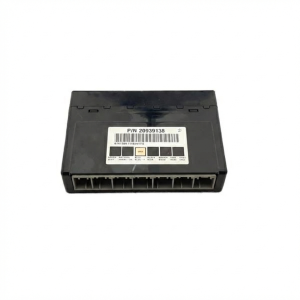
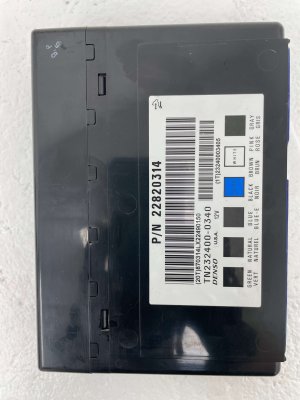
(OEM #25835966 (2007-2011), 13595894, 13594692 (Verify by VIN))— This is the module that has gone offline. It is replaced only after all wiring, power, ground, and water intrusion issues have been ruled out
Related Codes That Often Appear With This One
- U0073 — This code for 'Control Module Communication Bus A Off' often appears with U0140, indicating a general high-speed network failure, as noted in TSB #08-07-30-021H.
- U0100 — Lost Communication with ECM/PCM. This can occur if the BCM's failure disrupts the entire network, causing other modules to also report communication loss.
- U0101 — Lost Communication with TCM. Similar to U0100, this indicates the Transmission Control Module has also lost communication, pointing to a wider network fault.
- U0121 — Lost Communication with ABS Control Module. This is another common code that appears when the high-speed GMLAN network goes down.
Technical Service Bulletins (TSBs) & Recalls
- 08-07-30-021H: Loss of High Speed GMLAN Communications, Intermittent No Crank, IP Gage Fluctuation, and various communication DTCs including U0140. Points to wiring harness and connector issues.
- PIT4730B: Diagnostic tip for U0140 or U0073, warning against replacing the BCM before performing normal diagnostics for intermittent network faults.
Platform-Specific Known Issues
- TSB #08-07-30-021H documents a recurring issue where high-speed GMLAN communication is lost due to wiring problems, particularly chafing near the transmission or backed-out terminals in the transmission connector, leading to a host of symptoms including U0140.
Mechanic-Grade Diagnostic Values
- High-Speed GMLAN Bus Resistance — expected: 60 Ohms (+/- 5 Ohms) when measured between pins 6 and 14 of the DLC with the battery disconnected.. Failure: A reading of ~120 Ohms indicates an open circuit or a faulty terminating resistor. A reading near 0 Ohms indicates a short between the CAN high and low wires.
- High-Speed GMLAN Bus Voltage (Key On) — expected: GMLAN High (Pin 6) should average ~2.66V and GMLAN Low (Pin 14) should average ~2.34V. When communicating, the High line toggles up to ~3.5V and the Low line toggles down to ~1.5V.. Failure: Voltages stuck high, low, or at 2.5V indicate a bus fault.
- BCM Ground Circuit Resistance — expected: < 0.5 Ohms resistance to a clean chassis ground point.. Failure: High resistance indicates a corroded, loose, or broken ground connection at G201 or other ground points.
- BCM Power Supply Voltage — expected: Battery voltage (12.4V+ with engine off) at the appropriate power input pins on the BCM connectors (e.g., Pin 14 on Connector X1, Pin 4 on Connector X1).. Failure: Low or no voltage points to a blown fuse, fusible link, or a break in the power feed wire.
Scan Tool Commands That Help
- GM Tech2 / GDS2: BCM Service Programming System (SPS) — This function is required after replacing the BCM. It programs the new module with the vehicle's correct VIN, software, and configuration to ensure all features work correctly.
- GM Tech2 / GDS2: Module Setup — After programming a new BCM, a module setup or reset procedure may be required to re-learn features like key fobs, tire pressure sensors, and anti-theft system parameters.
Wiring & Ground Locations
- G201 — In the upper left corner of the instrument panel, near the A-pillar on the driver's side. It is located behind the dash panel.. This is a critical ground for the BCM and other instrument panel modules. A poor connection here is a very common cause of U0140 and other electrical issues.
- G300 — Under the vehicle on the driver's side, located on the second body mount from the front.. This is a major body ground point. While not the primary BCM ground, corrosion or looseness here can contribute to overall network instability and intermittent faults.
- G102 / G103 — G102 is on the lower left front of the engine block; G103 is on the front of the right cylinder head.. These are main engine grounds. A poor connection can cause electrical noise and voltage fluctuations that disrupt module communication across the entire vehicle.
- BCM Connector X4 — One of the large multi-pin connectors at the Body Control Module, located under the driver's side dash.. This connector contains the primary power, ground, and High-Speed GMLAN bus wires for the BCM. Checking for backed-out pins or corrosion here is essential.
- DLC (OBD-II Port) — Under the driver's side dashboard, to the left of the steering column.. Pins 6 (CAN High) and 14 (CAN Low) are used to test the resistance and voltage of the entire high-speed communication network.
Real Owner Repair Stories
- Reddit user on r/MechanicAdvice (2009 Cadillac Escalade ESV, ~116k miles) — Dash lit up with multiple messages (Service StabiliTrak, etc.), vehicle entered limp mode, and transmission stopped shifting after driving through deep water. Codes U0101, U0100, U0140, U0121 were stored.
❌ Tried (didn't work) Initial assumption was water damage to a module.
✅ What actually fixed it The locking lever on the large electrical connector to the Engine Control Module (ECM) had come loose, causing the plug to have a poor connection. Re-seating and locking the connector resolved all communication codes.
OEM Part Supersession History
13580690→13594692— Part number updated by GM due to design revision or manufacturing change.
Heads up: Part 13594692 is listed as a direct replacement for 13580690. However, part number 13594692 is also listed for 2015+ models, so verifying compatibility by VIN before purchase is critical.Multiple (e.g., 13591519, 13593214)→13594692— Consolidation of multiple older part numbers into a single service replacement part.
Heads up: An eBay listing for remanufactured units shows 13594692 superseding several other numbers, but this should be verified with an official GM parts catalog.
Helpful Videos
We Have This Part in Stock


The information in this article is provided for general reference and educational purposes only. Vehicle specifications, procedures, and part compatibility can vary by production date, trim level, and region. Always consult your vehicle's factory service manual and verify part numbers before purchasing or performing repairs. Safety-critical components such as airbags, seat belts, and braking systems should be installed by a qualified professional.
- Cadillac ESCALADE ESV:
- 🎬 Helpful Videos
- 🛍️ Shop This Part
- What's Unique About the 2007-2014 Cadillac ESCALADE ESV
- Diagnostic Flowchart
- Symptoms You May Notice
- Most Likely Causes
- Rare But Worth Checking
- Diagnosis Steps
- Parts You'll Likely Need
- Related Codes That Often Appear With This One
- Technical Service Bulletins (TSBs) & Recalls
- Platform-Specific Known Issues
- Mechanic-Grade Diagnostic Values
- Scan Tool Commands That Help
- Wiring & Ground Locations
- Real Owner Repair Stories
- OEM Part Supersession History
- 🎟️ Get 5% Off