

U0140 on 2007-2014 Cadillac Escalade: Lost Communication With BCM Fixes
U0140 on a 2007-2014 Escalade means the Body Control Module (BCM) has stopped communicating on the vehicle's network. This often causes strange electrical problems like non-working windows, lights, and door locks, and may even cause a no-start condition. The most common causes are faulty wiring (chafing), poor BCM grounds, water intrusion from clogged drains, or a failed BCM itself, which requires programming upon replacement.
- U0140 means the Body Control Module (BCM) is offline, causing widespread electrical issues.
- Do not immediately replace the BCM. A GM service bulletin warns that wiring or intermittent network faults are common on the Escalade and should be ruled out first.
- Check for simple fixes like a weak battery, blown fuses, and corroded ground connections before moving to more complex diagnostics.
- If the BCM must be replaced, it is not a DIY-friendly part. It requires professional programming to link it to your vehicle's VIN and other modules.
What's Unique About the 2007-2014 Cadillac ESCALADE
The 2007-2014 Escalade, part of the GMT900 platform, has a complex electrical system where the BCM is a key player. GM has issued multiple technical service bulletins for this platform related to communication codes like U0140. TSB PIT4730B specifically notes that the BCM can intermittently appear offline on the high-speed network, even when all other modules are communicating. This can happen if the data wires short out briefly (e.g., from hitting a bump), causing the BCM to shut down for that ignition cycle to protect itself, misleading technicians into unnecessarily replacing the BCM. TSB 08-07-30-021H further details how wiring harness chafing against engine or transmission components is a common cause for these communication losses across the entire GMT900 lineup.
Diagnostic Flowchart
Tap your situation to follow the diagnostic path that matches what you're seeing on this vehicle.
Symptoms You May Notice
- Multiple, seemingly random warning lights on the instrument panel (e.g., ABS, traction control, security).
- Transmission may not shift correctly or may be stuck in one gear (limp mode).
- Power windows, door locks, or mirrors stop working.
- Exterior lights (headlights, turn signals) behave erratically, staying on or not turning on at all.
- Interior dome lights or dashboard backlighting may fail.
- Remote key fob stops working.
- Wipers operate erratically or not at all.
- Scan tool cannot communicate with the BCM.
- Engine may not crank or start.
- "Service Stabilitrak" or similar messages on the Driver Information Center (DIC).
- Replacing other modules that have stored the U0140 code. The code is logged by a working module that has lost contact with the BCM; the fault lies with the BCM or its connection, not the module that stored the code.
- Immediately replacing the BCM without checking for intermittent wiring faults. TSB PIT4730B explicitly warns that an intermittent short on the CAN bus can make a good BCM appear offline, leading to misdiagnosis.
Most Likely Causes
- Wiring Harness Issues 🔴 High Probability GM TSB 08-07-30-021H specifically calls out harness chafing on GMT900 trucks. Common chafe points include where the harness passes over the engine and transmission, near the firewall, and around sharp brackets. Vibration and engine movement can wear through the wire insulation, causing intermittent shorts on the CAN bus wires.
How to confirm: Visually inspect the wiring harnesses connected to the BCM, especially where they route near the engine, transmission, and through the firewall. Look for shiny, worn-through conduit or exposed wires. Check for continuity on the CAN bus wires (CAN High and CAN Low) using a multimeter and test for shorts to ground.
Typical fix: Repair the damaged section of the wire and re-insulate it. Protect the harness from future damage using anti-abrasion tape or rerouting it away from sharp edges. Apply dielectric grease to connectors to prevent future corrosion.
Est. part cost: $10-$100 - Faulty Body Control Module (BCM) 🟡 Medium Probability Internal failure of the BCM can occur due to age, vibration, or moisture intrusion. Water leaks from clogged sunroof drains or degraded windshield seals are known to drip onto the BCM or its connectors, causing corrosion and short circuits. In some cases, solder joints on the internal circuit board can crack, leading to intermittent connections.
How to confirm: After confirming the BCM has proper power and ground and the network wiring is intact, the module itself is the likely culprit. A high-end scan tool will show the BCM as offline. Visually inspect the BCM and its connectors for any signs of water staining or green/white corrosion.
Typical fix: Replace the Body Control Module. The new module must be programmed by a dealer or a qualified shop with the correct tools (e.g., GM MDI). Some specialists can repair the original BCM by re-soldering failed components on the circuit board. 🎬 Watch: How to repair a BCM with failing internal connections.
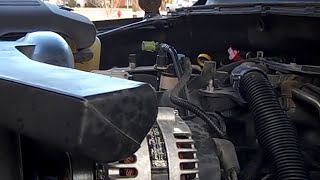
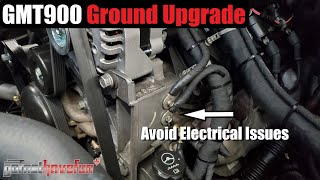
Est. part cost: $250-$500 - Poor Power or Ground Connection 🟡 Medium Probability Ground straps and connections can corrode or loosen over time, leading to intermittent voltage drops that cause modules to reset or go offline. GM bulletins mention checking grounds like G102 and G300 for poor connections, sometimes due to undercoating applied at the factory. 🎬 Watch: How to upgrade and fix common GMT900 ground issues. A tech tip specifically highlights ground G218 on the driver's side A-pillar as a common source of voltage spikes that can damage the BCM.
How to confirm: Using a multimeter, verify the BCM has a stable 12V+ power supply and a clean, low-resistance ground (<0.1 Ω). Check the main battery terminals and chassis ground points (G103, G218, G300) for corrosion or looseness.
Typical fix: Clean or tighten the ground connections. This may involve removing the ground bolt, sanding the contact surfaces to bare metal, and re-securing it. Protect the cleaned ground with dielectric grease or paint.
Est. part cost: $5-$50 - Low Battery Voltage ⚪ Low Probability Modern electronic modules are sensitive to voltage. A weak or failing battery can cause unpredictable communication errors across the vehicle's networks as modules fail to initialize correctly.
How to confirm: Test the battery's state of charge and health. A resting voltage below 12.2V suggests a problem. Have the battery and charging system professionally tested under load.
Typical fix: Replace the vehicle's battery.
Est. part cost: $150-$300
Rare But Worth Checking
- Aftermarket Device Interference: Improperly installed remote starters, alarms, or audio equipment can interfere with the CAN bus network, causing communication codes like U0140. A technician on a diagnostics forum traced a U0140 to a poorly installed aftermarket trailer brake controller.
- Faulty Left Side Junction Block: TSB 08-07-30-021H notes that in some diagnostic cases, after repairing wiring, the left side junction block (fuse box) itself may need to be replaced to resolve communication issues.
Diagnosis Steps
- Check Battery and Fuses: Ensure the battery voltage is above 12.4V and test the charging system. Inspect all fuses related to the BCM, typically located in the interior fuse panel (Left Instrument Panel Junction Block) and underhood fuse block.
- Perform a Full Vehicle Scan: Use a professional scan tool to see which other modules are reporting a loss of communication with the BCM. Note if the BCM itself is responsive or completely offline.
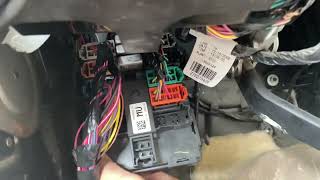
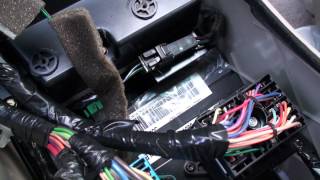
- Locate the BCM: On the 2007-2014 Escalade, the BCM is located behind the driver's side lower dashboard, to the left of the steering column.
- Inspect for Water Intrusion: Check for signs of moisture, water stains, or corrosion on the BCM, its connectors, and the surrounding carpet and wiring. Clogged sunroof drains and failing windshield seals are common sources.
- Inspect BCM Connectors and Grounds: Disconnect the battery. Unplug the BCM connectors and inspect for corrosion, moisture, or bent/backed-out pins. Locate and clean the main BCM ground points, such as G218 (typically on the left kick panel area) and other chassis grounds like G103 (cowl area) and G300 (floor area).
- Test Power and Ground at the BCM: With the key on, use a multimeter to confirm there is consistent battery voltage at the BCM's power pins and less than 0.1 ohms of resistance on the ground pins.
- Test the CAN Bus: With the battery disconnected, measure the resistance between Pin 6 (CAN High) and Pin 14 (CAN Low) at the OBD-II port. It should be approximately 60 ohms. A reading of 120 ohms suggests a break in the circuit or a missing terminating resistor, while a reading near 0 ohms indicates a short between the two wires.
- Isolate the Fault: If wiring, power, and grounds are good, the BCM itself is a likely cause. However, remember GM TSB PIT4730B warns that this can be an intermittent issue caused by a momentary short in the harness, so a thorough wiring inspection for chafing is critical before condemning the module.
Parts You'll Likely Need
- Body Control Module (BCM)
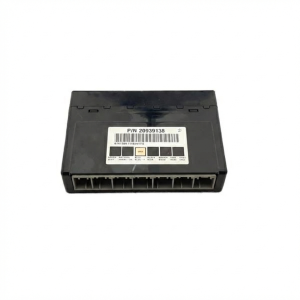
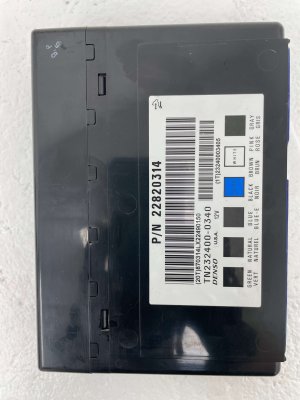
(OEM #25790508, 13595894, 25892621, 13534182 (Part numbers vary significantly by year and options; always verify with VIN. Some numbers supersede others).)— This module is the most common part to fail when wiring and connections are confirmed to be good. It is the central hub for many body electronic functions and can fail from internal faults or water damage.
Trusted brands: ACDelco (OEM), Dorman
OEM price range: $300-$500
Aftermarket price range: $200-$400
Related Codes That Often Appear With This One
- U0073 — This code for 'Control Module Communication Bus A Off' often appears with U0140, indicating a general high-speed network failure. TSB #08-07-30-021H and PIT4730B both list these codes together as primary indicators of a GMLAN communication problem.
- U0100 — Lost Communication with ECM/PCM. This can occur if the BCM acts as a gateway and its failure disrupts communication with the engine computer, or if a shared network wire is compromised.
- U0101 — Lost Communication with TCM. Similar to U0100, the BCM's failure can interrupt signals going to or from the transmission control module, which explains the symptom of the transmission not shifting.
- U0121 — Lost Communication with ABS Control Module. The BCM often shares data with the ABS system, and a loss of communication will trigger this code and an ABS warning light.
Technical Service Bulletins (TSBs) & Recalls
- 08-07-30-021H: Notes that communication DTCs including U0140 can cause various warning lamps and shifting issues, often stemming from chafed wiring or poor connections in the GMLAN network.
- PIT4730B: Cautions against replacing the BCM for an intermittent U0140, explaining that a momentary short on the network can cause the BCM to go offline for an entire ignition cycle, mimicking a failed module.
Platform-Specific Known Issues
- GM Technical Service Bulletin PIT4730B specifically addresses intermittent U0140 or U0073 codes on 2007-2014 Escalades, warning that the BCM may appear offline when it is not actually faulty, and advises against immediate replacement without thorough diagnostics for intermittent wiring shorts.
- GM Technical Service Bulletin #08-07-30-021H lists U0140 as a potential communication DTC that can cause various warning lamps and prevent the transmission from shifting, often due to chafed wiring harnesses.
- Water Leaks: These vehicles are known for water leaks from clogged front sunroof drain tubes and poorly sealed windshields, which can allow water to drip directly onto the BCM and left-side junction block, causing corrosion and electrical failure.
Mechanic-Grade Diagnostic Values
- High Speed GMLAN Bus Resistance — expected: Approximately 60 Ω. Failure: A reading of 120 Ω indicates an open in the bus or a missing terminating resistor. A reading near 0 Ω indicates a short between the CAN high and low wires.
- BCM Battery Positive Voltage — expected: 12V+. Failure: Low or no voltage indicates a problem with the fuse, wiring, or battery connection.
- BCM Ground — expected: < 0.5 Ω resistance to chassis ground. Failure: High resistance indicates a corroded or loose ground connection.
- High Speed GMLAN Voltage (at BCM) — expected: Bus+ (Pin 8, TN/BK wire) and Bus- (Pin 9, TN wire) should have specific voltage readings, typically around 2.5V, but require an oscilloscope for accurate diagnosis.. Failure: No voltage, or voltages that don't mirror each other, indicate a bus fault.
Hidden / Shadow Codes Worth Checking
- U0140 sym00: This is a GM-specific symptom code that may accompany the main DTC. It indicates a 'No Communication' status specifically for the BCM on the high-speed network. (see via Visible with a dealer-level scan tool like a GM Tech2 or GDS2. Mentioned in TSB PIT4730B.)
- U0073 sym71: This symptom code for 'Control Module Communication Bus A Off' is also listed in TSB PIT4730B as an indicator of an intermittent High Speed GMLAN fault that can cause the BCM to go offline. (see via Visible with a dealer-level scan tool like a GM Tech2 or GDS2.)
Scan Tool Commands That Help
- Tech2 / GDS2: NEW BCM SETUP — This function is used after installing a new or replacement BCM to configure it with the vehicle's specific RPO codes (options).
- GDS2: Setup SDM Primary Key in BCM — This is a mandatory security procedure after BCM replacement. It establishes a handshake between the new BCM and the existing Airbag Control Module (SDM). Failure to perform this will result in a persistent airbag warning light.
- GDS2: Theft Deterrent Relearn — After BCM replacement, this procedure is required to synchronize the new module with the vehicle's ignition keys and Powertrain Control Module (PCM) to allow the engine to start.
- GM MDI / VCI: Data Bus Diagnostic Tool — This is a specialized software tool, used with the GM interface, that helps analyze the vehicle data bus to identify faults like opens or shorts. It's recommended in TSBs for diagnosing intermittent communication issues.
Wiring & Ground Locations
- BCM — Located behind the lower left side of the instrument panel, to the left of the steering column.. This is the module that has lost communication. Its connectors and the surrounding area must be inspected for water intrusion, damage, and corrosion.
- G103 — Located at the left rear of the engine compartment on the cowl, above the brake booster.. This is a primary ground point for the BCM, Instrument Panel Cluster (IPC), and Data Link Connector (DLC). A poor connection here can directly cause the BCM to lose power or create network noise.
- G218 — Located on the driver's side A-pillar, often behind the kick panel.. A technician note highlights this specific ground as a common failure point. A poor ground here can cause voltage spikes that damage a new BCM, making it critical to check before installing a replacement module.
- G300 — Located behind the left seat, on the floor, near the B-pillar.. This ground serves various driver-side controls and modules. While not a primary BCM ground, issues here can contribute to overall electrical instability.
- BCM Connectors X1-X7 — The multi-pin connectors plugged into the Body Control Module.. These are the direct interface for all BCM power, ground, and data lines. Specific pins must be tested for voltage and resistance. For example, Connector X4 contains the main power, ground, and High-Speed GMLAN bus wires.
Real Owner Repair Stories
- Tahoe Yukon Forum user (GMT900 SUV (Tahoe/Yukon/Escalade platform)) — Weird problems with dash lights and messages, bad fuel mileage, possessed rear wiper.
❌ Tried (didn't work) Not specified, but the user was experiencing multiple, seemingly unrelated electrical faults typical of a network or grounding issue.
✅ What actually fixed it The user found a corroded ground wire that had fallen off its connection point on the frame under the driver's side door. They cleaned the frame contact point with a Dremel, reattached the ground with a stainless steel bolt, and cleaned all other accessible grounds. This single fix resolved all the erratic electrical problems.
"I Checked Everything" — The Actual Cause
- TSB PIT4730B describes a scenario where a U0140 is set intermittently, often when driving over bumps. A technician might scan the vehicle and find the BCM is completely offline, leading them to believe the BCM has failed. However, the actual cause is the High Speed GMLAN data wires (circuits 2500 & 2501) momentarily shorting to ground or to each other. This event causes the BCM to enter a protective shutdown for the remainder of that ignition cycle. A standard diagnostic check in the shop would miss this intermittent short, leading to the misdiagnosis and unnecessary replacement of a perfectly good BCM.
OEM Part Supersession History
Multiple, including 15940214, 25844480, 20939137→22860591, 25835966— Revisions for reliability and component updates.
Heads up: It is critical to order a BCM based on the vehicle's VIN and original part number. While many part numbers are interchangeable, there are different hardware versions (interchanges). For example, interchange 1290 and 1465 are common for 2007-2009 models. Using the wrong hardware version can result in failed programming or non-functional features.
Model Year Variations Within This Range
- 2007-2009 vs 2010-2014: There are different BCM part numbers and hardware interchanges for earlier vs. later models in this generation. Additionally, the primary diagnostic software used by dealers transitioned during this period. Earlier models would have been serviced with a Tech2 scanner running TIS2000 software, while later models use the GDS2 software platform with an MDI/MDI2 interface.
Helpful Videos
We Have This Part in Stock


The information in this article is provided for general reference and educational purposes only. Vehicle specifications, procedures, and part compatibility can vary by production date, trim level, and region. Always consult your vehicle's factory service manual and verify part numbers before purchasing or performing repairs. Safety-critical components such as airbags, seat belts, and braking systems should be installed by a qualified professional.
- Cadillac ESCALADE:
- 🎬 Helpful Videos
- 🛍️ Shop This Part
- What's Unique About the 2007-2014 Cadillac ESCALADE
- Diagnostic Flowchart
- Symptoms You May Notice
- Most Likely Causes
- Rare But Worth Checking
- Diagnosis Steps
- Parts You'll Likely Need
- Related Codes That Often Appear With This One
- Technical Service Bulletins (TSBs) & Recalls
- Platform-Specific Known Issues
- Mechanic-Grade Diagnostic Values
- Hidden / Shadow Codes Worth Checking
- Scan Tool Commands That Help
- Wiring & Ground Locations
- Real Owner Repair Stories
- "I Checked Everything" — The Actual Cause
- OEM Part Supersession History
- Model Year Variations Within This Range
- 🎟️ Get 5% Off