

U0131 on 2018-2024 Jeep Wrangler: Power Steering Communication Loss Causes & Fixes
On a 2018-2024 Jeep Wrangler, U0131 indicates a loss of communication with the power steering module, causing a sudden loss of steering assist. Before replacing the expensive power steering pump assembly, check the high-amperage fuse block on the battery for looseness or corrosion and thoroughly inspect the specific frame ground connection detailed in TSB S1919000004 Rev.A, as these are very common, low-cost fixes frequently cited by owners.
- U0131 on a Wrangler JL is a critical safety issue causing immediate loss of power steering.
- ALWAYS check simple, inexpensive causes first: the main EHPS fuse and the specific ground connection on the frame mentioned in TSB S1919000004 Rev.A.
- A visual inspection of the wiring harness to the power steering pump for damage is a crucial diagnostic step.
- If wiring, fuses, and grounds are good, the most likely failure is the integrated EHPS pump and control module assembly, which is an expensive repair.
- Ensure you use the correct Mopar MS-11655 specification fluid if you replace the pump or top off the system.
What's Unique About the 2018-2024 Jeep WRANGLER

The 2018-2024 Wrangler (JL) uses an Electro-Hydraulic Power Steering (EHPS) system, which has an electric motor driving a hydraulic pump. This is different from the purely hydraulic systems of older Jeeps. This design's complexity means failures can be electrical or network-related, not just mechanical. Notably, Jeep has issued multiple technical service bulletins specifically pointing to poor ground connections as a root cause for this communication code. Forum discussions among owners frequently highlight issues with the main fuse block on the positive battery terminal, where loose connections can interrupt the high current required by the EHPS pump, triggering the U0131 code.
Diagnostic Flowchart

Tap your situation to follow the diagnostic path that matches what you're seeing on this vehicle.
Symptoms You May Notice

- Complete loss of power steering assist (steering becomes very heavy).
- "Service Electric Power Steering" or "Service Power Steering" message on the dashboard.
- Illuminated Electronic Power Steering (EPS) or stability control warning light.
- Flashing mileage on the odometer, indicating a network proxy alignment issue.
- Multiple warning lights activating simultaneously ("Christmas tree" effect).
- Issue is intermittent, sometimes resolving after an engine restart or a cool-down period. 🎬 Watch: A real-world example of this steering failure in action.
- Replacing the power steering pump assembly without first checking the ground connection, fuses, and wiring. The ground issue and loose battery fuse block are known, widespread problems and are much cheaper fixes.
Most Likely Causes

- Poor Ground Connection for EHPS Module 🔴 High Probability TSB S1919000004 Rev.A and S2208000063 specifically identify manufacturing defects like weld spatter on the ground stud, glue from heat shrink on the eyelet connector, or improperly secured wires in the eyelet as known issues preventing a solid ground. This is a widely reported fix in owner forums.
How to confirm: Locate the EHPS ground stud, identified as G908A, on the frame behind the passenger side headlight. Disassemble the connection and inspect the stud for weld spatter and the wire's eyelet for any glue, corrosion, or loose wire crimp. Clean all contact surfaces thoroughly.
Typical fix: Disassemble the ground connection, clean the eyelet and the frame stud with sandpaper or a file to ensure bare metal contact, and reassemble securely, torquing the nut to 15 N-m (11 Ft-Lbs). Some TSBs recommend spot soldering the wire to the eyelet for a permanent repair.
Est. part cost: $0-$5 - Loose or Corroded High-Amperage Fuse Block 🔴 High Probability The EHPS pump draws significant current through a high-amperage fuse array (Mopar Part #68368853AA) mounted directly on the positive battery terminal. The nuts securing the main power feeds on this block, particularly the 125A fuse at position N6, are known to loosen over time, causing intermittent power loss to the steering module.
How to confirm: With the battery disconnected, check the nuts (typically 10mm and 13mm) on the fuse block attached to the positive battery post. Many owners report finding these loose. Inspect for any signs of arcing or corrosion. The entire fuse array can be unbolted and tested for continuity.
Typical fix: Disconnect the battery, then tighten all nuts on the fuse block to the proper torque specification. Clean any corrosion found. If a fuse within the array is blown, the entire array must be replaced as a single unit.
Est. part cost: $0-$70 - Wiring Harness or Connector Fault 🟡 Medium Probability The wiring harness to the power steering pump can be susceptible to damage from road debris, improper service, or stress from accidents. In some cases, the pins inside the main connector can get pulled back and make poor contact, a condition known as pin pushout.
How to confirm: Visually inspect the entire length of the wiring harness going to the EHPS pump. Unplug the main connectors (C1 for power/ground, C2 for CAN/ignition) and check for corrosion, moisture, or pins that have backed out or lost tension.
Typical fix: Repairing the damaged section of wire or replacing the connector pigtail. In severe cases, a new harness section may be needed. Sometimes the pins can be carefully pushed back into the connector to restore contact.
Est. part cost: $10-$200 - Faulty Electro-Hydraulic Power Steering (EHPS) Pump Assembly 🟡 Medium Probability The control module (PSCM) is integrated into the EHPS pump assembly. An internal failure of the electronics in this module will cause it to stop communicating, triggering U0131. This should only be suspected after all power, ground, and wiring issues are ruled out.
How to confirm: If all power, ground, and communication wires test good at the module's connector with a multimeter, the module/pump assembly itself is the likely point of failure. A scan tool may also show the module as completely offline.
Typical fix: Replacement of the entire EHPS pump and module assembly, followed by flushing the system and filling with the correct fluid. A proxy alignment with a capable scan tool may be required after replacement.
Est. part cost: $400-$1200 - Low Battery Voltage or Failing Battery ⚪ Low Probability The EHPS system has a high electrical demand. Low system voltage during startup or from a failing battery can cause modules to drop off the network temporarily. Wranglers with dual battery systems (for ESS) can have complex battery-related issues.
How to confirm: Test the battery voltage with the engine off (should be ~12.4V or higher) and with the engine running (should be ~13.7-14.7V). A load test at an auto parts store is the most definitive way to check battery health.
Typical fix: Recharge or replace the vehicle's main and/or auxiliary battery. Ensure all battery terminals and the battery sensor connector are clean and tight.
Est. part cost: $150-$450
Rare But Worth Checking
- CAN Bus Network Fault: A short circuit in the CAN bus wiring or a fault in another module on the same network (like the sway bar disconnect on Rubicon models) can flood the network with bad data, causing the PSCM to lose communication. This is often accompanied by multiple U-codes in various modules and requires systematic diagnosis by disconnecting modules one by one.
- Software Glitch: Intermittent issues that resolve after a restart may point to a software logic error. A dealer may need to re-flash the PSCM or other modules with updated software, as noted in various TSBs for communication issues.
Diagnosis Steps
- Read all fault codes from all vehicle modules using a capable OBD-II scanner with network access.
- Disconnect the negative battery terminal(s). Inspect the high-amperage fuse block on the positive battery terminal. Check all nuts for tightness (common failure point) and look for corrosion, specifically the 125A N6 fuse.
- Locate the EHPS ground stud, G908A, on the frame behind the passenger headlight. Disassemble, thoroughly clean the eyelet and stud to bare metal with a wire brush or sandpaper, and reassemble securely. Check for weld spatter or glue as noted in TSB S1919000004 Rev.A.
- Reconnect the battery and check the vehicle's battery health. Ensure it is fully charged and passes a load test. Clean the battery terminals.
- If the issue persists, carefully inspect the wiring harness and electrical connectors (C1 and C2) at the EHPS pump for any signs of physical damage, corrosion, or pushed-out pins.
- If wiring appears intact, use a multimeter to verify battery power and a solid ground at the EHPS C1 connector itself. Then check for proper CAN bus voltages at the C2 connector.
- If power and ground are confirmed good at the connector, the issue likely lies within the EHPS pump/module assembly itself.
- If multiple communication codes are present across different modules, a broader CAN bus network diagnosis is required. This may involve checking bus resistance (~60 Ω) or disconnecting modules one by one to isolate the source of the network interference.
Parts You'll Likely Need
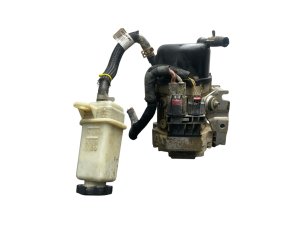
- Electro-Hydraulic Power Steering (EHPS) Pump Assembly
(OEM #68529412AB)— This assembly contains the integrated Power Steering Control Module (PSCM). If the module fails internally, the entire unit must be replaced. This part number supersedes several previous versions.
Related Codes That Often Appear With This One
- U0415 — Invalid Data Received From Anti-Lock Brake System (ABS) Control Module. This often appears with steering codes because the stability control system relies on steering angle data.
- C0051 — Steering Wheel Position Sensor. A fault in the steering sensor can cause conflicts with the power steering module.
- U0100 — Lost Communication With ECM/PCM. This can appear alongside U0131 if the network issue is more widespread, such as a major power/ground problem or a CAN bus fault.
Technical Service Bulletins (TSBs) & Recalls
- S1919000004 Rev.A
- S2208000063 REV.A
- S2019000005RevB
Platform-Specific Known Issues
- A known issue documented in TSB S1919000004 Rev.A is an intermittent "Service Electric Power Steering" message caused by poor ground contact. The TSB specifically calls out inspecting for weld spatter on the ground stud and excess glue from heat shrink tubing on the ground wire's eyelet, both of which must be cleaned off to ensure a good connection.
- TSB S2208000063 Rev.A also addresses U0131 and points to the ground wire not being fully welded or secured to the ground eyelet itself, recommending technicians spot solder the wire to the terminal for a robust repair.
- A very common failure point discussed by owners is the high-amperage fuse block on the positive battery terminal. The nuts securing the power cables can become loose, leading to intermittent power loss to the EHPS module and triggering U0131. Simply tightening these nuts often resolves the issue.
Mechanic-Grade Diagnostic Values
- CAN Bus Voltage (Key On, Engine Off) — expected: CAN C+ should be ~2.6V and CAN C- should be ~2.4V. The two voltages should add up to approximately 5V.. Failure: Significant deviation from these voltages, or voltages that do not add up to ~5V, indicates a bus wiring fault or a faulty module pulling the voltage high or low.
- CAN Bus Resistance (Battery Disconnected) — expected: Approximately 60 Ω (Ohms) when measured between the two CAN bus pins (e.g., pins 6 and 14 at the OBD-II port).. Failure: A reading of ~120 Ω indicates an open circuit or a missing terminating resistor. A reading significantly less than 60 Ω (e.g., 0-40 Ω) suggests a short circuit between the CAN lines or too many terminating resistors.
- EHPS Ground Stud Torque — expected: 15 N-m (11 Ft-Lbs).. Failure: A loose nut can cause intermittent loss of ground and trigger U0131.
Scan Tool Commands That Help
- wiTECH, AlfaOBD, JScan: Proxy Alignment (or Proxi Configuration Alignment) — This procedure is required after replacing the EHPS module or other major network modules. It synchronizes the vehicle's configuration across all modules. Failure to perform a proxy alignment can result in a flashing odometer and persistent communication codes.
- wiTECH, AlfaOBD, JScan: Clear All DTCs — After any repair, especially a proxy alignment, it is critical to clear fault codes from all modules, not just the PSCM. Some modules may require the ignition to be in the ACC position to clear certain codes.
Wiring & Ground Locations
- G908A — On the frame, located behind the passenger side headlight assembly.. This is the primary ground point for the Electro-Hydraulic Power Steering (EHPS) module. Multiple TSBs identify poor contact at this specific stud due to weld spatter or glue as a primary cause for U0131.
- EHPS C1 Connector — The larger of the two main connectors at the EHPS pump assembly.. This connector contains the main power and ground circuits for the EHPS pump motor. A load test should be performed on these pins to verify the circuit can handle the high amperage draw.
- EHPS C2 Connector — The smaller of the two main connectors at the EHPS pump assembly.. This connector contains the CAN communication wires and the ignition run/start signal. Verifying correct CAN bus voltage (~2.4V/2.6V) at these pins is a critical diagnostic step.
- CAN Bus Star Connector (Junction) — Located behind the dashboard, often appearing as a green or white bar where multiple CAN wire pairs converge.. If multiple communication codes are present, this junction is a central point to test the overall health of the CAN network and trace faults to specific branches.
Real Owner Repair Stories
- jlwranglerforums.com user 'Beedo' (Jeep Wrangler JL (year not specified)) — No power steering, particularly in the mornings. The issue would sometimes resolve after the vehicle ran for a few minutes.
❌ Tried (didn't work) Topping off low power steering fluid did not resolve the core electrical issue.
✅ What actually fixed it The issue was resolved by disconnecting the battery's negative terminal for 5 minutes and then reconnecting it. This 'reboot' of the vehicle's modules cleared a temporary software glitch, and the fix was reported to have lasted for at least two weeks. - YouTube channel 'Diagnose It All' (2020 Jeep Gladiator (JT, same platform as Wrangler JL)) — A massive number of communication faults (114 codes), wipers coming on by themselves, and the radiator fan running at full speed. The root cause was a single module failure.
❌ Tried (didn't work) Initial diagnosis pointed towards a security gateway module fault, but further testing was needed.
✅ What actually fixed it The faulty power steering pump was flooding the CAN bus with bad data, causing widespread communication loss across many modules. Disconnecting the power steering pump module allowed the rest of the network to function correctly, isolating it as the failed component. Replacing the pump resolved all issues.
OEM Part Supersession History
68247930AG, 68247930AH, 68247930AI, 68529412AA→68529412AB— Standard part evolution for revisions and improvements.
Heads up: Part 68529412AB is the current replacement for a wide range of 2018-2024 Wrangler and Gladiator models with various engines (2.0L Turbo, 3.6L V6, 3.0L Diesel). Always verify fitment with VIN.
Model Year Variations Within This Range
- 2024+: The 2024 model year refresh introduced a new, larger 12.3-inch Uconnect 5 infotainment system and a redesigned dashboard. While the core EHPS system and its common faults remain the same, any diagnosis involving the CAN bus network must account for the new screen and its integration as a major network module.
- 2018: Early production 2018 JL models were subject to a TSB (08-092-18) that addressed steering wander and dead spots via a software re-flash of the EHPS calibrations. While not directly for U0131, it shows that software updates were an early focus for this system.
Helpful Videos
We Have This Part in Stock



The information in this article is provided for general reference and educational purposes only. Vehicle specifications, procedures, and part compatibility can vary by production date, trim level, and region. Always consult your vehicle's factory service manual and verify part numbers before purchasing or performing repairs. Safety-critical components such as airbags, seat belts, and braking systems should be installed by a qualified professional.
- Jeep WRANGLER:
- 🎬 Helpful Videos
- 🛍️ Shop This Part
- What's Unique About the 2018-2024 Jeep WRANGLER
- Diagnostic Flowchart
- Symptoms You May Notice
- Most Likely Causes
- Rare But Worth Checking
- Diagnosis Steps
- Parts You'll Likely Need
- Related Codes That Often Appear With This One
- Technical Service Bulletins (TSBs) & Recalls
- Platform-Specific Known Issues
- Mechanic-Grade Diagnostic Values
- Scan Tool Commands That Help
- Wiring & Ground Locations
- Real Owner Repair Stories
- OEM Part Supersession History
- Model Year Variations Within This Range
- 🎟️ Get 5% Off