

U0131 on 2019-2022 Honda Insight: Power Steering Communication Loss Causes and Fixes
This code means your car's computer has lost communication with the Electric Power Steering (EPS) module. The most common symptom is a sudden loss of power steering, making the wheel very hard to turn. The cause is often a poor ground connection, a wiring issue, or a weak battery, but can sometimes be a failed EPS module.
- U0131 means a critical loss of communication with the power steering module; do not drive the vehicle.
- Before suspecting expensive parts, thoroughly check the 12V battery, all related fuses, and especially the EPS module's ground connection.
- The most common symptom is a heavy, hard-to-turn steering wheel and a warning light on the dash.
- Diagnosis can be complex and may require a professional with a high-end scan tool to analyze the vehicle's communication network.
- If the EPS module or steering rack needs replacement, it is an expensive repair that may also require programming.
What's Unique About the 2019-2022 Honda Insight
The 2019-2022 Honda Insight is built on the same platform as the 10th generation Honda Civic and shares much of its core architecture. It uses a sophisticated Electric Power Steering (EPS) system that is tightly integrated with its Advanced Driver-Assistance Systems (ADAS), like Lane Keeping Assist. A communication failure here can disable multiple safety features simultaneously. While the root cause is often simple, like a bad ground or low battery, the interconnected nature of these systems means a fault in one area (like the ADAS camera, as seen in a related Honda model) could potentially trigger a cascade of communication codes, including U0131. Honda has also issued product updates for other models like the CR-V for short circuits in the EPS torque sensor causing loss of steering assist, highlighting the sensitivity of these systems.
Symptoms You May Notice
- Complete loss of power steering, making the steering wheel very heavy and difficult to turn.
- Power Steering System (EPS) warning light illuminated on the dashboard.
- Multiple other warning lights may appear, such as for ABS, VSA (Vehicle Stability Assist), or ADAS features like Lane Keeping Assist.
- Steering may feel erratic or vibrate.
- Scan tool is unable to communicate with the EPS control unit.
- Replacing the EPS module or steering rack without first checking the battery, fuses, and especially the ground connection. A poor ground is a common and inexpensive-to-fix cause that is often overlooked.
- Assuming the EPS rack is bad when the actual fault is a simple blown fuse in the under-hood fuse box.
Most Likely Causes
- Poor Ground Connection for EPS Module 🔴 High Probability Service documents for similar platforms highlight that poor ground connections due to weld spatter, corrosion, or improperly secured eyelets are a known cause for intermittent U0131 codes. On Honda platforms, chassis grounds are a frequent point of failure due to moisture and vibration.
How to confirm: Locate the EPS module's ground point on the chassis. On similar Honda models, this is often a 10mm bolt on the subframe or near the firewall. Disconnect the battery, then unbolt the ground strap. Thoroughly clean the eyelet and the chassis mounting point with a wire brush or emery cloth until shiny. Ensure the connection is free of paint, glue, or corrosion and is re-tightened securely.
Typical fix: Cleaning and securing the ground connection. Some owners fabricate heavier-gauge ground wires to ensure a robust connection.
Est. part cost: $0-$15 - Low System Voltage or Weak Battery 🟡 Medium Probability Modern vehicles with numerous electronic modules, including the Insight's hybrid systems, are highly sensitive to battery voltage. A weak or failing 12V battery can cause transient voltage drops during startup or when the hybrid system transitions, leading to communication errors between modules.
How to confirm: Test the 12V AGM battery with a multimeter or a dedicated battery tester. A healthy battery should read above 12.4V (ideally 12.6V) with the engine off. Check the charging system voltage (should be 13.8-14.4V) with the engine running. Many communication faults can be traced back to a battery that fails a load test, even if voltage seems acceptable.
Typical fix: Recharge or replace the 12V battery.
Est. part cost: $180-$350 - Damaged Wiring or Loose Connector at EPS Module 🟡 Medium Probability
How to confirm: Visually inspect the wiring harness and electrical connector going to the Electric Power Steering (EPS) module, which is part of the steering rack assembly. Look for any signs of chafing, corrosion (green crust), bent pins, or rodent damage. Pay close attention to the CAN bus wires (often a twisted pair of red and white wires). A scan tool that can read network data can help confirm if the module is offline.
Typical fix: Repair the damaged section of the harness or clean/replace the connector. In one documented case on a similar Honda, water intrusion caused corrosion on the connector pins, and cleaning them restored communication.
Est. part cost: $10-$100 - Blown Fuse for EPS Module ⚪ Low Probability
How to confirm: Consult the owner's manual or a service manual to locate the fuse(s) for the Electric Power Steering system. On similar Hondas, there is often a large 60A or 70A fuse in the under-hood fuse box (sometimes on the battery terminal itself) and a smaller 7.5A control fuse that supply power to the EPS module. Visually inspect the fuse; if the metal strip inside is broken, it's blown. Use a multimeter to test for continuity.
Typical fix: Replace the blown fuse with a new one of the exact same amperage. If a fuse blows repeatedly, it indicates a short circuit in the wiring or the EPS module itself that must be diagnosed.
Est. part cost: $1-$10 - Failed Power Steering Control Module (PSCM) ⚪ Low Probability
How to confirm: This is typically diagnosed by exclusion. If the battery, fuses, grounds, and wiring are all confirmed to be good, and the module still won't communicate, the module itself is likely faulty. In some cases, the module may get hot to the touch, indicating an internal short. A professional-grade scan tool is required to confirm the module is offline and cannot be re-initialized.
Typical fix: Replace the EPS module. On the 2019-2022 Insight, the module is integrated with the steering rack, requiring replacement of the entire assembly. This requires programming to the vehicle.
Est. part cost: $1500-$2200
Rare But Worth Checking
- CAN Bus Network Fault: A fault in another module or a short in the network wiring can disrupt communication for the entire bus, causing multiple U-codes. The NHTSA complaint for a similar Honda showed U0131 alongside many other U-codes, pointing to a wider network issue. Diagnosis involves checking CAN bus resistance (should be ~60 ohms with key off) and using an oscilloscope to check signal integrity.
- Software Corruption: Rarely, a failed over-the-air update or an interrupted programming session can corrupt the EPS module's firmware, preventing it from communicating on the network. A dealer would need to attempt to re-flash the module as a first step before replacement.
Diagnosis Steps
- Check the 12V battery. Ensure it is fully charged and passes a load test. Low voltage is a common cause of communication codes.
- Use a professional scan tool to check for DTCs in ALL vehicle modules, not just the engine computer. Note all U-codes present and which modules are not communicating.
- Inspect the fuses for the EPS system. Check both the under-hood and interior fuse panels. On similar Hondas, this includes a large multi-amp fuse and a smaller control fuse.
- Locate and inspect the main ground connection for the EPS module. Disconnect, clean the terminal and mounting surface until shiny, and secure the connection.
- Visually inspect the wiring harness and connector at the EPS module (located on the steering rack) for any signs of damage, corrosion, or loose pins.
- If equipped with a capable scan tool, attempt to re-initialize communication with the PSCM.
- If all of the above check out, the issue may be a more complex CAN bus network fault or a failed EPS module, which requires professional diagnosis, potentially including checking CAN bus resistance (~60 Ω).
Parts You'll Likely Need
- Electric Power Steering Rack Assembly
(OEM #53620-TXM-A12 (Touring), 53620-TXM-A02 (LX, EX))— If the EPS control module fails, it is integrated into the steering rack assembly, requiring the entire unit to be replaced. This is a last resort after checking all power, ground, and wiring issues. Part numbers may supersede; 53620-TXM-A11 was replaced by A12, and 53620-TXM-A01 by A02.
Trusted brands: Honda (OEM)
OEM price range: $2000-$2200
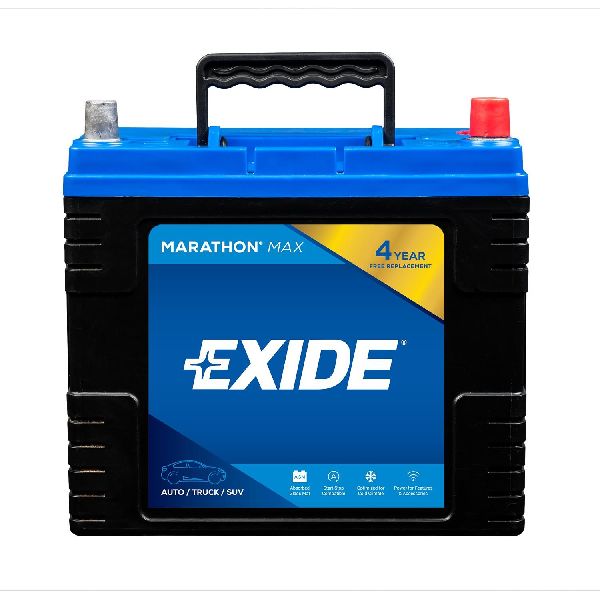
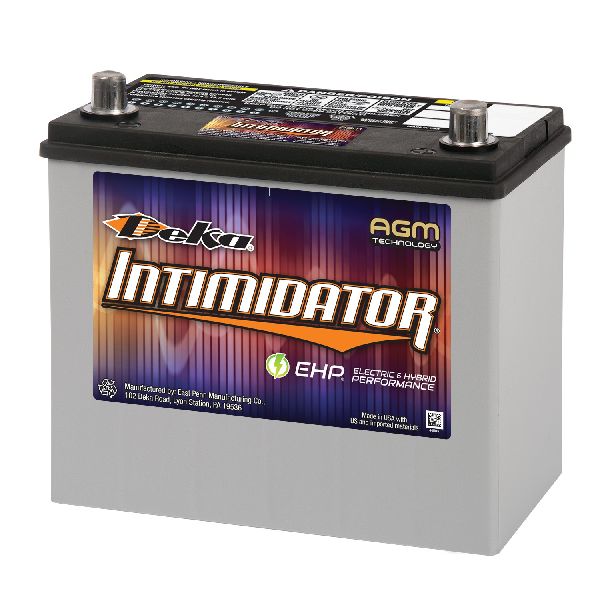
Aftermarket price range: $800-$1400 - 12V AGM Battery — A weak or failing battery can cause low voltage, triggering communication faults across the vehicle's network. The Insight requires a specific AGM battery due to the hybrid system's demands.
Trusted brands: Yuasa, Deka, Odyssey
OEM price range: $250-$350
Aftermarket price range: $180-$250
Related Codes That Often Appear With This One
- U0100 — Lost Communication with ECM/PCM. Often appears with other U-codes when a major network issue is present, as seen in Honda dealer investigations.
- U0122 — Lost Communication with Vehicle Dynamics Control (VSA) Module. The VSA and EPS systems work together, so a network fault can affect both.
- U0155 — Lost Communication with Instrument Panel Cluster Control Module. The cluster often acts as a gateway, so its failure can disrupt communication to other modules.
Technical Service Bulletins (TSBs) & Recalls
- ATI&01032023902: A dealer message from Honda searching for 2019-2022 Insights, among other hybrids, for unspecified issues that could be related to steering or electrical systems.
- TSB 22-011: While for the 2022 CR-V, this TSB details replacing the EPS gearbox due to an internal short in the torque sensor causing loss of steering assist, which is a relevant potential failure mode for similar Honda EPS systems.
- Honda Internal Investigation (May 2024): A request for information from dealers regarding 2023-2025 Accord Hybrids with a specific cluster of 10 'lost communication' codes, including U0131-F1, that appear intermittently. This indicates Honda is actively researching the root cause of these network faults in its hybrid vehicles.
Platform-Specific Known Issues
- Honda has issued TSB 22-011 for other models (2022 CR-V) for EPS gearbox replacement due to a short circuit in the torque sensor causing loss of assist. While not for the Insight specifically, it shows a pattern of EPS component issues in this era.
- A TSB for a different manufacturer (Stellantis) highlights the exact issue of poor ground connections (weld spatter, glue interference) causing an intermittent U0131, which is a valuable diagnostic clue for any vehicle with this code.
- Honda has active investigations into intermittent 'lost communication' DTCs across its hybrid lineup, including codes like U0131, where multiple warning lights appear and then may disappear after a restart.
Mechanic-Grade Diagnostic Values
- CAN Bus Resistance — expected: ~60 Ω (± 5 Ω). Failure: A reading of ~120 Ω indicates an open circuit or a missing terminating resistor. A reading near 0 Ω indicates a short between CAN High and CAN Low wires.
- CAN High Voltage (Key On, Engine Off) — expected: 2.5V - 3.5V. Failure: Voltage stuck high, low, or at 0V indicates a bus fault.
- CAN Low Voltage (Key On, Engine Off) — expected: 1.5V - 2.5V. Failure: Voltage stuck high, low, or at 0V indicates a bus fault.
- 12V Battery Voltage (Engine Off) — expected: ~12.6V. Failure: Voltage below 12.4V indicates a weak battery that can cause spurious communication codes.
- Charging System Voltage (Engine Running) — expected: 13.8V - 14.4V. Failure: Voltage outside this range indicates an alternator or charging system issue, which can destabilize the EPS module.
Hidden / Shadow Codes Worth Checking
- U0131-F1: This sub-code, noted in an NHTSA complaint, likely indicates a specific failure type, such as 'intermittent communication failure' or 'no signal'. The exact Honda definition is not publicly documented but points to a more detailed fault than the generic U0131. (see via Honda Diagnostic System (HDS) or an advanced professional scan tool capable of reading manufacturer-specific codes.)
- U0131-92: Indicates 'Performance or Incorrect Operation'. This suggests the module is online but not functioning as expected, which could be an internal fault or a software issue. (see via Honda Diagnostic System (HDS) or an advanced professional scan tool.)
Scan Tool Commands That Help
- Honda HDS (or equivalent): Torque Sensor Neutral Position Memorization — This procedure is mandatory after replacing the steering rack, EPS control unit, or performing a wheel alignment. It calibrates the 'zero point' for the steering torque sensor. Failure to perform this can cause steering pull or other issues even if communication is restored.
- Honda HDS (or equivalent): Clear DTCs / Reset Module — Used after a repair to clear the U0131 code. On Hondas, simply disconnecting the battery may not clear codes stored in non-volatile memory; a scanner command is required.
- Manual Procedure (No Tool): Lock-to-Lock Reset — After a battery disconnect or low voltage event, this can sometimes reset the steering angle sensor's learned limits. With the engine on, turn the wheel fully to the left lock, then fully to the right lock, then return to center. This can clear temporary logic faults.
Wiring & Ground Locations
- EPS Module Ground — Typically located on the subframe or chassis rail near the steering rack assembly. Look for a black wire bolted directly to the metal frame.. This is the primary ground for the high-current EPS motor and control unit. Corrosion or a loose connection here is a high-probability cause for intermittent power loss and the U0131 code.
- EPS Control Unit Connector — Directly on the electric power steering rack assembly. It will be a multi-pin connector with large-gauge power/ground wires and smaller-gauge CAN bus wires.. This is the single point of connection for all power, ground, and data signals to the module. It is vulnerable to water intrusion and corrosion, which can interrupt communication.
- DLC (OBD-II Port) Pins 6 & 14 — Under the driver's side dashboard.. Pin 6 is CAN High and Pin 14 is CAN Low. These are the primary points for testing the CAN bus network's resistance and voltage to verify the health of the communication backbone.
Real Owner Repair Stories
- YouTube channel 'makki autos' (2018 Honda City (related model with similar EPS architecture)) — Power steering warning light on, steering was hard to turn, U0131 code stored.
❌ Tried (didn't work) Initial scan showed no communication with the EPS module.
✅ What actually fixed it The technician found no power at the EPS module connector. The cause was a blown main fuse located on the positive battery terminal block in the engine bay. A temporary jumper wire restored power and steering function, confirming the fix was to replace the fuse.
OEM Part Supersession History
53620-TXM-A11→53620-TXM-A12— Revision or supplier change for the Touring trim steering rack.53620-TXM-A01→53620-TXM-A02— Revision or supplier change for the LX and EX trim steering rack.
Diagnostic Flowchart
Other Known Issues on This Vehicle
Issues unrelated to this code that are worth knowing about as an owner of this generation:
- A/C Compressor Shaft Seal Leak 🟠 Medium — Common enough that Honda issued a warranty extension (TSB A23-039) to 10 years/unlimited miles for the seal on the platform-mate Civic. The issue stems from a new refrigerant causing the seal to swell and fail. (Ref: TSB A23-039 (for Civic, but relevant))
- Low-Pressure Fuel Pump Failure 🔴 High — A recall was issued for certain 2020-2021 models where the fuel pump can fail, potentially causing a stall and loss of drive power. (Ref: NHTSA Recall 24V434000)
- Body Control Module (BCM) Software Error 🟠 Medium — A recall was issued for 2019-2020 models for a software error that could disrupt communication between the BCM and other components, causing various electrical malfunctions. (Ref: NHTSA Recall 20V771000)
- DC-DC Converter Shutdown 🔴 High — A recall affected some 2020-2021 models where the DC-DC converter could shut down, preventing the 12V battery from recharging and leading to a loss of drive power. (Ref: NHTSA Recall 23V458000)
- Sticky or Non-Functioning Wiper Stalk 🟡 Low — A common owner complaint is that the intermittent wiper setting is not well-calibrated, and the stalk can feel imprecise.
Used vs. New Parts: Buying Guide for This Vehicle
When a used part is the smart pick: A used steering rack assembly from a reputable salvage yard can be a cost-effective option if the failure is confirmed to be the internal EPS module and not wiring, power, or ground. This is a high-cost OEM part, making a used unit an attractive alternative to a new one.
Donor-vehicle mileage cap: roughly under 80000 miles for the part to have meaningful remaining life.
What to inspect on the donor part:
- Verify the donor vehicle was not in a major front-end collision, which could have damaged the rack.
- Inspect the electrical connector on the used rack for any signs of corrosion, bent pins, or damage.
- Check that the tie rods are straight and the boots are not torn, as this can indicate the overall condition.
- If possible, get the VIN of the donor car to ensure compatibility with your vehicle's trim level (Touring vs. LX/EX).
OEM-only on this vehicle (don't cheap out):
- Electric Power Steering Rack Assembly. While aftermarket options exist, their long-term reliability and compatibility with Honda's sensitive ADAS features can be questionable. An OEM or a low-mileage used OEM part is the safest bet.
Brands owners have reported issues with on this vehicle:
- Unbranded or 'white-box' steering racks from online marketplaces may have issues with software compatibility or may not support the required Torque Sensor Neutral Position learning procedure.
Real Owner Stories
Aggregated from forums and TSBs cited above. Mileages and costs reflect what owners reported in those sources.
2022 Honda CR-V
Symptoms: Loss of steering assist due to an internal short circuit in the torque sensor.
What fixed it: Replacement of the EPS gearbox.
Source hint: TSB 22-011
2023-2025 Honda Accord Hybrid
Symptoms: Multiple 'lost communication' DTCs (including U0131-F1) where multiple warning lights appear and then may disappear after a restart.
What fixed it: Currently under investigation by Honda (as of May 2024) to determine the root cause of these network faults.
Source hint: Honda Internal Investigation (May 2024)
Related OBD-II Codes
Frequently Asked Questions
Does TSB 22-011 apply to my 2019-2022 Honda Insight?
Is Honda investigating the 'lost communication' errors like U0131 on newer hybrids?
Where is the EPS control module located on my Insight if I need to check the wiring?
Can a weak 12V battery really cause a U0131 code on a hybrid like the Insight?
What is the most common 'low-cost' fix for U0131 on Honda platforms?
If my EPS module has failed, can I just replace the module itself?
Helpful Videos
Used OEM Parts in Stock

New Aftermarket Parts Available

The information in this article is provided for general reference and educational purposes only. Vehicle specifications, procedures, and part compatibility can vary by production date, trim level, and region. Always consult your vehicle's factory service manual and verify part numbers before purchasing or performing repairs. Safety-critical components such as airbags, seat belts, and braking systems should be installed by a qualified professional.
- Honda Insight:
- 🎬 Helpful Videos
- 🛍️ Shop This Part
- What's Unique About the 2019-2022 Honda Insight
- Symptoms You May Notice
- Most Likely Causes
- Rare But Worth Checking
- Diagnosis Steps
- Parts You'll Likely Need
- Related Codes That Often Appear With This One
- Technical Service Bulletins (TSBs) & Recalls
- Platform-Specific Known Issues
- Mechanic-Grade Diagnostic Values
- Hidden / Shadow Codes Worth Checking
- Scan Tool Commands That Help
- Wiring & Ground Locations
- Real Owner Repair Stories
- OEM Part Supersession History
- Diagnostic Flowchart
- Other Known Issues on This Vehicle
- Used vs. New Parts: Buying Guide for This Vehicle
- Real Owner Stories
- 2022 Honda CR-V
- 2023-2025 Honda Accord Hybrid
- Related OBD-II Codes
- Frequently Asked Questions
- 🎟️ Get 5% Off