

U0131 on 2014-2020 Chevrolet Impala: Power Steering Communication Loss Causes and Fixes
Code U0131 on a 2014-2020 Impala means the Power Steering Control Module (PSCM) has stopped communicating, causing a loss of power steering. Before replacing the expensive steering rack, check for a loose G111 ground wire on the driver's side strut tower and inspect the 100A F3UB mega fuse in the underhood fuse block, as these are the most common and cheapest fixes per GM TSB #PI1294A.
- U0131 means a total loss of communication with the power steering module, resulting in very heavy steering.
- Before any expensive repairs, ALWAYS check the main power steering ground wire on the driver's side strut tower. A loose nut here is a very common fix.
- Also, check the large power steering fuse in the underhood fuse block.
- If power and grounds are good, the wiring to the steering rack should be inspected for damage.
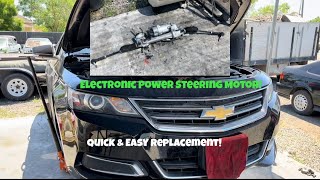
- Because the control module is part of the steering rack, a confirmed module failure requires replacing the entire assembly, which is a costly repair.
What's Unique About the 2014-2020 Chevrolet Impala
The 2014-2020 Impala (tenth generation) uses an electric power steering rack where the control module (PSCM) is integrated directly into the rack assembly. A well-documented issue for this platform is a loose main ground connection (G111) for the power steering harness, located on the driver's side strut tower. GM issued Technical Service Bulletin PI1294A specifically for this issue, instructing technicians to check and tighten the G111 ground to 9 N·m (80 lb in) and inspect the main power fuse before any other repairs. Technicians and owners have found that simply tightening this ground bolt can resolve the U0131 code and restore power steering function, making it a critical first check before considering a costly steering rack replacement. For 2014-2015 models, another potential cause is a chafed body harness under the right rear seat bolster, per TSB PI1487A.
Symptoms You May Notice
- Complete loss of power steering assist (steering wheel is very heavy)
- "Service Power Steering" message on the Driver Information Center (DIC)
- Illumination of the power steering warning light (an icon of a steering wheel)
- ABS and StabiliTrak/ESC warning lights may also illuminate, as the EBCM also sets a U0131 code.
- Scan tool shows 'No Communication' with the Power Steering Control Module.
- Immediately replacing the steering rack without checking grounds or fuses. The most common fix for this code on the Impala is often the cheapest and easiest (the G111 ground), so it should always be checked first as per TSB PI1294A.
Most Likely Causes
- Loose or Corroded Power Steering Ground (G111) 🔴 High Probability This specific ground point on the driver's side strut tower has been identified in multiple repairs and by GM's own TSB (PI1294A) as a common failure point. It can be left loose after unrelated service (like strut replacement) or body work.
How to confirm: Locate the large black ground wire bolted to the driver's side strut tower in the engine bay, near the brake fluid reservoir. Check if the nut is tight. Per TSB PI1294A, it should be torqued to 9 N·m (80 lb in). A video diagnosis on a 2019 Impala clearly shows this loose ground as the culprit. 🎬 Watch a 2019 Impala U0131 ground wire diagnosis
Typical fix: Disconnect the battery. Disassemble the ground connection, clean the contact surfaces of the wire's eyelet and the chassis with a wire brush or sandpaper to ensure bare metal contact, then securely re-tighten the ground nut to the specified torque.
Est. part cost: $0 - Blown Power Steering Fuse (100A) 🟡 Medium Probability The electric power steering motor draws significant current, protected by a large fuse in the underhood fuse block. TSB PI1294A identifies this as the F3UB 100A fuse. A voltage spike or a short circuit in the main power wire can blow this fuse, cutting all power to the module.
How to confirm: Locate the underhood fuse block. Find the 100A mega fuse, often designated as F3UB. Visually inspect the fuse for a break in the internal strip or test for continuity with a multimeter. A diagnostic video on a similar platform shows finding this blown fuse as the cause of no power to the PSCM.
Typical fix: Replace the blown fuse. If it blows again, there is an underlying short circuit in the power wire running to the steering rack that must be diagnosed and repaired.
Est. part cost: $10-$20 - Damaged Wiring or Connectors 🟡 Medium Probability The wiring harness to the steering rack is located under the vehicle, making it susceptible to road debris, corrosion, and rodent damage. A diagnostic video on a related Chevy Malibu showed the main power wire had been misrouted under the battery tray, causing it to chafe and short to ground. 🎬 See how to diagnose a power steering short circuit
How to confirm: Raise the vehicle and visually inspect the two main connectors and associated wiring going to the electric steering rack. One connector carries the main power and ground, the other carries the CAN bus communication wires. Look for chafed wires, corrosion in the connectors, or other visible damage. Wiggling the harness while checking for communication can sometimes reveal an intermittent connection.
Typical fix: Repair the damaged section of the wiring harness or clean/replace the affected connector. Ensure the harness is properly routed and secured away from moving parts or sharp edges.
Est. part cost: $10-$100 - Failed Power Steering Control Module (Steering Rack) ⚪ Low Probability While less common than wiring or ground issues, the internal electronics of the PSCM can fail due to heat, vibration, or age. Since the module is integrated into the steering rack, the entire assembly must be replaced.
How to confirm: This is diagnosed by exclusion. If power (at the 100A fuse and at the rack connector), ground (at G111 and at the rack connector), and CAN bus network integrity (checking for ~60 ohms) are all confirmed to be good, the module itself is condemned. A professional scan tool will show the PSCM as 'offline' or 'no response'.
Typical fix: Replace the entire electric power steering rack and pinion assembly. The new module must be programmed to the vehicle using GM's Service Programming System (SPS).
Est. part cost: $800-$1600
Rare But Worth Checking
- Low Battery Voltage or Failing Alternator: Modern vehicles are sensitive to system voltage. A weak battery or failing alternator can cause unpredictable communication errors between modules, including the PSCM. Always ensure the battery is fully charged and the charging system is working correctly (typically 13.8-14.4V when running) before diagnosing network faults.
Diagnosis Steps
- Read codes from all available modules with a professional scan tool. Note all modules that are reporting lost communication with the PSCM (e.g., BCM, EBCM).
- Check battery health and verify the charging system is operating correctly (typically 13.8-14.4V when running). TSB PI1294A recommends fully charging the battery as a preliminary step.
- Open the hood and locate the main power steering ground (G111) on the driver's side strut tower. Confirm it is clean and tight, torquing to 9 N·m (80 lb in).
- Inspect the large 100A power steering fuse (F3UB) in the underhood fuse block.
- If power and grounds at the source are good, safely raise the vehicle. At the steering rack connector, verify battery voltage on the main power wire and good ground on the ground wire using a multimeter.
- Perform a CAN bus integrity test. With the battery disconnected, measure resistance between Pin 6 (CAN High) and Pin 14 (CAN Low) at the OBD-II port. A healthy network should read approximately 60 ohms.
- If all wiring, power, and grounds are confirmed to be good, the Power Steering Control Module (integrated into the rack) has likely failed. Per TSB PI1294A, reprogramming the PSCM with the latest software is a final step to try before replacement.
- If replacement is necessary, the new steering rack's control module must be programmed to the vehicle.
Parts You'll Likely Need
- Electric Power Steering Rack and Pinion Assembly
(OEM #84494624)— This is the required part if the integrated Power Steering Control Module (PSCM) has failed, as it is not serviced separately. The part number may vary based on specific options.
Trusted brands: ACDelco (OEM), Cardone (Remanufactured), Detroit Axle
OEM price range: $1200-$1600
Aftermarket price range: $700-$1100 - 100 Amp Mega Fuse — This fuse (designated F3UB in TSB PI1294A) protects the high-current circuit for the electric power steering motor and can blow due to a short circuit.
Trusted brands: Bussmann, Littlefuse
OEM price range: $10-$20
Aftermarket price range: $5-$15
Related Codes That Often Appear With This One
- C056D — This code for 'Electronic Control Unit Hardware' can be set alongside U0131, as noted in GM's Technical Service Bulletin #PI1294A.
- C0475 — This code for 'Electric Steering Motor Circuit' is also mentioned in TSB #PI1294A as being related to power steering service messages.
Technical Service Bulletins (TSBs) & Recalls
- PI1294A: Addresses customer concerns of an intermittent 'Service Power Steering' message and associated trouble codes, including U0131. It provides specific torque values for the G111 ground (80 lb in) and F3UB fuse (42 lb in) and recommends a PSCM reprogram.
- PI1487A: For 2014-2015 models, this bulletin addresses multiple intermittent electrical issues, including loss of power steering, caused by the body harness chafing against the right rear seat back bolster bracket.
Platform-Specific Known Issues
- A known issue is an intermittent 'Service Power Steering' message on the DIC, which may set DTC C056D, C0475, or U0131, as documented in TSB #PI1294A. The bulletin recommends checking the G111 ground, the 100A fuse, and reprogramming the module before replacing parts.
Mechanic-Grade Diagnostic Values
- CAN Bus Network Resistance — expected: Approximately 60 Ω (with battery disconnected). Failure: A reading significantly higher than 60 Ω suggests an open in the circuit or a missing termination resistor. A reading significantly lower suggests a short between the CAN wires.
- CAN High Voltage (Key On, Engine Off) — expected: ~2.5 V (recessive/idle state), transitions to ~3.5 V (dominant state). Failure: Voltage stuck high, low, or at 0V indicates a bus fault or short.
- CAN Low Voltage (Key On, Engine Off) — expected: ~2.5 V (recessive/idle state), transitions to ~1.5 V (dominant state). Failure: Voltage stuck high, low, or at 0V indicates a bus fault or short.
- PSCM Ground Circuit Voltage Drop — expected: Near 0 V. Failure: Any significant voltage reading (e.g., several volts as seen in one diagnostic video) indicates high resistance in the ground circuit, most likely a loose or corroded G111 ground.
- G111 Ground Nut Torque — expected: 9 N·m (80 lb in). Failure: A loose nut can cause intermittent loss of communication.
Hidden / Shadow Codes Worth Checking
- C056D 3C: The '3C' is a symptom byte that provides specific details about the 'Electronic Control Unit Hardware' fault. GM's GDS2 software uses these symptom bytes to narrow down the diagnostic path. While not a 'hidden' code, it provides dealer-level diagnostic insight. (see via A professional scan tool capable of reading GM-specific codes and data, such as a GM MDI with GDS2 software.)
Scan Tool Commands That Help
- GDS2 (GM Global Diagnostic System 2): Reprogram Power Steering Control Module — Use with the Service Programming System (SPS) as a final step before replacing the PSCM. TSB PI1294A recommends this to load the latest calibrations, which may resolve software-related communication issues.
- GDS2 (GM Global Diagnostic System 2): Power Steering Control Module Programming and Setup — This function is required after installing a new power steering rack to program the new module to the vehicle's VIN and options. Failure to program will result in the new part not functioning.
- Professional Scan Tool: Re-initialize Communication — If the PSCM is intermittently offline, this command can be used to attempt to force the module back onto the network. If it fails repeatedly, it points towards a hardware or persistent wiring issue.
Wiring & Ground Locations
- G111 — On the driver's side strut tower in the engine bay, near the brake fluid reservoir.. This is the main ground connection for the Power Steering Control Module. A loose or corroded connection here is the most common cause of U0131 on this vehicle.
- PSCM Connectors — On the electric power steering rack itself, located under the vehicle near the front subframe. There are two primary connectors: a large 2-pin connector for main power and ground, and a smaller multi-pin connector for the CAN bus and other signal wires.. These connectors are the final destination for power, ground, and communication. They must be checked for voltage, ground integrity, and corrosion if the source connections (fuse block, G111) are good.
- Body Harness at Rear Seat — Under the right rear seat back bolster.. On 2014-2015 models, the metal bracket for the seat bolster can chafe through the body wiring harness, shorting CAN bus wires. This can cause a loss of communication with multiple modules, including the PSCM, leading to a U0131 code and loss of power steering.
Real Owner Repair Stories
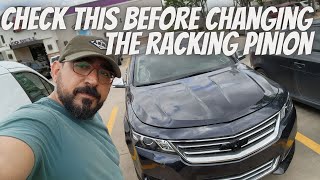
- YouTube channel 'I Can Fix It !!!' (2017 Chevrolet Impala) — Loss of power steering. A previous shop diagnosed a bad steering control module and quoted a steering rack replacement.
❌ Tried (didn't work) Initial diagnosis by another shop pointing to steering rack failure.
✅ What actually fixed it The actual fault was a damaged right rear wheel speed sensor wire that had been pinched during a previous wheel hub replacement. Replacing the ABS wheel speed sensor cable restored communication and power steering function for about $50. - YouTube channel 'Dallas Auto Diag' (2019 Chevrolet Impala) — Hard power steering, no communication with PSCM, U0131 set in the BCM after collision repair.
❌ Tried (didn't work) Checking the 100A fuse, which was found to be good., Attempting to communicate with the PSCM with a scan tool, which showed 'no response'.
✅ What actually fixed it The G111 ground nut on the driver's side strut tower was found to be completely loose. The body shop had likely failed to tighten it after repairs. Tightening the ground nut restored communication and fixed the power steering. - YouTube channel 'Auto Repair Tips' (2018 Chevrolet Truck (similar GM electric power steering system)) — No power steering after the owner replaced the battery. A dealership replaced the power steering module/rack assembly but could not fix the problem after two months.
❌ Tried (didn't work) Owner replaced the battery, possibly causing a short., Dealer replaced the entire power steering rack/module assembly.
✅ What actually fixed it A detailed inspection found damaged wires within the main wiring harness. Repairing the damaged wires and reprogramming the module restored power steering function. This highlights that even with a new module, underlying wiring damage can be the root cause.
"I Checked Everything" — The Actual Cause
- A technician could verify power, ground, and CAN bus resistance at the PSCM and find them all to be perfect, yet the power steering remains inoperative. In one documented case on a 2017 Impala, the root cause was a severed rear ABS wheel speed sensor wire. The Electronic Brake Control Module (EBCM) sent invalid data over the CAN bus, causing the PSCM to shut down as a safety precaution. The fix was repairing the ABS sensor wiring, not the steering rack.
When the Usual Fixes Don't Work
- While the most common fixes are the G111 ground or the 100A fuse, a notable repair on a 2017 Impala that was initially diagnosed with a failed steering rack was actually resolved by replacing a damaged rear wheel speed sensor wire. This demonstrates that other system inputs on the CAN network can cause a complete loss of power steering, and a U0131 diagnosis should not be limited to only the PSCM and its direct power/ground circuits.
Model Year Variations Within This Range
- 2014-2015 (built prior to March 26, 2015): These models are subject to a potential wiring harness chafe issue under the right rear seat bolster, as identified in TSB PI1487A. This can cause intermittent loss of power steering and multiple communication codes that may not be present on later models.
Diagnostic Flowchart
Other Known Issues on This Vehicle
Issues unrelated to this code that are worth knowing about as an owner of this generation:
- 6T70/6T75 Transmission Shudder or Harsh Shifting 🟠 Medium — Common as vehicles approach and exceed 100,000 miles. Can be caused by torque converter issues, failed pressure switches in the TEHCM, or valve body wear. (Ref: TSB #18-NA-358 addresses a 'launch shudder' and recommends valve body replacement instead of the TEHCM.)
- MyLink Infotainment Black/Frozen Screen 🟡 Low — A common annoyance reported by many owners. The screen may go black, freeze, or become unresponsive. (Ref: No specific recall, but it's a widely known software glitch. Fixes range from a soft reset (holding home/fast-forward buttons), a power cycle (disconnecting the battery), or a dealer-installed software update.)
- Crankshaft Reluctor Ring Movement (3.6L V6) 🔴 High — A known issue on the 3.6L LFX engine where the crankshaft position sensor reluctor wheel can shift, causing timing-related codes (P0016-P0019), rough running, and stalling. (Ref: No recall, but a well-documented engine problem. The repair is labor-intensive as it requires crankshaft replacement.)
- Cracked Front Catalytic Converter Pipe (3.6L V6) 🟠 Medium — Some 2014-2017 models are prone to cracks developing around the mounting flange weld on the front catalytic converter, causing an exhaust leak noise.
- High-Pressure Fuel Pump Failure (3.6L V6) 🟠 Medium — The high-pressure fuel pump can fail prematurely, leading to hesitation, stalling, and setting code P228C.
Used vs. New Parts: Buying Guide for This Vehicle
When a used part is the smart pick: For this specific repair, a used steering rack assembly is highly discouraged. The part is safety-critical and contains a complex electronic control module that requires programming. A used part carries unknown history and a high risk of premature failure. A used wiring harness may be a viable option if the original is damaged, provided the used part is inspected for corrosion, cut wires, and brittleness.
Donor-vehicle mileage cap: roughly under 75000 miles for the part to have meaningful remaining life.
What to inspect on the donor part:
- For a wiring harness: Check that all connector pins are straight and free of corrosion.
- Ensure the plastic loom is not cracked or brittle.
- Verify there are no signs of previous repair (e.g., splices wrapped in electrical tape).
- Confirm the part comes from a vehicle that did not have a front-end collision.
OEM-only on this vehicle (don't cheap out):
- Electric Power Steering Rack and Pinion Assembly: Due to the integrated control module, programming requirements, and high labor cost for replacement, using an OEM (ACDelco) new or OEM-remanufactured part is strongly recommended. Aftermarket remanufactured units have a reputation among mechanics for higher failure rates, leading to costly repeat repairs.
Aftermarket brands forum-validated for this vehicle:
- ACDelco (OEM Remanufactured): Often considered the most reliable remanufactured option as it is done to OEM standards.
Brands owners have reported issues with on this vehicle:
- Generic/White-Box Remanufacturers: Mechanics often report issues with steering racks from non-specialized, low-cost remanufacturers, citing premature leaks or electronic failure. The warranty may cover the part, but not the significant labor and alignment costs to replace it again.
Real Owner Stories
Aggregated from forums and TSBs cited above. Mileages and costs reflect what owners reported in those sources.
2019 Chevrolet Impala
Symptoms: The steering wheel became very heavy due to a complete loss of power steering assist, and the scan tool showed 'No Communication' with the Power Steering Control Module.
What fixed it: The technician located a loose ground wire (G111) on the driver's side strut tower. Cleaning the contact surfaces and tightening the nut restored communication.
Source hint: A video diagnosis on a 2019 Impala clearly shows this loose ground as the culprit.
2016 Chevrolet Malibu
Symptoms: The vehicle experienced a loss of power steering and threw code U0131.
What fixed it: The main power wire had been misrouted under the battery tray, causing it to chafe and short to ground, which blew the 100A fuse.
Source hint: A detailed diagnostic video on a 2016 Malibu with code U0131
2014-2015 Chevrolet Impala
Symptoms: Multiple intermittent electrical issues including a sudden loss of power steering assist.
What fixed it: Repairing the body harness where it was chafing against the right rear seat back bolster bracket.
Source hint: TSB PI1487A
Related OBD-II Codes
Frequently Asked Questions
My 2014 Impala has a 'Service Power Steering' message; does TSB PI1294A apply to my car?
Where is the G111 ground located on my 2014-2020 Impala?
Which fuse should I check for a U0131 code on my Impala?
Can a problem with the rear seat affect the power steering on my 2015 Impala?
If I replace the steering rack myself to fix the U0131 code, is it plug-and-play?
Why are my ABS and StabiliTrak lights on along with the power steering warning?
Helpful Videos
We Have This Part in Stock



The information in this article is provided for general reference and educational purposes only. Vehicle specifications, procedures, and part compatibility can vary by production date, trim level, and region. Always consult your vehicle's factory service manual and verify part numbers before purchasing or performing repairs. Safety-critical components such as airbags, seat belts, and braking systems should be installed by a qualified professional.
- Chevrolet Impala:
- 🎬 Helpful Videos
- 🛍️ Shop This Part
- What's Unique About the 2014-2020 Chevrolet Impala
- Symptoms You May Notice
- Most Likely Causes
- Rare But Worth Checking
- Diagnosis Steps
- Parts You'll Likely Need
- Related Codes That Often Appear With This One
- Technical Service Bulletins (TSBs) & Recalls
- Platform-Specific Known Issues
- Mechanic-Grade Diagnostic Values
- Hidden / Shadow Codes Worth Checking
- Scan Tool Commands That Help
- Wiring & Ground Locations
- Real Owner Repair Stories
- "I Checked Everything" — The Actual Cause
- When the Usual Fixes Don't Work
- Model Year Variations Within This Range
- Diagnostic Flowchart
- Other Known Issues on This Vehicle
- Used vs. New Parts: Buying Guide for This Vehicle
- Real Owner Stories
- 2019 Chevrolet Impala
- 2016 Chevrolet Malibu
- 2014-2015 Chevrolet Impala
- Related OBD-II Codes
- Frequently Asked Questions
- 🎟️ Get 5% Off