

U0128 on 2010-2012 Land Rover Range Rover: Park Brake Communication Fault Causes and Fixes
On a 2010-2012 Range Rover (L322), U0128 indicates a true communication failure with the Electronic Park Brake (EPB) module. This is often caused by a failed EPB module/actuator assembly, a faulty switch, or wiring issues. It is NOT related to the fuel gauge problems seen on the Range Rover Sport and LR4 models with the same code.
- For a 2010-2012 Range Rover (L322), U0128 means a problem with the Electronic Parking Brake system, NOT the fuel gauge.
- The most common cause is a complete failure of the EPB module/actuator assembly located at the rear of the vehicle.
- Symptoms include a parking brake fault warning on the dash and the inability to use the parking brake.
- Diagnosis requires checking power, ground, and CAN bus signals at the module connector.
- This is not a simple DIY repair; replacing the module is a complex job that requires special procedures and is best left to a professional.
What's Unique About the 2010-2012 Land Rover RANGE ROVER

It is critical to distinguish the full-size Range Rover (L322) from the Range Rover Sport (L320) and LR4 (Discovery 4). For the Sport and LR4, Land Rover issued a TSB (#LTB00566NAS2) linking U0128 to a software glitch causing fuel gauge errors. This TSB does NOT apply to the 2010-2012 full-size Range Rover (L322). For this vehicle, U0128 should be diagnosed as a direct fault within the Electronic Park Brake (EPB) system, its wiring, or its associated components.
Diagnostic Flowchart

Tap your situation to follow the diagnostic path that matches what you're seeing on this vehicle.
Symptoms You May Notice

- Parking brake warning light is illuminated or flashing on the dashboard.
- A message like 'Parking Brake Fault' appears on the instrument display.
- Inability to engage or disengage the electronic parking brake using the console switch.
- A loud screeching or grinding noise from the rear of the vehicle when attempting to use the parking brake, indicating a failing actuator.
- The parking brake may become stuck in the engaged or disengaged position.
- Needing to pull the EPB switch multiple times for it to activate, often accompanied by a message to press the brake pedal even if you already are.
- Replacing fuel level senders. This is the correct fix for a U0128 on a Range Rover Sport or LR4, but it is incorrect for a full-size Range Rover and will not solve the parking brake issue.
Most Likely Causes

- Failed Electronic Park Brake (EPB) Module/Actuator 🔴 High Probability The EPB module is a complex electro-mechanical unit mounted underneath the vehicle near the rear differential, where it is exposed to moisture, road salt, and debris, leading to internal failure or corrosion of the housing and electronics. The screeching sound is a hallmark of internal gear failure or a seized motor.
How to confirm: After confirming power and ground to the module, use a Land Rover-specific scan tool (like an IID tool) to attempt to communicate with it. If the module has power but does not respond or logs internal fault codes (like U3000-4B), it has likely failed internally. An owner on rangerovers.net reported that even with the U0128 communication code, the screeching noise and failure to engage confirmed the actuator was bad.
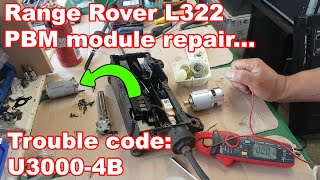
Typical fix: Replacement of the entire EPB module and actuator assembly. This also requires replacing the control cables and properly adjusting and bedding-in the new system. Some specialist shops offer a repair service for the existing module. 🎬 Watch: How to repair and refurbish your EPB module.
Est. part cost: $700-$1800 - Damaged Wiring or Corroded Connector 🟡 Medium Probability The wiring harness to the EPB module runs under the car and is susceptible to damage from road debris, while the connector itself can suffer from water intrusion and corrosion, interrupting the CAN bus signal. The CAN bus wires are a twisted pair, and damage to them can disrupt the network.
How to confirm: Visually inspect the wiring harness leading to the EPB module for any signs of chafing, breaks, or corrosion. Unplug the connector and check for corroded or bent pins. Use a multimeter to check for continuity on the CAN High and CAN Low wires between the module and a known good point on the network.
Typical fix: Repair the damaged section of wiring or clean/replace the connector. Land Rover provides harness repair kits for this purpose.
Est. part cost: $20-$150 - Faulty Electronic Park Brake Switch ⚪ Low Probability The switch in the center console contains microswitches that can fail over time or get debris inside, sending an erratic or no signal and causing an intermittent communication fault.
How to confirm: A key symptom is needing to pull the switch multiple times for it to work. A user on aulro.com confirmed that after replacing a 3-month-old actuator, the U0128 code and intermittent symptoms persisted until the switch itself was replaced.
Typical fix: Replace the EPB switch assembly in the center console. The Land Rover part number is approximately LR032064.
Est. part cost: $90-$150 - Low Battery Voltage or Failing Alternator ⚪ Low Probability Land Rover vehicles of this era are highly sensitive to system voltage. A weak battery can cause numerous, seemingly unrelated communication (U-prefix) codes to appear as modules fail to initialize correctly during startup.
How to confirm: Test the battery voltage with the engine off (should be >12.4V) and with the engine running (should be 13.5V-14.5V). Load test the battery to check its health, as a battery can show good voltage but fail under load.
Typical fix: Charge or replace the battery. If charging voltage is low, diagnose the alternator and charging system.
Est. part cost: $200-$400
Rare But Worth Checking
- Jammed Actuator Mechanism (Not Internally Failed):
Diagnosis Steps
- Read all fault codes from all vehicle modules using a Land Rover-compatible scan tool. Note if U0128 is the only code, or if other communication faults are present.
- Check and load test the vehicle's battery. Ensure voltage is stable and above 12.4V with the engine off.
- Attempt to actively communicate with the 'Park Brake Control Module' using the scan tool. If it does not respond, proceed to physical checks.
- Listen for the 'screech of death' when attempting to apply the brake. This sound strongly indicates a mechanical or motor failure within the actuator module itself. 🎬 See how to use the emergency release when it squeals.
- Locate the EPB module (typically mounted above the rear differential). Visually inspect its electrical connector and the surrounding wiring for obvious damage, corrosion, or water intrusion.
- If the wiring looks good, use a multimeter to verify that the module is receiving proper battery voltage (12.0-12.8V with ignition on) and has a solid ground connection (less than 0.1 Ω resistance).
- If power and ground are confirmed but the module is still unresponsive, the EPB module/actuator assembly is the most likely point of failure.
- If the module communicates but the fault persists (e.g., requires multiple pulls of the switch), investigate the EPB switch in the center console.
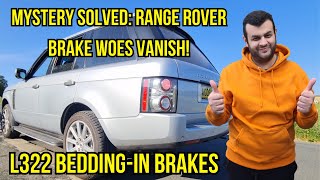
- After replacement, perform the EPB bedding-in procedure, which involves driving the vehicle and applying the brake multiple times in a specific sequence to ensure proper shoe contact. 🎬 Watch: Step-by-step guide to the EPB bedding-in procedure.
Parts You'll Likely Need
- Electronic Park Brake (EPB) Module and Actuator Assembly
(OEM #LR028112 (supersedes LR011915))— This is the most common point of failure for this fault code on the L322 Range Rover, often failing internally both electronically and mechanically.
Trusted brands: Land Rover (Genuine), TRW
OEM price range: $1100-$1860
Aftermarket price range: $450-$700 - Electronic Park Brake Switch
(OEM #LR032064)— A less common but known failure point that can cause intermittent communication faults before failing completely.
Trusted brands: Land Rover (Genuine)
OEM price range: $95-$150
Aftermarket price range: $50-$90
Related Codes That Often Appear With This One
- U3000-4B (Control Module - System Internal Failures - Over-temperature): This code can be stored within the EPB module itself and points directly to an internal failure, often of the motor.
Technical Service Bulletins (TSBs) & Recalls
- LTB00566NAS2
Platform-Specific Known Issues
- The provided NHTSA Technical Service Bulletin #LTB00566NAS2, which links U0128 to fuel gauge problems, is specific to the LR4 and Range Rover Sport models and does NOT apply to the full-size Range Rover.
- Accessing the EPB module on the L322 is more difficult than on the Range Rover Sport, as it may require lowering the rear subframe, which adds significant labor time and cost.
- A YouTuber, LM Auto Repairs, documented a repair of a 2010 Range Rover Vogue EPB module, finding the internal motor had failed, causing a U3000-4B code alongside the communication loss. He replaced the motor and internal gears as a preventative measure.
Mechanic-Grade Diagnostic Values
- CAN Bus Network Resistance — expected: ~60 Ohms. Failure: A reading of ~120 Ohms indicates an open circuit or one of the terminating resistors (in the Instrument Cluster or ABS module) is offline. A reading significantly lower than 60 Ohms (especially near 0) indicates a short between the CAN High and CAN Low wires.
- CAN High Voltage to Ground (Ignition ON) — expected: ~2.5V to 3.5V. Failure: Voltage outside this range can indicate a short to power or ground.
- CAN Low Voltage to Ground (Ignition ON) — expected: ~1.5V to 2.5V. Failure: Voltage outside this range can indicate a short to power or ground.
- EPB Module Power Supply Voltage — expected: 12.0V - 12.8V. Failure: Low voltage can cause communication dropouts and trigger U-codes.
- EPB Module Ground Resistance — expected: < 0.1 Ohms. Failure: High resistance indicates a poor ground connection, which is a common cause of module communication failure.
Hidden / Shadow Codes Worth Checking
- U0128-00: This is the most common sub-code associated with the main U0128 fault. The '-00' suffix doesn't add much diagnostic value on its own but confirms the fault is a general 'Lost Communication' event without a more specific subtype being identified by the logging module. (see via Land Rover-specific scan tools like IIDTool, Autel, or SDD will display this full code.)
Scan Tool Commands That Help
- GAP IIDTool / Land Rover SDD: EPB Unjam Procedure — Use this function if you hear the screeching noise but the module hasn't completely failed. It attempts to electronically drive the actuator out of a jammed state. This can sometimes be a temporary fix if the jam is caused by shoe adjustment issues rather than internal gear failure.
- GAP IIDTool / Land Rover SDD: Move to Mounting/Service Position — This is a mandatory first step before any mechanical work on the rear brakes or EPB module. It fully retracts the actuator to allow for removal of components without causing damage.
- GAP IIDTool / Land Rover SDD: Exit Mounting/Service Position & Calibrate — This is a mandatory final step after replacing the EPB module or rear brake components. It re-initializes the system, finds the new biting point, and sets the correct clamping force thresholds. Skipping this will lead to premature failure of the new parts.
- Manual Procedure (No Scan Tool): EPB Bedding-In Procedure — After replacing rear brake discs or EPB shoes, this procedure is required to properly mate the new shoes to the drums. With the engine running, press and release the brake pedal 3 times, hold it down, then pull the EPB switch up 4 times and push it down 3 times. The dash will confirm 'EPB Service Mode'. Then, drive between 19-31 mph and apply the parking brake by pulling the switch until the vehicle stops; repeat 10 times.
Wiring & Ground Locations
- EPB Module Connector — On the EPB module itself, which is mounted above the rear differential. Access is typically through the driver's side (offside) rear wheel arch.. This is the primary connection point for power, ground, and the CAN bus signals to the module. It is highly exposed to water and debris, making it a common point for corrosion and wiring damage that directly causes the U0128 code.
- EPB Module Ground Point — The EPB module grounds through its wiring harness to a chassis ground point in the rear of the vehicle. A key ground stud for many rear components is located in the luggage compartment area.. A corroded or loose ground connection will prevent the module from powering on and communicating, resulting in a U0128 code even if the module itself is functional.
- CAN Bus Terminating Resistors — On the High-Speed CAN bus for this system, the two 120-Ohm terminating resistors are located within the Instrument Panel Cluster (IPC) and the Anti-lock Brake System (ABS) module.. While not a direct cause of a single module failure, a fault with one of these resistors or their modules can disrupt the entire network, causing various communication codes, including U0128. A resistance check across the CAN lines should read ~60 Ohms; a reading of ~120 Ohms points to a problem with one of these termination points.
Real Owner Repair Stories
- AULRO.com user 'brian' (Land Rover Discovery 4 (similar EPB system to L322)) — EPB required two pulls of the switch to activate. The first pull would flash the brake light and show a 'press brake pedal' message, even though the pedal was pressed. The second pull would work correctly. Fault code U0128-00 was logged each time.
❌ Tried (didn't work) The EPB actuator/module had already been replaced 3 months prior, ruling it out as the cause., Clearing the fault code with an IIDTool; the code would return immediately upon the next 'two-pull' activation.
✅ What actually fixed it The user later confirmed in the thread that replacing the EPB switch assembly in the center console resolved the problem completely.
When the Usual Fixes Don't Work
- In a documented case on an Australian Land Rover forum, a user with a U0128 code and symptoms of needing to pull the EPB switch twice for it to engage had already replaced the main EPB actuator module three months prior. The common fix (replacing the module) did not apply. The actual cause was a faulty EPB switch in the center console, which was sending an intermittent signal and causing the communication fault. This highlights that if the main module has been recently replaced and a communication fault persists, the switch itself should be the next component to be investigated.
OEM Part Supersession History
LR011915→LR028112, LR032176— Component revisions and improvements to address reliability issues of the original EPB module.
Heads up: While later part numbers are generally improved, ensure the replacement part is specified for the L322 Range Rover, as the physically similar module for the Range Rover Sport (L320) has different software and cable lengths.
Helpful Videos

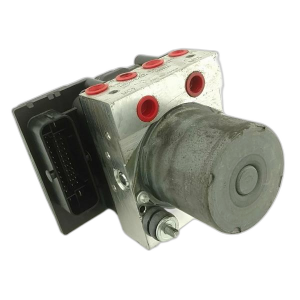
We Have This Part in Stock





The information in this article is provided for general reference and educational purposes only. Vehicle specifications, procedures, and part compatibility can vary by production date, trim level, and region. Always consult your vehicle's factory service manual and verify part numbers before purchasing or performing repairs. Safety-critical components such as airbags, seat belts, and braking systems should be installed by a qualified professional.
- Land Rover RANGE ROVER:
- 🎬 Helpful Videos
- 🛍️ Shop This Part
- What's Unique About the 2010-2012 Land Rover RANGE ROVER
- Diagnostic Flowchart
- Symptoms You May Notice
- Most Likely Causes
- Rare But Worth Checking
- Diagnosis Steps
- Parts You'll Likely Need
- Related Codes That Often Appear With This One
- Technical Service Bulletins (TSBs) & Recalls
- Platform-Specific Known Issues
- Mechanic-Grade Diagnostic Values
- Hidden / Shadow Codes Worth Checking
- Scan Tool Commands That Help
- Wiring & Ground Locations
- Real Owner Repair Stories
- When the Usual Fixes Don't Work
- OEM Part Supersession History
- 🎟️ Get 5% Off