

U0126 on 2013-2020 Ford Fusion: Lost Communication With Steering Angle Sensor Fixes
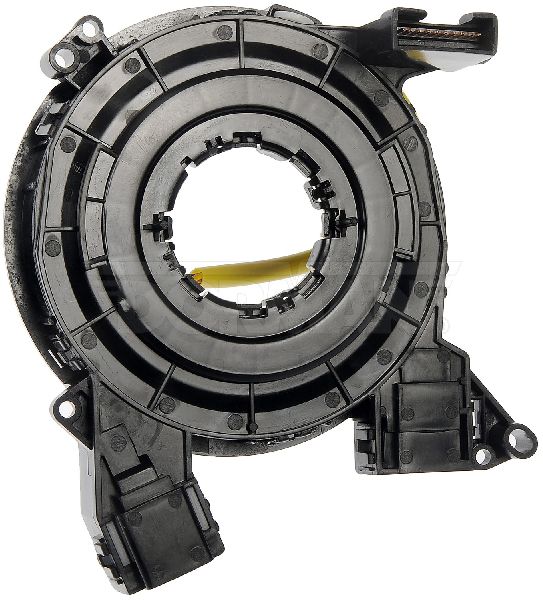
This code means the car's computers lost contact with the steering angle sensor. On the 2013-2020 Fusion, this is most often caused by a failed clock spring assembly behind the steering wheel. Expect to pay $150-$350 for the part and another 1-2 hours for labor and calibration.
- U0126 on a Ford Fusion means your stability control (AdvanceTrac) and ABS are disabled.
- The most likely cause is a worn-out clock spring assembly behind the steering wheel.
- Check for other symptoms like an airbag light or non-working steering wheel buttons, which strongly point to a bad clock spring.
- This is not a DIY-friendly repair for beginners due to the need to handle the airbag and perform electronic calibration after the part is replaced.
- Always check if your vehicle is affected by open safety recalls related to the steering system.
What's Unique About the 2013-2020 Ford Fusion
The 2013-2020 Ford Fusion uses an Electric Power Assisted Steering (EPAS) system that relies heavily on data from the Steering Angle Sensor. On this platform, the SAS is typically integrated with or located directly behind the clock spring. This clock spring contains a flexible ribbon of wires that is a known wear item. After years of turning the steering wheel, these wires can fatigue and break, leading to the U0126 communication fault.
Symptoms You May Notice
- "Service AdvanceTrac" warning message on the dashboard
- ABS warning light is on
- Traction control/stability control light is on
- Steering feels heavy or has reduced power assist
- Airbag warning light may also be illuminated
- Steering wheel-mounted controls (radio, cruise control) may stop working
- Horn may not work
- Replacing the ABS module when the fault is actually the clock spring. Always diagnose the SAS module communication first.
- Replacing the entire power steering rack. While the Fusion has had recalls related to the steering rack, those typically cause a loss of assist without necessarily setting a U0126 code.
Most Likely Causes
- Failed Clock Spring / Steering Angle Sensor Assembly 🔴 High Probability The clock spring contains a ribbon cable that flexes with every turn of the steering wheel. Over many years and thousands of turns, the internal wires fatigue and break, severing the connection to the integrated steering angle sensor, as well as the driver's airbag and steering wheel controls.
How to confirm: Check for other related failures like an inoperative horn, dead steering wheel buttons, or an airbag light. Use a professional scan tool to attempt to read live data from the steering angle sensor. If there is no data stream, and power/ground to the module are confirmed, the assembly has likely failed.
Typical fix: Replace the clock spring and steering angle sensor assembly. The new sensor must be calibrated to the vehicle using a diagnostic scan tool.
Est. part cost: $150-$350 - Low Battery Voltage or Failing Alternator 🟡 Medium Probability Modern vehicles are sensitive to system voltage. A weak battery can cause random communication dropouts between modules on the CAN network as they power up, especially during engine cranking.
How to confirm: Test the battery with the engine off; it should be at least 12.4 volts. With the engine running, check the alternator output, which should be around 13.5-14.5 volts. If the code appeared after a jump-start or with a known old battery, this is a likely cause.
Typical fix: Recharge or replace the battery. If the charging system is faulty, replace the alternator.
Est. part cost: $150-$400 - Wiring or Connector Issue ⚪ Low Probability The wiring harness in the steering column can be subject to stress or damage during previous repairs, or pins can back out of the connector at the base of the column.
How to confirm: Visually inspect the connectors and wiring going to the steering column control module and clock spring. Check for backed-out pins, corrosion, or chafed wires. Test for power, ground, and CAN bus signal integrity at the module connector with a multimeter.
Typical fix: Repair the damaged section of the wiring harness or clean/reseat the connector.
Est. part cost: $5-$50
Rare But Worth Checking
- Faulty ABS Control Module: The ABS module is a primary user of the steering angle data. In rare cases, an internal failure of the ABS module can cause it to stop communicating properly on the network, which may be misinterpreted as a fault with the SAS module. This is more likely if multiple other U-codes related to the ABS module are also present.
Diagnosis Steps
- Perform a full vehicle scan to check for codes in all modules. Note any other communication (U-codes) or system-specific codes, especially for the airbag (B-codes) or ABS systems.
- Check the battery and charging system. Ensure the battery has a static charge of at least 12.4V and that the alternator is providing ~14V with the engine running. Low voltage can cause widespread communication faults.
- Using a capable scan tool, attempt to access the live data stream from the Steering Angle Sensor module. If there is no data, the module is not communicating.
- If no communication is possible, access the clock spring/SAS module connector at the steering column.
- Verify the module is receiving proper battery voltage and has a solid ground connection using a digital multimeter.
- Check the CAN bus network integrity. With the battery disconnected, check for resistance between the two data lines (pins 6 and 14 of the OBD-II port). It should be approximately 60 ohms. A reading of 120 ohms indicates an open circuit or a missing terminating resistor, while a reading below 60 ohms could indicate a shorted wire or faulty module.
- With the key on, you can also check CAN bus voltages. CAN High should be ~2.6V and CAN Low should be ~2.4V.
- If power, ground, and network wiring are all confirmed to be good, the Steering Angle Sensor/Clock Spring assembly is faulty and needs to be replaced.
- After replacement, perform the Steering Angle Sensor calibration procedure. This often involves using the scan tool, but a basic calibration can sometimes be initiated by starting the car and turning the steering wheel all the way to the left, then all the way to the right.
- Clear all codes and perform a test drive to ensure the warning lights do not return.
Parts You'll Likely Need
- Clock Spring / Steering Angle Sensor Assembly
(OEM #DG9Z-14A664-A, EG9Z-14A664-A (Note: Specific part number varies based on vehicle options like heated steering wheel))— This is the most common point of failure. The internal ribbon cable breaks from normal use, severing communication from the integrated steering angle sensor.
Trusted brands: Motorcraft, Dorman
OEM price range: $250-$400
Aftermarket price range: $150-$250
Related Codes That Often Appear With This One
- U0121 — Lost Communication With ABS Control Module. This can appear if the ABS module itself is failing or if there is a wider network problem.
- U0140 — Lost Communication With Body Control Module. Often indicates a more widespread network or power supply issue.
- B-series codes — Various Body codes related to the airbag (SRS) system, like B0001, can appear if the clock spring has failed, as it also provides the connection to the driver's airbag.
Platform-Specific Known Issues
- Recall 19S26: For 2013-2016 models in corrosion-prone regions, steering gear motor bolts can fracture, causing a loss of power steering assist. While not a direct cause of U0126, it's a critical safety issue for the steering system.
- Recall 18S08: For 2014-2018 models, the steering wheel retaining bolt can loosen, which could lead to the steering wheel detaching. This is an urgent safety recall.
- Clock Spring Weld Failure: Some vehicles were recalled because an insufficient weld in the clock spring could cause a loss of electrical connection to the driver's airbag, illuminating the airbag light and disabling the horn and steering wheel switches. This is the same component that fails and causes U0126.
Mechanic-Grade Diagnostic Values
- HS-CAN Bus Resistance — expected: ~60 Ω (with a tolerance of ±5 Ω). Failure: A reading of ~120 Ω indicates an open in the circuit or a missing terminating resistor. A reading significantly less than 60 Ω suggests a short between the CAN lines or a faulty module.
- HS-CAN Bus Voltage (Key-On, Engine-Off) — expected: CAN High (Pin 6 at DLC): ~2.6V. CAN Low (Pin 14 at DLC): ~2.4V.. Failure: Voltages stuck near 0V or 5V, or a lack of differential swing, indicates a hard fault on the bus.
- Ground Resistance at SAS Module Connector — expected: < 0.1 Ω to chassis ground.. Failure: Higher resistance indicates a poor ground connection, which can cause intermittent communication dropouts.
- Power Supply at SAS Module Connector — expected: 12.0V - 12.6V (Key-On, Engine-Off).. Failure: Voltage below this range, especially below 10V, can cause the module to fail to initialize and communicate.
Scan Tool Commands That Help
- FORScan: SAS (Steering Angle Sensor) Calibration — This service function is required after replacing the clock spring/SAS assembly to zero the sensor's position. It can be found under the service procedures menu (wrench icon), typically within the ABS or PSCM module functions.
- FORScan / Professional Scan Tool: Live Data Stream - Steering Angle Sensor — This is a primary diagnostic step. Attempt to view the live angle reading from the sensor. If the data is frozen, erratic, or completely absent while turning the steering wheel, it confirms a communication or sensor fault.
- Ford IDS (Integrated Diagnostic System): IVD Initialization — On some Ford platforms, the formal SAS reset is part of the ABS module's Interactive Vehicle Dynamics (IVD) initialization sequence. This procedure calibrates the longitudinal acceleration sensor, which is tied to the steering angle offset. This is a more advanced procedure typically done with dealer tools.
Wiring & Ground Locations
- G200 / G201 — Center of the dash panel, often near the center console or behind the radio/HVAC controls.. These are primary grounding points for many instrument panel modules. A loose or corroded ground here can cause intermittent communication issues for multiple components in the dash, including the Steering Column Control Module which gateways SAS data.
- G202 — Left side of the dash, typically behind the driver's side kick panel or lower dash trim.. Serves as another critical ground point for driver-side electronics. A fault here could directly impact modules in the steering column.
- G204 — Inside the steering wheel itself, providing a ground path through the clock spring.. While the main failure is usually broken data lines in the clock spring, a failure of the ground path within the same assembly can also cause issues with steering wheel controls and contribute to electrical noise.
- C1467A / C1467B — Connectors for the Power Steering Control Module (PSCM).. The PSCM is a key module on the HS-CAN bus that uses SAS data. Technicians may need to test for power, ground, and CAN signals at these specific connectors during advanced diagnosis.
Real Owner Repair Stories
- Reddit user on r/FordFocus (platform shares similar electronics) (2015 Ford Focus) — Intermittent "Hill Assist not available" message, turn signals not working, key not detected prompts, and U0126 code.
❌ Tried (didn't work) A shop reset the steering angle sensor, which provided a temporary fix, but the issue returned. The shop then stated they could find no codes on the second visit.
✅ What actually fixed it The user was advised by others that the symptoms strongly pointed to a failing clock spring or a wiring harness issue in the steering column, as a simple reset did not permanently solve the problem. The intermittent nature and collection of steering-column-related failures (signals, key detection, SAS) are classic signs of the clock spring's internal wiring breaking. - YouTube video by Johnson's Gee-rage (2017 Ford Fusion) — Steering wheel controls stopped working correctly. A code for the steering wheel angle sensor was also present.
❌ Tried (didn't work) N/A, went straight for the suspected cause.
✅ What actually fixed it The owner diagnosed the issue as a faulty clock spring based on the combination of non-functional steering wheel controls and the SAS code. The video documents the successful replacement of the clock spring, which resolved all symptoms.
OEM Part Supersession History
DG9Z-14A664-A→EG9Z-14A664-H, EG9Z-14A664-N— Part revision and consolidation by Ford. The newer part numbers are the current service replacements.
Heads up: The specific part number required depends on vehicle options like a heated steering wheel. Always verify the correct part number with the vehicle's VIN. EG9Z-14A664-N is often listed for models without a heated steering wheel.
Model Year Variations Within This Range
- 2013-2020: While the fundamental cause (clock spring failure) is consistent, there are multiple clock spring part numbers depending on options (heated steering wheel, cruise control type). For example, part DG9Z-14A664-A is a common number, but it has been superseded. It is critical to use the vehicle's VIN to get the exact correct replacement part, as a part for a non-heated wheel will not work correctly on a vehicle equipped with one.
Diagnostic Flowchart
Other Known Issues on This Vehicle
Issues unrelated to this code that are worth knowing about as an owner of this generation:
- EcoBoost Engine Coolant Intrusion 🔴 High — Common on 1.5L and 2.0L EcoBoost engines. A design flaw in the open-deck engine block can cause a crack to form between cylinders, allowing coolant to leak into the combustion chamber. Symptoms include misfires, white exhaust smoke, and unexplained coolant loss. (Ref: TSB 19-2346, TSB 20-2100, TSB 22-2134. The official fix is a redesigned engine short block.)
- Shifter Cable Bushing Failure 🔴 High — Extremely common across multiple Ford models, including the 2013-2016 Fusion. The bushing that attaches the shifter cable to the transmission degrades and detaches, causing a mismatch between the gear selected by the driver and the actual gear the transmission is in. This can lead to a rollaway risk if the vehicle is not actually in Park. (Ref: Recall 18S20, 22S43. Dealers will replace the bushing and add a protective cap.)
- Faulty Door Latch Assembly 🔴 High — A widespread issue where a pawl spring tab inside the door latch mechanism breaks. This can result in a door that will not close or, more dangerously, a door that unlatches while driving. (Ref: Recall 15S16, expanded multiple times. The fix involves replacing all four door latch assemblies.)
- Harsh or Delayed Shifting (6F35 Transmission) 🟠 Medium — Owners report issues with the 6-speed automatic transmission, including harsh shifts or delays in engagement. For lower-mileage vehicles, a PCM/TCM software update can sometimes resolve the issue. On higher-mileage cars, it may indicate internal wear requiring more significant repairs.
- Swollen/Delaminated Lug Nuts 🟡 Low — A very common annoyance where the two-piece factory lug nuts have their chrome caps swell and deform due to corrosion. This makes it difficult or impossible to fit a standard lug wrench over them, complicating tire changes. The only fix is to replace them with solid, one-piece lug nuts.
Used vs. New Parts: Buying Guide for This Vehicle
When a used part is the smart pick: For this specific repair, a used clock spring is NOT recommended. The part fails due to mechanical wear (flexing of the internal ribbon cable). A used part from a salvage yard has an unknown amount of wear and is likely to fail much sooner than a new part, if it works at all. The labor to replace it is significant enough that you do not want to do the job twice.
What to inspect on the donor part:
- Not applicable, as used parts are not advised for this component.
OEM-only on this vehicle (don't cheap out):
- While not strictly 'OEM-only', using a high-quality OEM (Motorcraft) or a reputable aftermarket equivalent is highly recommended over a used part. The clock spring is critical for both safety (airbag) and vehicle control (SAS).
Aftermarket brands forum-validated for this vehicle:
- Dorman (Part numbers 525-204, 525-213 depending on options) is a widely available aftermarket alternative that is reverse-engineered to match the original.
- Standard Motor Products (SMP) is another reputable aftermarket manufacturer.
Brands owners have reported issues with on this vehicle:
- Be cautious of unbranded, extremely low-cost parts from online marketplaces. Reviews for these are mixed, and failure of this component can disable safety systems and require repeating the repair.
Real Owner Stories
Aggregated from forums and TSBs cited above. Mileages and costs reflect what owners reported in those sources.
2013-2020 Ford Fusion
Symptoms: The 'Service AdvanceTrac' warning message appeared on the dashboard, the ABS and traction control lights stayed on, and the steering felt heavy with reduced power assist.
What fixed it: Replacement of the clock spring and steering angle sensor assembly followed by a calibration procedure using a scan tool.
Source hint: YOUCANIC video '2013-2020 Ford Fusion - Clock Spring Replacement'
2013-2020 Lincoln MKZ
Symptoms: The airbag warning light was illuminated and the horn stopped working entirely.
What fixed it: Replacement of the clock spring assembly, which restored the electrical connection to the driver's airbag and horn.
Source hint: YouTube video 'Lincoln MKZ Clockspring Replacement (Airbag Light On And No Horn)'
Lincoln MKZ Zephyr (CD4 Platform)
Symptoms: Loss of communication with the steering column electronics; steering wheel buttons were unresponsive.
What fixed it: Replacement of the clock spring, ensuring the new unit was centered during installation.
Source hint: Nick the car guy video 'How to replace the clock spring on a lincoln mkz zephyr'
Related OBD-II Codes
Frequently Asked Questions
My 2014 Ford Fusion has a 'Service AdvanceTrac' message and the horn doesn't work. Is this related to a recall?
Can a weak battery cause the U0126 code on my 2017 Fusion?
I have a U0126 code and my steering wheel buttons stopped working. What is the most likely fix?
Does the new steering angle sensor need to be programmed after replacement?
Are there any steering-related recalls for the 2013-2016 Ford Fusion I should check while fixing U0126?
We Have This Part in Stock


The information in this article is provided for general reference and educational purposes only. Vehicle specifications, procedures, and part compatibility can vary by production date, trim level, and region. Always consult your vehicle's factory service manual and verify part numbers before purchasing or performing repairs. Safety-critical components such as airbags, seat belts, and braking systems should be installed by a qualified professional.
- Ford Fusion:
- 🛍️ Shop This Part
- What's Unique About the 2013-2020 Ford Fusion
- Symptoms You May Notice
- Most Likely Causes
- Rare But Worth Checking
- Diagnosis Steps
- Parts You'll Likely Need
- Related Codes That Often Appear With This One
- Platform-Specific Known Issues
- Mechanic-Grade Diagnostic Values
- Scan Tool Commands That Help
- Wiring & Ground Locations
- Real Owner Repair Stories
- OEM Part Supersession History
- Model Year Variations Within This Range
- Diagnostic Flowchart
- Other Known Issues on This Vehicle
- Used vs. New Parts: Buying Guide for This Vehicle
- Real Owner Stories
- 2013-2020 Ford Fusion
- 2013-2020 Lincoln MKZ
- Lincoln MKZ Zephyr (CD4 Platform)
- Related OBD-II Codes
- Frequently Asked Questions
- 🎟️ Get 5% Off