

U0121 on 2018-2025 Jeep Wrangler: Causes and Fixes for Lost ABS Communication
On a 2018-2025 Jeep Wrangler, code U0121 often points to a failing battery, especially the smaller auxiliary battery responsible for the Engine Start-Stop (ESS) system. Before suspecting expensive modules, fully test both batteries and check their related ground connections, specifically ground G907a. A new auxiliary battery costs around $100-$200 and is a very common fix.
- U0121 means the ABS module is offline; this disables ABS, traction control, and stability control.
- On a 2018+ Wrangler, the most likely cause is a failing auxiliary battery, followed by the main battery.
- Always load test BOTH batteries before starting more complex wiring or module diagnostics.
- Check and clean the ABS module ground point (G907a) located behind the driver's side front fender.
- Do not replace the expensive ABS module until power, grounds, and wiring have been proven to be good.
What's Unique About the 2018-2025 Jeep WRANGLER

The Jeep Wrangler JL (2018+) has a complex dual-battery system (main and auxiliary) to manage its electronics and Engine Start-Stop (ESS) feature. This system is highly sensitive to voltage drops, and a failing auxiliary battery is a very common cause of various communication codes, including U0121. A manufacturer TSB even links U0121 to an inoperative Start/Stop system, highlighting this connection. The JL platform also utilizes CAN bus 'Star Connectors' or junction blocks, where a fault in an unrelated module, like the power steering pump, can disrupt the entire network and manifest as a U0121 code.
Diagnostic Flowchart

Tap your situation to follow the diagnostic path that matches what you're seeing on this vehicle.
Generation note: The 2018-2025 range primarily covers the 'JL' generation Wrangler. The previous 'JK' generation was also sold in 2018. While the code's meaning is the same, the dual-battery system that is a frequent cause is specific to the JL. Diagnostic procedures and component locations, like the G907a ground point, may differ between a 2018 JK and a 2018+ JL.
Symptoms You May Notice

- ABS warning light is on
- Traction Control or Electronic Stability Control (ESC) light is on
- Check Engine Light is on
- "Service Electronic Stability Control" message on the dash
- Engine Start/Stop (ESS) system is unavailable or inoperative
- Cruise control may not function
- Service 4WD light may be on
- In rare cases, the transmission may enter a 'limp mode' or not shift out of park
- Replacing the ABS wheel speed sensors. U0121 is a communication code for the entire module, not a signal code from a specific sensor. 🎬 Watch: This video explains the U0121 code and how to fix it. A bad wheel speed sensor would typically set a C-code (e.g., C0031-C0034).
Most Likely Causes

- Failing Auxiliary or Main Battery 🔴 High Probability The JL Wrangler's dual-battery system is a known weak point. The smaller auxiliary battery fails frequently and can cause widespread, intermittent electrical and communication faults due to unstable voltage. Many owners on forums report this as the first and most successful fix.
How to confirm: Use a multimeter to check voltage (should be ~12.6V engine off) and, more importantly, use a dedicated battery load tester to check the health of BOTH the main and auxiliary batteries. Low voltage is a primary cause of CAN bus communication failures.
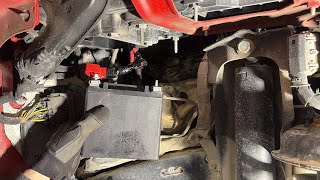
Typical fix: Replace the faulty battery. The auxiliary battery is located in a tray under the main fuse box and is most easily accessed by removing the passenger side front wheel and partially removing the fender liner. 🎬 See this walkthrough for replacing the auxiliary battery through the fender. This requires a 10mm socket and a 4mm 12-point or E-Torx socket for the battery studs.
Est. part cost: $100-$200 for auxiliary battery, $250-$400 for main AGM battery. - Poor Ground Connection 🟡 Medium Probability Corrosion or looseness at key ground points can disrupt module communication. TSB S2208000025 specifically points to a ground (G907a) as a potential cause for U0121 on these vehicles.
How to confirm: Locate, inspect, and clean the ABS module ground point (G907a, located on the driver's side body behind the front fender) and main battery grounds. Ensure connections are clean and tight.
Typical fix: Disconnect the battery, then disassemble the ground connection. Clean the contact surfaces of the ground wire terminal and the chassis with a wire brush until shiny. 🎬 Watch: A guide on how to properly diagnose and clean grounds. Reassemble and tighten securely.
Est. part cost: $0-$5 - Damaged Wiring or Connectors 🟡 Medium Probability The JL/JT platform has known areas where wiring harnesses can chafe or melt. Owners have reported the harness near the passenger side wheel well rubbing on exhaust components, causing shorts. Other chafe points exist near the firewall and suspension components.
How to confirm: Visually inspect the wiring harness leading to the ABS module for any signs of chafing, melting, corrosion, or rodent damage. Pay close attention to the connector at the ABS module itself. Use a multimeter to check for continuity and for shorts to power or ground on the CAN bus wires.
Typical fix: Repair the damaged section of the wire or replace the connector. This may require soldering and heat-shrinking for a durable repair. Secure the harness away from any sharp edges or heat sources using zip ties.
Est. part cost: $5-$50 - Faulty ABS Control Module ⚪ Low Probability
How to confirm: This is a process of elimination. If power, ground, and the CAN bus wiring to the module all test good, but the module still won't communicate, the module itself is likely the culprit. An advanced scan tool may show the module as offline or fail to establish communication.
Typical fix: Replace the ABS control module. The new module will require programming to the vehicle's VIN by a dealer or a properly equipped independent shop using a tool like wiTECH or AlfaOBD. Note: As of 2024-2025, new replacement modules have been on backorder and have had widespread programming failures.
Est. part cost: $300-$800, depending on the specific part number required.
Rare But Worth Checking
- Blown ABS Fuse: A simple but sometimes overlooked cause. Always check the fuses for the ABS system (often labeled ABS Pump and ABS CTRL) in the engine bay fuse box before beginning complex diagnostics.
- Faulty Gateway Module (SGW) or other module: A different module on the same CAN bus can fail in a way that it floods the network with bad data, preventing other modules like the ABS from communicating. This usually triggers a storm of communication codes (multiple U-codes) across the vehicle.
- Aftermarket Accessories: Improperly installed aftermarket electronics (such as a Tazer, remote start, or lighting) that tap into the CAN bus can cause communication interference and trigger this code. A diagnostic step can be to disconnect any such devices to see if the fault clears.
Diagnosis Steps
- Scan all vehicle modules with an advanced OBD-II scanner capable of reading manufacturer-specific codes and record all present fault codes. Note which modules are not communicating.
- Check the state of charge and health of both the main and auxiliary batteries using a digital multimeter and a load tester. A voltage below 12.4V (engine off) is a red flag. This is the most common cause.
- Inspect all ABS-related fuses (e.g., ABS Pump, ABS Controller) in the engine bay fuse box. Pull them and check for continuity.
- Locate, disconnect, clean, and secure the ABS module ground point (G907a on the driver's side body behind the fender) and the main battery ground connections. TSB S2208000025 specifically calls out this ground.
- Visually inspect the wiring harness leading to the ABS module, particularly around the passenger side exhaust and suspension components, for any signs of melting, chafing, or physical damage.
- If batteries and grounds are good, use a multimeter to test for 12V power and good ground at the ABS module connector pins. Refer to a wiring diagram for your specific vehicle.
- If power and ground are present, test the CAN bus wires for proper resistance (should be ~60 ohms across CAN High and CAN Low with the battery disconnected) and voltage (should be ~2.5V on each line with the key on, engine off).
- If any aftermarket accessories that interface with the vehicle's network are installed (like a Tazer), disconnect them completely and re-test.
- If all wiring, power, and grounds test good, the ABS module is the most likely failed component.
Parts You'll Likely Need
- Auxiliary Battery
(OEM #68647042AA, 56029759AB)— This is the most frequent cause of communication codes on the JL Wrangler platform due to voltage instability when it fails.
Trusted brands: Mopar, Deka, NAPA, Interstate (AUX14)
OEM price range: $150-$200
Aftermarket price range: $100-$150 - ABS Control Module
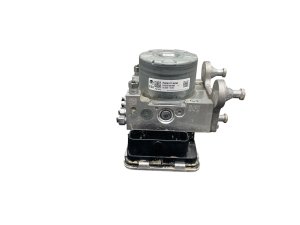
(OEM #68443422AG, 68438389AG)— The module can fail internally, but this should only be replaced after all other causes are ruled out. Note that part numbers are highly specific and may have compatibility issues.
Trusted brands: Mopar
OEM price range: $300-$800
Aftermarket price range: N/A
Related Codes That Often Appear With This One
- U0037-00 — As noted in TSB S2208000025, this LIN BUS fault can appear with U0121, indicating a broader network or wiring issue related to the ground G907a.
- U0102 — Lost Communication With Transfer Case Control Module. Often set alongside U0121 when there is a widespread network or power supply issue, as seen in TSB 23-033-25.
- U0401 — Invalid Data Received From ECM/PCM. This can occur when the ABS module is offline and not providing expected data to the engine controller.
- C1252-92 — Brake booster vacuum pump issue. This can appear with U0121, pointing towards a problem in the greater braking system network or a shared power/ground issue.
- U0002 — CAN C Bus Off Performance. This code indicates the entire network is going down, often due to a wiring short or a faulty module spamming the bus. It frequently appears with U0121 when the problem is more severe than just a single module losing power.
Technical Service Bulletins (TSBs) & Recalls
- S2208000025: ABS Lamp On, U0121 Lost Communication With ABS Module, Stop Start Inoperative U0037-00 LIN BUS
- 23-033-25: Lists U0121 as part of a group of potential lost communication DTCs.
Platform-Specific Known Issues
- TSB S2208000025 directly links U0121 to an illuminated ABS lamp and an inoperative Stop/Start system, sometimes accompanied by a U0037-00 LIN BUS fault. The prescribed fix is to inspect, clean, and secure ground G907a.
- TSB 23-033-25 lists U0121-00 as one of several potential 'Lost Communication' codes that can appear, suggesting a broader network failure is possible.
- Forum discussions consistently point to the dual-battery system as a primary culprit for a host of electrical issues, including U0121, on the JL Wrangler and JT Gladiator platforms.
- Wiring harness chafing and melting is a documented problem. A common failure point is the harness routed near the exhaust on the passenger side, which can short out and cause multiple communication codes.
Mechanic-Grade Diagnostic Values
- CAN Bus Resistance — expected: ~60 Ohms across CAN_H and CAN_L pins at the DLC with the battery disconnected. Some JLs may show ~40 Ohms, indicating a third terminating resistor is on the bus from the factory.. Failure: A reading of ~120 Ohms indicates one of the two main terminating resistors (or the module containing it) is offline. A reading of 0 Ohms or very low resistance indicates a short between the CAN lines.
- CAN Bus Voltage (Key On, Engine Off) — expected: CAN_H should be ~2.5-3.5V and CAN_L should be ~1.5-2.5V. When the bus is idle (recessive state), both lines should be at ~2.5V. The differential voltage is key. Some technicians note the two lines' voltages should add up to approximately 5V.. Failure: A line stuck at 0V or battery voltage, or voltages that do not add up to ~5V, indicates a short to ground, short to power, or a faulty module pulling the bus voltage down.
- Battery Voltage (Engine Off) — expected: 12.6V or higher for a fully charged AGM battery.. Failure: A reading of 12.4V or less indicates a discharged or failing battery, which is a primary cause of communication codes on this platform.
Hidden / Shadow Codes Worth Checking
- C006A: Multiple Axis Acceleration Sensor Calibration Missing Calibration. This code often appears after changing tire size or replacing the ABS module, indicating the G-sensor needs to be recalibrated. (see via Advanced scan tools like AlfaOBD or the dealer's wiTECH will show this in the ABS or ECM modules after a failed initialization.)
- U0418: Invalid Data Received From Brake System Control Module 'A' / Front Brake Module Test Not Complete. This code can set in the ECM when the ABS module initialization or calibration procedures are not completed successfully. (see via Visible with advanced scan tools when checking for faults in the Engine Control Module (ECM).)
Scan Tool Commands That Help
- AlfaOBD: ABS Initialization & Calibration Sequence — After replacing an ABS module or changing tire size, a specific sequence is often required to clear resulting ABS/Traction lights and codes like C006A. The sequence is: 1. Reset ECU Initialization, 2. Static ECU Initialization, 3. Calibrate the brake pedal module, 4. Sensor cluster calibration, then cycle key and clear all DTCs.
- AlfaOBD / wiTECH: Write VIN — When installing a used or new ABS module, the vehicle's VIN must be written to it. In AlfaOBD, this function is sometimes found under the ENGINE module, not the ABS module. If this fails, the dealer-level wiTECH tool is required to perform the programming.
- Bi-Directional Scanners (Autel, Launch, etc.): ABS Initialization / ABS Service Bleed — These tools have special functions to initialize a new module after installation, which may include a specific drive cycle procedure. They are also required to perform an ABS brake bleed, as the tool must command the ABS pump to cycle fluid through the hydraulic unit.
Wiring & Ground Locations
- G907A — Located on the driver's side body, behind the front fender area. It is part of the 'DASH' harness family.. This specific ground is called out in TSB S2208000025 as a potential cause of high resistance leading to U0121. A poor connection here directly impacts the ABS module's communication.
- CAN Bus Star Connector (Junction Block) — Located behind the glove box area on the passenger side. There are typically two, one white and one green.. These connectors are the central hub where many modules' CAN bus wires meet. A fault in any module connected here (like the power steering pump) can disrupt the entire network. Unplugging modules one by one from this block is a key strategy to isolate which component is causing the network failure.
Real Owner Repair Stories
- JLwranglerforums.com user 'Jturs' (2018 Jeep Wrangler) — After programming for 35" tires with AlfaOBD, the ABS and traction control lights came on.
❌ Tried (didn't work) Running the standard 'ABS Initialization' procedure in AlfaOBD, which was greyed out or did not resolve the issue on its own.
✅ What actually fixed it A specific sequence of calibrations in AlfaOBD fixed it. The user ran the following in order: 1. Reset ECU Initialization, 2. Static ECU Initialization, 3. Calibrated the brake pedal module, 4. Sensor cluster calibration. After this sequence and clearing all codes, the lights went out and did not return. This resolved codes C006A, U0432, and U0418.
OEM Part Supersession History
68443422AA (through AH)→Part numbers for JL ABS modules are frequently revised. For example, 68443422 has gone through many revisions (AA, AB, AC, AD, AE, AF, AG, AH).— Revisions for bug fixes or hardware changes.
Heads up: Compatibility is critical and depends on vehicle options like Forward Collision Warning. As of 2024, there are widespread reports of newly sourced modules being unable to be programmed by dealer tools, making even the 'correct' part number unusable.68145835AA, AB, AC, AD→68145835AE— Part consolidation and updates.
Model Year Variations Within This Range
- 2018-2025 JL: Jeep has issued several software updates via Technical Service Bulletins (TSBs) for the JL ABS module (e.g., TSB #08-136-18, #08-040-19, #0809923). Checking if these updates have been applied should be a step before module replacement, as they can resolve certain software-related faults.
- 2018: The 2018 model year included both the older JK generation and the new JL generation. The dual-battery system, G907a ground location, and specific ABS module part numbers discussed are primarily for the JL. The JK has different part numbers and ground locations.
Helpful Videos
We Have This Part in Stock





The information in this article is provided for general reference and educational purposes only. Vehicle specifications, procedures, and part compatibility can vary by production date, trim level, and region. Always consult your vehicle's factory service manual and verify part numbers before purchasing or performing repairs. Safety-critical components such as airbags, seat belts, and braking systems should be installed by a qualified professional.
- Jeep WRANGLER:
- 🎬 Helpful Videos
- 🛍️ Shop This Part
- What's Unique About the 2018-2025 Jeep WRANGLER
- Diagnostic Flowchart
- Symptoms You May Notice
- Most Likely Causes
- Rare But Worth Checking
- Diagnosis Steps
- Parts You'll Likely Need
- Related Codes That Often Appear With This One
- Technical Service Bulletins (TSBs) & Recalls
- Platform-Specific Known Issues
- Mechanic-Grade Diagnostic Values
- Hidden / Shadow Codes Worth Checking
- Scan Tool Commands That Help
- Wiring & Ground Locations
- Real Owner Repair Stories
- OEM Part Supersession History
- Model Year Variations Within This Range
- 🎟️ Get 5% Off