

U0121 on 2011-2021 Jeep Grand Cherokee: Lost Communication With ABS Module Causes & Fixes
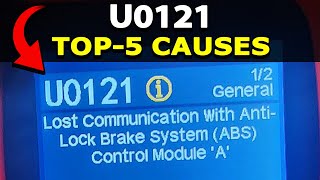
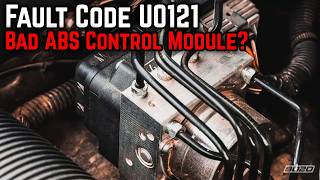
This code means your Grand Cherokee's main computer has lost communication with the Anti-lock Brake System (ABS) module. The most common causes are wiring or connector problems near the ABS module, a loose or corroded ground wire, or a failing ABS module itself. Expect to start with a thorough wiring and ground connection inspection before suspecting the module.
- U0121 means the ABS module is offline, disabling anti-lock brakes and stability control.
- Before replacing any parts, always check the battery, ABS-related fuses, and all wiring/connectors going to the ABS module.
- On the WK2 Grand Cherokee, pay special attention to the main ground connection near the brake booster, as a loose connection here is a known cause.
- If the ABS module must be replaced, it will require programming to your vehicle's VIN to function correctly.
- This is a serious safety issue; driving should be minimized until the fault is repaired.
What's Unique About the 2011-2021 Jeep Grand Cherokee
On the 2011-2021 (WK2) Grand Cherokee, the ABS module is a central hub for braking, traction control, and stability systems. A communication failure is often not the module itself, but the complex wiring harness or a critical ground connection. One well-documented case on a 2011 model, detailed in a ScannerDanner forum thread, revealed a loose main ground connection near the brake booster was the root cause. This was only discovered after the ABS module and TIPM were replaced with no success; simply cleaning and tightening the ground fixed the issue completely. This highlights the importance of checking simple electrical connections before replacing expensive modules. The CAN bus network on these vehicles can also be brought down by a faulty STAR connector, which acts as a central hub for module communication.
Generation note: The 2011-2021 model years cover the entire fourth generation (WK2) of the Jeep Grand Cherokee. The diagnostic and repair information is generally consistent across this generation, though specific part numbers for the ABS module may vary by year and installed options like adaptive cruise control. Fuse box layouts also differ between 2011-2013 and 2014-2021 models.
Symptoms You May Notice
- ABS warning light is on
- Traction Control (ESC/ESP) warning light is on
- Brake warning light is on
- Check Engine Light may be on
- Vehicle may enter a 'limp mode' with reduced power.
- Cruise control may be disabled
- "Service ABS System" or "Service ESC System" message on the instrument cluster
- Replacing the ABS wheel speed sensors. This code is a communication failure with the entire module, not a fault with a specific sensor input. Other codes would be present if a wheel speed sensor were faulty.
Most Likely Causes
- Wiring Harness or Connector Issues 🔴 High Probability Wiring harnesses in the engine bay are exposed to heat, vibration, and moisture, which can lead to corrosion or physical damage over time. The connector for the ABS module is located low in the engine bay, making it susceptible to contamination from road debris and water, which can corrode the pins and disrupt communication.
How to confirm: Visually inspect the wiring harness and connector going to the ABS module for any signs of corrosion, chafing, or damage. Check for power and ground at the module connector using a multimeter and a vehicle-specific wiring diagram. The main power and ground pins are typically larger than the others.
Typical fix: Repair the damaged section of the wiring harness or clean the corroded connector pins with a contact cleaner and apply dielectric grease to prevent future corrosion.
Est. part cost: $10-$100 - Loose or Corroded Ground Connection 🟡 Medium Probability A specific, well-documented case on a 2011 Grand Cherokee showed that a loose main ground connection located on the chassis near the brake booster caused this exact code. After replacing the ABS module and TIPM with no success, cleaning and tightening the ground fixed the issue. Wiring diagrams for the WJ Grand Cherokee (a predecessor) show a specific ground, G107, is dedicated solely to the ABS module, highlighting the importance of this connection. On the WK2, a key ground point is G304, located under the driver's seat.
How to confirm: Locate the main chassis ground points in the engine bay, particularly the one near the brake booster. Check that they are clean, free of corrosion, and securely fastened. A voltage drop test from the ground pin at the ABS connector to the battery negative terminal can confirm a bad ground.
Typical fix: Disconnect the ground wire, clean the contact surfaces of the terminal and the chassis with a wire brush until shiny, then securely tighten the connection. Applying a protective coating can prevent future corrosion.
Est. part cost: $0-$5 - Faulty ABS Control Module 🟡 Medium Probability
How to confirm: After confirming the wiring, connectors, power, and grounds are all good, the module itself is the likely culprit. A professional scan tool will be unable to establish communication with the ABS module, while communication with other modules remains normal.
Typical fix: Replace the ABS control module. The new module must be programmed to the vehicle's VIN and configuration using a scan tool function like 'ABS Initialization'. Some companies offer a repair service for the original module.
Est. part cost: $250-$700 - Low Battery Voltage or Failing Alternator ⚪ Low Probability
How to confirm: Test the battery voltage with the engine off (should be ~12.6V) and with the engine running (should be ~13.7-14.7V). Low system voltage can cause unpredictable communication errors between various electronic modules.
Typical fix: Charge or replace the battery, or replace the alternator if the charging system is faulty.
Est. part cost: $150-$500
Rare But Worth Checking
- Faulty Totally Integrated Power Module (TIPM): The TIPM acts as the central gateway for the CAN bus network. While less common for this specific code, a fault within the TIPM can disrupt communication to the ABS module. This is usually suspected only after all other causes are ruled out and often presents with multiple other communication codes. Early WK2s (2011-2013) were subject to recalls for TIPM-related fuel pump relay failures.
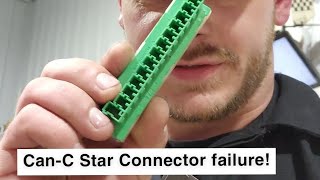
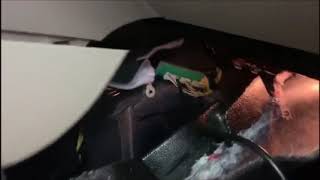
- Faulty STAR Connector (CAN Bus Junction Block): Chrysler/Jeep vehicles use a STAR connector as a central junction point for the CAN bus network. A failure or corrosion within this connector can take down the entire network or specific modules, causing multiple 'U' codes, including U0121. This is often located behind the glove box or in a kick panel. 🎬 Watch: Locating the STAR connectors on a Grand Cherokee
Diagnosis Steps
- Check the Battery: Ensure the battery is fully charged and the terminals are clean and tight. A weak battery can cause various communication codes.
- Scan for Other Codes: Use an advanced scan tool to see what other modules are reporting communication errors. If only U0121 is present, the issue is likely isolated to the ABS circuit. If many 'U' codes are present, it could be a wider network issue, possibly pointing to the STAR connector.
- Inspect Fuses: Check all fuses related to the ABS and stability control systems in the TIPM (fuse box). For 2014-2022 models, these include fuses F06 and F26. 🎬 Watch: How to locate and replace the ABS fuses A blown fuse is a simple but often overlooked cause.
- Inspect Wiring and Grounds: Thoroughly inspect the wiring harness leading to the ABS module for any signs of damage, corrosion, or loose connections. Pay special attention to the main ground straps in the engine bay, especially the one near the brake booster, which has been confirmed as a fix. Also check ground G304 under the driver's seat.
- Test Power and Ground at the Module: Using a multimeter and a wiring diagram, disconnect the ABS module connector and verify it is receiving proper battery voltage, ignition voltage, and has a solid ground connection. On the WK2, large pins 1 and 32 are typically power, while large pins 16 and 47 are grounds.
- Test CAN Bus Wires: With the battery disconnected, check the resistance between the two CAN bus wires (CAN C High/Low) at the ABS module connector. It should be approximately 60 ohms. A reading of 120 ohms suggests a break in the circuit or a problem with a terminating resistor, while a reading near 0 ohms indicates a short between the two wires. The CAN C bus wires are often white/light green and white/light blue.
- Suspect the ABS Module: If all wiring, power, and ground tests pass, and the scan tool still cannot communicate with the ABS module, the module itself is the most likely cause of the failure.
Parts You'll Likely Need
- ABS Control Module
(OEM #68442478AB (supersedes previous numbers, check VIN for compatibility))— If wiring and power supply are confirmed to be good, the module's internal electronics have likely failed, preventing communication.
Trusted brands: Mopar, Cardone (remanufactured), Dorman
OEM price range: $400-$700
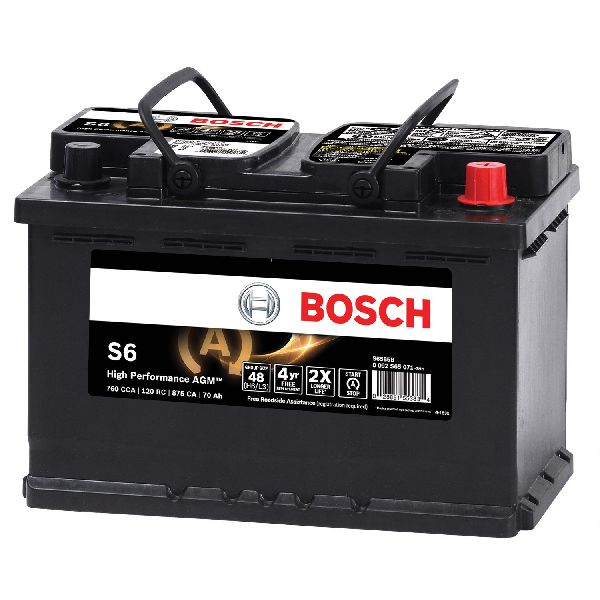
Aftermarket price range: $250-$500 - Battery — Low system voltage from a weak or failing battery is a common cause of network communication errors in modern vehicles.
Trusted brands: Mopar, Interstate, DieHard
OEM price range: $200-$300
Aftermarket price range: $150-$250
Related Codes That Often Appear With This One
- U1120 — This is another communication code, often indicating 'Lost Wheel Distance Message,' which is related to the ABS system's functions.
- U1110 — This is a general 'Lost Vehicle Speed Message' code, which is also dependent on data from the ABS module.
- U0001 — This code indicates a problem with the High-Speed CAN Communication Bus itself, suggesting a wider network problem rather than just an issue with the ABS module.
Technical Service Bulletins (TSBs) & Recalls
- Bulletin #23-033-25: Mentions U0121-00 - Lost Communication With Anti-lock Brake System (ABS) Control Module for Jeep Wrangler, confirming the code's meaning for the brand.
- Bulletin #S2208000025: Notes U0121 Lost Communication With ABS Module on Jeep Wrangler, further corroborating the definition.
Platform-Specific Known Issues
- A documented fix for a 2011 Grand Cherokee with U0121 was a loose main ground connection located near the brake booster. Cleaning and tightening this ground resolved the communication failure after module replacements had failed.
Mechanic-Grade Diagnostic Values
- CAN Bus Resistance — expected: ~60 Ohms. Failure: 120 Ohms indicates an open circuit or missing terminating resistor; ~0 Ohms indicates a short between the CAN High and Low wires.
- CAN C Bus (-) Circuit to Ground Resistance — expected: Above 10k Ohms. Failure: Resistance below 10k Ohms indicates a short to ground in the CAN C Bus (-) circuit.
- CAN C Bus (+) Circuit to Ground Voltage — expected: Below 5.0 Volts. Failure: Voltage above 5.0 Volts indicates a short to voltage in the CAN C Bus (+) circuit.
- ABS Module Power Pins (1 & 32) — expected: Battery Voltage (~12.6V with key on). Failure: Low or no voltage indicates a power supply issue (fuse, relay, wiring).
- ABS Module Ground Pins (16 & 47) — expected: Good continuity to chassis ground (<1 Ohm). Failure: High resistance indicates a bad ground connection.
Scan Tool Commands That Help
- wiTECH or equivalent professional scan tool: ABS Initialization — This routine must be performed after replacing the ABS control module to configure it to the vehicle. It may also resolve a 'Vehicle Configuration Mismatch' DTC stored in the ABS module.
- wiTECH or equivalent professional scan tool: View DTCs / Network Topology — To see which other modules are reporting communication faults. If many modules on the CAN C bus are offline, it points towards a network-wide issue (like a STAR connector) rather than an isolated ABS module problem.
Wiring & Ground Locations
- ABS Module Connector — Attached to the ABS hydraulic control unit, typically low in the engine bay near the brake master cylinder/booster.. This is the primary connection point for power, ground, and CAN bus signals to the module. Corrosion or damage here is a primary cause of U0121.
- CAN C Bus Wires — A twisted pair of wires running to the ABS module connector. Often White/Light Green (CAN+) and White/Light Blue (CAN-).. These two wires are the communication link. A short or open in either wire will sever communication and set code U0121.
- G304 — Under the driver's seat.. A wiring diagram identifies this as a ground point related to the ABS/Dynamics Sensor circuit. A poor connection here could cause communication issues.
- G107 (on predecessor models) — On the driver's side inner fender, behind the airbox on WJ models.. On the older WJ Grand Cherokee, this ground was dedicated solely to the ABS module, highlighting the critical nature of a dedicated, clean ground for this system. While the WK2 location differs, the principle remains.
- STAR Connector (CAN Bus Junction) — Typically located behind the glove box on Jeep Wrangler models, and likely in a similar accessible interior location on the Grand Cherokee.. This is a central hub where multiple module communication lines meet. A fault in this single, inexpensive part can bring down the entire network and mimic a failed ABS module.
Real Owner Repair Stories
- YouTube channel 'South Main Auto Repair' (2005 Jeep Grand Cherokee (similar architecture)) — No communication with the ABS module.
❌ Tried (didn't work) Initial diagnosis confirmed power, ground, and CAN bus signals were present at the ABS module connector, ruling out a wiring issue.
✅ What actually fixed it Replacing the electronic ABS control module with a used unit from a salvage yard restored communication. An 'ABS Initialization' procedure was then required with a scan tool to configure the replacement module. - YouTube channel 'This Old Bus' (2019 Jeep Wrangler JLU (same manufacturer, similar CAN architecture)) — Dashboard lights up with multiple errors including lost communication with ABS, service transmission, engine dying, and wipers activating on their own.
❌ Tried (didn't work) Two months at the dealership failed to produce a permanent fix.
✅ What actually fixed it The owner replaced the CAN-C STAR connector located behind the glovebox. This single part resolved all the communication errors.
OEM Part Supersession History
68382348AA, 68442478AA→68442478AB— Standard part revision and update by the manufacturer.
Heads up: This part number is listed for 2018-2020 models. Always verify compatibility with the vehicle's VIN before ordering, as earlier WK2 models (2011-2017) may use a different part number.
Model Year Variations Within This Range
- 2011-2013 vs 2014-2022: The layout of the main fuse box (TIPM) in the engine bay is different. When checking ABS-related fuses, it is critical to use a diagram specific to the correct year range.
Diagnostic Flowchart
Other Known Issues on This Vehicle
Issues unrelated to this code that are worth knowing about as an owner of this generation:
- Totally Integrated Power Module (TIPM) Failure 🔴 High — Common on 2011-2013 models. Can cause random electrical issues, no-start, or stalling. (Ref: Recalls #14V530, #15V115, #19V813000.)
- Quadra-Lift Air Suspension Failure 🟠 Medium — Common across all years for equipped vehicles. Leaks from air springs/lines or compressor failure are typical.
- Delaminating/Bubbling Leather Dashboard 🟡 Low — Affects higher trims (Overland, Summit) with leather dashboards, particularly in hot climates.
- Oil Filter Housing / Oil Cooler Leaks (3.6L V6) 🟠 Medium — Very common on the 3.6L Pentastar engine. The plastic housing can crack over time, leading to significant oil leaks in the engine valley.
- Hydraulic Lifter/Camshaft Failure (5.7L HEMI) 🔴 High — A known issue with the 5.7L HEMI, often referred to as the 'HEMI tick'. A failed lifter can destroy the camshaft, requiring expensive engine-top-end repairs.
- Uconnect Infotainment System Glitches 🟡 Low — Owners report issues with the screen freezing, becoming unresponsive, or rebooting randomly. Software updates can sometimes fix this.
Used vs. New Parts: Buying Guide for This Vehicle
When a used part is the smart pick: A used ABS control module from a salvage yard can be a cost-effective option, especially if you can find a donor vehicle with similar mileage and from a dry climate to minimize the risk of electronic corrosion. The repair is often successful if the module is the confirmed point of failure.
Donor-vehicle mileage cap: roughly under 120000 miles for the part to have meaningful remaining life.
What to inspect on the donor part:
- Check for any signs of physical damage or corrosion on the housing and connector pins.
- If possible, get the VIN of the donor car to verify its options match yours (e.g., standard vs. adaptive cruise control).
- Ensure the salvage yard offers a warranty or exchange policy in case the used module is also faulty.
OEM-only on this vehicle (don't cheap out):
- While aftermarket modules exist, using a used OEM (Mopar) module is a common and often successful repair strategy. Ensure any replacement module, new or used, is properly initialized to the vehicle.
Aftermarket brands forum-validated for this vehicle:
- Cardone (remanufactured)
- Dorman
Real Owner Stories
Aggregated from forums and TSBs cited above. Mileages and costs reflect what owners reported in those sources.
2011 Jeep Grand Cherokee
Symptoms: Fault U0121 stored in the Gateway (TIPM) module. The owner or technician initially suspected the ABS module or the TIPM itself.
What fixed it: Cleaning and tightening a loose main ground connection located on the chassis near the brake booster.
Source hint: ScannerDanner Forum (diag.net) thread titled 'Fault U0121 stored in Gateway (TIPIM) module for 2011 jee'
Related OBD-II Codes
Frequently Asked Questions
I have a 2011 Grand Cherokee with U0121; could this be related to the common TIPM issues?
Which specific fuses should I check on my 2014-2021 Grand Cherokee for an ABS communication error?
Is there a specific ground point on the WK2 Grand Cherokee known to cause U0121?
Does Jeep acknowledge U0121 in any official service bulletins?
My 2011 Grand Cherokee is throwing U0121 and 'Service ABS' messages; should I replace the ABS module immediately?
Can a weak battery cause the 'Service ESC System' message and U0121 on my Jeep?
Helpful Videos




Used OEM Parts in Stock


New Aftermarket Parts Available


The information in this article is provided for general reference and educational purposes only. Vehicle specifications, procedures, and part compatibility can vary by production date, trim level, and region. Always consult your vehicle's factory service manual and verify part numbers before purchasing or performing repairs. Safety-critical components such as airbags, seat belts, and braking systems should be installed by a qualified professional.
- Jeep Grand Cherokee:
- 🎬 Helpful Videos
- 🛍️ Shop This Part
- What's Unique About the 2011-2021 Jeep Grand Cherokee
- Symptoms You May Notice
- Most Likely Causes
- Rare But Worth Checking
- Diagnosis Steps
- Parts You'll Likely Need
- Related Codes That Often Appear With This One
- Technical Service Bulletins (TSBs) & Recalls
- Platform-Specific Known Issues
- Mechanic-Grade Diagnostic Values
- Scan Tool Commands That Help
- Wiring & Ground Locations
- Real Owner Repair Stories
- OEM Part Supersession History
- Model Year Variations Within This Range
- Diagnostic Flowchart
- Other Known Issues on This Vehicle
- Used vs. New Parts: Buying Guide for This Vehicle
- Real Owner Stories
- 2011 Jeep Grand Cherokee
- Related OBD-II Codes
- Frequently Asked Questions
- 🎟️ Get 5% Off