

U0121 on 2019-2022 Honda Insight: Lost Communication With ABS Module Causes and Fixes
Code U0121 on a 2019-2022 Honda Insight means the main computer has lost communication with the ABS/VSA module. This is frequently caused by an internal failure of the ABS module itself, a common issue on this platform. However, always check for a weak 12V battery, blown fuses, or the completion of recall K9E (for the DC-DC converter) first, as these are simpler and common causes. A professional repair of the module is often more cost-effective than a full replacement.
- U0121 on your Insight means the ABS/VSA safety module is offline.
- Before suspecting the expensive ABS module, you MUST test the 12V battery and check for blown fuses. A weak battery is a very common cause.
- Check if your vehicle was part of the recall for the DC-DC converter (2020-2021 models), as this fault directly impacts the 12V battery's ability to charge.
- If the module itself is faulty, having it repaired by a specialist is often much cheaper than buying a new one from the dealer.
- This is a safety-critical fault; driving without ABS and VSA is risky. Professional diagnosis is strongly recommended.
What's Unique About the 2019-2022 Honda Insight
For the 2019-2022 Honda Insight, its hybrid nature introduces a specific point of failure. A safety recall (Honda campaign K9E, NHTSA 20V-798) was issued for 2020-2021 models because the DC-DC converter could shut down, preventing the 12-volt battery from recharging. A dead or weak 12V battery is a very common trigger for network communication codes like U0121 across all modern vehicles. Therefore, checking the 12V battery health and ensuring this recall software update has been performed is a critical, platform-specific first step.
Symptoms You May Notice
- ABS warning light is on
- VSA (Vehicle Stability Assist) warning light is on
- Brake system warning light is on
- Multiple other warning lights may appear, such as for the Collision Mitigation Braking System (CMBS), Lane Keeping Assist (LKAS), or Adaptive Cruise Control (ACC), as these systems depend on the VSA module.
- Speedometer may not work.
- Brakes may lock up during hard braking
- Electric Power Steering (EPS) warning light may be on.
- Forward Collision Warning (FCW) and Lane Departure Warning (LDW) lights may be on.
- Replacing wheel speed sensors. This code is about communication with the entire module, not a specific sensor input. While a faulty sensor can cause ABS/VSA lights, it will set a different code (e.g., C0035 series).
Most Likely Causes
- Faulty ABS/VSA Modulator-Control Unit 🔴 High Probability Internal failure of the electronic control module is a common issue on many modern Honda vehicles, including the Insight and its platform mates like the Civic and HR-V. Repair specialists indicate failures often occur within the module's circuitry or processor.
How to confirm: After confirming good power, ground, and CAN bus wiring to the module, a professional scan tool that cannot communicate with the ABS/VSA module points to an internal failure. The module will be 'offline'.
Typical fix: The module must be repaired by a specialist or replaced. Repair services are often plug-and-play with no programming needed. A new replacement module requires programming to the vehicle's VIN.
Est. part cost: $200-$500 for a repair service, $1200+ for a new OEM part. - Low Battery Voltage or Charging System Fault 🟡 Medium Probability A recall (NHTSA 20V-798) for the DC-DC converter on 2020-2021 models can prevent the 12V battery from charging properly, leading to low voltage that disrupts module communication. Even on non-recalled vehicles, a failing 12V battery is a primary cause of network codes.
How to confirm: Test the 12V battery with a multimeter or battery tester. It should read at least 12.4V with the car off. With the car in 'Ready' mode, voltage should be around 13.8-14.5V, indicating a functioning charging system.
Typical fix: Recharge or replace the 12V battery. If the charging system is at fault, address the underlying issue (e.g., perform the DC-DC converter recall software update).
Est. part cost: $150-$300 for a new 12V AGM battery. - Blown Fuse or Faulty Relay ⚪ Low Probability
How to confirm: Visually inspect all fuses related to the ABS and VSA systems in the vehicle's under-hood and interior fuse boxes. Use a multimeter to test for continuity.
Typical fix: Replace the blown fuse with a new one of the same amperage.
Est. part cost: $1-$5 - CAN Bus Wiring or Connector Issue ⚪ Low Probability While not exceptionally prone, issues can arise from corrosion or damage. Honda has issued TSBs for other models regarding poor network connector contacts (FAKRA connectors on the MOST bus), indicating potential sensitivity in their network wiring.
How to confirm: Visually inspect the wiring harness and the main connector at the ABS/VSA module for corrosion, moisture, bent pins, or physical damage. A technician can perform a CAN bus network test (resistance and voltage checks) with a multimeter or oscilloscope.
Typical fix: Repair the damaged section of wiring or clean/replace the faulty connector.
Est. part cost: $10-$100 for wiring repair supplies.
Diagnosis Steps
- Scan for all DTCs. Note if U0121 is the only communication code or if there are many. If multiple U-codes are present, suspect a systemic issue like the battery first.
- Check the 12-volt battery. Ensure it is fully charged (above 12.4V) and passes a load test. Check that the charging system is working correctly (13.8V-14.5V in 'Ready' mode). A weak battery is a very common cause.
- Check for relevant recalls. For 2020-2021 models, verify if the DC-DC converter recall (Honda recall K9E / NHTSA 20V-798) software update has been completed.
- Inspect ABS/VSA related fuses. Check both under-hood and interior fuse panels. Consult the owner's manual for specific fuse locations and replace any that are blown.
- Inspect the ABS/VSA module connector. Disconnect the 12V battery first. Unplug the module and check for any signs of corrosion, moisture, or damaged/bent pins. Clean with electrical contact cleaner if necessary.
- Verify Power and Ground at the module connector. With the key on, use a multimeter to confirm that the module connector is receiving battery voltage on the correct power pins and has a solid connection to chassis ground on the ground pins.
- Test CAN Bus signals. This is an advanced step. With the key on, check for approximately 2.5V on both the CAN High and CAN Low wires at the module connector. With an oscilloscope, you should see mirror-image square wave signals.
- If power, ground, and CAN signals are present at the connector but the scan tool still cannot communicate with the module, the ABS/VSA module is condemned and needs to be repaired or replaced.
Parts You'll Likely Need
- ABS/VSA Modulator-Control Unit
(OEM #57100-TXM-A53 (replaces 57100-TXM-A51, 57100-TXM-A52 for Touring models). Other trims may use 57100-TXM-A03. Verify with VIN.)— This is the most common point of failure for a U0121 code when power and wiring are confirmed to be good.
Trusted brands: Honda (OEM), Circuit Board Medics (Repair Service), Module Master (Repair Service)
OEM price range: $1200-$1500+
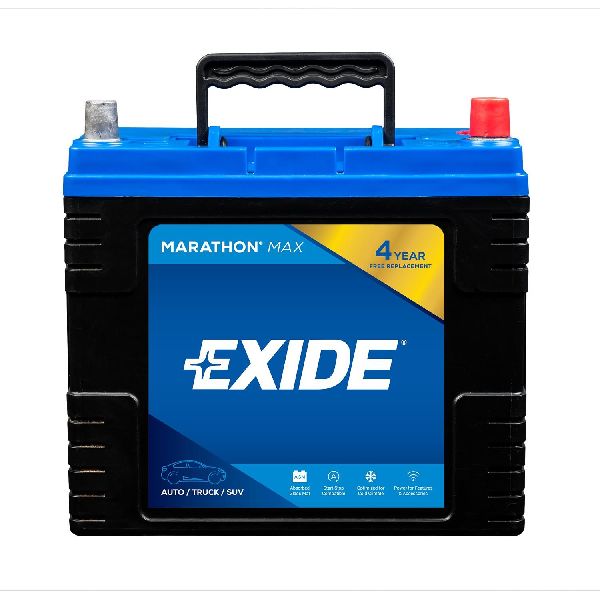
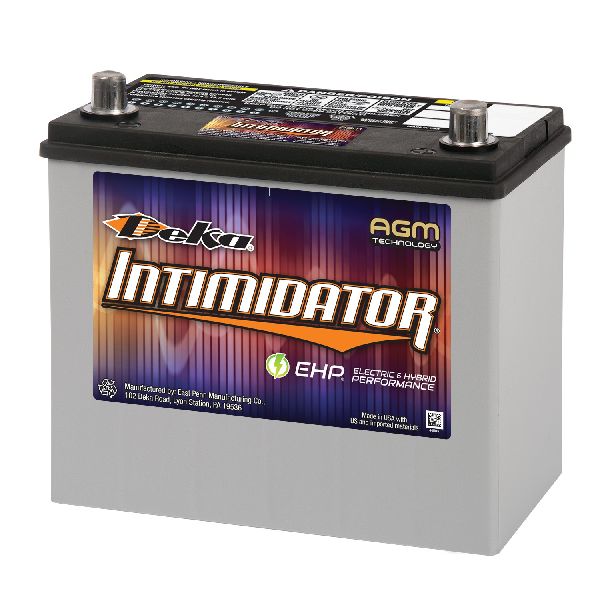
Aftermarket price range: $200-$500 (for a repair service) - 12V AGM Battery — A weak or failing 12V battery is a common cause of network communication faults on modern vehicles, especially on this Insight which had a recall related to the battery charging system.
Trusted brands: Bosch, DieHard, Duralast
OEM price range: $250-$350
Aftermarket price range: $150-$250
Related Codes That Often Appear With This One
- U3000-49 — This is an internal electronic failure code for the VSA module. If seen after installing a used module, it indicates the replacement part is also faulty or incompatible.
- Multiple U-codes (e.g., U0100, U0155) — If many different 'Lost Communication' codes appear at once, it points to a systemic problem like a very weak battery or a major CAN bus network failure, rather than just an issue with the ABS module.
Technical Service Bulletins (TSBs) & Recalls
- TSB 21-013: While for other Honda models (Odyssey, Pilot), this TSB addresses popping/crackling audio due to loose MOST bus network connectors. It highlights Honda's acknowledgment of network connection issues in this era, which could be a contributing factor in rare cases of U0121.
Platform-Specific Known Issues
- Recall K9E / NHTSA 20V-798: On certain 2020-2021 Honda Insight models, the DC-DC converter may shut down due to an overvoltage condition, preventing the 12-volt battery from recharging. This can cause a loss of power and trigger various communication codes, including U0121. The fix is a free software update from a Honda dealer.
- BCM Communication Recall: A recall on 2019-2020 models addressed a software error that could disrupt communication between the Body Control Module (BCM) and other systems, showing how sensitive the vehicle's network is to software glitches.
Mechanic-Grade Diagnostic Values
- CAN Bus Network Resistance — expected: ~60 Ohms. Failure: A reading of ~120 Ohms indicates one of the two terminating resistors (or the wiring to one) has failed. A reading of 0 Ohms indicates a short between the CAN High and CAN Low wires.
- CAN Bus Voltage (Key On, Engine Off) — expected: CAN High (CAN-H): ~2.5-3.5V. CAN Low (CAN-L): ~1.5-2.5V. Both should total ~5V.. Failure: Voltages outside these ranges, or a lack of voltage, points to a wiring issue or a module pulling the bus down.
- VSA Module Power Supply Voltage — expected: Battery Voltage (~12.6V Key On, ~14V Ready Mode). Failure: Voltage below 11V indicates a power supply issue (fuse, relay, wiring).
- VSA Module Ground Connection — expected: Near 0 Ohms resistance to chassis ground.. Failure: High resistance (more than a few ohms) indicates a corroded or loose ground connection.
Scan Tool Commands That Help
- Honda HDS (or compatible advanced scanner): VSA Neutral Position Memorization — This procedure is required after replacing the VSA modulator-control unit or if certain ABS/VSA codes have been cleared. It calibrates the yaw rate and deceleration sensors to the vehicle. Failure to perform this can leave the VSA light on.
- Honda HDS (or compatible advanced scanner): Immobilizer Registration — On many modern Hondas, a new VSA/ABS module must be registered with the vehicle's immobilizer system. If this step is skipped, the vehicle may experience a no-start condition with a flashing immobilizer key light the next time the 12V battery is disconnected.
- Honda HDS (or compatible advanced scanner): All Systems DTC Scan — Crucial first step to determine if the U0121 code is isolated or part of a larger network-wide communication failure affecting multiple modules.
Wiring & Ground Locations
- VSA Modulator-Control Unit Connector — In the engine bay, attached to the hydraulic ABS pump assembly.. This is the main electrical interface for the module. All power, ground, and CAN bus communications pass through this connector. Corrosion or damage here is a direct cause of U0121.
- VSA Module Power Pins — On the main module connector. Specifically the +B ABS/VSA MTR (RED wire) and +B ABS/VSA FSR (WHT wire).. These pins supply the necessary voltage for the module's motor and electronic functions. Loss of power on these pins will cause a total communication loss.
- VSA Module Ground Pins — On the main module connector. There are multiple GND pins (BLK wires).. A poor ground connection is a common cause of intermittent or complete module failure and communication codes.
- CAN Bus Pins — On the main module connector. F-CAN lines (e.g., RED and BLU wires on some diagrams). Also at the Data Link Connector (DLC) pins 6 (CAN-H) and 14 (CAN-L).. These are the direct communication lines. Testing for correct voltage and resistance on these wires confirms the network's physical integrity up to the module.
OEM Part Supersession History
57100-TXM-A51, 57100-TXM-A52→57100-TXM-A53— Standard part revision and consolidation by the manufacturer.
Heads up: These part numbers apply specifically to the Touring trim. The LX and EX trims may use a different part number series (e.g., 57100-TXM-A02 superseded by 57100-TXM-A03). Always verify the correct part number with the vehicle's VIN.57100-TXM-A02→57100-TXM-A03— Standard part revision by the manufacturer.
Heads up: These part numbers are typically for non-Touring trims. Using a Touring module on a non-Touring car or vice-versa may cause functionality issues even if it physically fits.
Diagnostic Flowchart
Other Known Issues on This Vehicle
Issues unrelated to this code that are worth knowing about as an owner of this generation:
- A/C Condenser Leak 🟠 Medium — Common enough that Honda extended the warranty on the A/C condenser to 10 years with unlimited miles. (Ref: TSB A21-016)
- Faulty Low-Pressure Fuel Pump 🔴 High — Subject to a large-scale recall (NHTSA 23V858000). The impeller can deform and cause the pump to fail, leading to engine stalling. (Ref: NHTSA 23V858000, TSB A20-042)
- BCM Software Error 🟠 Medium — A recall was issued for 2019-2020 models for a software error causing communication disruptions between the Body Control Module (BCM) and other components, affecting wipers, lights, and the rearview camera. (Ref: Recall / NHTSA data)
- Infotainment System Popping/Crackling 🟡 Low — A known issue on many Hondas of this era, caused by loose MOST bus network connectors. While the Insight is not explicitly named in the primary TSBs, it shares the architecture. (Ref: TSB 21-013 (for other models like Odyssey/Pilot))
- Phantom Braking (CMBS) 🟠 Medium — Owners have filed numerous NHTSA complaints about the Collision Mitigation Braking System (CMBS) engaging unexpectedly without an obstacle present.
- Soy-Based Wiring Attracting Rodents 🟡 Low — A common complaint across many modern auto brands, including Honda. Owners report that the soy-based wire insulation can attract rodents, leading to chewed wires and various electrical faults.
Used vs. New Parts: Buying Guide for This Vehicle
When a used part is the smart pick: A used ABS/VSA module from a donor vehicle can be a cost-effective option, but it comes with risks. It makes the most sense if the donor vehicle is from the same model year and trim, has low mileage, and you have access to a Honda HDS or equivalent advanced scan tool to perform the necessary post-installation procedures.
Donor-vehicle mileage cap: roughly under 60000 miles for the part to have meaningful remaining life.
What to inspect on the donor part:
- Verify the part number on the used module exactly matches the original or its official supersession.
- Inspect the electrical connector pins for any signs of corrosion, moisture damage, or being bent.
- Check the donor vehicle's history if possible to ensure it wasn't in a flood or major front-end collision.
- Purchase from a reputable salvage yard that offers a warranty or return policy.
OEM-only on this vehicle (don't cheap out):
- ABS/VSA Modulator-Control Unit: While repair services are a strong alternative, if buying a replacement part, OEM is strongly recommended. Aftermarket modules are not commonly available, and a used OEM part carries the risk of being near the end of its own service life and requiring dealer-level programming.
Aftermarket brands forum-validated for this vehicle:
- Circuit Board Medics (Repair Service)
- Module Master (Repair Service)
- Diag-Engine (Repair Service)
- XeMODeX (Repair Service)
Brands owners have reported issues with on this vehicle:
- No-name, unbranded modules from online marketplaces should be avoided due to high failure rates and potential programming/compatibility issues.
Real Owner Stories
Aggregated from forums and TSBs cited above. Mileages and costs reflect what owners reported in those sources.
2019 Honda Insight — ~36000 miles
Symptoms: A cascade of warning lights appeared simultaneously, including the brake system and power steering lights.
What fixed it: Replacing the original 12V battery, which had failed after about 3 years of service.
Source hint: InsightCentral.net thread titled 'multiple-warning-lights-on'
Related OBD-II Codes
Frequently Asked Questions
Does the DC-DC converter recall apply to my 2021 Honda Insight?
Why are my CMBS, LKAS, and Adaptive Cruise Control lights on alongside the ABS light?
Can a weak 12V battery really cause a U0121 code on a 2019 Insight?
Is there a software fix for communication errors on the 2019-2020 Insight?
Should I replace the ABS/VSA modulator immediately if I see U0121?
Used OEM Parts in Stock


New Aftermarket Parts Available

The information in this article is provided for general reference and educational purposes only. Vehicle specifications, procedures, and part compatibility can vary by production date, trim level, and region. Always consult your vehicle's factory service manual and verify part numbers before purchasing or performing repairs. Safety-critical components such as airbags, seat belts, and braking systems should be installed by a qualified professional.
- Honda Insight:
- 🛍️ Shop This Part
- What's Unique About the 2019-2022 Honda Insight
- Symptoms You May Notice
- Most Likely Causes
- Diagnosis Steps
- Parts You'll Likely Need
- Related Codes That Often Appear With This One
- Technical Service Bulletins (TSBs) & Recalls
- Platform-Specific Known Issues
- Mechanic-Grade Diagnostic Values
- Scan Tool Commands That Help
- Wiring & Ground Locations
- OEM Part Supersession History
- Diagnostic Flowchart
- Other Known Issues on This Vehicle
- Used vs. New Parts: Buying Guide for This Vehicle
- Real Owner Stories
- 2019 Honda Insight — ~36000 miles
- Related OBD-II Codes
- Frequently Asked Questions
- 🎟️ Get 5% Off