

U0121 on 2007-2014 Chevrolet Tahoe: Lost Communication with ABS Module Causes and Fixes
On a 2007-2014 Tahoe, code U0121 typically means a loss of communication with the ABS module (EBCM). The most common causes are a corroded main EBCM ground (G303) on the driver's side frame rail, damaged wiring, or a faulty EBCM. Diagnosis involves checking the ground connection and EBCM connector before suspecting the module itself. This issue is shared across the GMT900 platform.
- Code U0121 on a 2007-2014 Tahoe means the ABS/EBCM module is offline, disabling ABS and StabiliTrak.
- Before replacing any parts, always check the simple things first: battery voltage, ABS fuses, and especially the EBCM ground connection on the driver's side frame rail.
- Inspect the wiring harness and connectors for any visible damage or corrosion, as this is a common cause.
- If all wiring, power, and grounds are good, the EBCM itself has likely failed and will need to be replaced and programmed.
- This is a safety-critical fault; professional diagnosis is recommended if you are not comfortable with electrical troubleshooting.
What's Unique About the 2007-2014 Chevrolet TAHOE

The GMT900 platform, which includes the 2007-2014 Tahoe, is known for specific electrical vulnerabilities that can lead to code U0121. A primary point of failure is the main ground for the EBCM, often labeled G303, located on the outside of the frame rail below the driver's door. This location exposes it to road salt and moisture, making it highly susceptible to rust and corrosion, which interrupts power and communication to the module. Additionally, Technical Service Bulletin (TSB) #08-07-30-021H points to potential corrosion in large inline wiring harness connectors (like X109 and X150) and chafing of the harness itself as common causes for this and other communication failures across the platform.
Diagnostic Flowchart

Tap your situation to follow the diagnostic path that matches what you're seeing on this vehicle.
Symptoms You May Notice

- ABS warning light is on
- StabiliTrak or Traction Control (TC) warning light is on
- "Service StabiliTrak" or "Service Traction Control" message on the driver information center
- Cruise control is inoperative
- Transmission may exhibit harsh shifting or default to a single gear (as noted in TSB #08-07-30-021H).
- Remote start may not work.
- Brake warning light (red) may be illuminated.
- Replacing wheel speed sensors without diagnosis. A faulty wheel speed sensor typically sets a specific 'C' code (e.g., C0035) and would not usually cause a total communication loss 'U' code, unless it has an internal short as noted in TSB PIT4056H.
Most Likely Causes

- Corroded or Loose EBCM Ground Wire (G303) 🔴 High Probability The primary ground for the EBCM (G303) is bolted to the outside of the driver's side frame rail, making it highly susceptible to road salt, water, and undercoating spray, which leads to corrosion and a poor connection.
How to confirm: Locate the ground wire bolted to the frame near the EBCM under the driver's door. A YouTube video from 'DrShock' provides a detailed guide to all GMT900 ground locations, including G303. Disconnect the battery, then unbolt the ground. Clean the contact surfaces of the wire's eyelet and the frame with a wire brush until both are shiny, then re-secure it tightly. A poor ground here is a very common fix reported in owner forums.
Typical fix: Cleaning the ground wire terminal and frame contact point. In severe cases, replacing the ground wire terminal end.
Est. part cost: $1-$15 - Damaged or Corroded Wiring/Connector at EBCM 🟡 Medium Probability The wiring harness to the EBCM is located low on the vehicle, exposing it to debris and chafing. TSB #08-07-30-021H specifically mentions corrosion in major inline harness connectors (X109, X150) on the left side of the engine bay as a cause for this and other communication codes.
How to confirm: Visually inspect the wiring harness leading to the EBCM for any signs of damage, chafing, or melting. Disconnect the main connector at the EBCM and check for green or white corrosion, moisture, or bent/backed-out pins. A YouTube video by 'Parts shooter' demonstrates diagnosing a U0121 by wiggling the harness and finding an intermittent ground connection at the connector.
Typical fix: Repairing the damaged section of wire, cleaning the connector pins with electrical contact cleaner, or replacing the connector pigtail.
Est. part cost: $10-$75 - Failed Electronic Brake Control Module (EBCM/ABS Module) 🟡 Medium Probability
How to confirm: If power, ground, and CAN bus communication wires all test good with a multimeter at the EBCM connector, the module itself is the likely failure point. A professional scan tool will fail to communicate with the module, confirming it's offline. TSB PIT4056H notes that this can happen even when all wiring tests good, leading to module replacement.
Typical fix: Replacement of the EBCM, which requires programming to the vehicle's VIN. Alternatively, many owners opt for a repair service where the original module is sent out, rebuilt, and returned, which is more affordable and avoids programming.
Est. part cost: $100-$300 (for repair service), $400-$700 (for a new aftermarket or OEM part). - Low Battery Voltage or Blown Fuse ⚪ Low Probability
How to confirm: Test the battery voltage; it should be above 12.4V with the engine off and 13.7-14.7V when running. A weak battery can cause sporadic communication codes. Check the ABS-related fuses (often labeled ABS, EBCM, or BRAKE) in the underhood fuse box.
Typical fix: Charge or replace the battery, or replace the blown fuse.
Est. part cost: $5-$250
Rare But Worth Checking
- A shorted Wheel Speed Sensor (WSS) or its wiring can sometimes disrupt the EBCM's internal operations and cause it to go offline, triggering a U0121 code. TSB PIT4056H suggests unplugging wheel speed sensors one by one to see if communication with the EBCM returns.
Diagnosis Steps
- Scan for all codes in all modules. Note any other 'U' codes, as they can point to a wider network problem versus an isolated EBCM issue.
- Check battery voltage and ensure it is stable and above 12.4 volts with the engine off.
- Inspect the ABS and EBCM related fuses in the underhood fuse block.
- Locate the EBCM on the driver's side frame rail. Visually inspect its connector and the surrounding wiring harness for obvious damage, corrosion, or loose connections.
- Locate the main ground for the EBCM (G303) bolted to the outside of the frame rail under the driver's door. Disconnect the battery, then unbolt, thoroughly clean the connection point and terminal with a wire brush, and re-secure it tightly.
- If the ground is clean, use a multimeter to verify battery power and a solid ground at the EBCM connector pins. A wiring diagram is needed for pin identification. A YouTube video by 'Parts shooter' shows this process on a similar Chevy.
- Test the CAN bus wires (typically a twisted pair) for continuity and resistance. With the battery disconnected, resistance between the two CAN lines at the DLC should be ~60 ohms.
- As per TSB PIT4056H, if communication does not return, try unplugging each wheel speed sensor one at a time to check for an internal short bringing the module down.
- If all wiring, power, and grounds are confirmed good, the EBCM itself has likely failed. Replacement or sending the module for repair are the final steps.
Parts You'll Likely Need
- Electronic Brake Control Module (EBCM)
(OEM #e.g., ACDelco 19331662 (part number varies by year and options, verify by VIN))— This is the control computer for the ABS and Stabilitrak systems. It is a common failure point after all wiring, power, and ground issues have been ruled out.
Trusted brands: ACDelco (OEM), Dorman (e.g., 599-775)
OEM price range: $400-$700
Aftermarket price range: $250-$500
Related Codes That Often Appear With This One
- U0073 — Control Module Communication Bus 'A' Off. This is a general network code that often appears with U0121 because a break in the main communication bus (GMLAN) can cause multiple modules to lose communication simultaneously, as noted in TSB #08-07-30-021H.
- U0100 — Lost Communication with ECM/PCM. This can also be set alongside U0121 if the network wiring fault is significant enough to affect communication with the engine computer.
- U0101 — Lost Communication with TCM. Like the other codes, this can be triggered by the same wiring issue mentioned in TSB #08-07-30-021H, and may result in the harsh shifting symptoms described.
Technical Service Bulletins (TSBs) & Recalls
- Bulletin #08-07-30-021H: Notes that communication DTCs including U0121 can set due to intermittent electrical issues (corrosion, chafing) causing various warning lamps and potential shifting problems.
- Bulletin #PIT4056H: Details a diagnostic scenario where the EBCM is offline (U0121) and suggests checking for shorted wheel speed sensor wiring as a possible cause before condemning the module.
Platform-Specific Known Issues
- TSB #08-07-30-021H: This is a comprehensive bulletin covering loss of GMLAN communication. It points to corrosion in inline connectors, chafed harnesses, and backed-out terminals in the transmission connector as potential causes for U0121 and other U-codes.
- TSB #PIT4056H: Specifically addresses being unable to communicate with the EBCM. It notes that after verifying power, ground, and CAN wiring, the cause may be a shorted wheel speed sensor or its wiring, which should be checked before replacing the EBCM.
Mechanic-Grade Diagnostic Values
- CAN Bus Network Resistance — expected: ~60 Ohms. Failure: A reading of ~120 Ohms indicates an open circuit or a missing terminating resistor. A reading near 0 Ohms indicates a short between the CAN High and CAN Low wires.
- CAN Bus Voltage (Key On, Engine Off) — expected: CAN-High (Pin 12, Light Green wire) should be ~2.5-3.5V. CAN-Low (Pin 13, Light Blue wire) should be ~1.5-2.5V.. Failure: Voltages that are stuck high, stuck low, or match each other indicate a short to power, short to ground, or short between the CAN wires.
- EBCM Power and Ground at Connector — expected: At least two pins should have Battery Voltage (+12V) with key on. At least two pins should have continuity to ground (<1 Ohm).. Failure: No voltage or low voltage on power pins indicates a fuse or wiring issue. High resistance on ground pins indicates a bad ground connection (like G303).
Scan Tool Commands That Help
- GDS2 / Tech 2: ABS Automated Bleed / Motor Activation — After restoring communication, a bi-directional scan tool can command the ABS pump motor to run. If the motor activates, it confirms the EBCM is online and capable of controlling the hydraulic unit. This is a final verification step before clearing codes and test driving.
Wiring & Ground Locations
- EBCM Connector — On the Electronic Brake Control Module, which is mounted to the ABS hydraulic unit on the inboard side of the driver's side frame rail, below the driver's seat.. This is the primary connection point for all power, ground, and communication signals for the ABS system. Verifying signal integrity here is a critical diagnostic step. Key pins include: Battery Power (Pins 1 & 38 - Red/White), Ground (Pins 19 & 20 - Black/White), and GMLAN/CAN bus (Pin 12 - Light Green, Pin 13 - Light Blue).
- G303 (EBCM Ground) — Bolted to the *outside* of the driver's side frame rail, directly below the driver's door area.. This is the main ground point for the EBCM. Its exposed location makes it the most common failure point for U0121 on this platform due to rust and corrosion interrupting the ground path.
- CAN Bus Terminating Resistor — On later GMT900 models, a 120-ohm terminating resistor is often taped to the wiring harness near the rear axle, often close to the fuel pump control module or spare tire area.. The CAN bus requires two 120-ohm resistors to function. If this external resistor is missing or the wiring to it is damaged, the total network resistance will be incorrect (~120 ohms instead of ~60 ohms), causing communication failures like U0121.
- Underhood Fuse Block — On the driver's side of the engine bay.. This fuse block contains critical fuses for the EBCM, typically labeled 'ABS', 'EBCM', or with a brake symbol. A blown fuse will cut power to the module, causing an immediate U0121. Specifically, fuses 59 and 61 are often related to the Stabilitrak system.
Real Owner Repair Stories
- Tahoe Yukon Forum user (2007-2013 Tahoe/Yukon) — Intermittent 'Service Stabilitrak' and 'Traction Control Off' messages, often when coasting or at a stoplight. Resulting harsh shift out of first gear. Check engine light with 'Bank 1 and 2 too rich' codes.
❌ Tried (didn't work) Cleaning MAF sensor, Re-checking intake tube for tightness
✅ What actually fixed it The user found the positive battery cable connections at the main 125A 'megafuse' on the firewall were corroded. After disconnecting the battery, removing the connections, cleaning all contact surfaces with a wire brush, and reassembling with dielectric grease, the issue was resolved. - YouTube video by 'Parts shooter' (Chevrolet vehicle with U0121) — ABS light on, U0121 code stored, no communication with EBCM.
❌ Tried (didn't work) Clearing codes (code returned immediately)
✅ What actually fixed it After confirming power and ground were present at the EBCM connector, the technician wiggled the wiring harness near the connector and communication was intermittently restored. The fault was a poor connection or broken wire right at the connector plug itself. Repairing the connector wiring fixed the communication loss.
Model Year Variations Within This Range
- 2007-2008 vs 2009-2014: The transmission was updated from a 4-speed (4L60-E) in early models to a 6-speed (6L80-E) starting in 2009 for most V8 models. While not directly related to the EBCM, a network fault causing a U0121 can also trigger a U0101 (Lost Comm with TCM). The resulting limp-home behavior and diagnostic approach for the transmission can differ between the 4-speed and 6-speed units.
- 2007-2014: While the core EBCM function is the same, software updates were released over the vehicle's lifespan. A GM Tech 2 or other J2534 pass-through device can be used to update the EBCM software, which was sometimes done to improve compatibility with different tire sizes or address minor bugs. A software mismatch or corruption during programming can also cause a U0121.
Helpful Videos

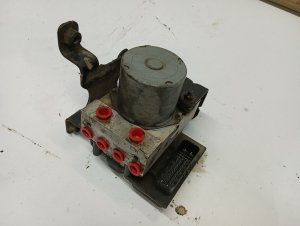
We Have This Part in Stock



The information in this article is provided for general reference and educational purposes only. Vehicle specifications, procedures, and part compatibility can vary by production date, trim level, and region. Always consult your vehicle's factory service manual and verify part numbers before purchasing or performing repairs. Safety-critical components such as airbags, seat belts, and braking systems should be installed by a qualified professional.
- Chevrolet TAHOE:
- 🎬 Helpful Videos
- 🛍️ Shop This Part
- What's Unique About the 2007-2014 Chevrolet TAHOE
- Diagnostic Flowchart
- Symptoms You May Notice
- Most Likely Causes
- Rare But Worth Checking
- Diagnosis Steps
- Parts You'll Likely Need
- Related Codes That Often Appear With This One
- Technical Service Bulletins (TSBs) & Recalls
- Platform-Specific Known Issues
- Mechanic-Grade Diagnostic Values
- Scan Tool Commands That Help
- Wiring & Ground Locations
- Real Owner Repair Stories
- Model Year Variations Within This Range
- 🎟️ Get 5% Off