

U0109 on 2007-2011 GMC Yukon Denali XL: Lost Communication With Fuel Pump Control Module Fixes
On a 2007-2011 GMC Yukon, code U0109 almost always points to a power supply issue to the Fuel Pump Control Module (FPCM), most often caused by a corroded 20A fuse (F21) or its terminals in the underhood fuse box. Before suspecting the module or wiring, thoroughly inspect and test fuse F21. This is a well-documented issue on the GMT900 platform.
- Code U0109 on a 2007-2011 Yukon means the Fuel Pump Control Module (FPCM) is offline.
- Before suspecting expensive parts, ALWAYS check fuse #21 in the underhood fuse box for corrosion. This is the most common cause.
- Symptoms are severe and include a no-start condition or sudden engine stalling, making the vehicle unsafe to drive.
- If multiple 'U' codes are present, the problem is likely a broader network issue (wiring, fuse box) rather than a single failed module. [Bulletin #08-07-30-021H]
What's Unique About the 2007-2011 Gmc YUKON DENALI XL
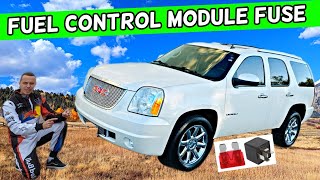
The GMT900 platform, which includes the 2007-2011 Yukon, is known for a design vulnerability in the underhood fuse box (UBEC). The box is susceptible to moisture and road salt intrusion, which wicks into the multi-layered circuit board and causes severe corrosion on fuse and relay terminals. This corrosion creates high resistance, interrupting power to critical modules like the FPCM via its dedicated fuse (F21) 🎬 Watch: Locate your fuel control module fuse in the underhood box., triggering communication code U0109. While the module or wiring can be at fault, the fuse box itself is the most common point of failure for this specific problem on these trucks.
Diagnostic Flowchart
Tap your situation to follow the diagnostic path that matches what you're seeing on this vehicle.
Symptoms You May Notice
- Engine cranks but will not start (most common symptom).
- Engine stalls intermittently or suddenly while driving.
- Check Engine Light is illuminated.
- Reduced engine power or rough running if the connection is intermittent.
- Transmission may not shift correctly or may default to 2nd gear.
- Various other warning lamps may be illuminated on the instrument panel (e.g., Service Stabilitrak).
- No audible hum or whine from the fuel pump when the key is turned to the 'ON' position.
- Replacing the fuel pump. The fuel pump itself is rarely the cause of a U0109 code. The code indicates a communication problem with the control module, not a mechanical failure of the pump.
- Replacing the FPCM without checking the fuse. Many owners and even some technicians replace the expensive module when the fix was a $1 fuse and cleaning the corroded terminals in the fuse box.
Most Likely Causes
- Corroded or Blown Fuse for FPCM 🔴 High Probability The underhood fuse box on GMT900 trucks is highly susceptible to moisture and salt intrusion, causing corrosion on the fuse terminals. Fuse #21, a 20A fuse for the FPCM, is a frequent victim.
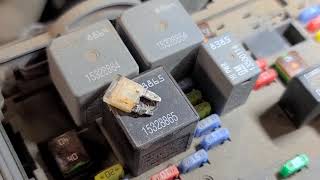
How to confirm: Visually inspect fuse #21 in the underhood fuse box. Pull the fuse and look for a blown filament or, more likely, green/white corrosion on its legs and inside the terminals of the fuse slot. Test for 12V power on both sides of the fuse socket with a test light or multimeter with the key on. A technician in one documented case noted the fuse passed a load test with a headlight but still failed under operating conditions due to heat-related resistance, highlighting how critical a visual inspection for corrosion is.
Typical fix: Replace the fuse. If the terminals in the fuse box are corroded, they must be cleaned thoroughly with a terminal cleaning tool or small file. In cases of severe corrosion where the terminal is damaged or broken, the entire fuse box may need replacement. Applying dielectric grease to the new fuse can help prevent future moisture intrusion.
Est. part cost: $1-$5 for a fuse, $150-$400 for a fuse box. - Wiring Harness or Connector Issue 🟡 Medium Probability Wiring is routed along the frame and can be exposed to road debris, moisture, and corrosion, leading to breaks or shorts in the CAN bus or power/ground circuits for the FPCM. TSB #08-07-30-021H specifically calls out checking for chafed, damaged, or corroded wiring in various harnesses as a cause for communication loss.
How to confirm: Visually inspect the wiring harness leading to the FPCM (located on the driver's side frame rail, often near the rear of the second door or above the spare tire) for any physical damage. Check the connector at the FPCM for corrosion, moisture, or bent pins. Perform continuity and voltage drop tests on the power, ground, and CAN bus wires using a multimeter and a wiring diagram.
Typical fix: Repair the damaged section of wire or clean/replace the affected connector. Ensure the harness is properly secured away from moving parts or sharp edges.
Est. part cost: $10-$50 for wiring repair supplies. - Failed Fuel Pump Control Module (FPCM) ⚪ Low Probability The FPCM is an electronic module mounted to the vehicle's frame, exposing it to heat, vibration, and moisture, which can lead to internal failure over time. Its location above the spare tire with downward-facing connectors makes it vulnerable.
How to confirm: This is typically diagnosed by exclusion. If the fuse, power, ground, and CAN bus wiring to the module all test good, but a scan tool still cannot communicate with the FPCM, the module itself is likely faulty. This is often misdiagnosed; many owners replace the FPCM when the real issue is the fuse/fuse box.
Typical fix: Replace the Fuel Pump Control Module. The new module MUST be programmed to the vehicle's VIN to function. Some vendors sell pre-programmed modules, which simplifies DIY installation.
Est. part cost: $80-$250
Rare But Worth Checking
- Faulty Powertrain Control Module (PCM): This is very rare. Before condemning the PCM, all other possibilities, including wiring and other modules on the CAN bus, must be thoroughly ruled out.
- CAN Bus Network Fault: A short or open in the main CAN bus wiring, or a fault in another module on the same network, can disrupt communication for all modules, including the FPCM. The presence of other 'U' codes (like U0073) points towards a broader network issue. TSB #08-07-30-021H is the primary document for diagnosing these widespread network faults.
Diagnosis Steps
- Check for other DTCs. The presence of multiple 'U' codes (especially U0073) suggests a network-wide problem per TSB #08-07-30-021H, not just a faulty FPCM.
- Inspect the FPCM fuse. This is the most critical step. Pull fuse #21 (a 20A fuse) in the underhood fuse box. Inspect the fuse legs and the box terminals for any sign of white or green corrosion.
- Test Power at the Fuse Slot. With the key on, use a test light or multimeter to confirm 12V is present at the fuse #21 terminals in the fuse box. If power is missing, the fuse box itself has an internal failure.
- Inspect FPCM Connector and Wiring. Locate the FPCM on the driver's side frame rail. Disconnect and inspect its electrical connector for corrosion, water intrusion, or damaged pins. Check the harness for chafing against the frame.
- Test Power and Ground at the FPCM. Using a multimeter and a wiring diagram, verify that the FPCM is receiving battery voltage on the correct pin (from the now-verified-good fuse) and has a solid ground connection.
- Check CAN Bus Integrity. With the battery disconnected, measure the resistance between the two CAN bus wires at the vehicle's diagnostic port (pins 6 and 14). A healthy network should read approximately 60 ohms. A reading of 120 ohms indicates an open circuit or a missing terminating resistor, while 0 ohms indicates a short between the two wires.
- Isolate the Module. If all wiring, power, and grounds are good, and a capable scan tool still cannot communicate with the FPCM, the module itself is the most likely culprit.
Parts You'll Likely Need
- Fuse — The 20A fuse (#21) protecting the FPCM circuit is highly prone to corrosion and is the most frequent point of failure for this code.
Trusted brands: Bussmann, Littlefuse
OEM price range: $1-$5
Aftermarket price range: $1-$5 - Fuel Pump Control Module (FPCM)
(OEM #20850907 (supersedes 25836900, 20759945, and others))— If power, ground, and network wiring are confirmed to be good, the module's internal electronics have likely failed. Must be programmed to the vehicle's VIN.
Trusted brands: ACDelco (OEM), Dorman (often pre-programmed), Cardone
OEM price range: $120-$200
Aftermarket price range: $80-$150 - Underhood Fuse Block
(OEM #Consult dealer with VIN)— In cases of severe, widespread corrosion, cleaning the terminals may not be sufficient, and the entire fuse block assembly must be replaced to ensure reliable connections. This is a common repair on high-mileage
Related Codes That Often Appear With This One
- U0073 — This code means 'Control Module Communication Bus A Off'. It often appears with U0109, indicating a general network problem rather than just an issue with the FPCM alone. This is a key code mentioned in TSB #08-07-30-021H.
- U0100 — Lost Communication with ECM/PCM. This can be logged by other modules when a network-wide issue is present, as described in TSB #08-07-30-021H.
- U0101 — Lost Communication with TCM (Transmission Control Module). This explains the shifting problems mentioned in the TSB and points to a shared network fault.
- P069E — This code means 'Fuel Pump Control Module Commanded OFF'. While U0109 is a loss of communication, P069E indicates the PCM could communicate with the FPCM but detected a fault within the FPCM's control circuit. It often points directly to a failed FPCM.
Technical Service Bulletins (TSBs) & Recalls
- 08-07-30-021H: The primary TSB related to this issue. It covers a widespread loss of GMLAN communication, listing U0109 as one of many possible codes. It guides technicians to inspect wiring harnesses, connectors (especially the transmission connector), and grounds for faults before replacing modules.
- PIC5204D / PIT4853C: While for Hybrid models, these bulletins also list U0109 and point to checking specific ground locations (G102, G300) and harness connectors (X150, X109) for poor connections or corrosion, reinforcing the theme of connection integrity being paramount.
Platform-Specific Known Issues
- Owner Experience: The Fuse Box is the Real Culprit: A technician on YouTube documented a 2011 GMC Sierra with a U0109 code that returned after replacing the FPCM. The root cause was found to be a corroded fuse #21 in the underhood fuse box. Even though the circuit passed a simple load test, the corrosion created enough resistance to cause an intermittent failure. The fix was to replace the entire fuse box due to multiple corroded circuits.
- Forum Discussion: TahoeYukonForum.com: In a thread titled 'Anybody had a U 0109 code?', a user's vehicle was diagnosed by the dealer as needing a new fuel control module to resolve the code. This highlights the common, though not always correct, professional diagnosis.
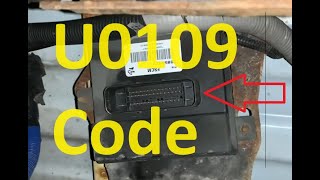
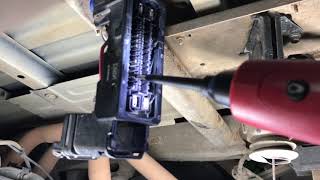
- FPCM Location: On GMT900 SUVs like the Yukon, the Fuel Pump Control Module is typically mounted to the driver's side frame rail, near the rear of the second-row door, not always above the spare tire as on some trucks. It is often protected by a small shield.
Mechanic-Grade Diagnostic Values
- CAN Bus Network Resistance — expected: Approximately 60 Ohms. Failure: A reading of 120 Ohms indicates an open circuit or a missing terminating resistor. A reading near 0 Ohms indicates a short between the CAN High and CAN Low wires.
- Voltage at FPCM Connector Pin 32 (Red/White wire) — expected: 12V+ (Battery Voltage) with Key On. Failure: No voltage indicates a loss of main power, likely from a blown/corroded Fuse #21 or a break in the power wire.
- Voltage at FPCM Connector Pin 15 (Pink wire) — expected: 12V+ (Ignition Voltage) with Key On. Failure: No voltage indicates a loss of the ignition signal to the module, possibly from Fuse #56 (ECM IGN) or a wiring issue.
- Voltage at FPCM Connector Pin 13 (Dark Green/White wire) — expected: 12V+ for 2-6 seconds with Key On, or constant 12V when cranking.. Failure: No voltage indicates the fuel pump enable signal is missing from the ECM, likely due to a broken wire or a faulty ECM.
- Voltage at ECM Connector Pin 50 (Dark Green/White wire) — expected: 12V+ with Key On. Failure: If voltage is present here but not at FPCM Pin 13, the wire between the ECM and FPCM is broken. If no voltage is present here, the ECM is likely faulty (rare).
- Ground at FPCM Connector Pin 1 (Black wire) — expected: Good continuity to chassis ground (near 0 Ohms).. Failure: High resistance indicates a bad ground connection, which can cause the module to malfunction.
Hidden / Shadow Codes Worth Checking
- P069E: Fuel Pump Control Module Commanded OFF. While not a hidden code, its presence alongside U0109 is highly significant. U0109 means the modules can't talk; P069E means they can talk, but the PCM has detected a fault within the FPCM's circuit and has shut it down. It strongly points to a failed FPCM. (see via Any standard OBD-II scanner.)
Scan Tool Commands That Help
- Bi-Directional Scan Tool (e.g., Tech2, GDS2, high-end Autel): Fuel Pump Relay/Control Module Test — Used to command the fuel pump on and off directly from the scan tool. If the pump runs with the command, it confirms the pump itself and its wiring are likely good, pointing the diagnosis towards the control side (FPCM, CAN bus, PCM).
- Jumper Wires (Manual Test): Manually Power Fuel Pump — As a field test without a scan tool, you can jump the FPCM connector to directly power the fuel pump. Connect a jumper from Pin 32 (Red/White - Battery Power) to Pin 47 (Gray - Fuel Pump Supply). This bypasses the module entirely. If the pump runs, it is functional.
Wiring & Ground Locations
- FPCM Connector — On the driver's side frame rail, often near the rear of the second door or above the spare tire.. This is the central connection point for the module. All power, ground, and communication signals must be present and clean here. It is highly susceptible to corrosion.
- Underhood Fuse Block — Driver's side of the engine compartment.. Houses Fuse #21 (20A) for the FPCM and Fuse #56 (15A) for the ECM ignition signal. The terminals within this block are a known point of corrosion and failure for the FPCM power circuit.
- ECM Connector (Black) — In the engine bay, mounted to the vehicle body.. Pin 50 (Dark Green/White wire) is the source of the fuel pump enable signal sent to the FPCM. Testing here helps determine if a missing signal is due to a broken wire or a faulty ECM.
- Ground G305 — Under the vehicle to the rear of the left B-pillar at the third body mount on the frame.. While the FPCM has a dedicated ground wire in its harness, poor body and frame grounds can introduce electrical noise and intermittent communication issues across the entire CAN network.
Real Owner Repair Stories
- YouTube channel 'South Main Auto Repair LLC' (2009 Chevrolet 1500 (same GMT900 platform)) — Crank but no start, code U0109 present.
❌ Tried (didn't work) Initial diagnosis focused on lack of power at the FPCM.
✅ What actually fixed it The technician found the 20A FPCM fuse (#21) was blown. After replacing the fuse, power was restored, but the fuse blew again. This indicated the FPCM itself was internally shorted, causing the fuse to blow. Replacing both the failed FPCM and the blown fuse resolved the U0109 code and the no-start condition. - Forum/Tech discussions (2011 GM Truck (GMT900 platform)) — Recurring U0109 code, intermittent no-start.
❌ Tried (didn't work) Replacing the Fuel Pump Control Module (FPCM) did not solve the problem.
✅ What actually fixed it The root cause was a corroded terminal for fuse #21 inside the underhood fuse block. The corrosion created high resistance, intermittently cutting power to the FPCM. The fix required removing the fuse block, disassembling it, and thoroughly cleaning the corroded internal contacts to restore a reliable connection.
When the Usual Fixes Don't Work
- While replacing the FPCM is a common fix, it is frequently misdiagnosed. In many documented cases, the actual root cause is not the module itself but its power supply. A recurring U0109, especially after an FPCM has already been replaced, almost always points back to the underhood fuse block. Technicians have found that even if fuse #21 looks good and has power, the terminals it plugs into can be so corroded that they make a poor connection under load, causing the FPCM to lose power intermittently. The definitive fix in these cases is to either meticulously clean the fuse block terminals or replace the entire underhood fuse block assembly.
OEM Part Supersession History
25836900, 20759945→20850907— Part revision and consolidation by GM.
Heads up: OEM ACDelco modules (like 20850907) are sold blank and MUST be programmed to the vehicle's VIN using a J2534 pass-thru device and a GM TIS/SPS software subscription. Some aftermarket brands, like Dorman, are often sold pre-programmed ('Plug & Play') for a specific VIN, which can simplify DIY installation.
Model Year Variations Within This Range
- 2007-2011: There are no significant, documented variations within this year range for the GMC Yukon XL that would alter the fundamental causes or diagnostic procedures for code U0109. The FPCM location, relevant fuses, and common failure points (fuse box corrosion, module failure) are consistent across the platform for these years.
Helpful Videos

Used OEM Parts in Stock


New Aftermarket Parts Available




The information in this article is provided for general reference and educational purposes only. Vehicle specifications, procedures, and part compatibility can vary by production date, trim level, and region. Always consult your vehicle's factory service manual and verify part numbers before purchasing or performing repairs. Safety-critical components such as airbags, seat belts, and braking systems should be installed by a qualified professional.
- Gmc YUKON DENALI XL:
- 🎬 Helpful Videos
- 🛍️ Shop This Part
- What's Unique About the 2007-2011 Gmc YUKON DENALI XL
- Diagnostic Flowchart
- Symptoms You May Notice
- Most Likely Causes
- Rare But Worth Checking
- Diagnosis Steps
- Parts You'll Likely Need
- Related Codes That Often Appear With This One
- Technical Service Bulletins (TSBs) & Recalls
- Platform-Specific Known Issues
- Mechanic-Grade Diagnostic Values
- Hidden / Shadow Codes Worth Checking
- Scan Tool Commands That Help
- Wiring & Ground Locations
- Real Owner Repair Stories
- When the Usual Fixes Don't Work
- OEM Part Supersession History
- Model Year Variations Within This Range
- 🎟️ Get 5% Off