

U0109 on 2007-2014 GMC Yukon: Lost Communication With Fuel Pump Control Module
This code means the Fuel Pump Control Module (FPCM) isn't communicating. It's often caused by a failed FPCM itself, which is prone to corrosion due to its location on the frame rail, or a corroded fuse in the underhood fuse box. Expect to pay $50-$250 for a new module. Some aftermarket modules are pre-programmed, while OEM parts require programming.
- U0109 on a 2007-2014 Yukon almost always points to a problem with the Fuel Pump Control Module (FPCM) or its power supply.
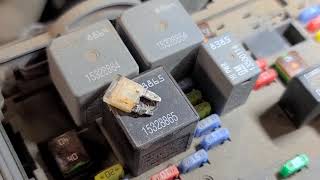
- Before buying any parts, inspect fuse #21 in the underhood fuse box for being blown or having corroded terminals.
- The most likely fix is replacing the FPCM, which is located on the driver's side frame rail and is known to fail from corrosion.
- Do not drive the vehicle with this code, as the engine could stall at any time, posing a serious safety risk.
What's Unique About the 2007-2014 Gmc YUKON

On this generation of GMC Yukon (GMT900 platform), the Fuel Pump Control Module is notoriously prone to failure. It is typically mounted on the vehicle's frame rail, often above the spare tire, exposing it to moisture, road salt, and debris. This leads to severe corrosion of the module's aluminum housing, the connector, and internal electronics. This specific vulnerability is a very common reason for a U0109 code on these trucks, often more so than wiring issues on other parts of the vehicle.
Diagnostic Flowchart

Tap your situation to follow the diagnostic path that matches what you're seeing on this vehicle.
Symptoms You May Notice
- Engine cranks but will not start.
- Engine stalls while driving, sometimes intermittently.
- Reduced engine power or hesitation.
- Check Engine Light is illuminated.
- No audible 'whine' or 'hum' from the fuel pump when the key is turned to the 'ON' position.
- In some cases, other communication codes may be present, and the vehicle may exhibit strange electrical behavior like door lock cycling or chimes, as noted in TSB #08-07-30-021H, which points to a broader network issue.
- Replacing the fuel pump itself. While a failed fuel pump can cause a no-start condition, the U0109 code specifically points to a communication problem with the control module, not the pump motor. A technician can bypass the FPCM to directly power the pump to confirm its operation. Fuel pump replacement is significantly more expensive and labor-intensive.
Most Likely Causes
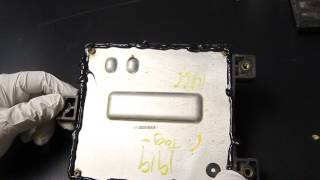
- Failed Fuel Pump Control Module (FPCM) 🔴 High Probability The FPCM is mounted on the driver's side frame rail, often above the spare tire, making it highly susceptible to corrosion from road salt and moisture. The corrosion attacks the aluminum casing, causing it to swell and break the internal circuit board, leading to communication loss.
How to confirm: Visually inspect the module and its connector for heavy corrosion, swelling, or physical damage. If power (Red/White wire) and ground (Black wire) are good at the module but it still won't communicate (tested with a scan tool), the module has likely failed.
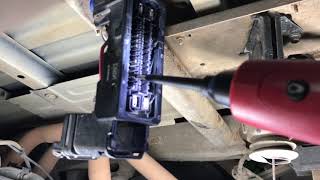
Typical fix: Replace the Fuel Pump Control Module. The new module may require programming. Some owners relocate the new module to a less exposed area, such as inside the frame rail 🎬 See this walkthrough on replacing and programming the module. or a different crossmember, to protect it from the elements.
Est. part cost: $70 - $250 - Blown or Corroded FPCM Fuse 🟡 Medium Probability Corrosion in the underhood fuse box is a known issue on these trucks, which can cause poor connections and blown fuses. Water intrusion can lead to corrosion on the fuse legs and terminals within the fuse block itself.
How to confirm: Locate and inspect the fuse for the FPCM in the underhood fuse box. On these models, it is typically fuse #21 (a 20A fuse). Check if the fuse is blown or if its terminals are green and corroded. Wiggle the fuse to see if it makes intermittent contact.
Typical fix: Replace the blown fuse. If corrosion is present in the fuse box, the terminals must be cleaned thoroughly, or the entire fuse box may need replacement to prevent future issues.
Est. part cost: $1 - $20 for a fuse, $150-$300 for a fuse box - Wiring or Connector Issues 🟡 Medium Probability The wiring harness leading to the FPCM is exposed under the vehicle and can be damaged by road debris, chafing against the frame, or corrode over time. The connector itself is also a common failure point due to water intrusion.
How to confirm: Perform a visual inspection of the wiring harness and connector going to the FPCM. Check for breaks, chafing, or corrosion. Use a multimeter to test for continuity on the CAN bus lines (Tan and Tan/Black wires) and proper voltage/ground at the FPCM connector.
Typical fix: Repair the damaged section of wiring or replace the corroded connector pigtail.
Est. part cost: $20 - $100
Rare But Worth Checking
- Failed Powertrain Control Module (PCM): This is rare. Before condemning the PCM, all other possibilities, including FPCM failure, wiring, and fuses, must be thoroughly exhausted. This is typically diagnosed by seeing a lack of communication with multiple modules, not just the FPCM.
- Software Corruption or Version Mismatch: An incomplete flash or a mismatched software version on the FPCM can prevent successful communication with the PCM. This would require reprogramming the module with the correct calibration data.
Diagnosis Steps

- Scan for Codes: Use an OBD-II scanner to confirm the U0109 code and check for any other 'U' codes (like U0073) or 'P' codes (like P069E) that provide more context.
- Check the FPCM Fuse: Inspect the 20A fuse for the Fuel System Control Module (FSCM), which is fuse #21 in the underhood fuse box. Look for corrosion on the fuse legs and in the fuse slot. A corroded fuse box is a very common issue.
- Visual Inspection: Get under the vehicle and visually inspect the Fuel Pump Control Module, its connector, and the surrounding wiring. The module is located on a frame crossmember, usually above the spare tire. Look for classic signs of failure: a swollen, corroded aluminum case, green crust on the connector, or broken mounting bolts.
- Check Power and Ground at the Connector: Unplug the FPCM connector. Using a multimeter, verify battery voltage (12V+) on the Red/White wire (Pin 32) and a solid ground connection on the Black wire (Pin 1).
- Check CAN Bus Lines: If power and ground are good, check the CAN bus communication lines. With the key off, you should measure approximately 60 ohms of resistance between the Tan wire (Pin 6) and the Tan/Black wire (Pin 5). 🎬 Watch: Step-by-step electrical diagnosis of the GMT-900 fuel module. This confirms the integrity of the CAN circuit.
- Test/Replace FPCM: If all wiring, power, and grounds are confirmed to be good, the FPCM itself is the most likely culprit. Replacement is the final step.
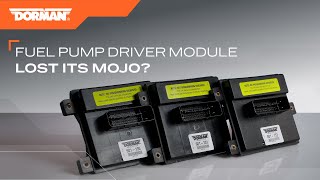
- Programming & Setup: An OEM ACDelco module will require programming using a GM Tech 2 or similar pass-thru device. However, aftermarket brands like Dorman offer pre-programmed 'OE FIX' modules that are plug-and-play.
Parts You'll Likely Need
- Fuel Pump Control Module (FPCM)
(OEM #ACDelco 20895924 (superseded by 23487310))— This module is the most common point of failure for a U0109 code on this vehicle due to its vulnerable mounting location leading to corrosion and internal failure.
Trusted brands: ACDelco (GM Genuine Parts), Dorman (Offers a pre-programmed OE FIX version, part #601-045)
OEM price range: $150-$250
Aftermarket price range: $70-$150
Related Codes That Often Appear With This One
- U0073 — Control Module Communication Bus 'A' Off. This is a general network code that can appear alongside U0109 when there's a broader communication issue, as cited in TSB #08-07-30-021H.
- P069E — Fuel Pump Control Module Requested MIL Illumination. This code often accompanies U0109 and indicates the FPCM has detected an internal fault and has asked the PCM to turn on the Check Engine Light.
- U0100 — Lost Communication With ECM/PCM. This can appear if the network issue is severe, affecting multiple modules.
- U0101 — Lost Communication with TCM. Like U0100, this points to a wider network problem, often related to wiring issues near the transmission as described in TSB #08-07-30-021H.
Technical Service Bulletins (TSBs) & Recalls
- 08-07-30-021H: This is a broad TSB regarding 'Loss of High Speed GMLAN Communications' across many GM trucks and SUVs from this era. It lists U0109 as one of many possible codes that can be set due to network-wide problems, such as chafed wiring harnesses near the transmission or corrosion in various module connectors. It advises technicians not to replace modules until the wiring and network integrity have been thoroughly checked.
Platform-Specific Known Issues
- Corrosion of the underhood fuse box is a known problem that can cause this code if the FPCM fuse (#21) or its contacts are compromised. Technicians report finding corroded fuse legs even when the fuse isn't blown.
- The placement of the FPCM on the frame rail, directly exposed to road spray from the tires, makes it extremely common for the module itself to fail from water and salt intrusion.
- The bolts holding the FPCM to the frame often rust and break during removal, requiring new hardware. Dorman OE FIX kits often include new mounting hardware for this reason.
Mechanic-Grade Diagnostic Values
- FPCM Connector: Pin 32 (Red/White Wire) to Ground — expected: Battery Voltage (12V+). Failure: No voltage indicates a loss of main power, likely from a blown Fuse #21 or a break in the power wire.
- FPCM Connector: Pin 1 (Black Wire) to a known good ground — expected: < 1 Ohm. Failure: High resistance indicates a bad ground connection, which is a common point of failure.
- FPCM Connector: Pin 15 (Pink Wire) to Ground — expected: Ignition 1 Voltage (12V+ with key in ON or CRANK position). Failure: No voltage means the module isn't receiving the signal to turn on from the ignition.
- FPCM Connector: Pin 13 (Dark Green/White Wire) to Ground — expected: 12V present for 2-6 seconds with key ON, or constant 12V when cranking.. Failure: No voltage indicates the PCM is not sending the fuel pump enable signal, which could be a broken wire or a faulty PCM.
- CAN Bus Resistance at FPCM Connector (Key Off, Battery Disconnected) — expected: ~60 Ω between Pin 5 (Tan/Black) and Pin 6 (Tan). Failure: A reading of ~120 Ω indicates one of the terminating resistors is offline or there's a break in one of the CAN wires. A reading near 0 Ω indicates a short between the two CAN wires.
- Fuel Pressure (commanded by scan tool or with FPCM bypassed) — expected: 345-690 kPa (50-100 psi). Failure: Low or no pressure when the pump is directly commanded ON confirms a fuel pump or fuel line issue, ruling out the FPCM.
Scan Tool Commands That Help
- GM Tech 2 / GDS2: FPCM Data Display — To see if the scan tool can communicate with the FPCM at all. If the module shows up in the module list but has no data, it confirms a communication loss. If it doesn't show up at all, it points to a power, ground, or total module failure.
- GM Tech 2 / GDS2: Fuel Pump On/Off Command (Bidirectional Control) — This command directly tells the FPCM to turn the fuel pump on. If you can hear the pump activate with this command but it doesn't run otherwise, it suggests the FPCM is working but not receiving the proper signal from the PCM. If the command does nothing, it points toward a faulty FPCM, wiring, or pump.
- GM Tech 2 / GDS2: Module Setup / Programming — Required after installing a new, unprogrammed OEM FPCM. The tool downloads the correct software and vehicle-specific calibration to the new module so it can communicate with the other modules on the truck.
Wiring & Ground Locations

- FPCM Connector — On the Fuel Pump Control Module, mounted to a frame crossmember, typically above the spare tire on the driver's side.. This is the primary connection point for all power, ground, and communication lines for the module. It is highly exposed to the elements and a common source of corrosion and pin failure.
- G305 — On the 3rd body mount from the front.. This is a potential ground point for the Fuel Pump Control Module. A corroded or loose G305 can cause a loss of ground to the module, preventing it from powering on and communicating.
- Underhood Fuse Block (UBEC) — In the engine bay, on the driver's side.. This block contains Fuse #21 (FSCM, 20A) and Fuse #56 (ECM, 15A), which supply power to the FPCM and ECM. Corrosion within this fuse block is a very common cause of intermittent power loss to the FPCM, triggering a U0109 even if the fuse itself is not blown.
- PCM Connector (Black) — At the Powertrain Control Module (PCM) in the engine bay.. Pin 50 (Dark Green/White wire) at this connector is the source of the fuel pump enable signal. If voltage is missing at the FPCM on this wire, checking for 12V at this pin can determine if the PCM is faulty or if the wire is broken between the PCM and FPCM.
Real Owner Repair Stories
- YouTube channel 'Phillip Bailey' (2011 GM Truck) — Crank no start, intermittent. Code U0109 returned after a new FPCM was already installed.
❌ Tried (didn't work) Replacing the Fuel Pump Control Module (FPCM).
✅ What actually fixed it The problem was a poor connection at Fuse #21 in the underhood fuse box. The fuse terminals were corroded, causing intermittent power loss to the FPCM. The entire fuse panel had to be replaced because multiple other fuse terminals were also corroded or broken. - YouTube channel 'South Main Auto Repair LLC' (2009 Chevrolet 1500) — Crank no start, code U0109.
❌ Tried (didn't work) Initial check showed no power at the FPCM connector.
✅ What actually fixed it Found the 20A FPCM fuse (#21) was blown. After replacing the fuse, power was restored. The investigation then pointed to a shorted FPCM, which was causing the fuse to blow. Replacing the FPCM and the blown fuse resolved the issue.
When the Usual Fixes Don't Work
- In one documented case, a 2011 GM truck had the U0109 code and a crank-no-start symptom. The shop initially replaced the Fuel Pump Control Module, which is the most common fix. However, the truck returned the next day with the exact same problem. Further diagnosis revealed that while the FPCM was receiving power when tested with a multimeter, the connection at Fuse #21 in the underhood fuse box was corroded. This created high resistance that would cause the module to lose power intermittently under load. The final repair was to replace the entire underhood fuse box, which had widespread corrosion. This highlights that even if the FPCM is the most likely cause, a corroded fuse box can create identical symptoms and cause a misdiagnosis if not thoroughly checked.
OEM Part Supersession History
20895924→23487310— Standard part update for improved reliability or manufacturing changes.
Model Year Variations Within This Range
- 2007: Some early 2007 models may not have an FPCM and instead use a more traditional fuel pump relay system. A quick check is to look in the underhood fuse box for a fuel pump relay. If a relay is present, the vehicle does not have an FPCM. If the relay slot is empty, it uses an FPCM.
Helpful Videos

Used OEM Parts in Stock


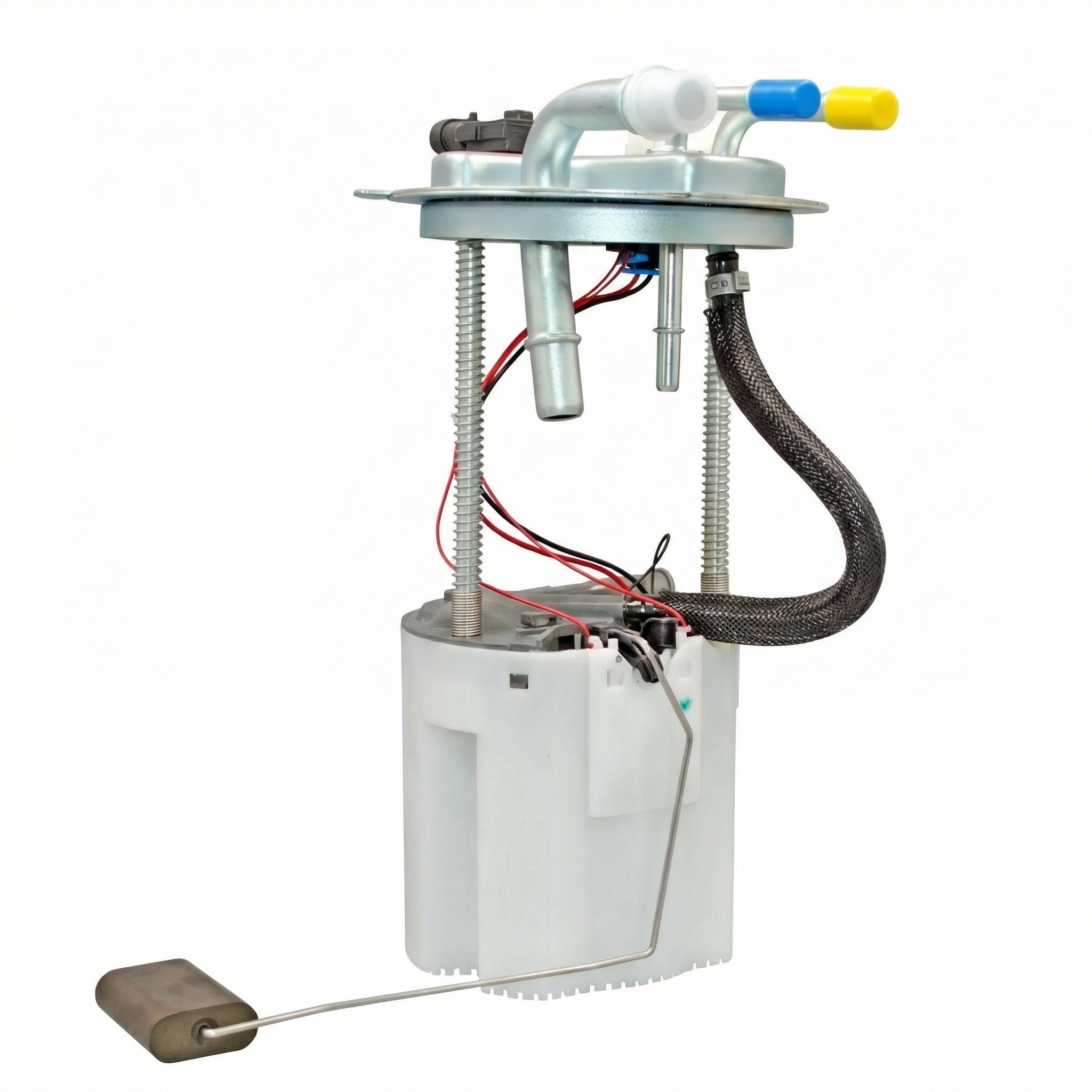
New Aftermarket Parts Available

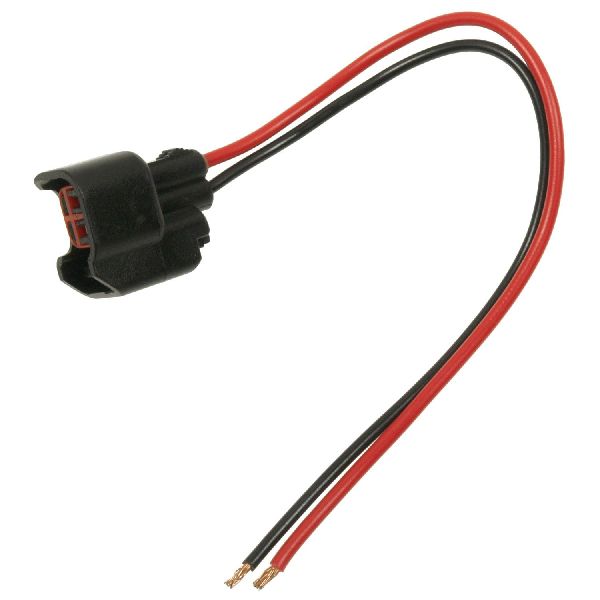

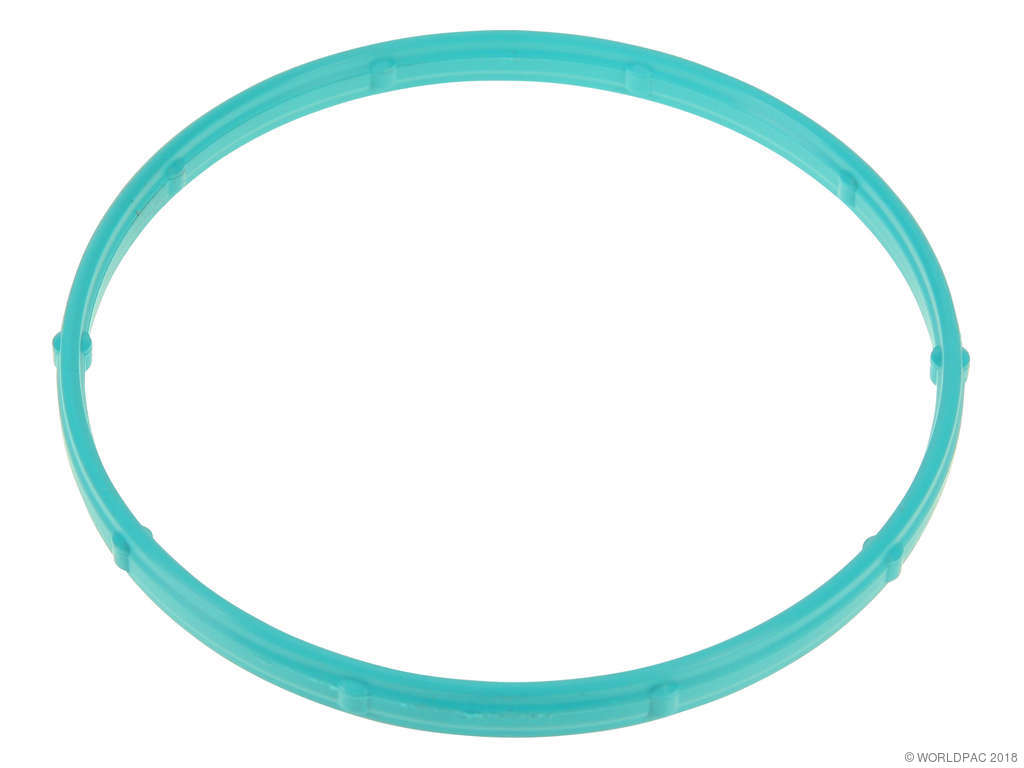

The information in this article is provided for general reference and educational purposes only. Vehicle specifications, procedures, and part compatibility can vary by production date, trim level, and region. Always consult your vehicle's factory service manual and verify part numbers before purchasing or performing repairs. Safety-critical components such as airbags, seat belts, and braking systems should be installed by a qualified professional.
- Gmc YUKON:
- 🎬 Helpful Videos
- 🛍️ Shop This Part
- What's Unique About the 2007-2014 Gmc YUKON
- Diagnostic Flowchart
- Symptoms You May Notice
- Most Likely Causes
- Rare But Worth Checking
- Diagnosis Steps
- Parts You'll Likely Need
- Related Codes That Often Appear With This One
- Technical Service Bulletins (TSBs) & Recalls
- Platform-Specific Known Issues
- Mechanic-Grade Diagnostic Values
- Scan Tool Commands That Help
- Wiring & Ground Locations
- Real Owner Repair Stories
- When the Usual Fixes Don't Work
- OEM Part Supersession History
- Model Year Variations Within This Range
- 🎟️ Get 5% Off