

U0109 on 2018-2022 Ford Transit: Lost Communication With Fuel Pump Control Module Causes and Fixes
On a 2018-2022 Ford Transit, code U0109 almost always means there is a loose or corroded electrical connector at the Fuel Pump Control Module (FPCM). Ford has issued multiple Technical Service Bulletins about this exact problem. Before replacing any parts, inspect and secure the FPCM harness connector (C433) and check ground G401 on the frame rail.
- U0109 on a 2018-2022 Ford Transit is a critical code that can cause a no-start or stalling, and the vehicle should not be driven.
- The problem is almost always a poor electrical connection at the Fuel Pump Control Module (FPCM), not a faulty part.
- Ford has issued multiple TSBs (e.g., SSM 49618) confirming this known issue.
- Before buying any parts, locate the FPCM, and thoroughly inspect its connector, wiring, and the main ground point (G401) on the frame.
- Do not replace the fuel pump; this code indicates an electrical communication problem, not a mechanical pump failure.
What's Unique About the 2018-2022 Ford TRANSIT

Ford has explicitly acknowledged a recurring issue on the 2018-2022 Transit and other models that triggers code U0109. Multiple Technical Service Bulletins (TSBs) point directly to an intermittent or partial disconnect of the wiring harness (connector C433 for the Transit) to the Fuel Pump Control Module. This makes the problem less about a failed part and more about a known vulnerability in the vehicle's wiring connection, often due to its location on the driver's side frame rail where it is exposed to vibration, moisture, and road debris. The specific ground point G401 is also a known weak point for corrosion.
Diagnostic Flowchart
Tap your situation to follow the diagnostic path that matches what you're seeing on this vehicle.
Symptoms You May Notice
- Check Engine Light (MIL) is on.
- Engine cranks but will not start.
- Engine stalls unexpectedly while driving.
- No audible fuel pump 'hum' or 'whine' when key is turned to ON position.
- Engine hesitation or rough running.
- Reduced engine power or 'wrench' light.
- Replacing the in-tank fuel pump. This code points to a communication failure with the control module, not a mechanical failure of the pump itself.
- Replacing the Fuel Pump Control Module without first thoroughly inspecting the connector (C433), wiring, and ground (G401). The TSBs and owner experiences show the connection is the most common failure point, not the module.
Most Likely Causes

- Intermittent or partial disconnect of the FPCM harness connector (C433) 🔴 High Probability This is a well-documented issue confirmed by multiple Ford TSBs (SSM 50661, SSM 52483, SSM 51306, SSM 49618). The connector's locking tab can be weak or not fully engaged, leading to intermittent contact from road vibrations and moisture intrusion.
How to confirm: Locate the FPCM on the driver's side frame rail. Visually inspect the main electrical connector, identified as C433 in TSB SSM 49618. Wiggle the connector to see if it is loose. Disconnect it and check for corrosion (green/white powder), moisture, or pushed-out pins.
Typical fix: Securely reseat the connector until it clicks. Clean any corrosion from the pins using an electrical contact cleaner. Applying dielectric grease before reconnecting can prevent future moisture intrusion. If the locking tab is broken, many owners successfully use a heavy-duty zip tie to ensure the connector stays seated. 🎬 Watch: How to fix the module connection on a Transit.
Est. part cost: $0-$10 - Damaged wiring or poor ground connection (G401) 🟡 Medium Probability Wiring routed along the vehicle's frame is susceptible to chafing, abrasion, and corrosion from road salt and debris. Wires can break internally within the loom, showing no visible external damage.
How to confirm: Visually inspect the wiring harness leading to the FPCM for any signs of damage. TSB SSM 49618 specifically calls out checking ground G401 on the Transit for looseness or corrosion. If the connector and ground appear good, carefully peel back the protective loom from the harness to inspect the individual wires for corrosion or breaks. Use a multimeter to check for continuity on the CAN bus wires and verify a good ground connection.
Typical fix: Repair the damaged section of wire using heat-shrink butt connectors. Clean and tighten the ground connection point (G401) on the frame. If the connector itself is damaged, replace it with a pigtail connector kit.
Est. part cost: $5-$50 - Failed Fuel Pump Control Module (FPCM) ⚪ Low Probability While electronic modules can fail, Ford's TSBs and extensive owner experiences strongly suggest that the wiring and connector are the primary culprits. The module itself is robust and less likely to be the root cause.
How to confirm: This is typically diagnosed by exclusion. If the connector, wiring, power, and ground (G401) are all confirmed to be 100% good, the module itself is the likely point of failure.
Typical fix: Replace the Fuel Pump Control Module. The new module may need to be programmed to the vehicle.
Est. part cost: $40-$150
Rare But Worth Checking
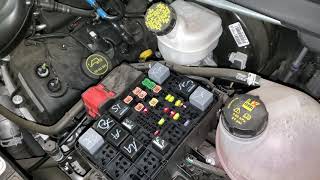
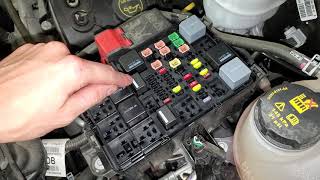
- Blown fuse for the FPCM: A simple but sometimes overlooked cause. A short circuit in the system can blow the fuse (check the under-hood fuse box), cutting power to the module 🎬 See this guide to finding the fuel pump fuses and relays. and causing a communication loss.
- Failed Powertrain Control Module (PCM): This is extremely rare. The PCM is the master computer, and its failure would likely cause numerous other codes and symptoms. It should only be considered after all other possibilities have been exhausted.
Diagnosis Steps
- Scan for all DTCs to confirm U0109 and note any accompanying fuel-related codes like P025A, P008A, etc.
- Turn the ignition key to the 'ON' position (without starting) and listen for a 1-2 second hum from the rear of the vehicle. The absence of this fuel pump priming sound strongly suggests the FPCM is not activating the pump.
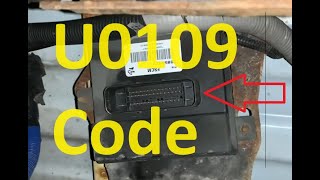
- Locate the Fuel Pump Control Module (FPCM). On the Ford Transit, it is mounted on the driver's side frame rail, just forward of the charcoal canister.
- Inspect the FPCM's main electrical connector (identified as C433 in TSBs) for looseness, corrosion, or pushed-out pins. This is the most likely cause per Ford TSBs.
- Disconnect the connector, clean the pins with electrical contact cleaner, apply a small amount of dielectric grease, and reconnect it firmly. Ensure the locking tab clicks into place. If the tab is broken, use a zip tie to secure the connection.
- Inspect the ground wire connection point (identified as G401 for the Transit in TSBs) on the frame for rust or looseness. Remove the bolt, clean the terminal and frame surface to bare metal, and tighten securely.
- Check the fuses related to the fuel pump in the under-hood fuse box.
- Clear the DTCs and attempt to start the vehicle. If it starts and the code does not return, the issue was likely the connection or ground.
- If the code returns, perform a 'wiggle test' on the FPCM harness with the key on to check for intermittent shorts or opens.
- Carefully inspect the wiring harness for several feet back from the FPCM connector. If necessary, remove the protective loom to check for hidden wire breaks or corrosion, which has been reported by other owners.
- Using a multimeter and a wiring diagram, verify battery voltage, a solid ground, and the presence of CAN bus signals at the FPCM connector.
- If all wiring, power, and ground connections are verified to be good, the FPCM itself is the likely cause and should be replaced.
Parts You'll Likely Need

- Fuel Pump Driver Module
(OEM #GA8Z-9D370-A)— This is the part to replace if the module itself has failed after all wiring and connection issues have been ruled out. Always verify the part number with your vehicle's VIN before purchasing.
Trusted brands: Motorcraft, Dorman, Wells, Spectra Premium
OEM price range: $70-$120
Aftermarket price range: $30-$70 - FPCM Connector Pigtail
(OEM #WPT504 (Verify application))— Needed if the original connector housing or pins are damaged by corrosion or heat beyond cleaning or repair. This allows you to splice a new connector onto the existing harness.
Trusted brands: Motorcraft, Duralast, Standard Motor Products
OEM price range: $20-$40
Aftermarket price range: $15-$30
Related Codes That Often Appear With This One
- P025A — This code, 'Fuel Pump Module Control Circuit/Open', often appears with U0109 because a loss of communication (U0109) is interpreted as an open circuit. This is mentioned in TSBs SSM 50661, SSM 52483, SSM 51306, and SSM 49618.
- P008A — 'Low Pressure Fuel System Pressure - Too Low'. If the FPCM isn't communicating, it can't run the pump, leading to low fuel pressure. This is cited in TSBs SSM 50661, SSM 52483, and SSM 51306.
- P0627 — 'Fuel Pump 'A' Control Circuit/Open'. Similar to P025A, this indicates a control circuit fault that is a direct result of the communication loss. This is mentioned in TSBs SSM 52483 and SSM 51306.
- P00C6 — 'Fuel Rail Pressure Too Low - Engine Cranking'. The PCM detects no fuel pressure while trying to start the engine because the FPCM isn't responding. This is cited in TSBs SSM 50661, SSM 52483, and SSM 51306.
Technical Service Bulletins (TSBs) & Recalls
- SSM 52483: For 2018-2024 Transit, advises that DTC U0109 (and others) may be stored. Instructs to check for an intermittent or partial disconnect of the harness to the fuel pump control module.
- SSM 51306: For 2018-2023 Transit, advises that DTC U0109 (and others) may be stored due to an intermittent or partial disconnect of the harness to the fuel pump control module.
- SSM 50661: For 2020-2022 Transit, advises that DTC U0109 (and others) may be stored due to an intermittent or partial disconnect of the harness to the fuel pump control module.
- SSM 49618: For 2018-2021 Transit, advises that DTC U0109 and/or P025A may be stored. Instructs to check the FPCM connector (C433) and ground (G401) for issues before performing diagnostics.
Platform-Specific Known Issues
- Ford has issued multiple Technical Service Bulletins (TSBs) for this exact problem. TSB SSM 49618 is most relevant, stating that an illuminated MIL with DTC U0109 may be due to an intermittent or partial disconnect of the harness to the fuel pump control module. They specifically instruct technicians to check connector C433 and ground G401 on the Transit before performing any other diagnostics or replacing parts.
Mechanic-Grade Diagnostic Values
- FPCM Power Supply Voltage — expected: 11.5 - 12.5 Volts (or battery voltage). Failure: Low or no voltage suggests a problem with the fuse, relay, or wiring supplying power to the module, rather than a communication fault.
- CAN Bus Network Resistance — expected: Approximately 60 Ω (Ohms) when measured across the CAN High and CAN Low pins with the battery disconnected.. Failure: A reading of 120 Ω indicates a break in one of the circuits or a missing terminating resistor. A reading near 0 Ω indicates a short between the CAN lines.
Scan Tool Commands That Help
- Ford IDS (Integrated Diagnostic System): Self-Test (Key On, Engine Off) — To retrieve all on-demand and continuous memory DTCs from the PCM and other modules. This is the first step to confirm U0109 and see any related codes.
- Ford IDS (Integrated Diagnostic System): Module Programming > Programmable Module Installation (PMI) — This function is used when replacing the FPCM. It downloads the as-built data and software from the old module (if possible) and programs it into the new one to ensure compatibility.
- Ford IDS (Integrated Diagnostic System): Datalogger — To monitor live data PIDs (Parameter IDs) from the FPCM, such as fuel pump duty cycle and fuel pressure, to see if the module is responding to commands before the communication is lost.
- FORScan: FPCM Module Reset — Some users have reported using FORScan, an aftermarket diagnostic tool, to reset the FPCM module or clear persistent codes after a repair.
Wiring & Ground Locations

- FPCM (Fuel Pump Control Module) — On North American models, it is mounted to the exterior of the driver's side frame rail, often just forward of the charcoal canister and near the front of the fuel tank.. This is the module that has lost communication. Its exposed location makes its connector and wiring vulnerable to moisture and physical damage, which is the primary cause of code U0109.
- C433 — This is the main electrical harness connector that plugs into the FPCM on the frame rail.. Ford TSBs specifically identify this connector as the most common point of failure due to intermittent or partial disconnection.
- G401 — This is the primary ground point for the FPCM, located on the frame rail near the module.. A loose or corroded ground at G401 will prevent the FPCM from operating correctly and cause communication loss, triggering U0109. TSB SSM 49618 explicitly calls for inspecting this ground.
Real Owner Repair Stories
- YouTube user comment on a 2014 Ford Escape video (2014 Ford Escape (Note: Different model, but same codes and an interesting outcome)) — Check engine light with codes P025A and U0109, particularly when using remote start.
❌ Tried (didn't work) Replaced the battery, Replaced the Fuel Pump Control Module, Tested wiring and voltages (all normal)
✅ What actually fixed it The vehicle had stored crash data in the airbag module (RCM). After a mechanic reset the airbag module and cleared the crash history, the U0109 and P025A codes disappeared and did not return. - Ford F150 Forum user (2012 Ford F-150 5.0L (Note: Different model, but similar symptoms and cause)) — Engine died while driving, would restart, sputter, then die again. Code U0109 was present.
❌ Tried (didn't work) Swapped fuel pump relay, Checked fuse 27
✅ What actually fixed it The problem was intermittent. The user suspected a short in the wiring to the Fuel Pump Control Module, as the issue was a known problem on prior model years and was beginning to surface on the 2009-2014 generation. The final fix was not posted, but the diagnosis points directly to the FPCM wiring, consistent with the Transit TSBs.
OEM Part Supersession History
8U5Z-9345-B, 8U5Z-9345-C, 8U5Z-9345-D, AA8Z-9345-A, AA8Z-9D370-A, AA8Z-9D370-B, AA8Z-9D370-D→GA8Z-9D370-A— Part has been revised and updated multiple times by Ford. The latest number consolidates previous versions.FU5A-9D370-LA→Unknown— This part number is listed for 2020-2021 Transit models specifically. It may be a different design or supplier for the refreshed models, but it appears the GA8Z-9D370-A is still the primary service part.
Heads up: Verify the correct part number with the vehicle's VIN, especially for 2020+ models, as there may be variations related to the model year refresh.
Model Year Variations Within This Range
- 2017+ (European Models): On some European models, particularly the 2.0L EcoBlue diesel, the Fuel Pump Control Module may not be on the frame rail. Forum users report finding it on top of the fuel tank itself, making access much more difficult and requiring the tank to be lowered.
Helpful Videos
![[2/3] Ford Transit Not Starting - Fuel Pump Control Module Fix! 2015 Ford Transit Van 350 3.7L- Rd.↓](https://img.youtube.com/vi/swpfU356yAM/mqdefault.jpg)


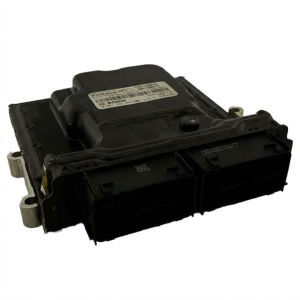
Used OEM Parts in Stock




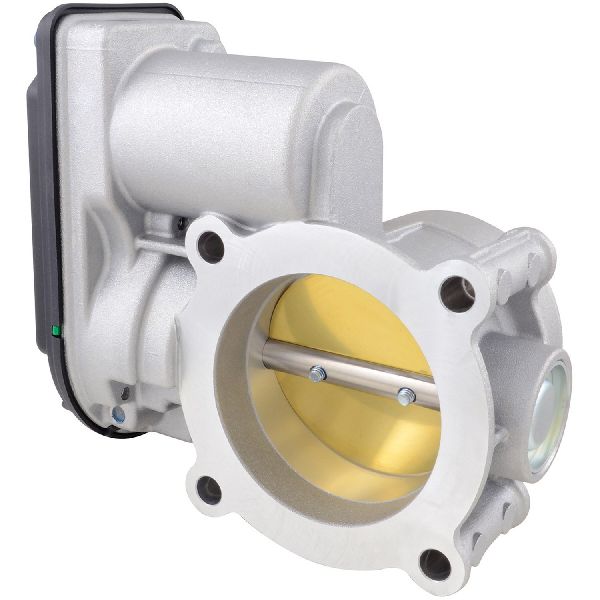
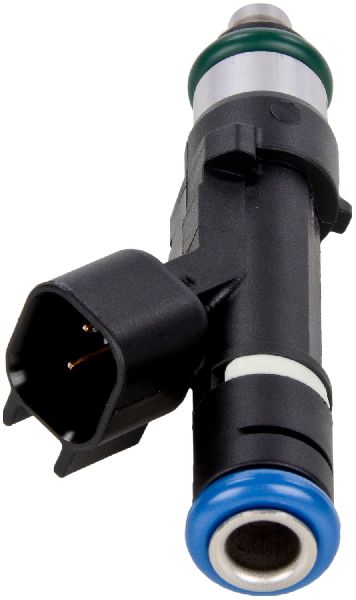
New Aftermarket Parts Available


The information in this article is provided for general reference and educational purposes only. Vehicle specifications, procedures, and part compatibility can vary by production date, trim level, and region. Always consult your vehicle's factory service manual and verify part numbers before purchasing or performing repairs. Safety-critical components such as airbags, seat belts, and braking systems should be installed by a qualified professional.
- Ford TRANSIT:
- 🎬 Helpful Videos
- 🛍️ Shop This Part
- What's Unique About the 2018-2022 Ford TRANSIT
- Diagnostic Flowchart
- Symptoms You May Notice
- Most Likely Causes
- Rare But Worth Checking
- Diagnosis Steps
- Parts You'll Likely Need
- Related Codes That Often Appear With This One
- Technical Service Bulletins (TSBs) & Recalls
- Platform-Specific Known Issues
- Mechanic-Grade Diagnostic Values
- Scan Tool Commands That Help
- Wiring & Ground Locations
- Real Owner Repair Stories
- OEM Part Supersession History
- Model Year Variations Within This Range
- 🎟️ Get 5% Off