

U0109 on 2007-2011 Chevrolet Silverado 1500: Causes and Fixes for Lost Communication With Fuel Pump Control Module
This code almost always points to a failed Fuel Pump Control Module (FPCM), also called a Fuel System Control Module (FSCM). It's located on the driver's side frame rail near the spare tire and fails from severe corrosion due to its exposed location. Expect to pay $70-$150 for a new module. OEM modules require programming by a dealer or qualified shop, but some aftermarket units (like from Dorman) come pre-programmed.
- U0109 on a 2007-2011 Silverado is a critical code that indicates a loss of communication with the Fuel Pump Control Module (FPCM).
- The most common cause by far is the failure of the FPCM itself due to corrosion from its exposed location on the truck's frame.
- Symptoms are severe and dangerous, including engine stalling while driving and a crank/no-start condition.
- Before replacing the module, always check the FPCM fuse and inspect the module's connector for corrosion or damage.
- A replacement FPCM will likely need to be programmed to your truck's VIN to function correctly.
What's Unique About the 2007-2011 Chevrolet Silverado 1500

On this generation of Silverado (GMT900), the Fuel Pump Control Module is notoriously mounted on a frame crossmember, directly above the spare tire. This location exposes it to a constant barrage of water, road salt, and debris kicked up by the tires. This leads to severe corrosion of the module's aluminum housing, connector pins, and internal circuit board, often causing the housing to crack and allow water intrusion. This design flaw is the primary reason U0109 is a common and well-documented issue for these specific trucks and their platform mates.
Diagnostic Flowchart

Tap your situation to follow the diagnostic path that matches what you're seeing on this vehicle.
Symptoms You May Notice
- Engine stalls while driving, sometimes intermittently. [ODI #11406870, ODI #11203936, 1]
- Vehicle cranks but will not start.
- Check Engine Light is on.
- No audible 'hum' or 'whine' from the fuel pump when the key is turned to the 'ON' position.
- Hesitation or stumbling during acceleration.
- Reduced engine power or 'limp mode'.
- In some cases, other electrical issues like door lock cycling or various warning lamps may appear if the communication bus is disrupted. [Bulletin #08-07-30-021H]
- Replacing the in-tank fuel pump. The U0109 code indicates a communication failure with the control module, not a mechanical failure of the pump itself. If you can hear the pump run when applying direct power to it (bypassing the FPCM), the pump is good.
Most Likely Causes

- Failed Fuel Pump Control Module (FPCM/FSCM) 🔴 High Probability The module is mounted on the frame rail, where it is highly susceptible to corrosion from water and road salt. This causes the aluminum case to swell and crack, allowing moisture to destroy the internal circuit board.
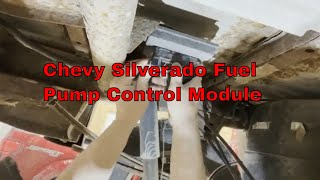
How to confirm: Visually inspect the module, located near the spare tire, for heavy rust, white powder-like aluminum corrosion, a swollen case, or a corroded electrical connector. If the module looks compromised, it is the most likely cause. 🎬 Watch: How to locate and inspect your corroded FPCM. A technician can also try to communicate directly with the FPCM using a scan tool; a failure to communicate points to a bad module or wiring.
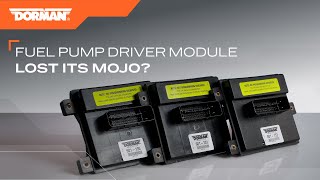
Typical fix: Replace the Fuel Pump Control Module. The new module must be programmed to the vehicle's VIN. Some aftermarket modules (like Dorman #601-132) come pre-programmed, saving a trip to the dealer. 🎬 See how a pre-programmed module simplifies the repair. It is also recommended to apply dielectric grease to the new connector to prevent future corrosion.
Est. part cost: $70 - $270 - Corroded Wiring or Connector at the FPCM 🟡 Medium Probability The same environmental factors that destroy the module also damage its electrical connector and nearby wiring. The connector faces downward, trapping moisture.
How to confirm: After unplugging the FPCM, inspect the connector terminals for green or white corrosion and check for swollen or broken wires. Pay close attention to the power (Pin 32, Red/White) and ground (Pin 3, Black) wires.
Typical fix: Clean the connector terminals with a specialized contact cleaner. If the connector or wiring is too damaged, it will need to be repaired or replaced with a new pigtail connector.
Est. part cost: $20 - $50 - Corroded Underhood Fuse Block ⚪ Low Probability The underhood fuse block can be susceptible to moisture intrusion, causing corrosion on the internal contacts for the FPCM fuse. This creates a poor connection that can mimic a failed module.
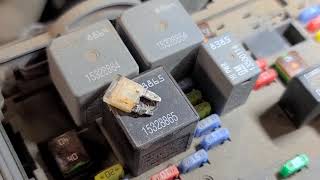
How to confirm: Check the fuse for the FPCM (typically the 20A fuse in position 21) in the under-hood fuse box. Look for corrosion on the fuse's legs or inside the fuse slot itself. A video by a technician showed this exact failure on a 2011 GM truck where a new FPCM did not solve the problem, but cleaning the corroded fuse terminal did. 🎬 Watch: Why you must check the underhood fuse block.
Typical fix: Replace the blown or corroded fuse. If the fuse slot is corroded, the terminal must be cleaned or the entire fuse block may need to be replaced in severe cases.
Est. part cost: $1 - $400 - Damaged CAN Bus Wiring ⚪ Low Probability Wiring can chafe against the frame or other components over time, leading to a short or open in the communication network. GM has issued bulletins for harness chafing in other areas on these trucks.
How to confirm: This requires advanced diagnostics. Using a multimeter, check for ~60 ohms of resistance across pins 6 and 14 of the OBD-II port (with the battery disconnected). Also check for correct voltages on the CAN lines at the FPCM connector (CAN High and CAN Low should both be around 2.5V with key on, engine off).
Typical fix: Locate and repair the damaged section of the wiring harness. This often involves peeling back loom and tape to find the break.
Est. part cost: $5 - $25
Diagnosis Steps
- Read all Diagnostic Trouble Codes (DTCs) with an OBD-II scanner. Note if other U-codes are present.
- Locate the Fuel Pump Control Module (FPCM) on the driver's side frame rail, mounted to a crossmember above the spare tire.
- Visually inspect the FPCM and its electrical connector for signs of corrosion, physical damage, or a swollen case. This is the most common point of failure.
- Check the FPCM fuse in the under-hood fuse block (typically a 20A fuse in slot #21). Inspect the fuse legs and the slot for any green or white corrosion.
- If the fuse is good, disconnect the FPCM connector. Check for 12V power on the Red/White wire (Pin 32) and a solid ground on the Black wire (Pin 3) using a multimeter.
- If power and ground are good, the FPCM itself has almost certainly failed.
- If power is missing, the issue is likely upstream in the fuse block or wiring. A known issue is corrosion within the fuse block itself, preventing power from reaching the circuit.
- If multiple 'U' communication codes are present (e.g., U0073, U0100), this may point to a larger network issue, such as a chafed wiring harness or a fault in a CAN bus splice pack (e.g., SP205, SP208). [TSB #08-07-30-021H, 12, 15]
Parts You'll Likely Need

- Fuel Pump Control Module (FPCM/FSCM)
(OEM #20850907)— This module is the most common point of failure due to its vulnerable mounting location leading to corrosion.
Trusted brands: ACDelco (requires programming), Dorman (e.g., 601-132, often pre-programmed)
OEM price range: $150-$270
Aftermarket price range: $70-$150
Related Codes That Often Appear With This One
- U0073 — This code for 'Control Module Communication Bus A Off' often appears with other U-codes when there is a general network problem, as cited in TSB #08-07-30-021H.
- P069E — This code indicates 'Fuel Pump Control Module Commanded Off'. It is often set as a direct result of the FPCM failing or losing communication and is a strong indicator that the FPCM is the root cause.
- U0100 — Lost Communication with ECM/PCM. This can appear alongside U0109 if the CAN bus network is compromised.
Technical Service Bulletins (TSBs) & Recalls
- Bulletin #08-07-30-021H: Mentions U0109 as one of several communication codes that can set due to network issues, causing various electrical problems including a no-shift condition.
Platform-Specific Known Issues
- NHTSA owner complaints frequently cite engine stalling while driving due to U0109. [ODI #11406870, ODI #11203936]
- Some owners report their VIN is not included in recalls or special coverage adjustments they believe address this exact issue. [ODI #11406870, ODI #11203936]
- GM issued Special Coverage Adjustment #14515 for some trucks, but this addresses a different issue with the Chassis Control Module, not the FPCM that causes U0109.
- A recurring theme in owner forums is the importance of checking the FPCM fuse (#21) and its contacts in the underhood fuse box for corrosion, as this can cause the same symptoms as a failed module.
Mechanic-Grade Diagnostic Values
- CAN Bus Network Resistance — expected: ~60 Ω. Failure: A reading of ~120 Ω indicates an open circuit or a missing termination resistor. A reading near 0 Ω indicates a short between the CAN High and Low wires.
- CAN Bus Voltage (Key On, Engine Off) — expected: CAN High (Pin 6 at FPCM, Tan wire) and CAN Low (Pin 7 at FPCM, Tan/Black wire) should both read ~2.5V to ground.. Failure: Voltages that are stuck high, low, or at 0V indicate a short or open on the network.
- FPCM Battery Power — expected: Battery Voltage (12V+). Failure: Low or no voltage indicates a problem with the fuse, fuse block, or wiring.
- FPCM Ground — expected: Near 0 Ω resistance to chassis ground.. Failure: High resistance indicates a corroded or broken ground connection.
- ECM Fuel Pump On Command Signal — expected: 12V for 2-3 seconds with key-on, or constant 12V while cranking.. Failure: No voltage indicates a problem with the ECM or the wiring between the ECM and FPCM.
Scan Tool Commands That Help
- GDS2 / Tech 2 / High-End Bidirectional Scanner: Fuel Pump On/Off Command — Used to verify if the ECM, FPCM, and fuel pump can be commanded to activate, bypassing the normal run sequence. This helps isolate whether the issue is with the command from the ECM, the FPCM's ability to execute, or the pump itself.
- GDS2 (GM Dealer Software): Fuel Pump Driver Control Module Configuration — This function is required after replacing the FPCM with a new OEM unit. It programs the module to the vehicle's specific VIN and configuration, allowing it to communicate with the other modules.
Wiring & Ground Locations
- FPCM Connector — On the Fuel Pump Control Module, located on the driver's side frame rail crossmember, above the spare tire.. This is the central connection point for all power, ground, and communication signals for the module. Key pins are: Pin 32 (Power), Pin 3 (Ground), Pin 6 (CAN High), Pin 7 (CAN Low).
- G400 / G401 — Mounted to the left rear frame rail, behind the left rear tire.. These are the primary chassis ground points in the rear of the vehicle. The FPCM relies on a clean chassis ground. While the FPCM's ground wire may not terminate directly here, corrosion at these main points can cause widespread electrical issues in the rear, including a poor ground path for the FPCM.
- Underhood Fuse Block — Driver's side of the engine bay.. This block contains Fuse 21 (20A), which supplies battery power to the FPCM via the Red/White wire at Pin 32. The internal contacts of this fuse block are a known failure point due to corrosion.
- SP205 / SP208 (Splice Packs) — Located under the instrument panel, near the steering column or on the right side.. These splice packs are junction points where the CAN bus wires from various modules connect. A corroded or loose connection inside one of these packs can disrupt the entire communication network, potentially causing a U0109 code.
Real Owner Repair Stories
- YouTube video by Phillip Bailey (2011 GM Truck) — Crank no start, U0109 code returned one day after replacing the Fuel Pump Control Module.
❌ Tried (didn't work) Replacing the Fuel Pump Control Module (FPCM)
✅ What actually fixed it The terminal for the FPCM fuse (#21) inside the underhood fuse block was corroded, causing an intermittent loss of power to the new module. The entire fuse block had to be replaced to restore a reliable connection. - Reddit user in r/Silverado (2009 Chevrolet Silverado 1500 5.3L) — Crank no start, no consistent fuel pump priming, U0109 code present.
❌ Tried (didn't work) Replacing the in-tank fuel pump, Replacing the battery, Confirming the previously replaced Dorman FPCM was likely working (pump could be jumped at its connector)
✅ What actually fixed it The user's diagnosis pointed toward a lack of power at the FPCM fuse in the underhood fuse block, which was the next step in the diagnostic chain after confirming the downstream components were functional. The narrative strongly implies a faulty fuse block was the root cause. - YouTube video by walosauto repair (2007 Chevrolet Silverado) — Intermittent no start, U0109 code, only 3 volts measured at the FPCM power wire.
❌ Tried (didn't work) A new FPCM had already been installed by the owner but the problem persisted.
✅ What actually fixed it The FPCM fuse (#22 in this case) was making poor contact in the fuse box. The terminal inside the box was damaged. As a temporary fix to prove the fault, the technician soldered the fuse leg to make it thicker, which restored power. The final recommendation was to replace the entire fuse box.
When the Usual Fixes Don't Work
- While the most common cause of U0109 is a corroded Fuel Pump Control Module (FPCM), a significant number of cases are resolved only after addressing the underhood fuse block. Multiple owner and technician reports confirm that replacing the FPCM does not solve the problem if the true cause is a corroded terminal for the FPCM fuse (typically fuse #21). In these instances, the new module fails to receive proper power, leading to the same communication loss code. Therefore, verifying solid battery voltage at the FPCM power wire (Pin 32) is a critical diagnostic step before condemning the module itself. If power is low or absent, the fuse block becomes the primary suspect.
OEM Part Supersession History
15213110→25854536, 25785013, 25866052, 25967325, 20759945, 20850907— Standard part evolution and consolidation by the manufacturer over time.
Heads up: All OEM versions require VIN programming to function. An unprogrammed module will not allow the vehicle to start. Aftermarket versions may come pre-programmed.
Model Year Variations Within This Range
- 2007-2011: No significant variations have been documented regarding the cause or fix for code U0109 within the GMT900 platform years. The FPCM location, its vulnerability to corrosion, and the diagnostic procedure remain consistent across this model range.
Helpful Videos

Used OEM Parts in Stock




New Aftermarket Parts Available



The information in this article is provided for general reference and educational purposes only. Vehicle specifications, procedures, and part compatibility can vary by production date, trim level, and region. Always consult your vehicle's factory service manual and verify part numbers before purchasing or performing repairs. Safety-critical components such as airbags, seat belts, and braking systems should be installed by a qualified professional.
- Chevrolet SILVERADO 1500:
- 🎬 Helpful Videos
- 🛍️ Shop This Part
- What's Unique About the 2007-2011 Chevrolet Silverado 1500
- Diagnostic Flowchart
- Symptoms You May Notice
- Most Likely Causes
- Diagnosis Steps
- Parts You'll Likely Need
- Related Codes That Often Appear With This One
- Technical Service Bulletins (TSBs) & Recalls
- Platform-Specific Known Issues
- Mechanic-Grade Diagnostic Values
- Scan Tool Commands That Help
- Wiring & Ground Locations
- Real Owner Repair Stories
- When the Usual Fixes Don't Work
- OEM Part Supersession History
- Model Year Variations Within This Range
- 🎟️ Get 5% Off