

U0104 on 2017-2019 GMC Sierra 1500: Lost Communication with Cruise Control Module Fixes
On 2017-2019 GMC Sierras, code U0104 is almost always caused by a faulty Serial Data Gateway Module (SDGM), not the cruise control module itself. The issue is well-documented in GM TSBs #PIT5586G and #20-NA-212. The most common fix is reprogramming or replacing the SDGM, which requires a trip to the dealer or a qualified shop with programming capabilities.
- U0104 on your Sierra almost never means the cruise control module is bad.
- The problem is most likely the Serial Data Gateway Module (SDGM), a central communication hub under your dashboard.
- The official GM fix starts with a software update (reprogramming) of the SDGM, which must be done by a professional.
- Do not replace any parts until the SDGM and its wiring have been professionally diagnosed.
- Driving is possible, but be aware that other electrical systems could act up unexpectedly.
What's Unique About the 2017-2019 Gmc SIERRA 1500

On this generation of GM trucks (K2XX and T1XX platforms), many individual control modules communicate through a central hub called the Serial Data Gateway Module (SDGM). A high number of communication (U-code) faults, including U0104, often points not to the individual modules themselves, but to a failure within the SDGM. GM has issued technical service bulletins noting that the SDGM can suffer from internal 'logic locks' (a software freeze) or have poor pin connections, causing a network-wide communication breakdown that logs numerous false codes. The SDGM acts as a router, and when it fails, it's like the internet going out for the whole vehicle network.
Diagnostic Flowchart
Tap your situation to follow the diagnostic path that matches what you're seeing on this vehicle.
Generation note: This range covers the end of the third generation (K2XX, 2014-2018/2019 Limited) and the start of the fourth generation (T1XX, 2019-present). The network architecture relying on a Serial Data Gateway Module (SDGM) is common to both, and TSBs regarding SDGM failure apply to both generations within this year range. A key diagnostic difference exists for the 2019 model year: K2XX 'Limited' models will show 60 Ohms resistance on the CAN bus at the DLC, while the new T1XX body style will show 120 Ohms, as it does not provide direct access to the terminated bus.
Symptoms You May Notice

- Cruise control will not engage
- Adaptive Cruise Control (ACC) unavailable message on the Driver Information Center (DIC)
- Check Engine Light is on
- Multiple other warning lights may appear (Service 4WD, Service Airbag, ABS light, etc.)
- Instrument panel gauges may fluctuate, go dead, or read zero
- Intermittent no-crank or no-start condition
- Turn signal audio and other chimes may be inoperative
- Radio or infotainment system may act erratically
- Replacing the cruise control module/radar sensor. Because the code definition is 'Lost Communication With Cruise Control Module', many will replace this expensive part first, only to find the problem persists because the issue lies with the central SDGM.
- Replacing the Body Control Module (BCM) or Powertrain Control Module (PCM) without first diagnosing the SDGM, which acts as the central router for both.
Most Likely Causes

- Serial Data Gateway Module (SDGM) Failure 🔴 High Probability GM TSBs #PIT5586G and the superseding #20-NA-212 specifically identify internal microcontroller errors ('logic lock') as a primary cause for a cascade of communication codes, including U0104. This is a known software/hardware anomaly where the module powers on but stops communicating.
How to confirm: A professional scan tool will show a loss of communication with multiple modules, not just the cruise control module. The first step per the TSB is to attempt a module reprogram. If the SDGM is unresponsive to the scan tool despite having good power and ground, it is the primary suspect.
Typical fix: First, attempt to reprogram the SDGM with the latest software using GM's Techline Connect system. If that fails, or if the issue returns, the module must be replaced. The new module requires programming to the vehicle's VIN.
Est. part cost: $75-$250 - Poor Connection at SDGM 🟡 Medium Probability TSB #20-NA-212 and its predecessors note that terminals in the SDGM's X1 and X2 connectors can become bent, loose, corroded, or have poor tension, interrupting communication across the network. The module is located under the driver's side dashboard, near the steering column and BCM.
How to confirm: Visually inspect the connectors and terminals at the SDGM. Check for any backed-out pins, corrosion, or damage to the connector housing. A technician may perform a 'pin drag' test to check for proper terminal tension.
Typical fix: Repair or replace the affected wire terminal. GM provides terminated leads (Part #84619127 per TSB #PIT5586G) for this repair. In some cases, the entire connector pigtail may need to be replaced. The process of de-pinning the connector requires a small pick tool and extreme care to avoid damaging the connector.
Est. part cost: $10-$50 - Wiring Harness Damage ⚪ Low Probability While less common for this specific code, the main CAN bus wiring can be damaged. On trucks, harnesses can chafe against the frame, engine components, or aftermarket accessories. A user on MHH Auto forum noted visible corrosion on a power pin to the SDGM on a flood-damaged truck, which caused similar network-wide issues.
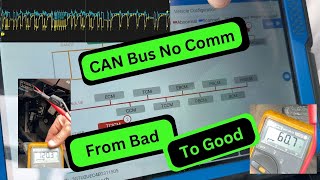
How to confirm: Visually inspect the wiring harness, particularly where it passes through the firewall and near the SDGM and BCM. Check for continuity and resistance on the CAN bus wires 🎬 Watch: Troubleshooting a bad CAN bus signal causing no-start issues (typically a twisted pair) using a multimeter. The network should have a resistance of approximately 60 Ohms.
Typical fix: Repair the damaged wires by soldering and heat-shrinking. Secure the harness away from the point of contact using tape or new clips.
Est. part cost: $5-$25
Rare But Worth Checking
- Faulty Cruise Control Module (Radar Sensor): While this is what the code directly points to, it's rarely the actual cause on these trucks. This should only be considered after the SDGM and all related wiring have been ruled out. Misdiagnosing this can be costly, as the radar sensor can cost over $600-$900, compared to the much cheaper SDGM.
- Low Battery Voltage or Poor Grounds: Weak batteries or corroded ground straps can cause unpredictable electronic issues, including module communication errors. Always ensure the battery and charging system are healthy before diagnosing complex network faults. TSB #20-NA-212 emphasizes the need for a stable battery voltage during any reprogramming attempts. A known issue on this platform is a poor BCM ground at G218, located under the driver's side dash, which can cause widespread electrical problems.
Diagnosis Steps
- Check battery voltage and charging system health. It must be stable and above 12.4 volts. Low voltage can cause numerous communication codes.
- Perform a full vehicle DTC scan with a professional-grade scan tool. Note all 'U' (communication) codes present. A long list of U-codes strongly suggests a network-wide problem originating from the SDGM.
- Follow TSB #20-NA-212. The first step is to attempt to reprogram the Serial Data Gateway Module (SDGM). This requires a GM Techline Connect subscription and compatible hardware. Do not connect a battery charger during this process; use a GM-approved programming support tool.
- If reprogramming fails or the issue persists, locate the SDGM. It is under the driver's side dashboard, often above the BCM near the steering column, and has a black and a gray connector.
- Disconnect the battery. Carefully disconnect the SDGM connectors (X1 and X2) and inspect for bent, loose, corroded, or backed-out terminals. Pay close attention to pin tension.
- If connector terminals are faulty, repair using the specified terminated leads.
- If no issues are found with the SDGM or its connectors, inspect the wiring harness leading to the cruise control module (radar sensor) at the front of the vehicle for any damage, especially if the truck has had front-end damage or repair.
- As a last resort, if all wiring and the SDGM check out, the final step would be to test the Cruise Control Module itself, but this is the least likely point of failure.
Parts You'll Likely Need

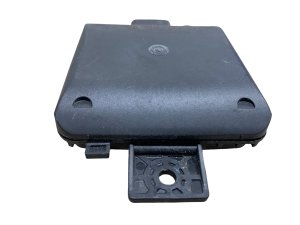
- Serial Data Gateway Module (SDGM)
(OEM #13599318)— This module is the most common point of failure for this code, due to either internal software glitches or hardware failure, as documented in GM TSBs. This part number supersedes older versions like 13509768, 13524297, 13524298, and 13599317.
Trusted brands: ACDelco (GM Genuine)
OEM price range: $75-$150
Aftermarket price range: $50-$120 - Cruise Control Distance Sensor (Radar Unit)
(OEM #84659103 (superseded by 86809188))— This is the part that is often incorrectly replaced. It is the actual cruise control module but is rarely the cause of the U0104 code on this platform. Its high cost makes misdiagnosis a significant financial issue.
Trusted brands: ACDelco, Bosch
OEM price range: $600-$900
Aftermarket price range: $400-$700
Related Codes That Often Appear With This One
- U0073 — Control Module Communication Bus "A" Off
- U0100 — Lost Communication With ECM/PCM
- U0101 — Lost Communication with TCM
- U0140 — Lost Communication With Body Control Module
- U0155 — Lost Communication With Instrument Panel Cluster (IPC) Control Module
Technical Service Bulletins (TSBs) & Recalls
- PIT5586G: Initial bulletin mention
Platform-Specific Known Issues
- GM Technical Service Bulletin #20-NA-212 (which supersedes #PIT5586G) is the primary document for this issue. It explicitly states the cause is either a software 'logic lock' in the SDGM or a physical terminal problem in its X1/X2 connectors. The prescribed fix is to reprogram the module first, and only inspect connectors or replace the module if reprogramming is unsuccessful.
Mechanic-Grade Diagnostic Values
- High-Speed GMLAN Bus Resistance (at DLC pins 6 & 14, battery disconnected) — expected: Approximately 60 Ω (for K2XX platform). Failure: A reading of 120 Ω indicates an open in the bus or one of the terminating resistors is offline. A reading near 0 Ω indicates a short between the CAN High and Low wires.
- High-Speed GMLAN Bus Voltage (Key On, Engine Off) — expected: CAN High (Pin 6 to Ground): ~2.6V. CAN Low (Pin 14 to Ground): ~2.4V.. Failure: Voltages that are stuck high, low, or equal to each other indicate a short to power, short to ground, or a short between the CAN lines.
- Module Ground Circuit Resistance — expected: Less than 1.0 Ohm between the module's ground pin and a clean chassis ground.. Failure: Resistance greater than 1.0 Ohm indicates a high-resistance or open ground circuit, a common cause of intermittent module faults.
Hidden / Shadow Codes Worth Checking
- U0104 71: The '71' is a hexadecimal symptom byte meaning 'Invalid Serial Data Received'. This provides more detail than the base code, suggesting the SDGM is receiving corrupted or nonsensical data, rather than no data at all. (see via GM GDS2 (Global Diagnostic System 2) or equivalent professional scan tool.)
- U0104 72: The '72' symptom byte means 'Alive Counter Incorrect'. Modules on the network send a constantly incrementing number (counter) with their messages to prove they are 'alive'. This code indicates the counter from the cruise control module is not updating as expected, pointing to a software or module freezing issue. (see via GM GDS2 (Global Diagnostic System 2) or equivalent professional scan tool.)
Scan Tool Commands That Help
- GDS2 (GM Global Diagnostic System 2): Module Replacement and Setup — This function is mandatory after physically replacing the Serial Data Gateway Module. It configures the new module to the vehicle's VIN and specific options (RPO codes), allowing it to communicate correctly with all other modules on the network. Failure to perform this step will result in the new module not working.
- GM Techline Connect (SPS2): Module Programming — This is used to update the software/firmware of the existing SDGM as the first step of diagnosis, per TSB #20-NA-212. It can resolve 'logic lock' issues without replacing the hardware. It is also required to load the initial software onto a new replacement module before the 'Module Setup' procedure in GDS2.
Wiring & Ground Locations
- G218 — Under the driver's side dashboard, behind the kick panel, near the A-pillar. It is a stud with one or more ground eyelets secured by a nut.. This is a major ground point for the Body Control Module (BCM) and other interior electronics. GM has documented that sound-deadening insulation can get trapped between the ground connector and the body, causing high resistance. A poor ground here can cause widespread, intermittent communication faults across the entire vehicle network, mimicking an SDGM failure.
- SDGM Connectors X1 and X2 — On the Serial Data Gateway Module itself, located under the driver's side dash, often near or above the BCM.. TSB #PIT5586G and #20-NA-212 specifically call out checking for poor terminal tension, bent pins, or backed-out wires in these two main connectors as a primary cause of network failure. All CAN bus traffic routes through these connectors, making them a critical point of failure.
- Battery to Frame Ground — A cable from the negative battery terminal to a bolt on the vehicle frame in the engine compartment.. While basic, this primary ground is essential for the entire electrical system. Corrosion or looseness at this point can create system-wide low voltage and electrical noise, leading to random communication codes like U0104.
Real Owner Repair Stories
- Reddit user in r/fordfusion (similar CAN bus architecture) (Ford Fusion (N/A year)) — After fixing a different issue, used remote start. The vehicle then set multiple U-codes including U0100, U0151, and U0132.
❌ Tried (didn't work) The user had just replaced an O2 sensor.
✅ What actually fixed it The user suspected the aftermarket remote start system caused the computer to 'freak out' and throw a cascade of communication codes. This highlights how non-OEM modules, especially those tied into starting and security, can disrupt the CAN bus and generate false communication codes.
OEM Part Supersession History
13509768, 13524297, 13524298, 13599317→13599318— Standard part evolution for improved reliability and manufacturing updates.
Heads up: The newest part number, 13599318, is the correct and fully compatible service replacement for all prior versions listed for this vehicle range.
Model Year Variations Within This Range
- 2019: The 2019 model year included both the older K2XX platform (as the 'Sierra 1500 Limited') and the new T1XX platform. When measuring CAN bus resistance at the DLC, a K2XX truck should read ~60 ohms. However, the T1XX architecture does not tie the DLC directly to the terminated bus, so it will read ~120 ohms (reading from the gateway module itself). A technician unaware of this difference may misdiagnose the T1XX truck as having an open circuit.
Helpful Videos
We Have This Part in Stock

The information in this article is provided for general reference and educational purposes only. Vehicle specifications, procedures, and part compatibility can vary by production date, trim level, and region. Always consult your vehicle's factory service manual and verify part numbers before purchasing or performing repairs. Safety-critical components such as airbags, seat belts, and braking systems should be installed by a qualified professional.
- Gmc SIERRA 1500:
- 🎬 Helpful Videos
- 🛍️ Shop This Part
- What's Unique About the 2017-2019 Gmc SIERRA 1500
- Diagnostic Flowchart
- Symptoms You May Notice
- Most Likely Causes
- Rare But Worth Checking
- Diagnosis Steps
- Parts You'll Likely Need
- Related Codes That Often Appear With This One
- Technical Service Bulletins (TSBs) & Recalls
- Platform-Specific Known Issues
- Mechanic-Grade Diagnostic Values
- Hidden / Shadow Codes Worth Checking
- Scan Tool Commands That Help
- Wiring & Ground Locations
- Real Owner Repair Stories
- OEM Part Supersession History
- Model Year Variations Within This Range
- 🎟️ Get 5% Off