

U0102 on 2015-2020 Chevrolet Suburban: Lost Communication with TCCM Fixes
On a 2015-2020 Suburban, code U0102 usually means the Transfer Case Control Module (TCCM) is offline. The most common causes are wiring/connector issues at the Serial Data Gateway Module (SDGM) located under the driver's side dash, a blown fuse, or a faulty TCCM itself. Inspecting the SDGM connectors is a key first step per GM TSBs. A new TCCM costs between $150-$300 and requires programming.
- Code U0102 means the Transfer Case Control Module (TCCM) has stopped communicating.
- Always check the 4WD/TCCM fuse first, as it's a simple and common fix.
- On this specific Suburban generation, wiring problems at the central Serial Data Gateway Module (SDGM) are a known cause of this code, as documented in GM TSBs.
- If the fuse and wiring are good, the TCCM itself has likely failed and will need to be replaced and programmed.
- Your 4WD system will not work until this issue is resolved.
What's Unique About the 2015-2020 Chevrolet SUBURBAN

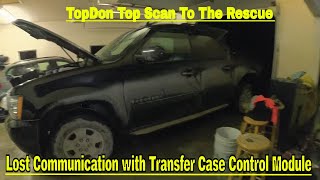
The 2015-2020 Suburban (K2XX generation) uses a central computer called the Serial Data Gateway Module (SDGM) to manage communication between all other modules. The SDGM is located under the driver's side of the dashboard. GM has issued multiple Technical Service Bulletins (TSBs) for these trucks, including PIT5586B, PIT5586G, and 20-NA-212, which note that a host of communication codes, including U0102, can be caused by connector or wiring problems at this specific gateway module. 🎬 Watch: Diagnosing U0102 and communication issues on a 2017 Suburban This makes checking the SDGM's X1 (black) and X2 (gray) connectors a critical, platform-specific first step that isn't relevant to other manufacturers.
Diagnostic Flowchart

Tap your situation to follow the diagnostic path that matches what you're seeing on this vehicle.
Symptoms You May Notice

- "Service 4 Wheel Drive" message on the instrument cluster.
- Check Engine Light is on.
- 4WD system is inoperative; cannot switch between 2WD and 4WD.
- Indicator lights on the 4WD selector switch are off or go out after starting.
- Other warning lights, like ABS or StabiliTrak, may also illuminate if the network fault is widespread.
- Scan tool shows 'No Communication' or 'No Response' from the TCCM.
- Replacing the 4WD selector switch. While a faulty switch can cause issues with changing 4WD modes, it does not typically cause a U0102 communication code. Forum users have reported replacing this part with no success for a U0102 code.
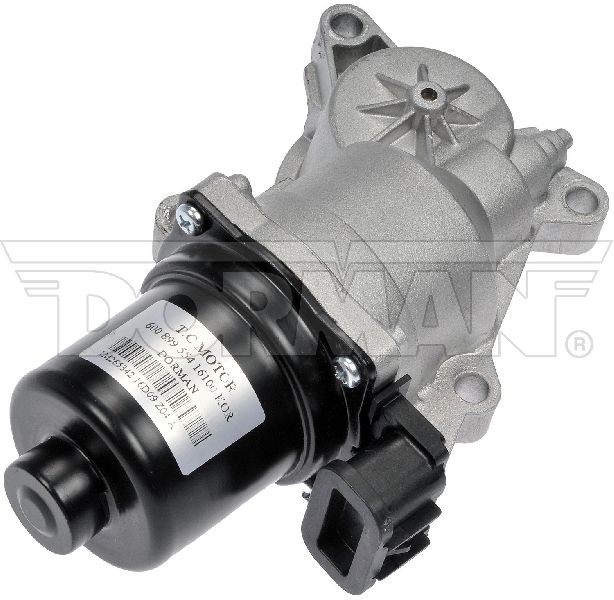
- Replacing the transfer case actuator motor. A failed actuator motor will prevent shifting but will usually set specific actuator or position sensor codes (like C0398), not a communication code for the entire module.
Most Likely Causes

- Wiring or Connector Issue at Serial Data Gateway Module (SDGM) 🔴 High Probability As documented in GM TSBs #PIT5586G and #20-NA-212, loose, bent, or backed-out terminals in the SDGM connectors are a known issue on this platform, causing widespread communication faults. The SDGM acts as the central router, and a bad connection here can isolate the TCCM from the rest of the vehicle network.
How to confirm: Inspect the X1 (black) and X2 (gray) connectors at the Serial Data Gateway Module (located under the driver's side dash, behind the knee bolster) for any bent, loose, or backed-out terminals. This should be done by a qualified technician after disconnecting the battery.
Typical fix: Repair or replace the affected terminal and/or connector. In some cases, the SDGM may need reprogramming or replacement. TSB PIT5586G notes a potential 'logic lock' that can sometimes be cleared by pulling the SDGM fuse for a minute.
Est. part cost: $20-$150 - Faulty Transfer Case Control Module (TCCM) 🟡 Medium Probability The TCCM is an electronic module that can fail internally due to age, vibration, or voltage spikes. It is a common point of failure when U0102 is set and all power, ground, and network wiring are confirmed to be good.
How to confirm: After verifying all wiring, fuses, and grounds are good, a diagnostic scan tool can be used to attempt direct communication with the TCCM. If the module does not respond, it has likely failed.
Typical fix: Replace the Transfer Case Control Module. The new module must be programmed to the vehicle's VIN using dealership-level software (GM SPS).
Est. part cost: $150-$300 - Blown Fuse for TCCM 🟡 Medium Probability Electrical shorts in related components or wiring can cause the fuse powering the TCCM to blow. There are multiple fuse boxes in the Suburban (underhood, driver side dash, passenger side dash, and rear luggage compartment).
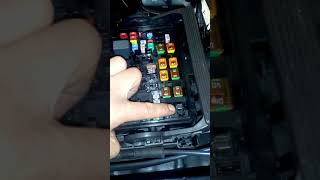
How to confirm: Check the fuse for the 4WD/TCCM. A 2017 Suburban owner found the issue was the fuse in position #6 of the underhood fuse block. Check your owner's manual for the specific fuse labeled '4WD', 'TCS', or 'TCCM' in all fuse box locations. Visually inspect the fuse or test for continuity with a multimeter.
Typical fix: Replace the blown fuse. If it blows again, further diagnosis is needed to find the short circuit. One owner found a short inside the underhood fuse box itself.
Est. part cost: $1-$5 - Poor Power or Ground Connection to TCCM ⚪ Low Probability Corrosion or loose connections at the TCCM's power feed or chassis ground can interrupt its operation. TSB 19-NA-218 also points to potential high resistance in battery cables or poor grounds at G218 (behind the driver's A-pillar kick panel) as a cause for various communication codes. Forum members note there are critical frame grounds located behind both front wheels that are prone to corrosion from tire splash.
How to confirm: Use a multimeter to perform a voltage drop test on the power and ground circuits at the TCCM connector. Voltage should be ~12V, and ground resistance should be less than 0.1 ohms. Inspect and clean the main chassis grounds, especially those on the frame behind the front wheels.
Typical fix: Clean or repair the corroded/loose ground connection. Repair the power wire or fix the source of the power loss (e.g., corroded fuse block).
Est. part cost: $5-$50
Rare But Worth Checking
- Damaged CAN Bus Wiring: The twisted pair of wires for the CAN bus can get chafed or shorted, especially in areas where the harness passes through the firewall or along the frame. This is less common than a module or connector fault but can cause the same symptoms.
Diagnosis Steps
- Read all diagnostic trouble codes from all modules using a professional scan tool. Note if U0102 is the only code or if many other U-codes are present, which would strongly suggest a network-wide issue.
- If multiple communication codes (U0100, U0101, U0140, etc.) are present, immediately suspect the Serial Data Gateway Module (SDGM). Follow the guidance in TSB #PIT5586G: locate the SDGM under the driver's side dash and, with the battery disconnected, carefully inspect the X1 and X2 connectors for loose or damaged terminals.
- If U0102 is the primary or only code, check all fuses related to the TCCM/4WD in the various fuse boxes (underhood and in-cabin). A known cause is a blown fuse in the underhood fuse box at position #6 or #67.
- If fuses are good, locate the TCCM on the vehicle's frame rail and inspect its main connector and wiring harness for any signs of corrosion, moisture, or physical damage.
- Test the power and ground circuits at the TCCM connector using a multimeter. Ensure there is stable battery voltage (12V ± 0.5V) and a clean ground connection (less than 0.1 ohms resistance to chassis ground).
- Test the CAN bus network wires for proper resistance. With the battery disconnected, measure resistance between CAN High and CAN Low at the DLC (pins 6 & 14); it should be approximately 60 ohms. A reading of 120 ohms indicates an open circuit or a missing termination resistor, which could be an issue with the wiring or the internal resistor in the ECM or a separate terminating resistor located near the spare tire.
- If all wiring, fuses, and grounds are confirmed to be good, and the module still does not communicate with a scan tool, the Transfer Case Control Module (TCCM) is the most likely failed component and requires replacement and programming.
Parts You'll Likely Need
- Transfer Case Control Module (TCCM)
(OEM #86522174)— This module is the brain for the 4WD system. If it fails internally, it will stop communicating, triggering the U0102 code.
Trusted brands: ACDelco (GM Genuine), Dorman
OEM price range: $200-$300
Aftermarket price range: $150-$250 - Mini Fuse — A short circuit can cause the fuse powering the TCCM to blow, which is a simple and common cause for the module to lose communication.
Trusted brands: Bussmann, Littlefuse
OEM price range: $1-$5
Aftermarket price range: $1-$5 - Serial Data Gateway Module (SDGM)
(OEM #13534928)— Though less common than connector issues, the SDGM can fail internally, causing a flood of communication codes including U0102. Replacement requires programming.
Trusted brands: ACDelco (GM Genuine)
OEM price range: $100-$150
Related Codes That Often Appear With This One
- U0100 — Lost Communication with ECM/PCM. Often appears with other U-codes when a central network issue exists, like a problem with the SDGM.
- U0101 — Lost Communication with TCM. Like U0100, this points to a broader network problem rather than an issue with the transmission module itself.
- U0140 — Lost Communication with Body Control Module. This is another common code that appears in a group when the Serial Data Gateway Module or its wiring is compromised.
- U0155 — Lost Communication with Instrument Panel Cluster. Also listed in TSB PIT5586G as a related code pointing to a network-wide issue originating from the SDGM.
Technical Service Bulletins (TSBs) & Recalls
- PIT5586B
- PIT5586G
- 20-NA-212
- 19-NA-218
Platform-Specific Known Issues
- GM has issued a recall (GM #14192, NHTSA #14V374000) for some 2015 Suburbans where an electrical short could cause the transfer case to shift to neutral unexpectedly. The fix was a software reprogram of the TCCM. While this doesn't directly cause U0102, it highlights the sensitivity of the TCCM software on early models of this generation.
Mechanic-Grade Diagnostic Values
- CAN Bus Network Resistance — expected: ~60 Ω (Ohms) when measured between Pins 6 and 14 of the DLC with the battery disconnected.. Failure: A reading of ~120 Ω indicates an open circuit or one of the two terminating resistors is offline. A reading significantly lower than 60 Ω could indicate a shorted wire or an extra, unintended resistor on the network.
- TCCM Power Supply Voltage — expected: 12V ± 0.5V at the TCCM power supply pin with the key on.. Failure: Low or no voltage indicates a problem with the fuse, wiring, or power source.
- TCCM Ground Circuit Resistance — expected: Less than 0.1 Ω between the TCCM ground pin and a clean chassis ground point.. Failure: Higher resistance indicates a poor ground connection, which can cause intermittent module operation.
- CAN Bus Voltage (Key On) — expected: Both CAN High and CAN Low lines should measure approximately 2.5V DC. During data transmission (viewed on an oscilloscope), CAN High toggles to ~3.5V and CAN Low toggles to ~1.5V.. Failure: A line stuck near 0V or battery voltage, or showing no activity, indicates a short or open in the wiring or a faulty module pulling the bus down.
Scan Tool Commands That Help
- GM SPS (Service Programming System): Serial Data Gateway Module Learn Procedure — This procedure is required after replacing the SDGM or adding a new accessory module to the vehicle's network. It allows the new gateway to learn which modules are present on the vehicle's buses to properly monitor for communication faults.
Wiring & Ground Locations
- Serial Data Gateway Module (SDGM) — Under the driver's side dashboard, often behind the knee bolster. It has two main connectors: X1 (black) and X2 (gray).. This is the central communication hub. TSBs PIT5586B and PIT5586G specifically cite terminal issues in its connectors as a primary cause for U0102 and other communication codes.
- Frame Grounds (Prone to Corrosion) — On the vehicle frame, located directly behind both the driver and passenger side front wheels.. This is a notoriously bad location that exposes the grounds to constant water and salt spray from the tires, leading to corrosion and high resistance. A bad ground here can cause a host of difficult-to-diagnose electrical issues, including module communication loss.
- CAN Bus Terminating Resistor (External) — Under the truck, near the spare tire area, above the muffler. It is a small component taped into the main wiring harness.. The CAN bus requires two 120-ohm resistors for proper operation (totaling 60 ohms). One is internal to a module (like the ECM), but the other is a physical part on the harness. If this resistor fails or its wiring is damaged, network resistance will be incorrect (120 ohms), causing communication failures like U0102.
- G218 / BCM Ground — Inside the cabin, behind the driver's side A-pillar kick panel.. This is a key ground point for multiple interior modules, including the Body Control Module (BCM). A fault here can cause widespread communication issues that may present with a U0102 code among others.
Real Owner Repair Stories
- YouTube user 'Neto Ros' (2017 Chevrolet Suburban) — "Service 4 Wheel Drive" and StabiliTrak warning lights, U0102 code stored.
❌ Tried (didn't work) Initial diagnosis pointed towards a complex network issue.
✅ What actually fixed it Replacing a single blown 15A fuse in the under-hood fuse box, located in position #6, which was labeled for the Transfer Case ('TR Case 4WD'). - YouTube user 'Michigan Heating Guy' (2014 Chevrolet Suburban (K2XX Platform)) — "Service 4 Wheel Drive" message, U0102 code in the brake module.
❌ Tried (didn't work) Simply replacing the fuse worked temporarily.
✅ What actually fixed it The initial fix was a blown fuse in position #67 (gas engine). However, the fuse blew again. The root cause was found to be a short circuit within the under-hood fuse box itself, which caused sparks when the cover was closed. The ultimate fix required repairing the shorted wiring inside the fuse box. - Reddit user 'FlyingZebra34' (2015 Chevrolet Suburban, 125k miles) — Multiple catastrophic failures, including transmission, front differential, and engine lifters.
❌ Tried (didn't work) Regular maintenance (5k oil changes, 60k trans services).
✅ What actually fixed it This user's story did not involve a U0102 code specifically, but highlights the potential for significant mechanical and electrical issues in the first model year (2015) of this generation, reinforcing the idea that early-build vehicles can be more problematic.
OEM Part Supersession History
Multiple (e.g., 23270060, 84115056, etc.)→86522174— GM regularly updates service parts to integrate new materials, technologies, or fix previously identified failure modes.
Heads up: The newest part number (86522174) is the correct service replacement for all 2015-2020 models, but it must be programmed with GM's SPS software to function.Multiple (e.g., 13518851, 13526301, etc.)→13534928— Revisions to the Serial Data Gateway Module (SDGM) to improve reliability and compatibility.
Heads up: Part number 13534928 is the current replacement for a long list of prior part numbers. Like the TCCM, it requires programming via SPS after installation.
Model Year Variations Within This Range
- 2015: The 2015 model year was subject to NHTSA recall #14V374000 for a TCCM software issue that could cause the transfer case to shift to neutral unexpectedly. While not a direct cause of U0102, it shows that early-build software for the TCCM on this platform had known issues requiring an update.
- 2019-2020: An optional 6.2L V8 engine with a 10-speed automatic transmission became available on the Premier trim. While the base 5.3L powertrain remained, vehicles with the 6.2L have a different transmission and TCM, though the TCCM and its communication protocol remain the same.
Helpful Videos
Used OEM Parts in Stock


New Aftermarket Parts Available


The information in this article is provided for general reference and educational purposes only. Vehicle specifications, procedures, and part compatibility can vary by production date, trim level, and region. Always consult your vehicle's factory service manual and verify part numbers before purchasing or performing repairs. Safety-critical components such as airbags, seat belts, and braking systems should be installed by a qualified professional.
- Chevrolet SUBURBAN:
- 🎬 Helpful Videos
- 🛍️ Shop This Part
- What's Unique About the 2015-2020 Chevrolet SUBURBAN
- Diagnostic Flowchart
- Symptoms You May Notice
- Most Likely Causes
- Rare But Worth Checking
- Diagnosis Steps
- Parts You'll Likely Need
- Related Codes That Often Appear With This One
- Technical Service Bulletins (TSBs) & Recalls
- Platform-Specific Known Issues
- Mechanic-Grade Diagnostic Values
- Scan Tool Commands That Help
- Wiring & Ground Locations
- Real Owner Repair Stories
- OEM Part Supersession History
- Model Year Variations Within This Range
- 🎟️ Get 5% Off