

U0102 on 2007-2014 Chevy Silverado 1500: Causes and Fixes for Lost TCCM Communication
Code U0102 on a 2007-2014 Silverado means the Transfer Case Control Module (TCCM) is offline. This is most often caused by a bad ground connection on the frame or engine block, faulty wiring to the TCCM, or a failed module. Expect to diagnose electrical connections, especially grounds, before replacing the TCCM, which costs between $100 and $300 and may require programming.
- U0102 means the Transfer Case Control Module (TCCM) isn't communicating.
- Before replacing the TCCM, thoroughly check all related fuses, ground connections, and the wiring harness for corrosion or damage, as these are very common causes.
- The TCCM is located under the driver's side dashboard, to the left of the steering wheel.
- If you replace the TCCM, be aware that it may need to be programmed to your truck's VIN.
- Your 4WD will not work until this issue is fixed.
What's Unique About the 2007-2014 Chevrolet SILVERADO 1500

On this generation of Silverado (GMT900), network communication issues are a known quirk. GM issued a Technical Service Bulletin (TSB #08-07-30-021H) that groups U0102 with a host of other communication codes (U0073, U0100, U0101, etc.) that can appear together. This TSB suggests the platform can be sensitive to broader network voltage or wiring problems, such as corroded grounds, chafed harnesses, or poor connections at various modules, not just the TCCM. A common failure point is a ground wire breaking inside the harness where it connects to the engine block.
Diagnostic Flowchart

Tap your situation to follow the diagnostic path that matches what you're seeing on this vehicle.
Generation note: This guide covers the second generation (GMT900) Silverado 1500 (2007-2013) and the 2014 "HD" or "Classic" models which retained the GMT900 platform. The redesigned K2XX platform was also introduced in 2014, and while the code's meaning is the same, module location and wiring may differ. The GMT900 platform is shared with the GMC Sierra, Chevrolet Tahoe/Suburban, and Cadillac Escalade, which can experience the same U0102 issues.
Symptoms You May Notice

- "Service 4 Wheel Drive" message on the instrument cluster.
- Check Engine Light is on.
- Indicator lights on the 4WD selector switch are off or do not change.
- Inability to shift into or out of 4WD; truck is stuck in its last known state (usually 2WD).
- Transmission may not shift properly, default to 2nd gear, or feel like it's slipping on takeoff.
- Other warning lights, such as for the ABS or StabiliTrak, may illuminate.
- Gauges on the instrument panel may fluctuate erratically.
- Replacing the transfer case encoder motor or position sensor. While these parts can cause 'Service 4WD' messages, they typically set different codes (like C-codes such as C0327) and do not cause a U0102 communication failure.
- Replacing the 4WD selector switch. A faulty switch usually sets its own specific trouble codes and doesn't cause the TCCM to go offline, though owners often replace it first due to the indicator lights being out.
Most Likely Causes

- Poor Ground Connection 🔴 High Probability Grounding points on the frame and engine block are exposed to the elements, leading to corrosion and high resistance, which can starve the TCCM of a stable connection. A specific known issue is a ground wire breaking inside the crimped ring terminal on the engine block harness.
How to confirm: Locate the TCCM ground (often a shared ground point like G103 on the front of the right cylinder head or G110 on the frame under the driver's door) and check for corrosion or looseness. Perform a voltage drop test on the ground circuit; it should be less than 100-200mV. Wiggling the engine harness near the driver's side valve cover may cause the engine to stall or gauges to flicker, indicating a bad ground connection.
Typical fix: Clean the ground contact point and wire terminal with a wire brush until shiny, then re-secure it. If a wire is broken at the terminal, a new ring lug must be spliced on. Apply dielectric grease to prevent future corrosion.
Est. part cost: $0-$10 - Wiring or Connector Fault at the TCCM 🟡 Medium Probability The TCCM is typically located under the driver's side dash, where its wiring harness is susceptible to moisture, corrosion from water leaks, and physical damage from being kicked. TSB 08-07-30-021H also points to potential harness chafing above the transfer case or where it passes near the engine.
How to confirm: Visually inspect the TCCM connectors for green or white corrosion, bent pins, or water intrusion. Check for power (12V) and ground at the appropriate connector pins. With the battery disconnected, check the resistance between the two CAN bus wires (pins 6 and 14 at the OBD-II port), which should be approximately 60 ohms.
Typical fix: Clean the connector pins with electrical contact cleaner. If the connector or wiring is damaged, a new pigtail may need to be spliced in.
Est. part cost: $15-$50 - Failed Transfer Case Control Module (TCCM) 🟡 Medium Probability
How to confirm: If power, ground, and CAN bus network wiring are all confirmed to be good, the module itself is the likely culprit. A professional scan tool that can communicate with individual modules will show the TCCM as "offline" or "no response". This is often the final step after ruling out all other possibilities.
Typical fix: Replace the TCCM. The module is located under the driver's side dashboard, to the left of the steering column. Depending on the replacement part (new OEM vs. remanufactured), it may require programming by a dealer or a capable scan tool to match the vehicle's VIN and options. Some aftermarket units claim to be plug-and-play.
Est. part cost: $100-$300 - Low System Voltage / Failing Battery ⚪ Low Probability
How to confirm: Test the battery voltage with the engine off. A healthy battery should read approximately 12.6 volts. Check the alternator output with the engine running; it should be between 13.7 and 14.7 volts. Low voltage can cause random communication codes across various modules, especially during cold starts.
Typical fix: Charge or replace the battery. Disconnecting the battery for 30 minutes can sometimes reset the modules and temporarily restore communication.
Est. part cost: $150-$250
Rare But Worth Checking
- Faulty CAN Bus Termination Resistor: The CAN bus network has two 120-ohm resistors. If one fails or has a bad connection, the total network resistance will be incorrect (reading 120 ohms instead of ~60), causing communication failures. TSB 08-07-30-021H mentions this as a possible cause.
- Software Glitch / Incorrect Programming: In some cases, a software issue can cause the TCCM to stop communicating. A dealer or qualified shop can check for and apply any available software updates. Forum users have reported that an incorrect software flash can induce a U0102 code. Sometimes, disconnecting the battery for 15-30 minutes can reset the modules and temporarily restore communication.
Diagnosis Steps
- Scan for all DTCs in all modules. Note any other 'U' codes that are present, as they can point to a wider network issue.
- Check the 4WD and TREC fuses in the underhood and interior fuse boxes. A blown fuse is a simple but possible cause.
- Locate the TCCM under the driver's side dash, to the left of the steering column, above the brake pedal.
- Inspect the TCCM connectors for any signs of corrosion, moisture, or damage. Ensure they are fully seated.
- Check for a good ground connection at the TCCM and at the main body/frame grounding points (e.g., G103, G110). Inspect for broken wires at the ground lug on the engine block, a known failure point.
- With the key on, use a multimeter to verify battery voltage (12V+) at the power supply pin on the TCCM connector.
- With the key off, check the CAN bus resistance. Measure between pins 6 and 14 at the OBD-II port. The reading should be ~60 ohms. If it's 120 ohms, there is an open in the circuit or a missing termination resistor.
- If all wiring, power, and grounds are verified to be good, the TCCM is the most likely failed component. Replacement may require programming.
Parts You'll Likely Need
- Transfer Case Control Module (TCCM)
(OEM #23247709 (superceded by 84953426))— This module is the most common component to fail after wiring and ground issues have been ruled out. Part number 23247709 is frequently cited for this platform, though it has been superseded. Always verify with VIN.
Trusted brands: ACDelco (Genuine GM), Dorman
OEM price range: $200-$350
Aftermarket price range: $100-$250 - TCCM Connector Pigtail — If the original connector is corroded or damaged from water intrusion, it must be replaced to ensure a solid connection to the new module.
Trusted brands: ACDelco, Dorman
OEM price range: $30-$60
Aftermarket price range: $15-$40
Related Codes That Often Appear With This One
- U0073 — Control Module Communication Bus 'A' Off. This is a general network code often set alongside U0102, indicating a broader problem on the High-Speed CAN bus, as noted in TSB 08-07-30-021H.
- U0100 — Lost Communication with ECM/PCM. If the main engine computer is also having network issues, it points towards a systemic wiring or power problem rather than just a TCCM fault.
- U0101 — Lost Communication with TCM. Like U0100, this points to a wider network issue, which is consistent with the symptoms of erratic shifting mentioned in TSB 08-07-30-021H.
Technical Service Bulletins (TSBs) & Recalls
- 08-07-30-021H: Addresses a condition of multiple communication DTCs (U0073, U0100, U0101, U0102, etc.) and recommends checking for network-level faults like chafed wiring, poor grounds, and bad connectors before replacing individual modules.
- PIT4853C: Pertains to Hybrid models but provides valuable insight into common grounding issues (G102, G300) and harness connector problems (X150, X109) that can cause a loss of communication.
Platform-Specific Known Issues
- TSB 08-07-30-021H notes that a variety of communication codes, including U0102, can be caused by intermittent issues like door lock cycling, chime operation, and various warning lamps illuminating. This points to a potential for network-wide electrical problems, not just an isolated TCCM fault.
Mechanic-Grade Diagnostic Values
- CAN Bus Voltage (Key On) — expected: CAN High and CAN Low lines should both be ~2.5V, within a range of 2.0-3.0V.. Failure: Significant deviation from 2.5V suggests a wiring short to power or ground.
- CAN Bus Network Resistance (Key Off, Battery Disconnected) — expected: ~60 Ω (Ohms) when measured between Pin 6 and Pin 14 of the OBD-II port.. Failure: A reading of ~120 Ω indicates an open circuit or a failed termination resistor. A reading below 60 Ω suggests a short between the CAN wires.
- TCCM Ground Circuit Voltage Drop — expected: Less than 100-200mV (0.1-0.2V) when measured between the TCCM ground pin and the negative battery terminal with the circuit under load.. Failure: Higher voltage indicates excessive resistance in the ground path, often due to corrosion or a loose connection.
- TCCM Power Supply — expected: 12V ± 0.5V at the TCCM power pin with the key on.. Failure: Low or no voltage indicates a blown fuse, faulty relay, or a break in the power wire.
Scan Tool Commands That Help
- GDS2/Tech2 (GM Factory Scan Tool): Range Actuator Learn / Transfer Case Range Selector Learn — This procedure is required after replacing the TCCM or the transfer case actuator. It calibrates the position of the actuator to ensure the transfer case can properly shift between ranges (2WD, 4HI, 4LO). Failure to perform this can result in a 'Service 4WD' message and new DTCs like C038D.
- GDS2/Tech2 (GM Factory Scan Tool): Module Programming (SPS) — When installing a new or remanufactured TCCM, it must be programmed with the vehicle's specific VIN and RPO codes using GM's Service Programming System (SPS). This ensures it communicates correctly with other modules and has the right software for the vehicle's configuration.
Wiring & Ground Locations

- G110 — On the frame rail, under the driver's side door.. This is a primary frame ground point. Corrosion or looseness here is a very common cause of the 'Service 4WD' message and U0102, as it can create an unstable ground for the TCCM and other nearby components.
- G103 — On the front of the right (passenger side) cylinder head.. This is a major engine ground point. A poor connection here can cause a host of communication issues across multiple modules, including the TCCM, ECM, and BCM.
- G102 — On the rear of the left (driver side) engine block/cylinder head.. This ground is critical for the ignition coils and other engine sensors. A break in the wires at this ground's ring terminal is a known failure point that can cause stalling and widespread communication codes, including U0102.
- TCCM Connector — Under the driver's side dashboard, to the left of the steering column and above the brake pedal.. This is the direct connection to the module. It is susceptible to water intrusion from windshield or cowl leaks, and physical damage. Checking for power, ground, and CAN signals at this connector is a key diagnostic step.
Real Owner Repair Stories
- YouTube channel 'WillPowered Garage' (2007-2014 GM Truck/SUV (Tahoe shown)) — Engine would stall when shifting into reverse, oil pressure would drop, and eventually threw codes for lost communication between the ECU and TCU (U0100/U0101/U0102).
❌ Tried (didn't work) Initially suspected an oil pressure issue, dropped the oil pan, and checked the pickup tube and screen.
✅ What actually fixed it The root cause was a broken ground wire for the G102 ground on the driver's side engine block. One of the smaller wires in the bundle had broken all its strands inside the insulation right at the ring terminal. The connection was intermittent, only failing when the engine torqued in reverse, causing modules to lose their ground reference and shut down. The fix was to cut off the old ring terminal, splice in a new one, and re-secure it to the engine block. - YouTube channel 'EASY FIX!' (2004 Chevy Silverado (similar GMT800 platform, but common issue also on GMT900)) — Service 4WD light on, selector switch lights blink but do not engage 4WD.
❌ Tried (didn't work) Cleaning the main ground lug on the frame (G110) did not solve the issue initially.
✅ What actually fixed it A smaller, secondary ground wire that was part of the same harness bundle at the G110 frame ground had broken off its connector. The wire was hidden inside the plastic loom. The fix was to strip the broken wire, attach a new eyelet connector, and secure it to the main ground stud on the frame. - YouTube video on a 2014 Suburban (2014 Chevrolet Suburban) — Service 4WD message, U0102 code present, blown fuse for the 4WD system.
❌ Tried (didn't work) Replacing the blown fuse worked temporarily, but it blew again when the fuse box cover was closed, accompanied by sparks.
✅ What actually fixed it A power wire in the harness leading from the underhood fuse box had chafed through its insulation and was shorting to the vehicle's body. The fix involved repairing the damaged section of wire with heat shrink tubing and re-wrapping the harness to prevent future chafing.
OEM Part Supersession History
23247709→84953426— Part update/revision by manufacturer.
Heads up: The new part number 84953426 is the direct OEM replacement for 23247709. Always confirm compatibility with the vehicle's VIN before ordering.Multiple service numbers→Varies— GM used many different service numbers for TCCMs across this platform's lifespan.
Heads up: Compatible service numbers include 24240487, 24241143, 24243084, and others. Using a module from a salvage yard is risky as it is programmed for the donor vehicle's specific options (VIN, axle ratio, tire size). A replacement module must be programmed for the recipient vehicle to function correctly.
Model Year Variations Within This Range
- 2007-2014: While the U0102 code and its common causes are consistent across the GMT900 generation, there were numerous TCCM part numbers and software calibrations used. A TCCM from a 2008 model may not be plug-and-play for a 2013 model without correct programming. It is critical to use a VIN-matched or properly programmed module for the specific year and configuration of the truck.
Helpful Videos
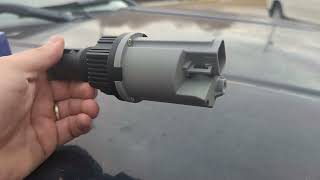
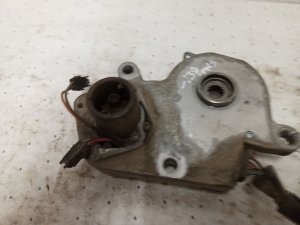
Used OEM Parts in Stock

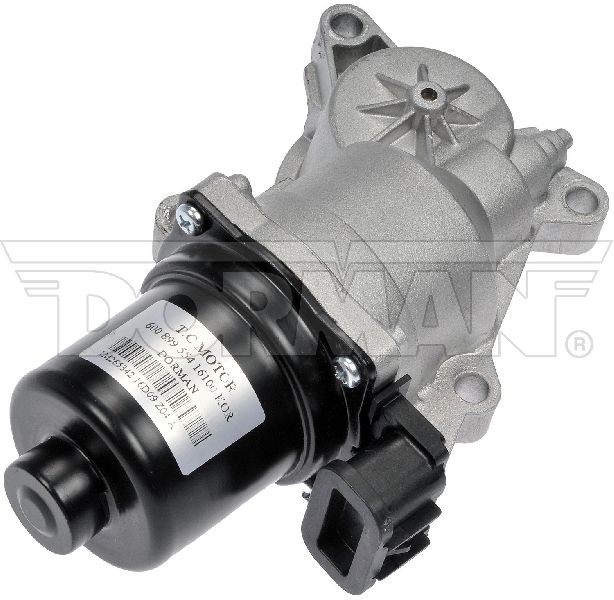
New Aftermarket Parts Available

The information in this article is provided for general reference and educational purposes only. Vehicle specifications, procedures, and part compatibility can vary by production date, trim level, and region. Always consult your vehicle's factory service manual and verify part numbers before purchasing or performing repairs. Safety-critical components such as airbags, seat belts, and braking systems should be installed by a qualified professional.
- Chevrolet SILVERADO 1500:
- 🎬 Helpful Videos
- 🛍️ Shop This Part
- What's Unique About the 2007-2014 Chevrolet SILVERADO 1500
- Diagnostic Flowchart
- Symptoms You May Notice
- Most Likely Causes
- Rare But Worth Checking
- Diagnosis Steps
- Parts You'll Likely Need
- Related Codes That Often Appear With This One
- Technical Service Bulletins (TSBs) & Recalls
- Platform-Specific Known Issues
- Mechanic-Grade Diagnostic Values
- Scan Tool Commands That Help
- Wiring & Ground Locations
- Real Owner Repair Stories
- OEM Part Supersession History
- Model Year Variations Within This Range
- 🎟️ Get 5% Off