

OBD-II Code U0102: Lost Communication With Transfer Case Control Module
What U0102 means, why it triggers, and how to fix it
- Code U0102 disables your 4WD/AWD system by taking the Transfer Case Control Module (TCCM) offline, forcing the vehicle into a 2WD fail-safe mode.
- Check the TCCM's 12V power supply and ground connections before buying parts, as wiring faults and blown fuses cause the majority of these communication errors.
- Scan all vehicle modules; if U0102 appears alongside codes like U0073 or U0100, you have a network-wide CAN bus failure, not a broken TCCM.
- Replacing the TCCM costs between $450 and $1,300 for parts and labor, and almost always requires a professional scan tool for VIN programming.
What Does U0102 Mean?

Code U0102 means the vehicle's main computer network lost connection with the Transfer Case Control Module (TCCM). The TCCM is the electronic brain for the 4WD/AWD system, controlling axle engagement. When communication stops, the 4WD/AWD system shuts down as a safety measure, and dependent modules set secondary faults.
Technical definition: The official SAE/OBD-II definition for code U0102 is "Lost Communication With Transfer Case Control Module." This network code indicates the TCCM stopped sending or receiving messages on the Controller Area Network (CAN) bus. Other modules, such as the ECM or ABS, set this code when they fail to receive expected status messages from the TCCM.
Can I Drive With U0102?
Yes, But With Caution. You can drive, but the 4WD/AWD system is disabled. The vehicle defaults to two-wheel-drive (2WD) as a fail-safe. Continued driving is safe for the core powertrain, but lacking 4WD is a safety risk in adverse weather. On some vehicles, the Transmission Control Module (TCM) relies on TCCM data, causing erratic shifting or slipping on takeoff.
Common Causes

- Wiring and Connector Problems (Very Common) — Wires leading to the TCCM corrode, fray, or break from road debris and moisture. A loose or water-damaged connector at the TCCM is the primary suspect.
- Poor Power or Ground Connection (Very Common) — The TCCM requires a stable 12V supply and a clean ground. A blown fuse, faulty relay, or corroded ground wire on the frame interrupts power and triggers this code.
- Low Battery Voltage (Common) — A weak battery causes widespread electronic issues. If system voltage drops below 12.4V during startup, modules fail to initialize, setting multiple 'U' codes.
- Failed Transfer Case Control Module (TCCM) (Common) — The module itself fails internally due to age, moisture intrusion, or cracked solder joints from vibration.
- Faulty Serial Data Gateway Module (SDGM) (Less Common) — On newer vehicles, a faulty gateway module acts like a broken network router. It fails to pass messages between the TCCM and other modules, causing a U0102 code even if the TCCM functions perfectly.
- Software Glitches or Corrupted Data (Less Common) — The software within the TCCM corrupts due to voltage spikes or incomplete programming events. The module requires reprogramming ('re-flashing') with the latest manufacturer software.
- CAN Bus Termination Resistor Fault (Rare) — The CAN bus network requires a 120-ohm resistor at each end. If one fails, it disrupts network communication. Total network resistance must be approximately 60 ohms. 🎬 Watch: How to test a CAN bus network with a multimeter.
- Aftermarket Device Interference (Rare) — Poorly installed aftermarket devices like remote starters or telematics dongles plugged into the OBD-II port disrupt the CAN bus network and cause communication errors.
Symptoms

- Service 4WD Light — A "Service 4WD" or "Check 4x4" warning message illuminates on the dashboard.
- 4WD/AWD System Inoperative — The vehicle cannot switch into or out of 4WD/AWD. The system remains stuck in its last known state, typically 2WD.
- 4WD Selector Switch Lights Are Off — The indicator lights on the 4WD mode selector switch turn off, flash, or ignore inputs.
- Check Engine Light is On — The Malfunction Indicator Lamp (MIL) illuminates because the Engine Control Module (ECM) flagged a fault in a related system.
- ABS and Traction Control Lights On — The ABS and traction control systems rely on 4WD data. When TCCM communication drops, these systems illuminate their warning lights and disable themselves.
- Erratic Shifting or Stalling — Loss of TCCM communication alters transmission shift strategies or causes stalling, as the Powertrain Control Module (PCM) requires TCCM data to function correctly.
- Instrument Panel Gauges Fluctuate (also visible on scanner) — During broader network failures, dashboard gauges behave erratically or drop to zero intermittently.
Diagnostic Flowchart

Tap your situation to follow the diagnostic path that matches what you're seeing on this code.
Common Fixes & Costs
- Repairing Damaged Wiring or Connectors — Parts: $10-$50, Labor: $150-$600, ~1.5 hr book time (Intermediate)
- Cleaning or Repairing Ground Connections — Parts: $5-$20, Labor: $125-$350, ~1 hr book time (DIY)
- Replacing the Transfer Case Control Module (TCCM)
— Parts: $250-$900, Labor: $200-$400, ~1.2 hr book time
(Professional)
: OEM
: OEM
: OEM - Reprogramming the Transfer Case Control Module — Parts: $0, Labor: $150-$250, ~1 hr book time (Professional)
- Applying Dielectric Grease and Reseating Connectors — Parts: $5-$15, Labor: $50-$150, ~0.5 hr book time (DIY)
Used vs. New Parts: Buying Guide
When a used part is worth it: A used TCCM from a reputable auto recycler is a cost-effective solution for vehicles over 10 years old where a new OEM part is expensive or discontinued.
Donor-vehicle mileage cap: roughly under 100000 miles for the part to have meaningful remaining life.
Donor quality checklist:
- Match the OEM part number exactly. Verify compatibility for your specific VIN.
- Source the part from a vehicle of the same model and year range. Avoid parts from flood-damaged vehicles.
- Inquire about the donor vehicle's mileage. Lower is always better for electronic components.
- Ask if the seller offers a 'VIN programming' service or guarantees the module is 'unlocked'.
Decision logic:
- If The vehicle is less than 5 years old and/or the fault is a known software issue → Buy a new OEM part and have it programmed by the dealer to ensure the latest software updates are applied.
- If The vehicle is over 10 years old and the new part costs over $500 → A used part from a low-mileage donor is a reasonable choice. Factor in the potential need for professional programming.
- If Pre-programmed or 'plug-and-play' aftermarket options are available for your model → These offer a good balance of cost and convenience, avoiding the need for dealer programming.
Warranty tradeoff: Used parts typically come with a 30-90 day warranty covering only the part. New aftermarket parts carry a 1-year to limited lifetime warranty. New OEM parts usually have a 1-2 year warranty.
Worst-case if a used part fails: $300-$600 if a used or improperly programmed module fails, including repeated labor costs.
What Happens If You Wait — Timeline
- Immediate: Code U0102 sets. The 'Service 4WD' and Check Engine lights illuminate. The 4WD system disables, defaulting the vehicle to 2WD. (MPG impact: 0%% · Added cost: $0)
- 1-3 months: Continued driving causes erratic transmission shifting or hesitation, as the TCM misses required data from the TCCM. (MPG impact: 0-2%% · Added cost: $0 - $100)
- 3-12 months: If caused by a chafed wiring harness, continued vibration wears through the insulation completely, causing a direct short to ground that damages the TCCM's internal circuits. (MPG impact: 0-2%% · Added cost: $250 - $900)
- 12+ months: A severely corroded connector allows moisture to travel up the wires, damaging other modules on the same data bus and creating a complex network-wide failure. (MPG impact: 0-5%% · Added cost: $1000 - $2500+)
Cost of Not Fixing It
- Immediate: Loss of 4WD/AWD capability. This is a significant safety issue in adverse weather or off-road conditions. The vehicle defaults to 2WD. (Added cost: $0)
- 1-6 months: The transmission control module relies on TCCM data for proper shift strategy. Ignoring the code leads to harsh shifting, causing premature wear on transmission components. (Added cost: $0 - $500)
- 6+ months: Continued exposure of a damaged wiring harness to the elements leads to further corrosion, causing other nearby circuits to fail. A single module communication loss cascades into a complex network-wide electrical problem. (Added cost: $500 - $2000+)
Diagnosis Steps
- Read All Codes from All Modules
Use a professional-grade OBD-II scanner to perform a full network scan. Note which modules set the U0102 code. If multiple modules report lost communication with the TCCM, the fault is isolated to the TCCM. If you see dozens of other 'U' codes (U0073, U0100), you have a wider network problem.
Tools: Professional OBD-II Scanner (Beginner) - Check Battery Voltage and Fuses
Verify the battery reads at least 12.4V with the engine off. Then, consult the owner's manual to locate all fuses related to the TCCM (labeled TCCM, 4WD, DTCM, or TREC). Visually inspect each fuse and replace if blown. A repeatedly blowing fuse indicates a short circuit.
Tools: Multimeter, Owner's Manual, Fuse Puller (Beginner) - Inspect the TCCM Connector and Wiring
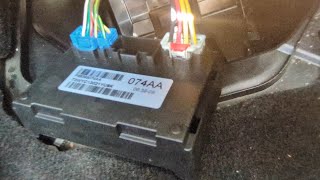
Locate the TCCM (often under the driver's dashboard, below the glove box, or on the frame rail). Disconnect the battery, unplug the TCCM, and inspect for green/white corrosion, bent pins, or water intrusion. Follow the wiring harness to check for chafing or breaks.
Tools: Flashlight, Safety Glasses (Intermediate) - Check for Power and Ground at the TCCM Connector
Using a multimeter and a wiring diagram, check for battery voltage (12V ± 0.5V) at the power pins of the TCCM connector with the key on. Next, measure resistance between the ground pins and a clean chassis ground; it must be less than 0.2 ohms.
Tools: Multimeter, Vehicle Wiring Diagram (Intermediate) - Perform a "Wiggle Test"
With the scan tool monitoring the TCCM's live communication status, gently wiggle the wiring harness and connector. If the module's status flips from 'Offline' to 'Online', you have confirmed an intermittent connection or broken wire.
Tools: OBD-II Scanner (Intermediate) - Test the CAN Bus Network Resistance
With the battery disconnected, set your multimeter to Ohms and measure resistance between Pin 6 (CAN High) and Pin 14 (CAN Low) on the OBD-II port. A healthy network reads ~60 Ω. A reading of ~120 Ω indicates an open circuit or failed termination resistor. A reading near 0 Ω indicates a short.
Tools: Multimeter (Advanced) - PRO TIP: Perform a Voltage Drop Test on the Ground Circuit
Resistance tests on ground wires are sometimes misleading. With the module connected and the key on, set your multimeter to DC Volts. Place the positive lead on the ground pin at the TCCM connector and the negative lead on a known good chassis ground. The reading must be under 200 millivolts (0.2V).
Tools: Multimeter, Back-probe Pins (Advanced) - PRO TIP: Check CAN Bus Voltages (Key On)
With the key on and engine off, back-probe the CAN High and CAN Low wires at the TCCM connector. In the idle state, both lines sit at ~2.5V. During active communication, CAN High toggles to ~3.5V and CAN Low toggles to ~1.5V. A line stuck at 0V or 12V indicates a hard short.
Tools: Multimeter, Back-probe Pins (Advanced) - PRO TIP: Monitor Live Data PIDs
Attempt to access the TCCM's live data stream. Monitor 'TCCM Status' and 'Module Supply Voltage'. If the scan tool cannot establish communication with the TCCM at all, and power/ground tests passed, the module itself has failed internally.
Tools: Professional OBD-II Scanner (Advanced)
When This Code Triggers (Freeze-Frame Conditions)
- Module Voltage: 11.5V - 14.5V (Sets during or immediately after engine startup when battery voltage fluctuates. A reading below 12.0V strongly indicates a battery or charging system issue.)
- Vehicle Speed: 0 mph or 35-65 mph (Detected during the initial module self-test at key-on (0 mph), or during steady-state driving (35-65 mph) when vibration causes an intermittent connection loss.)
- Engine RPM: 0 RPM or 1500-2500 RPM (Correlates with vehicle speed at key-on (0 RPM) or cruising (1500-2500 RPM).)
- Ignition Status: RUN (Sets when the ignition is in the 'Run' position, as modules are powered and communicating on the CAN bus.)
Related Codes
- U0073 — Indicates a general network problem. If U0073 is present with U0102, the problem is a network-wide fault (wiring, gateway module, terminating resistor) rather than an isolated TCCM failure.
- U0100 — Lost Communication with ECM/PCM. If the engine computer is offline, it is a critical failure. Diagnose this code first, as its resolution clears the U0102 code.
- U0101 — Lost Communication with TCM. Seeing this code with U0102 points to a wiring harness problem near the transmission, as the TCCM and TCM wiring route together.
- C038D — Range Actuator Position Not Learned. Appears after a TCCM replacement before the 'relearn' procedure is performed. Indicates the new module needs calibration.
Climate & Environmental Factors
- High Humidity and Heavy Rain: Moisture seeps into poorly sealed connectors, causing pin corrosion and short circuits that directly lead to communication loss.
- Cold Weather and Road Salt: Road salt accelerates the deterioration of wiring harnesses, ground straps, and connector pins. Extreme cold causes electronic components to contract, worsening intermittent connections inside failing modules.
How to Talk to a Mechanic About This Code
Say this: "I have a U0102 code and a 'Service 4WD' light on. I want to authorize one hour of diagnostic time to check the TCCM's power, ground, and the CAN bus network before we consider replacing any parts."
This signals you understand U0102 is a network code and the most common causes are wiring-related. It directs the technician to perform a proper diagnosis instead of jumping to an expensive module replacement.
Avoid saying:
- 'My 4-wheel drive isn't working.'
- 'My check engine light is on, can you just fix it?'
- 'I think I need a new transfer case computer.'
Questions to ask before authorizing the repair:
- Did you perform a full network scan to see which other modules have stored codes?
- Did you test for 12-volt power and a good ground directly at the TCCM connector?
- What was the result of the CAN bus resistance test at the OBD-II port? Was it 60 ohms?
- If you recommend a TCCM replacement, can you confirm the module itself is the point of failure and not the wiring?
- Does the quoted price for a new module include the cost of programming it to my vehicle?
Where to Take It: Dealer vs Independent vs Chain
- Dealer:
Recommended if a known software TSB exists or if your vehicle is under warranty. A good choice for complex, newer vehicles if you are willing to pay a premium for specialized knowledge.
Best for: Vehicles under warranty, Newer vehicles (less than 5 years old) where proprietary software updates (TSBs) are the likely fix, Complex programming of a new module is required
Downsides: Highest labor rates, May default to module replacement without exhausting all wiring diagnostic steps (Typical cost: +50% vs. baseline) - Independent Shop:
Best fit for most U0102 situations, especially on out-of-warranty vehicles. Seek out a well-reviewed shop that specializes in electrical diagnostics to get the best value.
Best for: Out-of-warranty vehicles where cost is a factor, Diagnosing common wiring and ground faults that cause U0102, Vehicles older than 5 years with known issues (e.g., GM ground problems)
Downsides: Diagnostic skill varies greatly; must find a shop with strong electrical/diagnostic expertise., May not have the latest tools for programming brand-new models. (Typical cost: +0% vs. baseline) - Chain Shop:
AVOID for U0102 diagnosis. The risk of an incorrect diagnosis and paying for parts you don't need is very high. This network fault requires diagnostic expertise not typically found at chain shops.
Best for: Simple, unrelated maintenance like oil changes, tires, and brakes.
Downsides: Technicians often lack the specialized training and tools for complex network diagnostics., High likelihood of misdiagnosing the issue as a bad TCCM without checking wiring., High-pressure sales environment leads to upselling. (Typical cost: -10% vs. baseline)
When to Walk Away From the Repair
If the total estimated repair cost for the U0102 fault exceeds 40-50% of your car's private-party value, seriously consider selling or trading it in instead of repairing it.
- Car worth $5000, fix is $2200: Walk away. The repair cost is nearly half the car's value. It is not a sound financial decision.
- Car worth $15000, fix is $800: Fix it. The repair cost is a small fraction of the vehicle's value and restores an important safety and performance feature.
- Car worth $3000, fix is $400: Borderline, but likely worth fixing. If the fix is a simple wiring or ground repair, it is a cost-effective way to keep the vehicle fully functional.
What Scan Tool You Need for This Code
Minimum: A scanner that performs a full system scan (all modules) and displays the network topology (which modules are online/offline).
A basic $20 code reader only checks the engine computer (ECM). It shows U0102 but cannot tell you if the TCCM is truly offline or if other modules are affected. You must see the status of the entire vehicle network to diagnose a 'U' code correctly.
Budget: BlueDriver Pro (~$100) — Performs a full vehicle scan to see which modules report the U0102 code. Allows you to view live data to see if the TCCM is communicating at all.
Mid-range: Foxwell NT710 / NT809BT (~$250) — Offers OE-level diagnostics and bi-directional control, allowing you to command modules and test functions to confirm if a module is responsive.
Professional: Autel MaxiCOM MK808S / XTOOL D7 (~$450-600) — Provides network topology mapping, a visual layout of the car's modules that instantly shows which ones are offline. Offers full bi-directional control and the ability to perform programming/coding.
Rent vs buy: For a one-time diagnosis, many auto parts stores perform a full system scan for free. If you plan on doing your own repairs regularly, buying a mid-range scanner is a worthwhile investment.
How to Clear the Code After You Fix It
- Perform the physical repair (e.g., fix wiring, replace module).
- Reconnect the battery if it was disconnected.
- Use a quality OBD-II scan tool to clear the U0102 code from all modules.
- Perform a TCCM relearn or calibration procedure if the module was replaced, using the scan tool's special functions.
Drive cycle (~20 minutes): Start the vehicle from a cold start and idle for 2-3 minutes. Drive in mixed city conditions, including several stops and starts. Then, drive for 5-10 minutes at a steady highway speed (50-60 mph). This allows the vehicle to reach full operating temperature and forces the TCCM to communicate under various conditions.
Readiness monitors affected: This communication code does not directly affect primary emissions readiness monitors. However, an illuminated Check Engine Light causes an automatic emissions test failure.
Before emissions retest: drive at least 50 miles to fully set monitors.
Watch out for:
- Clearing the code without fixing the root cause results in the code returning immediately.
- Forgetting to perform a 'relearn' or 'calibration' procedure after replacing the TCCM causes new codes to appear.
- Using a basic code reader that only clears codes from the ECM/PCM leaves the U0102 stored in the ABS or Instrument Cluster.
Will This Fail Emissions / State Inspection?
Yes — this code typically fails an OBD-II emissions inspection.
- California: An illuminated Check Engine Light is an automatic failure for a smog check. The U0102 code must be resolved and the light turned off before the vehicle can pass.
- New York: The NYS vehicle inspection includes a check for illuminated malfunction indicator lights. A U0102 code causing the light to be on results in an inspection failure.
- Texas: In the 17 Texas counties that require emissions testing, an active U0102 code with an illuminated Check Engine Light causes the vehicle to fail the OBD-II inspection.
Most Commonly Affected Vehicles
- Chevrolet / GMC Silverado, Sierra, Tahoe, Suburban, Yukon (2007-2014) — Extremely common issue caused by a corroded ground connection on the frame under the driver's side door (G110) or a broken ground wire in the engine harness.
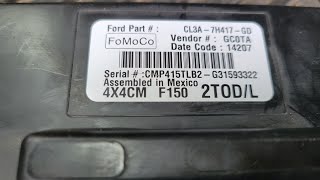
- Ford F-150 (2015-2020) — Often caused by wiring corrosion or a specific blown fuse in the Battery Junction Box (e.g., Fuse-72) that powers the TCCM.
- Jeep Grand Cherokee (2014-2018) — A failed TCCM (located under the driver's seat) is common and causes a cascade of warning lights for the air suspension and adaptive cruise control.
- Dodge Ram 1500 (2009-2018) — Connector and wiring issues under the truck are common culprits. The Drivetrain Control Module (DTCM) suffers from water intrusion at its connector.
- Chevrolet / GMC Suburban, Sierra, Yukon, Colorado (2015-2021) — A faulty Serial Data Gateway Module (SDGM) triggers a U0102 code even if the TCCM is fine. Another known issue is a poor ground at G218 in the driver's footwell.
- Nissan Titan, Frontier, Armada (2010-2020) — The U0102 code appears alongside a U1000 code due to a shorted wire in a harness, which repeatedly blows a dedicated AWD module fuse.
- Subaru Outback, Forester, Crosstrek (2015-2020) — Points to a wiring issue or a failure of the AWD control module itself. Post-accident repairs resulting in damaged wiring are a known trigger.
- Hyundai / Kia Santa Fe, Tucson, Sorento (2013-2018) — Issues frequently relate to wiring connector problems near the AWD coupling or an internal failure of the AWD control module.
Manufacturer-Specific Notes
- General Motors (Chevrolet/GMC): GM TSBs (#08-07-30-021H, #PIT4853C) point to corroded grounds (G110, G103), chafed harnesses, or a faulty Serial Data Gateway Module (SDGM) as the root cause for U0102, advising network diagnosis before replacing the TCCM.
- Ford: On F-150s, a single fuse in the under-hood Battery Junction Box is dedicated to the TCCM (e.g., BJB Fuse-72). If this fuse blows, it causes an isolated U0102 code without other communication faults.
- FCA/Stellantis (Jeep, Dodge, Ram): A failing TCCM causes a bizarre cascade of warning lights for unrelated systems like air suspension and adaptive cruise control, because those systems require TCCM input to function.
- All Manufacturers: Manufacturers append a two-digit 'symptom byte' to the code (e.g., U0102-00). This byte, read by advanced scan tools, provides crucial diagnostic information like 'No Communication' or 'Alive Counter Incorrect'.
Real Owner Stories
2008 Chevy Silverado 1500 at 150K miles - The 'Easy' Fix
Check engine light came on with code U0102, the 4WD selector switch had no lights, and the truck was stuck in 2WD.
What they tried:
- Verified connections and grounds were intact.
Outcome: The owner replaced the TCCM with a Dorman aftermarket unit. They performed a specific Dorman reprogramming procedure without a scan tool, successfully restoring 4WD function.
Lesson: On older models, aftermarket modules offer DIY-friendly reprogramming sequences that avoid a trip to the dealer. Always check the part's specific instructions.
2014 Chevy Suburban - The Misdiagnosis Story
Service 4WD message and U0102 code appeared. The owner found the '4WD' fuse blown.
What they tried:
- Replaced the blown fuse, which restored 4WD function temporarily.
- The fuse blew again with sparks when the fuse box cover closed, indicating a short circuit.
Outcome: The root cause was a power wire in the harness that chafed and shorted to the vehicle's body. Repairing the damaged wire fixed the issue permanently.
Lesson: A repeatedly blowing fuse is a clear sign of a short circuit. Find and repair the underlying wiring fault instead of replacing fuses or modules.
2007 Chevy Tahoe - The Unusual Root Cause
The owner had the vehicle's software updated. Shortly after, a 'Service 4 Wheel Drive' message appeared, followed by a U0102 code.
What they tried:
- Took the vehicle back to the dealer. The technician discovered the wrong software was loaded during the initial update.
Outcome: A second technician manually updated the software correctly, resolving the communication error. The U0102 was caused by an incorrect software flash, not a hardware failure.
Lesson: If a communication code appears immediately after a software update, suspect the software itself. An incorrect flash causes modules to stop communicating.
2007-2014 GM Truck - The Hidden Ground Fault
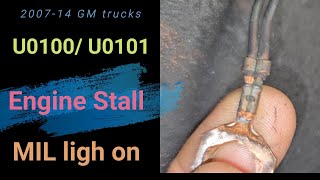
The vehicle stalled when shifting into reverse, oil pressure dropped, and multiple communication codes (U0100, U0101, U0102) set simultaneously.
What they tried:
- Initially suspected an oil pressure issue, performing unnecessary diagnostic work on the oil pan.
Outcome: The actual problem was a broken ground wire (G102) on the driver's side engine block. The wire broke inside the insulation at the ring terminal, causing an intermittent connection. Splicing a new ring terminal fixed all issues.
Lesson: A cluster of communication codes appearing simultaneously points to a fundamental electrical problem like a bad ground, not multiple module failures.
How to Prevent This Code From Triggering
- Apply Dielectric Grease to Connectors (Every 2-3 years or during underbody service) — Applying non-conductive dielectric grease to the TCCM connector seals out moisture and oxygen, preventing pin corrosion.
- Inspect and Clean Main Ground Connections (Every 2 years, especially in the salt belt) — Modules require a clean ground path. Removing and cleaning main frame and engine block grounds to bare metal prevents high resistance.
- Secure and Protect Wiring Harnesses (During oil changes or under-vehicle inspections) — Securing loose wiring harnesses with zip ties prevents chafing against the frame or suspension, avoiding shorts and open circuits.
- Perform Periodic Undercarriage Washes (Monthly, especially during winter) — Washing the underbody removes corrosive road salt and brine that accelerates the degradation of wiring, connectors, and ground straps.
Frequently Asked Questions
Can I fix a U0102 code myself?
Yes, if the issue is a blown fuse or visibly corroded ground connection. Diagnosing complex wiring issues, testing the CAN bus, or programming a new module requires professional tools. Stop DIY and go to a shop if basic power and ground tests pass but the module remains offline.
Will replacing the TCCM always fix a U0102 code?
Not always. Wiring and connection problems are more common than a failed module. Perform a full diagnosis of the power, ground, and communication circuits before replacing the TCCM to avoid wasting money.
What is the most common misdiagnosis for a U0102 code?
The most common mistake is replacing the TCCM without checking the wiring. Technicians frequently overlook corroded ground wires, blown fuses, or chafed harnesses. Ignoring other 'U' codes also leads to misdiagnosing a network-wide failure as an isolated TCCM issue.
Does a new TCCM need to be programmed?
Yes, most new TCCMs require programming to the vehicle's VIN and specific configuration. This requires a manufacturer-specific scan tool and software subscription. Skipping this step leaves the new module non-functional.
Why are my ABS and Traction Control lights on with the 4WD light?
The ABS and Traction Control systems require drivetrain status and wheel speed data from the TCCM. When the TCCM stops communicating, the ABS module loses this critical data. It illuminates its warning light and disables traction control as a safety measure.
Can a bad transfer case motor cause a U0102 code?
No. A failed transfer case shift motor sets its own specific hardware codes (like C0327), not a U0102 communication code. U0102 specifically indicates a loss of network communication with the control module itself.
What is a TCCM 'relearn' procedure?
A relearn procedure calibrates a new TCCM to the physical positions of the transfer case shift motor. This requires a professional scan tool using 'Special Functions'. A simple battery disconnect forces a module reboot but does not perform this specific calibration.
What should I do if the U0102 code comes back after a repair?
If the code returns, the root cause remains unfixed. Re-test for overlooked intermittent wiring problems using a wiggle test, or check for poor pin fitment in the connector. If you replaced the module, verify it was programmed successfully.
Key Takeaways
- Code U0102 disables your 4WD/AWD system by taking the Transfer Case Control Module (TCCM) offline, forcing the vehicle into a 2WD fail-safe mode.
- Check the TCCM's 12V power supply and ground connections before buying parts, as wiring faults and blown fuses cause the majority of these communication errors.
- Scan all vehicle modules; if U0102 appears alongside codes like U0073 or U0100, you have a network-wide CAN bus failure, not a broken TCCM.
- Replacing the TCCM costs between $450 and $1,300 for parts and labor, and almost always requires a professional scan tool for VIN programming.
Helpful Videos

The information in this article is provided for general reference and educational purposes only. Vehicle specifications, procedures, and part compatibility can vary by production date, trim level, and region. Always consult your vehicle's factory service manual and verify part numbers before purchasing or performing repairs. Safety-critical components such as airbags, seat belts, and braking systems should be installed by a qualified professional.
- 🎬 Helpful Videos
- What Does U0102 Mean?
- Can I Drive With U0102?
- Common Causes
- Symptoms
- Diagnostic Flowchart
- Common Fixes & Costs
- Used vs. New Parts: Buying Guide
- What Happens If You Wait — Timeline
- Cost of Not Fixing It
- Diagnosis Steps
- When This Code Triggers (Freeze-Frame Conditions)
- Related Codes
- Climate & Environmental Factors
- How to Talk to a Mechanic About This Code
- Where to Take It: Dealer vs Independent vs Chain
- When to Walk Away From the Repair
- What Scan Tool You Need for This Code
- How to Clear the Code After You Fix It
- Will This Fail Emissions / State Inspection?
- Most Commonly Affected Vehicles
- Manufacturer-Specific Notes
- Real Owner Stories
- 2008 Chevy Silverado 1500 at 150K miles - The 'Easy' Fix
- 2014 Chevy Suburban - The Misdiagnosis Story
- 2007 Chevy Tahoe - The Unusual Root Cause
- 2007-2014 GM Truck - The Hidden Ground Fault
- How to Prevent This Code From Triggering
- Frequently Asked Questions
- Can I fix a U0102 code myself?
- Will replacing the TCCM always fix a U0102 code?
- What is the most common misdiagnosis for a U0102 code?
- Does a new TCCM need to be programmed?
- Why are my ABS and Traction Control lights on with the 4WD light?
- Can a bad transfer case motor cause a U0102 code?
- What is a TCCM 'relearn' procedure?
- What should I do if the U0102 code comes back after a repair?
- Key Takeaways
- 🎟️ Get 5% Off