

U0101 on 2007-2014 Chevrolet Tahoe: Lost Communication with TCM Causes and Fixes
On a 2007-2014 Tahoe, code U0101 means the Transmission Control Module (TCM) has gone offline. This is most often caused by a damaged or corroded wiring harness or a bad ground connection, as detailed in GM Technical Service Bulletin #08-07-30-021H. A common failure point is a broken ground wire inside the crimp of the ring terminal on the engine block. Always inspect wiring and grounds thoroughly before considering TCM replacement.
- U0101 on a 2007-2014 Tahoe means the Transmission Control Module (TCM) is offline, which is a serious issue that makes the vehicle unsafe to drive.
- Do not immediately assume the TCM has failed. The most common cause is a wiring or ground issue, as confirmed by a GM Technical Service Bulletin.
- Start your diagnosis by checking the battery, fuses, and visually inspecting the wiring harness along the driver's side frame for damage.
- Look for other 'U' codes. A group of communication codes (like U0073, U0121, U0140) strongly suggests a network wiring problem, not a single failed module.
- Repairing a wire or cleaning a ground connection is far cheaper than replacing and programming a new TCM.
What's Unique About the 2007-2014 Chevrolet TAHOE

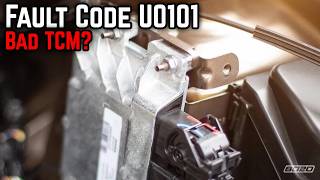
The GMT900 platform, which includes the 2007-2014 Tahoe, is specifically called out in General Motors TSB #08-07-30-021H for issues leading to code U0101. The bulletin highlights that the high-speed communication wiring (GMLAN) is prone to damage, corrosion, or poor connections, particularly at the main transmission connector and engine ground points. This makes wiring faults a significantly more probable cause on these trucks compared to a random module failure. The location of the TCM itself depends on the transmission: models with the 6-speed 6L80 automatic have the TCM (as part of the TEHCM) inside the transmission pan, while models with the 4-speed 4L60-E have an external TCM under the hood.
Diagnostic Flowchart
Tap your situation to follow the diagnostic path that matches what you're seeing on this vehicle.
Symptoms You May Notice

- Transmission may not shift or gets stuck in one gear (limp mode).
- Check Engine Light is on.
- Multiple instrument panel warning lamps are illuminated (e.g., StabiliTrak, ABS, Traction Control).
- Intermittent cycling of door locks and audible chimes.
- Engine may stall, especially when shifting into gear like Reverse.
- Gear position indicator on the dash may be blank or incorrect.
- Backup camera and reverse park assist may stop working.
- Voltage gauge may fluctuate wildly.
- Replacing the Transmission Control Module (TCM) without first performing a thorough inspection and testing of the wiring harness and ground connections. The fault is frequently in the wiring, not the module itself.
Most Likely Causes

- Damaged or Corroded GMLAN Wiring Harness 🔴 High Probability GM TSB #08-07-30-021H specifically identifies wiring harness issues as a common cause for a cluster of communication codes, including U0101, on this platform. The harness is vulnerable to chafing against the frame, heat damage near the exhaust, and corrosion at connectors, especially the main 16-way connector at the transmission.
How to confirm: Visually inspect the wiring harness leading to the transmission and TCM for any signs of chafing, breaks, or green/white corrosion. Pay close attention to the large connectors and where the harness runs along the driver's side frame rail. Use a multimeter to check for continuity on the CAN bus wires (typically Tan and Tan/Black) between the OBD-II port and the TCM connector.
Typical fix: Repair the specific broken or corroded wires. In severe cases, a harness pigtail or a section of the harness may need to be replaced. Ensure the repaired section is protected from future damage.
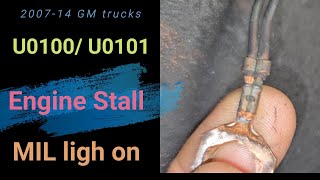
Est. part cost: $10-$150 - Poor or Broken Ground Connection 🟡 Medium Probability A widely reported failure is a broken ground wire at the engine block ring terminal. The wire strands break inside the insulation right at the crimp, making the connection look intact but fail intermittently. Engine torque, especially when shifting, can cause the connection to open, triggering the U0101 code and stalling the engine. The main ground stud is on the front of the engine block on the driver's side.
How to confirm: Locate the main engine-to-chassis ground points (G103/G104) on the engine block. Even if they look tight, remove the nut and physically tug on each wire going into the ring terminals. A broken wire will pull out of the crimp. Clean all contact surfaces and check for voltage drop between the TCM ground pin and the negative battery terminal; it should be less than 0.1 volts.
Typical fix: Replace the faulty ring terminal with a new, high-quality crimped and sealed terminal. Clean the ground stud and contact surfaces before re-securing the connection.
Est. part cost: $5-$25 - Blown Fuse for TCM ⚪ Low Probability
How to confirm: Consult the owner's manual or the underhood fuse box lid to locate the fuses for the Transmission Control Module. On these Tahoes, check fuses #14 (TCM-BATT) and #19 (TRANS IGN1) in the underhood fuse panel. Pull the fuses and visually inspect if they are blown. Test with a multimeter for continuity.
Typical fix: Replace the blown fuse. If the new fuse blows immediately, it indicates a short circuit in the wiring that must be diagnosed and repaired.
Est. part cost: $1-$5 - Faulty Transmission Control Module (TCM) ⚪ Low Probability For models with the 6L80 transmission, the TCM is part of the Transmission Electro-Hydraulic Control Module (TEHCM) located inside the transmission oil pan, exposing it to heat and vibration. However, it is still far less likely to fail than the external wiring.
How to confirm: This should only be considered after all wiring, power, and ground circuits have been tested and confirmed to be good. A professional can bypass the TCM at its connector by jumping the CAN wires; if communication between other modules is restored, the TCM is condemned. A scan tool that cannot communicate directly with the TCM (despite good power/ground) also points to a faulty module.
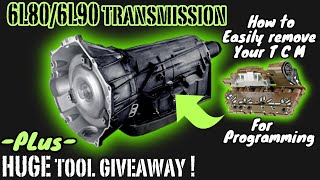
Typical fix: Replace the Transmission Control Module. This requires programming the new module to the vehicle's VIN. For internal TEHCMs, this involves dropping the transmission pan 🎬 Watch: Essential tips for 6L80 TCM removal and replacing fluid.
Est. part cost: $300-$800
Rare But Worth Checking
- Spread Terminals in Transmission Connector:
Diagnosis Steps
- Scan all vehicle modules for stored trouble codes. Note all 'U' codes present, as they provide clues to the location and severity of the network fault.
- Check the battery and charging system. A weak battery or alternator can cause erratic module behavior and communication errors. Voltage should be above 12.4V with the engine off and 13.7-14.7V with the engine running.
- Inspect the TCM fuses in the underhood fuse box (specifically fuses 14 and 19).
- Perform a thorough visual inspection of the wiring harness between the ECM, the underhood fuse block, and the transmission. Pay special attention to the area along the driver's side frame rail, near the exhaust, and the main 16-pin transmission connector for damage, chafing, or corrosion.
- Inspect and clean the main engine ground connections on the driver's side of the engine block. Physically pull on the wires at the ring terminals to check for internal breaks, a known failure point.
- Disconnect the battery. At the OBD-II port, measure the resistance between Pin 6 (CAN High) and Pin 14 (CAN Low). A healthy network should read approximately 60 ohms. A reading of 120 ohms indicates a missing terminating resistor or a break in the circuit.
- If wiring, grounds, and power are all confirmed to be good, suspect a faulty TCM. This can be further tested by a professional by bypassing the module on the CAN bus to see if communication is restored to other modules.
Parts You'll Likely Need
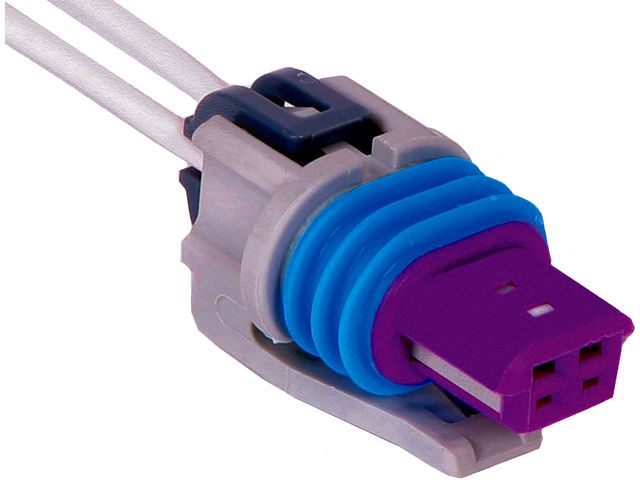
- Wiring Harness Pigtail Connector — If corrosion or damage is found at a connector, replacing the connector pigtail is often the most reliable repair.
Trusted brands: ACDelco, Dorman
Related Codes That Often Appear With This One
- U0073 — Control Module Communication Bus 'A' Off. This is a general high-speed CAN bus failure code that often appears with the more specific U0101 when there's a network-wide wiring issue.
- U0100 — Lost Communication with ECM/PCM. This can appear alongside U0101 if the wiring fault is severe enough to disrupt communication with the engine controller as well.
- U0121 — Lost Communication with Anti-Lock Brake System (ABS) Control Module. The ABS module is on the same high-speed network, and a wiring problem can take it offline along with the TCM.
- U0140 — Lost Communication with Body Control Module (BCM). This code points to a wider network problem, consistent with the symptoms of cycling door locks and chimes mentioned in TSB #08-07-30-021H.
Technical Service Bulletins (TSBs) & Recalls
- Bulletin #08-07-30-021H: Addresses intermittent electrical issues including communication DTCs U0073, U0100, U0101, U0102, U0109, U0121, or U0140. It points to potential opens or shorts in the GMLAN circuits, poor connections at module connectors, backed-out terminals in the transmission harness connector, and faulty ground connections as primary causes.
Platform-Specific Known Issues
- Per NHTSA-cited Technical Service Bulletin #08-07-30-021H, these vehicles are known to set communication codes like U0101 due to issues in the high-speed GMLAN communication circuits. Symptoms directly mentioned include the transmission not shifting, intermittent door lock cycling, and various warning lamps illuminating.
- A common, documented failure is the ground wire breaking inside the crimp of the ring terminal that attaches to the driver's side of the engine block. This causes intermittent loss of communication that can be triggered by engine movement, such as shifting into reverse.
- The main transmission harness connector (16-way) is a frequent source of problems, either from corrosion, water intrusion, or terminals backing out or spreading open.
Mechanic-Grade Diagnostic Values
- CAN Bus Network Resistance — expected: Approximately 60 Ω. Failure: A reading of 120 Ω indicates an open circuit or a missing terminating resistor. A reading significantly less than 60 Ω suggests a short between the CAN wires.
- GMLAN Bus Voltage (Key On, Engine Off) — expected: CAN High (Pin 6 to ground): ~2.6V. CAN Low (Pin 14 to ground): ~2.3V.. Failure: Voltages that are stuck high, low, or at 0V indicate a short to power or ground on that circuit.
- TCM Power Supply Voltage — expected: 12.0 - 12.6 V (Key On, Engine Off). Failure: Low or no voltage indicates a problem with the fuse (TCM-BATT #14, TRANS IGN1 #19) or the supply wiring.
Scan Tool Commands That Help
- GDS2 / Tech2Win: Module Scan / View All DTCs — This is the first step to determine the scope of the communication failure. Seeing if U0101 is isolated to one module or present in many (ECM, BCM, ABS) helps locate the break in the CAN bus.
- GM SPS2 (Service Programming System) / Techline Connect: TCM Programming / VIN Write — This is mandatory after replacing the TCM or TEHCM. The new module must be programmed with the vehicle's VIN before it will function.
- GDS2 / Tech2Win: Reset Transmission Adapts / Fast Learn — After programming a new TCM/TEHCM, this procedure should be run to reset the learned shift pressure values, ensuring smooth shifting and preventing damage.
Wiring & Ground Locations

- G103 / G104 — Main engine grounds. G103 is located on the front of the right (passenger side) cylinder head. Another critical ground point is the stud on the driver's side of the engine block.. These are the primary ground points for the engine's control modules. A wire is known to break inside the insulation at the driver's side ground lug, causing intermittent U0101 and stalling when the engine torques.
- 16-Way Transmission Connector — The main electrical connector on the outside of the transmission case, connecting the vehicle harness to the transmission.. This connector carries the CAN bus signals to the TCM/TEHCM. It is a common point for corrosion, moisture intrusion, and spread or damaged pins that can sever communication.
- Underhood Fuse Block — On the driver's side of the engine compartment.. This block is a major junction for power and communication circuits. TSB #08-07-30-021H points to potential corrosion or terminal issues within its connectors, not just the fuses themselves. Fuses #14 and #19 specifically power the TCM.
- CAN Bus Terminating Resistor — There are two 120-ohm resistors in the high-speed CAN circuit. One is internal to the Engine Control Module (ECM). The other is at the opposite end of the bus, after the last module.. The entire network relies on seeing a total resistance of 60 ohms. If a wire breaks leading to the end-of-line resistor, the resistance will jump to 120 ohms, causing unstable communication and setting 'U' codes.
Real Owner Repair Stories
- YouTube user at Willpower Garage (2008 Chevrolet Tahoe) — Intermittent stalling, especially when shifting into reverse. Gauges would act erratically. Eventually set a code for lost communication between the ECU and TCU (U0101).
❌ Tried (didn't work) Initial visual inspection of ground connections., Cleaning the ground connection and re-tightening it.
✅ What actually fixed it Found a ground wire had broken all its strands inside the insulation, right at the crimp for the ring terminal on the engine block (driver's side). Engine torque would cause the connection to open circuit. Repairing the ground wire with a new terminal fixed the issue. - YouTube user at Mad Mikes Garage (GM Truck (specific model not stated, but with Allison transmission and similar U0101 issue)) — Persistent U0101 code that could not be cleared, and the manual shift function was inoperative.
❌ Tried (didn't work) Replacing the Transmission Control Module (TCM)., Checking fuses, including a specific 'ignition zero' fuse related to manual shifting.
✅ What actually fixed it The mechanic had used multimeter probes that were too large when testing the TCM harness connector, which spread the female terminals. This created a poor connection for the new TCM. The fix was to use a pick tool to carefully re-tension the spread terminals in the connector to ensure a snug fit.
"I Checked Everything" — The Actual Cause
- A common scenario for the U0101 code on this platform is a ground wire that is broken inside the insulation at the ring terminal on the engine block. A visual inspection will show a connected wire, and a simple continuity test might even pass if the wire ends are touching. The fault only becomes apparent when the engine torques (e.g., shifting into gear), which physically separates the broken strands and causes the communication loss and stall. The fix requires physically tugging on the wire at the crimp to reveal the internal break.
OEM Part Supersession History
24256861 / 24256863 (Example for 2010-2013)→Multiple, including 24275873, 24294925. Often sold as remanufactured units like Sonnax GM6L-TEHCM-C6.— Updates to improve solenoid performance, pressure switch durability, and address internal circuit failures.
Heads up: TEHCMs are year-group specific and not cross-compatible. For example, a 2010 TEHCM (e.g., 24256861) cannot be used in a 2014+ vehicle. The module's programming and internal logic are different. Always match the part number or Tag ID from the original TEHCM.
Model Year Variations Within This Range
- 2007-2008 (Primarily): Some early models in this range were equipped with the 4-speed 4L60-E/4L65-E automatic transmission. These vehicles have an external Transmission Control Module (TCM) located under the hood, making it and its wiring more susceptible to engine heat but easier to access.
- 2009-2014 (Primarily): Most models in this range use the 6-speed 6L80 automatic transmission. The TCM is integrated into the Transmission Electro-Hydraulic Control Module (TEHCM), which is located inside the transmission oil pan. This makes it less prone to external wiring damage but more susceptible to heat and vibration-related internal failures.
- 2014: The 2014 model year is a transition year that requires the newer GDS2 (Global Diagnostic System 2) software for diagnostics, whereas 2007-2013 models are typically serviced with Tech2Win software.
Helpful Videos
We Have This Part in Stock

The information in this article is provided for general reference and educational purposes only. Vehicle specifications, procedures, and part compatibility can vary by production date, trim level, and region. Always consult your vehicle's factory service manual and verify part numbers before purchasing or performing repairs. Safety-critical components such as airbags, seat belts, and braking systems should be installed by a qualified professional.
- Chevrolet TAHOE:
- 🎬 Helpful Videos
- 🛍️ Shop This Part
- What's Unique About the 2007-2014 Chevrolet TAHOE
- Diagnostic Flowchart
- Symptoms You May Notice
- Most Likely Causes
- Rare But Worth Checking
- Diagnosis Steps
- Parts You'll Likely Need
- Related Codes That Often Appear With This One
- Technical Service Bulletins (TSBs) & Recalls
- Platform-Specific Known Issues
- Mechanic-Grade Diagnostic Values
- Scan Tool Commands That Help
- Wiring & Ground Locations
- Real Owner Repair Stories
- "I Checked Everything" — The Actual Cause
- OEM Part Supersession History
- Model Year Variations Within This Range
- 🎟️ Get 5% Off