

U0101 on 2012-2017 Chevrolet Sonic: Lost Communication with TCM Causes and Fixes
This code means your car's main computer has lost communication with the Transmission Control Module (TCM). The most common causes are poor electrical connections at the TCM or underhood fuse block, damaged wiring, a faulty ground, or a failed TCM. Expect a shop repair cost of $300-$2100, depending on if it's a simple wiring fix or a full TCM replacement. Driving is not recommended.
- U0101 on a Chevy Sonic means the Transmission Control Module (TCM) is offline.
- Before assuming the TCM has failed, thoroughly inspect all related wiring, fuses, and especially the large electrical connector on the transmission, as recommended by GM.
- Symptoms are serious and affect drivability; the car may get stuck in gear or shift harshly.
- This is not a simple DIY fix. Diagnosis can be complex, and replacing the TCM requires special programming tools.
- Do not immediately replace the transmission; the problem is almost always electrical or electronic.
What's Unique About the 2012-2017 Chevrolet SONIC

For the first-generation Chevy Sonic and its platform mates (Cruze, Trax), this code is frequently linked to specific electrical connection issues rather than immediate module failure. General Motors issued Technical Service Bulletin #PIP4990D advising technicians to inspect terminal pin fit at the transmission connector, check for chafed wiring on top of the transmission, inspect the underhood fuse block, and verify the TCM ground (G106, G107) before replacing the expensive Transmission Control Module (TCM). This makes a thorough electrical check the critical first step.
Diagnostic Flowchart

Tap your situation to follow the diagnostic path that matches what you're seeing on this vehicle.
Symptoms You May Notice
- Check Engine Light is on.
- Transmission warning light may be illuminated.
- Traction control/Stabilitrak warning light may illuminate.
- Vehicle enters 'limp mode,' with limited speed (often stuck in 2nd or 3rd gear). 🎬 Watch: Diagnosing a Cruze in limp mode with code U0101.
- Harsh, erratic, or slamming shifts.
- Sudden jerking as if hitting a pothole.
- Transmission may get stuck in one gear.
- Gear position indicator on the dashboard may be blank or incorrect.
- Vehicle may not start or shift out of Park.
- A scan tool may be unable to communicate with the TCM.
- Replacing the entire transmission when the fault is purely electrical (wiring or TCM).
- Replacing the TCM without first thoroughly inspecting all related wiring, connectors, grounds, and the fuse block as recommended by GM's service bulletin #PIP4990D.
Most Likely Causes

- Poor Connection or Damaged Wiring 🔴 High Probability GM TSB #PIP4990D specifically calls out checking for chafed harnesses on top of the transmission where they can contact sharp areas on the engine block. It also highlights poor terminal fit at the main transmission connector and the underhood fuse block as known issues.
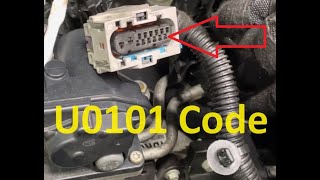
How to confirm: Visually inspect the main transmission harness connector for corrosion, backed-out pins, or fluid contamination. Check the harness for any signs of rubbing or damage. Test for power and ground at the TCM connector using a multimeter and wiring diagram. A video for a 2014 Cruze with U0101 showed a bent terminal (pin 37 in connector X3) at the underhood fuse block was the culprit.
Typical fix: Clean the connector terminals with electrical contact cleaner, repair any damaged wires, and ensure the connector is securely latched. If terminal fit is poor, the connector or pins may need replacement.
Est. part cost: $10-$50 - Failed Transmission Control Module (TCM) 🟡 Medium Probability The TCM, also known as a TEHCM (Transmission Electro-Hydraulic Control Module), is located inside the transmission oil pan, subjected to heat, vibration, and fluid. An owner complaint filed with the NHTSA (ODI #11616544) confirmed a bad TCM was the cause of a U0101 code.
How to confirm: This is typically diagnosed by exclusion. If all wiring, connectors, fuses, and grounds are confirmed to be good, and the CAN bus network is functional, the TCM itself is the likely culprit. A professional may bypass the TCM on the CAN bus by jumping the communication wires at the connector to see if communication with other modules is restored.
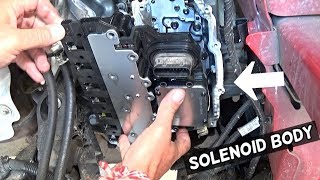
Typical fix: Replace the Transmission Control Module. This requires removing the transmission oil pan. 🎬 Watch: Step-by-step guide to removing and replacing the TCM assembly. The new module must be programmed to the vehicle's VIN. One owner on Reddit reported a shop quote of $2102 for this repair.
Est. part cost: $400-$850 - Blown Fuse or Faulty Fuse Block ⚪ Low Probability TSB #PIP4990D mentions inspecting the underhood fuse block for mispositioned fuses or poor terminal fit as a potential cause. This is a known weak point on the platform.
How to confirm: Check the vehicle's owner's manual to locate the fuse(s) that provide power to the TCM (often labeled TCM, ECM, or ECU). Visually inspect the fuse and test it with a multimeter. Inspect the fuse block terminals for corrosion or looseness where the fuse plugs in.
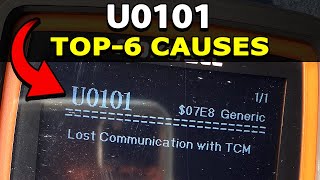
Typical fix: Replace the blown fuse. If the fuse blows again, there is an underlying short circuit that must be found. 🎬 See this breakdown of the top 6 causes for U0101. If the fuse block terminals are the issue, the block may need repair or replacement.
Est. part cost: $1-$20
Rare But Worth Checking
- Low Battery Voltage or Faulty Alternator: Control modules require a stable voltage to communicate properly. Low system voltage can trigger various communication codes, including U0101. Always ensure the battery and charging system are healthy before diving into complex network diagnostics.
- Faulty Negative Battery Cable or Ground Connection: A common failure point on this platform is the negative battery cable, which can corrode internally and cause high resistance. TSB #PIP4990D also specifically advises checking the TCM ground location (G106 or G107 per the service manual schematics). A user on a forum for the sister vehicle, the Chevy Cruze, fixed their U0101 code by tightening a loose ground bolt, costing only $125 at a mechanic.
Diagnosis Steps
- Check for other DTCs. Note all codes and which modules they are stored in. This is the first step recommended by TSB #PIP4990D.
- Check battery voltage and the charging system. Voltage should be >12.4V with the engine off and 13.7-14.7V when running. Check the negative battery cable for corrosion or heat damage at the terminal.
- Inspect the fuse for the TCM in the underhood fuse block. If it's blown, investigate for a short circuit.
- Locate the main transmission electrical connector. Disconnect it and inspect for any corrosion, moisture, or damaged/bent pins. Clean and re-seat it firmly.
- Inspect the wiring harness leading to the TCM for any signs of chafing, melting, or physical damage, especially where it runs over the transmission and near the engine block.
- Locate and inspect the main TCM ground point. Per TSB #PIP4990D, this is typically G106 or G107. Ensure it is clean and tight.
- Using a wiring diagram, test for proper power and ground at the TCM connector with a multimeter. Ensure you load test the circuits.
- If all wiring, power, and grounds are good, the fault is likely within the Transmission Control Module (TCM) itself.
- Professional diagnosis may be required to test the CAN bus network integrity with an oscilloscope or by jumping the CAN wires at the TCM connector to bypass it.
Parts You'll Likely Need

- Transmission Control Module (TCM/TEHCM)
(OEM #24287425)— If wiring and connections are confirmed to be good, the internal electronics of the TCM are the next most likely point of failure. An owner complaint (ODI #11616544) directly cites a bad TCM as the fix. A Reddit user was quoted $2102 for a shop to replace it.
Trusted brands: ACDelco, GM Genuine Parts, Dorman (aftermarket)
OEM price range: $550-$850
Aftermarket price range: $400-$600 - Transmission Connector — GM TSBs specifically highlight poor terminal fit at the connector as a common cause, making connector repair or replacement a possible fix.
Trusted brands: ACDelco
OEM price range: $40-$80
Aftermarket price range: $20-$50 - Negative Battery Cable — A known failure point on this GM platform that can cause a variety of electrical and communication codes, including U0101. Often overlooked but a relatively inexpensive part to rule out.
Trusted brands: ACDelco, GM Genuine Parts
OEM price range: $30-$60
Aftermarket price range: $20-$40
Related Codes That Often Appear With This One
- P0700 — P0700 is a generic code that the TCM requests the ECM to set, indicating a transmission-related fault has been detected. It often appears with U0101 because the communication loss is itself a major transmission system fault.
- U0073 — This code means 'Control Module Communication Bus A Off'. It indicates a general network problem and can be set in various modules when a critical module like the TCM goes offline and disrupts the entire CAN bus.
- U0100 — This code indicates 'Lost Communication with ECM/PCM'. If the TCM is causing interference on the CAN bus network, it can disrupt communication with other modules, sometimes triggering a U0100 code in another module.
Technical Service Bulletins (TSBs) & Recalls
- PIP4990D: Advises checking for U0101 and inspecting transmission connector pins, the underhood fuse block, grounds, and for chafed wiring before replacing parts.
- PIP4990C: An earlier version of the same bulletin, also advising checks of terminal pin fit at the transmission connector and underhood fuse block.
Platform-Specific Known Issues
- TSB #PIP4990D Inspection Priorities: Technicians are advised to thoroughly inspect terminal pin fit at the transmission connector and the underhood fuse block, check for chafed harnesses on top of the transmission, and verify the TCM ground (G106/G107) before condemning the TCM.
- Negative Battery Cable Failure: On the Chevy Cruze, a platform mate, the negative battery cable is a very common cause of U0101 and other electrical issues. It can corrode internally, causing high resistance and unstable voltage to modules. Given the shared platform, this is a high-probability item to inspect on the Sonic as well.
Mechanic-Grade Diagnostic Values
- CAN Bus Network Resistance — expected: Approximately 60 Ohms. Failure: A reading of 120 Ohms indicates a missing terminating resistor or a break in the circuit. A reading near 0 Ohms indicates a short between the CAN High and CAN Low wires.
- CAN High (CAN+) Voltage to Ground (Key On, Engine Off) — expected: 2.5V to 3.5V. Failure: Voltage significantly outside this range, or that matches the CAN Low voltage, indicates a bus problem.
- CAN Low (CAN-) Voltage to Ground (Key On, Engine Off) — expected: 1.5V to 2.5V. Failure: Voltage significantly outside this range, or that matches the CAN High voltage, indicates a bus problem.
- TCM Power Supply Pin Voltage — expected: 12.0 - 12.6V (with ignition on). Failure: Low or no voltage indicates a problem with the fuse, relay, or power supply wire. A significant voltage drop when the TCM is connected can indicate a shorted module.
- TCM Ground Circuit Resistance to Chassis Ground — expected: Less than 0.5 Ohms. Failure: High resistance indicates a corroded or loose ground connection, which is a common cause of communication issues.
Scan Tool Commands That Help
- GDS2 (GM Techline Connect): Module Communication Test / Bidirectional Data Request — After verifying power and ground, a technician can use a bidirectional scanner to actively request a response from the TCM. If the tool sends a request and gets no response, it confirms a communication failure and helps isolate the fault to the TCM or the network wiring between the last communicating module and the TCM.
- GDS2 (GM Techline Connect): TCM Programming/Setup — This function is required after replacing the TCM (TEHCM). The new module must be programmed with the vehicle's VIN and the latest calibration file to function correctly. Failure to program the new module will result in a no-start condition or persistent communication codes.
- Professional Scan Tool: Network Test / Bus Bypass — For advanced diagnosis, a technician can unplug the TCM and use jumpers to connect the CAN High wires together and the CAN Low wires together, effectively bypassing the TCM. If communication is restored to other modules on the network after the bypass, it strongly indicates the TCM itself is faulty and was disrupting the bus.
Wiring & Ground Locations

- G106 — On the left rear of the engine block.. This is a primary ground point for the Transmission Control Module. TSB #PIP4990D specifically calls for checking this ground. A poor connection here will interrupt power to the TCM and cause communication loss.
- G107 — On the lower left rear of the engine block.. This is another critical ground point for the powertrain system, including the TCM. Like G106, corrosion or looseness here can directly cause U0101.
- TCM Connector (14-pin) — On the transmission valve body, accessible after removing the transmission side cover. The harness passes through the case.. This is the main electrical interface for the TCM. All power, ground, and communication (CAN bus) signals pass through this connector. It is a frequent point of failure due to poor pin fit, corrosion, or fluid intrusion.
- CAN Bus Wires — A twisted pair of wires (often Tan and Tan/Black Stripe on GM vehicles) running between modules. On a Sonic, the High Speed GMLAN wires are typically Blue (CAN High) and White (CAN Low) and can be accessed at the Data Link Connector (pins 6 & 14) or the BCM's blue 27-pin plug (pins 24 & 23).. These two wires are the communication lifeline. A short or open on either wire will sever communication with the TCM, triggering U0101.
Real Owner Repair Stories
- Sonic Owners Forum user 'Ma86tt' (2012 Chevrolet Sonic 1.4L LTZ) — Car wouldn't start, then started with Check Engine and Power Steering lights on. Code U0101 was present. Rough driving behavior.
❌ Tried (didn't work) The user performed extensive electrical checks at the DLC (OBD-II port), confirming correct CAN bus resistance (60 ohms), proper voltages on CAN lines (2.8V/2.2V), and power at pin 16. This ruled out a general network failure visible from the port.
✅ What actually fixed it The user did not post the final resolution, but their diagnostic process correctly focused on finding a wiring diagram to check the specific harness and ground connections between the ECM and the TCM, suspecting a wiring or ground issue rather than a failed TCM despite the good readings at the DLC. - YouTube channel 'Boyz and their toys' (2017 Chevrolet Sonic RS 1.8L) — No communication with TCM, code U0101.
❌ Tried (didn't work) Scanning the vehicle confirmed no communication was possible with the TCM.
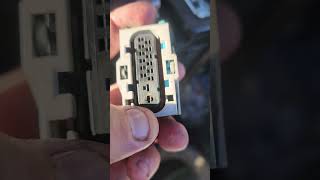
✅ What actually fixed it Upon inspecting the female end of the main transmission connector, the owner found a pin had broken off and was stuck inside the male pin of the connector on the TCM side. The fix required replacing the faulty TCM/valve body assembly to resolve the broken pin issue.
OEM Part Supersession History
24268164→24287425— Part has been updated by the manufacturer for improved reliability or to consolidate multiple previous part numbers.
Heads up: The part 24287425 is listed as a compatible interchange for 24268164 and fits the 2012-2017 Sonic. However, multiple other part numbers (like 24291305, 24275864) are also listed as compatible for the Gen 2 6T40/6T45 transmission. It is critical to provide the vehicle's VIN when ordering to ensure the correct module and pre-programming is supplied.
Model Year Variations Within This Range
- 2014-2018: Part listings for the TCM (TEHCM) often specify compatibility starting from 2014, even though the same 6T30/6T40 transmission was used in earlier models. For example, part number 24287425 is frequently listed for 2014-2018 Sonics. While it may be backward compatible, owners of 2012-2013 models should be extra cautious and verify the part number with their VIN before purchasing.
Helpful Videos



Used OEM Parts in Stock


New Aftermarket Parts Available




The information in this article is provided for general reference and educational purposes only. Vehicle specifications, procedures, and part compatibility can vary by production date, trim level, and region. Always consult your vehicle's factory service manual and verify part numbers before purchasing or performing repairs. Safety-critical components such as airbags, seat belts, and braking systems should be installed by a qualified professional.
- Chevrolet SONIC:
- 🎬 Helpful Videos
- 🛍️ Shop This Part
- What's Unique About the 2012-2017 Chevrolet SONIC
- Diagnostic Flowchart
- Symptoms You May Notice
- Most Likely Causes
- Rare But Worth Checking
- Diagnosis Steps
- Parts You'll Likely Need
- Related Codes That Often Appear With This One
- Technical Service Bulletins (TSBs) & Recalls
- Platform-Specific Known Issues
- Mechanic-Grade Diagnostic Values
- Scan Tool Commands That Help
- Wiring & Ground Locations
- Real Owner Repair Stories
- OEM Part Supersession History
- Model Year Variations Within This Range
- 🎟️ Get 5% Off