

U0101 on 2008-2015 Chevrolet Malibu: Lost Communication with TCM Causes and Fixes
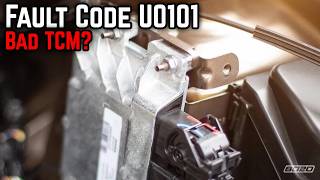
Code U0101 on a 2008-2015 Malibu means the Transmission Control Module (TCM) has stopped communicating. This is most often caused by wiring issues, like poor pin connections or fluid contamination at the main transmission connector, chafing on the engine block, or a failed TCM (TEHCM) located inside the transmission pan. Before condemning the TCM, always inspect the external wiring and connectors first, as this is a common and cheaper fix. Expect a repair cost of $150-$500 for wiring issues or $
- U0101 on a Malibu means the Transmission Control Module (TCM) is offline.
- Before suspecting the expensive internal TCM, thoroughly inspect the wiring. Check the main transmission connector for loose pins or fluid contamination, and look for chafed wires.
- Symptoms include a check engine light, limp mode, and harsh or no shifting.
- This is not a simple DIY fix. Diagnosing network issues and replacing the internal TCM requires special tools, skills, and programming.
- Do not immediately replace the transmission; the problem is almost always electrical or electronic, not mechanical.
What's Unique About the 2008-2015 Chevrolet MALIBU

On many 2008-2015 Malibus equipped with 6-speed automatic transmissions (like the 6T40), the Transmission Control Module (TCM) is integrated into a component called the TEHCM (Transmission Electro-Hydraulic Control Module) which is located inside the transmission oil pan. This design makes it susceptible to issues from heat, vibration, and contaminated fluid, and makes replacement a more complex, labor-intensive job. GM has issued Technical Service Bulletin #PIP4990D specifically pointing to poor terminal pin connections at the transmission connector and underhood fuse block as common culprits for this code. Furthermore, there are two generations of the TEHCM; Gen 1 (pre-2012) used pressure switches, while Gen 2 (2012+) did not, which is important to know for replacement.
Diagnostic Flowchart

Tap your situation to follow the diagnostic path that matches what you're seeing on this vehicle.
Generation note: This range covers the 7th generation (2008-2012) and the 8th generation (2013-2015) Malibu. Both generations can experience this code. 🎬 Watch: A helpful overview of the U0101 code and fixes. The primary cause across both is often related to the 6-speed automatic transmission's wiring or the internally-mounted TCM/TEHCM. Diagnostic approaches are similar for both generations, though the TEHCM design changed around 2012.
Symptoms You May Notice
- Check Engine Light (Service Engine Soon lamp) is on
- Transmission is stuck in one gear (limp mode).
- Harsh, erratic, or delayed shifting.
- Vehicle may not shift out of Park
- Gear position indicator on the dashboard may be blank or incorrect.
- Reduced Engine Power warning message may appear.
- In some cases, the vehicle may not start
- Erratic door lock cycling or other strange electrical behavior may occur simultaneously.
- Replacing the TCM without checking wiring first. TSBs and expert advice strongly recommend checking connectors, wiring, and grounds before condemning the expensive internal TEHCM.
- Assuming the transmission has failed mechanically. While symptoms are transmission-related, the root cause is electrical, and replacing the entire transmission is unnecessary for a U0101 code alone.
Most Likely Causes

- Poor Terminal/Pin Connection at Connectors 🔴 High Probability TSB #PIP4990D specifically calls out poor terminal pin fit at the main transmission connector and the underhood fuse block as a frequent cause. Vibration and heat cycles can cause these connections to become loose. In some cases, an internal transmission wiring issue can cause fluid to wick up into the external connector, causing corrosion and short circuits.
How to confirm: Visually inspect the pins in the transmission harness connector for corrosion, damage, or being spread too far apart. Check for any signs of transmission fluid inside the connector itself. Perform a 'pin drag' test with a proper terminal tool to ensure a snug fit. A burnt or blackened pin is a clear sign of a bad connection.
Typical fix: Clean the connector terminals thoroughly with electrical contact cleaner and compressed air. If pins are loose, they may need to be carefully re-tensioned or the connector pigtail replaced. 🎬 See this walkthrough on replacing the TCM connector pigtail. If a pin is burnt, the connector and potentially the TEHCM side of the connection will need replacement. Ensure the connector is fully seated and locked.
Est. part cost: $10-$75 - Damaged Wiring Harness 🟡 Medium Probability The wiring harness can rub against sharp edges. TSB #PIP4990D specifically mentions to check for the harness chafing on the engine block or on top of the transmission case.
How to confirm: Carefully inspect the entire length of the wiring harness between the ECM, fuse block, and the transmission. Pay close attention to any areas where the harness makes contact with metal components. Test for continuity on the CAN bus wires (Tan and Tan/Black) using a multimeter.
Typical fix: Repair the damaged section of wire using solder and heat shrink tubing. Secure the harness away from any sharp edges with zip ties or loom to prevent future damage.
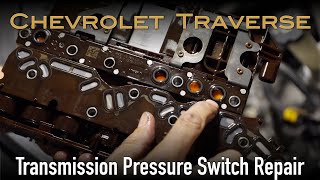
Est. part cost: $5-$25 - Failed Transmission Control Module (TCM/TEHCM) 🟡 Medium Probability The TCM is located inside the transmission, submerged in fluid. This environment can lead to failure from heat, vibration, or fluid contamination over time. For Gen 1 models (pre-2012), failure of the internal pressure switches is a common failure point within the TEHCM.
How to confirm: This should only be suspected after confirming all wiring, fuses, power, and grounds to the TCM are good. A professional scan tool will be unable to establish communication with the TCM. An advanced test involves jumping the CAN bus wires at the TCM connector; if communication to other modules is restored, the TCM is highly suspect.
Typical fix: The TCM/TEHCM must be replaced. This involves draining the transmission fluid, removing the transmission pan, and replacing the entire module assembly. The new module must be programmed to the vehicle's VIN using GM's Service Programming System (SPS).
Est. part cost: $300-$700 - Low Battery Voltage or Poor Grounds ⚪ Low Probability All modern control modules are sensitive to voltage. A weak battery or corroded ground straps can cause intermittent communication faults. TSB #PIP4990D specifically calls out checking TCM grounds, such as those at locations G106 and G107.
How to confirm: Test the battery voltage with the engine off (should be ~12.6V) and while running (should be ~13.7-14.7V). Inspect the main battery terminals and chassis ground connections, specifically G106/G107, for corrosion or looseness. Load test the ground circuits to ensure they are robust.
Typical fix: Clean battery terminals and ground connection points until they are bright metal. Charge or replace a weak battery. In some cases, a faulty negative battery cable with high internal resistance needs to be replaced.
Est. part cost: $5-$250
Rare But Worth Checking
- Faulty Underhood Fuse Block: TSB #PIP4990D mentions that internal issues or poor terminal fit within the fuse block itself can cause this code. If a specific fuse or relay related to the TCM repeatedly fails or has a loose connection, the fuse block may be the root cause.
- Faulty Engine Control Module (ECM): While much less common than a TCM failure, it is possible for the ECM to be the source of the communication breakdown. This is usually diagnosed only after all other possibilities, especially wiring and the TCM, have been exhausted.
Diagnosis Steps
- Scan all vehicle modules for codes. Note all current and history codes and which modules they are stored in. A U0101 stored in the ECM, BCM, and ABS module points to a network-wide issue.
- Check and load test the battery. Ensure voltage is stable and above 12.4V with the engine off.
- Inspect all fuses related to the TCM, ECM, and transmission. Check for loose or mispositioned fuses in the underhood fuse block, as noted in TSB #PIP4990D.
- Perform a thorough visual inspection of the main transmission connector. Disconnect it and look for bent pins, corrosion, or signs of transmission fluid contamination.
- Inspect the wiring harness leading to the transmission. Look for chafing, melting, or corrosion, especially on top of the transmission where it can rub against the engine block.
- Using a wiring diagram, verify the TCM has proper power and ground. Check specific ground points like G106/G107. Load test the power and ground circuits to ensure they can carry a current.
- Test the CAN bus wires for proper resistance. With the battery disconnected, measure resistance between the Tan and Tan/Black wires at the DLC or TCM connector. It should be approximately 60 ohms.
- If possible, perform a CAN bus bypass test. Use jumper wires to connect the two Tan wires and the two Tan/Black wires at the disconnected TEHCM connector. If other modules can now communicate with each other, the TEHCM or its connector pins are faulty.
- If all wiring, power, and ground circuits test good, and the bypass test points to the module, the failure is most likely the internal TCM/TEHCM.
Parts You'll Likely Need
- Transmission Control Module (TEHCM)
(OEM #24256524 (For Gen 1, approx. 2008-2011 models, verify by VIN))— This is the most common major component to fail, causing a complete loss of communication. It is located inside the transmission pan and requires programming.
Trusted brands: ACDelco (OEM), Dorman - Transmission Connector Pigtail — If the main connector or its pins are burnt, corroded, or damaged, replacing the pigtail is the standard repair.
Related Codes That Often Appear With This One
- U0100 — This is a general 'Lost Communication with ECM/PCM' code. It can appear alongside U0101 if the network disruption is severe or if other modules can no longer hear the ECM.
- U0140 — This code means 'Lost Communication with Body Control Module (BCM)'. Seeing multiple U-codes points to a wider network problem, such as a faulty CAN bus wire or a bad ground affecting multiple modules.
Technical Service Bulletins (TSBs) & Recalls
- TSB #PIP4990D: MIL Setting DTC U0101 Current Or History: This is the most important TSB for this issue. It advises technicians to investigate external factors *before* replacing the TEHCM. Key inspection points include: poor terminal fit at the transmission connector and underhood fuse block, checking TCM grounds (G106/G107), and inspecting the harness for chafing on the engine/transmission.
Platform-Specific Known Issues
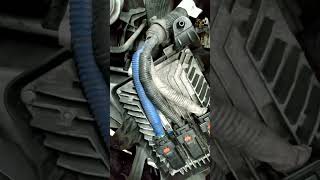
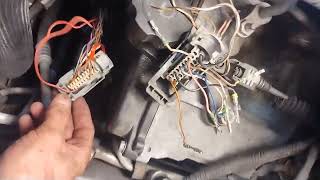
- Transmission Fluid Contamination in Main Connector: A well-documented issue on forums and in repair videos for the Malibu and related platforms is transmission fluid migrating through the internal harness and contaminating the external 16-pin connector. This conductive fluid can short out the CAN bus communication pins, causing an intermittent or persistent U0101 code. This can also cause other seemingly unrelated electrical issues, like door locks cycling on their own. Cleaning the connector is a primary, low-cost diagnostic step.
Mechanic-Grade Diagnostic Values
- GMLAN Bus Resistance — expected: Approximately 60 Ω when measured across pins 6 and 14 of the DLC with the battery disconnected.. Failure: A reading of ~120 Ω indicates an open in the bus or one of the two terminating resistors is offline. A reading significantly less than 60 Ω indicates the CAN High and Low wires are shorted together.
- TCM Power Supply Voltage — expected: Should read battery voltage (approx. 12.0-12.6V with key on, engine off) at the appropriate power supply pin on the TCM connector.. Failure: 0V or significantly low voltage indicates a break in the power supply wire or a blown fuse.
- TCM Ground Circuit Resistance — expected: Less than 0.5 Ω when measured between the TCM connector ground pin and a clean chassis ground.. Failure: High resistance indicates a corroded or loose ground connection at points like G106/G107.
- 6T40 Solenoid Resistance (Internal to TEHCM) — expected: Pressure Control Solenoids (PCS): 3-5 Ω. Shift Solenoid (On/Off): 16-20 Ω.. Failure: Readings outside these ranges indicate a failed solenoid within the TEHCM. This test requires removing the solenoid from the TEHCM to avoid damage.
Scan Tool Commands That Help
- GDS2 / Tech2Win with GM MDI/VCI: Service Programming System (SPS) — This function is mandatory after replacing the TCM/TEHCM. It downloads the correct VIN-specific software and calibrations from GM's servers and flashes them to the new module.
- GDS2 / Tech2Win: Replace and Program / Reprogram — This is the specific workflow within SPS used to install a new module. Failure to perform this step will result in a no-start condition or immediate shifting problems.
- GDS2 / Tech2Win: Clear All DTCs — After programming is complete, this function should be used to clear any codes that were set during the programming process.
Wiring & Ground Locations

- G106 / G107 — Located on the transmission case or on the engine block very near the transmission bellhousing.. These are the primary ground points for the TCM/TEHCM. A loose or corroded connection here is a known cause for U0101, as highlighted in TSB #PIP4990D.
- Transmission Harness Connector (X225) — The main 16-pin circular connector on the outside of the transmission case that connects the vehicle harness to the internal TEHCM.. This is the most common location for pin fitment issues, corrosion, and fluid intrusion that cause U0101. The GMLAN bus wires (typically Tan and Tan/Black) pass through this connector.
- Data Link Connector (DLC) — Located under the driver's side dashboard, to the left of the steering column.. This is the primary diagnostic port. Pins 6 (CAN High) and 14 (CAN Low) are used to test the overall health and resistance of the GMLAN network.
Real Owner Repair Stories
- YouTube user 'Garrys repair and auto electrical diagnostics' (2012 Chevrolet Malibu/Impala with 3.6L V6) — U0101, limp mode, erratic door locking/unlocking.
❌ Tried (didn't work) Initial checks of powers and grounds at the ECM and TCM were good.
✅ What actually fixed it The main transmission connector was full of transmission fluid that had wicked up from inside the transmission. Cleaning the fluid out of the connector and tightening the pin connections resolved the communication issues. - YouTube user 'Garrys repair and auto electrical diagnostics' (2011-2020 Chevrolet Malibu/Impala) — Intermittent U0101 code.
❌ Tried (didn't work) Initial scan showed communication was possible sometimes.
✅ What actually fixed it A visual inspection of the main transmission connector revealed one of the pins was completely burnt and black, indicating a poor connection causing high resistance and heat. The connector and potentially the TEHCM side of the connection required replacement. - Reddit user in r/MechanicAdvice (2014 Chevrolet Malibu) — U0101 code, transmission stuck in gear.
❌ Tried (didn't work) Owner took vehicle to a shop for diagnosis.
✅ What actually fixed it A loose wire or terminal in the main connector going to the TCM. The mechanic tightened the connections, resolving the code.
OEM Part Supersession History
24256524→24041956, 24287420, among others.— Part revisions to improve reliability and address known failure points.
Heads up: Crucially, Gen 1 TEHCMs (like 24256524, for models approx. pre-2012) contain pressure switches and are NOT interchangeable with Gen 2 TEHCMs (for models approx. 2012+) which do not have pressure switches. Installing the wrong generation will cause immediate DTCs and operational failure.
Model Year Variations Within This Range
- 2008-2011 (approx.): These models use the 'Gen 1' 6T40 TEHCM, which contains five internal pressure switches. These switches are a known common failure point, often delaminating or failing due to contamination, which can lead to communication codes or solenoid performance codes. The TEHCM can be identified as Gen 1 if the 8th digit of the barcode on the module is a number.
- 2012-2015 (approx.): These models use the 'Gen 2' 6T40 TEHCM, which eliminated the failure-prone pressure switches in favor of a more reliable 'clutch pulse learning' function. These modules are not backward-compatible with Gen 1 systems. The TEHCM can be identified as Gen 2 if the 8th digit of the barcode on the module is a letter.
Helpful Videos
We Have This Part in Stock



The information in this article is provided for general reference and educational purposes only. Vehicle specifications, procedures, and part compatibility can vary by production date, trim level, and region. Always consult your vehicle's factory service manual and verify part numbers before purchasing or performing repairs. Safety-critical components such as airbags, seat belts, and braking systems should be installed by a qualified professional.
- Chevrolet MALIBU:
- 🎬 Helpful Videos
- 🛍️ Shop This Part
- What's Unique About the 2008-2015 Chevrolet MALIBU
- Diagnostic Flowchart
- Symptoms You May Notice
- Most Likely Causes
- Rare But Worth Checking
- Diagnosis Steps
- Parts You'll Likely Need
- Related Codes That Often Appear With This One
- Technical Service Bulletins (TSBs) & Recalls
- Platform-Specific Known Issues
- Mechanic-Grade Diagnostic Values
- Scan Tool Commands That Help
- Wiring & Ground Locations
- Real Owner Repair Stories
- OEM Part Supersession History
- Model Year Variations Within This Range
- 🎟️ Get 5% Off