

U0101 on 2008-2013 Audi A3: Lost Communication with TCM Causes and Fixes
On a 2008-2013 Audi A3 with the DQ200 S-Tronic transmission, code U0101 almost always means the transmission's mechatronics unit has failed. This is a known issue requiring professional replacement, which can be costly. The failure is often internal to the mechatronics, specifically related to the hydraulic pressure accumulator or the electronic control board.
- U0101 on a DQ200-equipped Audi A3 is a strong indicator of a failed mechatronics unit.
- Symptoms are severe and include a flashing gear display ('PRNDS') and the transmission entering a non-functional limp mode.
- While checking fuses and wiring is good practice, the repair almost always involves replacing the mechatronics unit.
- This is not a DIY-friendly repair; it requires specialized tools and software for programming the new part.
- Due to the high cost of repair, getting a thorough professional diagnosis is critical before ordering parts.
What's Unique About the 2008-2013 Audi A3

For this specific Audi A3 (8P) equipped with the 7-speed DQ200 'S-Tronic' dry-clutch transmission, the U0101 code is exceptionally common and points directly to a well-documented failure of the mechatronics unit. This unit, which combines the electronic TCM and the hydraulic valve body, is a known weak point. The primary internal failure is often a crack in the aluminum accumulator housing plate, which cannot withstand the high hydraulic pressures over time, leading to pressure loss. Another common failure is on the electronic TCU board itself, where internal connections or components fail, severing communication. While wiring or fuse issues can cause this code, on the DQ200 platform, the fault is very frequently internal to the mechatronics.
Symptoms You May Notice

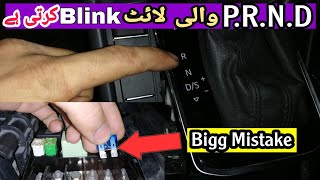
- Flashing 'PRNDS' gear indicator on the dashboard. 🎬 Watch: Troubleshooting a no-start and flashing PRNDS display.
- Transmission enters 'limp mode', often stuck in a single gear or refusing to shift past 3rd.
- Inability to shift out of Park or Neutral.
- Complete loss of forward or reverse gears.
- Check Engine Light is on.
- EPC (Electronic Power Control) light is illuminated.
- A diagnostic scan tool cannot establish communication with the transmission module (address 02).
- Main 30-amp fuse for the transmission may repeatedly blow.
- Replacing the entire transmission when only the mechatronics unit is faulty.
- Replacing the gear selector lever assembly, as its indicator lights may go out due to the lack of communication from the TCM.
- Replacing the clutch pack when the root cause is a faulty mechatronics unit that is causing poor clutch control and juddering.
Most Likely Causes

- Mechatronics Unit Failure 🔴 High Probability The DQ200 mechatronics unit has two primary, well-documented failure modes. The first is a physical crack in the valve body housing near the hydraulic pressure accumulator, which is too thin to handle the 60+ bar of pressure over many cycles. The second is an electronic failure on the TCU circuit board, where internal connections break, causing a total loss of communication. These design flaws make it the most common point of failure for this code.
How to confirm: After confirming the TCM has proper power and ground and that the CAN bus wiring is intact, the inability to communicate with the TCM (address 02) using a VAG-specific scan tool strongly points to an internal failure. If the main 30A fuse blows instantly, it also indicates a short within the unit. Hydraulic pressure faults like P17BF often accompany the communication failure.
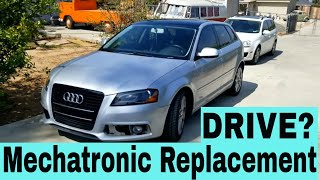
Typical fix: Replace the entire mechatronics unit. 🎬 Watch a mechanic replace the mechatronics on a budget A3. Some specialized shops offer repair or remanufacturing services, which can be more cost-effective and may include reinforcements to prevent future accumulator housing cracks.
Est. part cost: $1000-$2500 - Blown Fuse for TCM ⚪ Low Probability A blown fuse is often a symptom of the mechatronics unit failing and shorting internally, rather than a standalone cause.
How to confirm: Locate the fuse boxes in the driver-side dash panel and the engine bay. For 2008+ models, check fuse F14 (10A) in the interior fuse panel and the main 30A/50A fuses in the engine bay fuse box (often labeled SB). Test with a multimeter for continuity. If the fuse is blown, it's critical to suspect an internal short in the mechatronics unit.
Typical fix: Replace the blown fuse. If the new fuse blows immediately, do not continue to replace it. The mechatronics unit must be disconnected and tested for a short circuit.
Est. part cost: $1-$5 - Wiring Harness or Connector Damage ⚪ Low Probability While less common than mechatronics failure, water ingress into the fuse box area under the cowl can corrode power supply wires, leading to a loss of voltage to the TCM.
How to confirm: Visually inspect the wiring harness leading to the transmission mechatronics unit. Check the main connector for corrosion, bent pins, or fluid contamination. Test for power, ground, and CAN bus signal continuity at the connector with a multimeter. A real-world example showed an owner finding the power wire to the fuse box had corroded due to water damage, which was the ultimate cause.
Typical fix: Repair the damaged section of the wiring harness or clean/replace the corroded connector. In cases of water damage, the source of the leak (e.g., clogged plenum drains) must also be addressed.
Est. part cost: $10-$200
Rare But Worth Checking
- Low Battery Voltage or Failing Alternator: Control modules can malfunction and drop off the communication network if system voltage is too low. Before suspecting expensive components, ensure the battery is fully charged and the alternator is working correctly.
- Faulty CAN Gateway Module: The gateway module (address 19) manages all CAN bus traffic. While rare, its failure can prevent modules from communicating. This usually triggers a cascade of communication codes with multiple modules, not just U0101 for the TCM.
Diagnosis Steps

- Perform a full vehicle scan with a VAG-compatible tool (like VCDS or OBDeleven) to check for codes in all modules. Confirm if the scan tool can communicate with the Transmission module (Address 02). If not, this is a key symptom.
- Check the battery voltage and the charging system. Voltage should be above 12.4V with the engine off and 13.7-14.7V with the engine running.
- Locate and inspect the fuses for the TCM. Check fuse F14 (10A) in the cabin fuse panel and the main 30A/50A power feed fuse in the engine bay fuse box. If a fuse is blown, suspect a shorted mechatronics unit.
- If fuses are intact, safely raise the vehicle and locate the main electrical connector on the transmission mechatronics unit. Disconnect it and inspect for any signs of corrosion, moisture, or damaged pins.
- With the connector disconnected, use a multimeter to test for battery power and a solid ground connection at the appropriate pins on the harness side of the connector. Lack of power can point to wiring issues, as documented in some forum cases.
- If power and ground are present, the final step is to check the CAN bus wires for continuity and resistance. If wiring is confirmed good but the module still won't communicate, the mechatronics unit has an internal electronic or electrical failure.
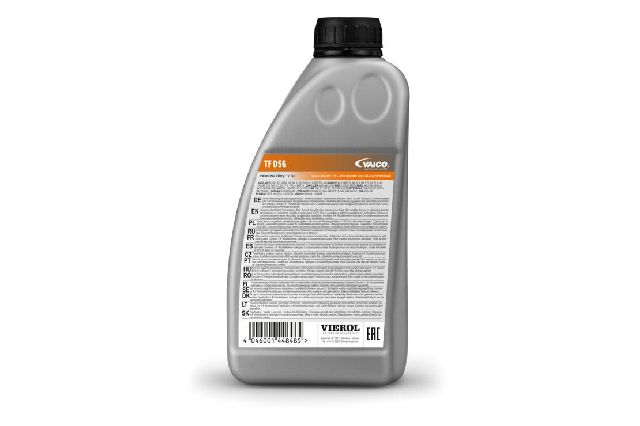
- If the mechatronics unit is replaced, note that the DQ200 uses two separate fluids: gear oil for the mechanical gearset (approx. 1.8L) and a specific hydraulic fluid for the mechatronics unit itself (approx. 1.0L). These fluids must not be mixed.
Parts You'll Likely Need
- Transmission Mechatronics Unit
(OEM #0AM927769D (most common, verify by VIN). Other variants include 0AM927769K, 0AM927769E, 0AM927769G.)— This is the primary point of failure for code U0101 on the DQ200 transmission due to internal hydraulic or electronic faults. The entire unit, which includes the TCM, is typically replaced.
Trusted brands: Genuine VW/Audi, LUK, Vitesco Technologies (OEM manufacturer)
OEM price range: $1500-$2500 (Requires programming at dealer)
Aftermarket price range: $400-$1800 (Remanufactured or new from various sources)
Related Codes That Often Appear With This One
- P17BF — This code indicates 'Hydraulic Pump: Play Protection' and is a classic sign that the hydraulic pump is running excessively to compensate for a pressure leak, often from a cracked accumulator housing in the mechatronics unit.
- P189C — This points to 'Function Restriction due to Insufficient Pressure Build-Up', directly related to the hydraulic failure within the DQ200 mechatronics.
- 01315 — This is the VAG-specific equivalent of U0101, meaning 'No Communication with Transmission Control Module'. You will see this code when scanning with VAG-specific tools like VCDS.
- P0562 — Indicates 'System Voltage Too Low'. This can be logged by the TCU if there's an internal electrical fault on its circuit board or a wiring issue causing a voltage drop.
Technical Service Bulletins (TSBs) & Recalls
- Australian Recall Campaign (2019): For Audi A3 models 2008-2016, addressing a production fault where a crack can occur in the transmission's pressure accumulator, leading to loss of hydraulic pressure and interruption of engine power.
- Volkswagen Safety Recall 34F6/4V (US)
Platform-Specific Known Issues
- The DQ200 (0AM) 7-speed DSG transmission has been subject to multiple recalls and service campaigns in various global markets. A notable campaign in Australia (affecting 2008-2016 A3s) was issued to address cracks in the pressure accumulator, which could lead to a loss of drive. Another earlier campaign involved changing the synthetic mechatronics fluid to a mineral-based oil, as the synthetic oil could cause electrical issues in hot and humid climates.
Mechanic-Grade Diagnostic Values
- CAN Bus Network Resistance — expected: Approximately 60 Ω (Ohms) when measured between CAN-High and CAN-Low pins at the vehicle's OBD-II port (pins 6 and 14) or at the disconnected TCM connector.. Failure: A reading of ~120 Ω indicates a break in one of the CAN wires or a missing terminating resistor. A reading significantly lower than 60 Ω (e.g., near 0 Ω) indicates a short circuit between the CAN-High and CAN-Low wires.
- TCM Power Supply Voltage — expected: 12.0 - 12.6V with key on, engine off, at the appropriate power supply pin of the mechatronics connector.. Failure: Voltage below 12.0V indicates a power supply issue, such as a corroded wire, failing battery, or bad fuse connection.
- TCM Ground Resistance — expected: Less than 0.5 Ω between the ground pin at the mechatronics connector and a clean chassis ground point.. Failure: Resistance higher than 0.5 Ω indicates a poor ground connection, which can cause modules to malfunction and drop off the network.
Hidden / Shadow Codes Worth Checking
- 01315 - Transmission Control Module: No Communications: This is the VAG-specific fault code that will be logged in other modules (like Engine, ABS, and Gateway) when they cannot communicate with the TCM. It is the direct equivalent of the generic U0101 code. (see via VCDS, ODIS, or other VAG-compatible diagnostic tools.)
Scan Tool Commands That Help
- VCDS or ODIS: Basic Settings - Group 060 — This procedure is mandatory after replacing the mechatronics unit or clutches. It performs an electro-mechanical reset and calibration of the gear selectors and clutch actuators. The procedure requires the engine to be off initially and then started when prompted by the software.
- VCDS or ODIS: Adaptation Drive — After a successful Basic Setting, a specific test drive procedure must be performed to allow the TCM to learn the clutch bite points and adapt shift pressures for smooth operation. This involves a sequence of pulling away, driving in all gears, and holding specific gears at certain RPMs.
- ODIS or other advanced tools: TCU Flashing/Programming — If a new, 'virgin' mechatronics unit is installed, it must be programmed (flashed) with the correct software for the specific vehicle's VIN and equipment. This requires dealer-level tools and software access.
Wiring & Ground Locations

- Mechatronics Connector (T94) — On the side of the DQ200 transmission, where the main vehicle wiring harness connects to the mechatronics unit. This is a large, multi-pin connector.. This is the primary connection point for power, ground, and CAN bus signals to the TCM. Checking for voltage, ground, and CAN signals at this connector is a critical diagnostic step.
- Main Engine/Transmission Ground — Typically located on the left side of the engine compartment, near or under the battery tray. There are several ground points in this area.. Corrosion or looseness at these main ground points can cause intermittent voltage drops to multiple modules, including the TCM, leading to communication faults.
- Ground Point on Left A-Pillar — Inside the vehicle, behind the lower A-pillar trim on the driver's side.. This ground point serves various interior electronics and can sometimes be related to the CAN Gateway module, which is essential for all module communication.
Real Owner Repair Stories
- MHH Auto forum user (2013 Audi A1 with DQ200 DSG) — U0101 - Lost communication with TCU. No communication with mechatronic most of the time.
❌ Tried (didn't work) Checked all fuses, power, and ground wires to the mechatronics unit - all were good., Installed a brand new, pre-calibrated replacement mechatronics unit, which worked for a few minutes and then failed with the same U0101 code.
✅ What actually fixed it The issue was traced to corrupted data in the original mechatronics unit's EEPROM/Flash memory. When the original (corrupted) software was cloned to a known-good test unit (from a Seat Toledo), that unit immediately lost communication. Restoring the test unit's original software brought communication back. This proved the vehicle's wiring was fine and the root cause was a software/data corruption issue in the original TCU, not a simple hardware failure. The final fix required a properly programmed mechatronics unit with clean, non-corrupted software. - Audi Owner Report — An owner reported that after installing a new battery, the vehicle still would not start. A diagnostic scan revealed code U0101, indicating a loss of communication to the Transmission Control Module (TCM), as documented in NHTSA ODI #11450718.
OEM Part Supersession History
0AM927769D→0AM927769G, 0AM927769E, 0AM927769K, and others.— Revisions to address internal electronic and hydraulic weaknesses. Later part numbers are generally considered more reliable.
Heads up: While many part numbers are physically interchangeable, they often contain different software versions (e.g., 'G' board vs 'D' board). A new unit must be programmed with software specific to the vehicle's VIN and features. Cloning data from an old unit is possible but risky if the original data is corrupt.
Model Year Variations Within This Range
- 2012/2013+: Later DQ200 mechatronics units, often designated with part numbers ending in G or K, were introduced. While still prone to failure, they featured some internal revisions. The software also differs, with later models (like the Golf 7 which shares the platform) using different software (e.g., 'G' board software) that is not compatible with earlier 'D' board units.
Diagnostic Flowchart
Used vs. New Parts: Buying Guide for This Vehicle
When a used part is the smart pick: A used or remanufactured mechatronics unit is a very common and sensible choice, as a new OEM unit is expensive and still requires costly dealer programming. Reputable rebuilders often reinforce the known weak points, such as the accumulator housing, potentially making their units more durable than a new old-stock part.
Donor-vehicle mileage cap: roughly under 60000 miles for the part to have meaningful remaining life.
What to inspect on the donor part:
- Ask for the donor vehicle's VIN to verify compatibility.
- Ensure the seller offers a warranty.
- If possible, get a unit that has been tested on a bench rig to confirm hydraulic pressure and solenoid function.
- For a 'virgin' or new unit, confirm it is truly un-programmed. For a used unit, you will likely need a specialist to clone your old TCU's immobilizer and software data onto it.
Aftermarket brands forum-validated for this vehicle:
- LUK (often an OEM supplier)
- Vitesco Technologies (Continental)
- Reputable specialist rebuilders mentioned in forums like ECU Planet or ControlUnits.
Brands owners have reported issues with on this vehicle:
- Unbranded, suspiciously cheap units from online marketplaces. Many use low-quality Chinese replica components that have a very high failure rate.
Real Owner Stories
Aggregated from forums and TSBs cited above. Mileages and costs reflect what owners reported in those sources.
Audi A3 (2008-2013)
Symptoms: An intermittent failure to communicate with the TCM eventually became a permanent U0101 fault.
What fixed it: The problem was not the mechatronics unit itself, but a corroded power supply wire located under the fuse box, which had been damaged by water ingress.
Source hint: Ross-Tech Forums - 'U0101 / VAG01315 - Intermittent turned to "permanent" failure to communicate with TCM'
2010 Audi A3
Symptoms: The car initially had pressure codes. After replacing the mechatronic unit, new problems appeared, including being stuck in 3rd gear and experiencing a severe judder.
What fixed it: The owner replaced the mechatronic unit to fix the original pressure codes, but this highlighted the complexity of the repair, as it led to secondary issues possibly related to clutch wear or incorrect adaptation.
Source hint: Ross-Tech Forums - 'DSG 7 DQ200 issue after mech change'
Audi A3 with DQ200 S-tronic
Symptoms: Persistent juddering and repeat transmission failures, even after the clutch packs were replaced.
What fixed it: Forum discussion pointed to the underlying culprit being the mechatronics unit, suggesting its replacement was the necessary fix for the recurring issues.
Source hint: Audi-Sport.net - 'S-tronic - DQ200 issues'
Related OBD-II Codes
Frequently Asked Questions
My 2011 Audi A3 has a transmission fault. Are there any recalls I should know about?
The dealer quoted me for a full mechatronics unit replacement. Can these DQ200 units be repaired instead?
The 30-amp fuse for my transmission keeps blowing. Is it safe to just use a higher-rated fuse?
My 'PRNDS' indicator is flashing on the dashboard. What does this mean for my A3's transmission?
I heard there was a fluid-related service campaign for the DQ200. What was that about?
When replacing the mechatronics unit, is there anything special I need to know about the fluid?
Helpful Videos

We Have This Part in Stock


The information in this article is provided for general reference and educational purposes only. Vehicle specifications, procedures, and part compatibility can vary by production date, trim level, and region. Always consult your vehicle's factory service manual and verify part numbers before purchasing or performing repairs. Safety-critical components such as airbags, seat belts, and braking systems should be installed by a qualified professional.
- Audi A3:
- 🎬 Helpful Videos
- 🛍️ Shop This Part
- What's Unique About the 2008-2013 Audi A3
- Symptoms You May Notice
- Most Likely Causes
- Rare But Worth Checking
- Diagnosis Steps
- Parts You'll Likely Need
- Related Codes That Often Appear With This One
- Technical Service Bulletins (TSBs) & Recalls
- Platform-Specific Known Issues
- Mechanic-Grade Diagnostic Values
- Hidden / Shadow Codes Worth Checking
- Scan Tool Commands That Help
- Wiring & Ground Locations
- Real Owner Repair Stories
- OEM Part Supersession History
- Model Year Variations Within This Range
- Diagnostic Flowchart
- Used vs. New Parts: Buying Guide for This Vehicle
- Real Owner Stories
- Audi A3 (2008-2013)
- 2010 Audi A3
- Audi A3 with DQ200 S-tronic
- Related OBD-II Codes
- Frequently Asked Questions
- 🎟️ Get 5% Off