

U0100 on 2014-2018 Toyota Highlander: Lost Communication With ECM Causes and Fixes
On a 2014-2018 Toyota Highlander, code U0100 is most often caused by water intrusion and corrosion in the main Engine Control Module (ECM) connector, known as A43. This is a known issue, often linked to poorly sealed aftermarket windshields, as documented in Toyota TSBs. The water wicks down the de-icer harness to the ECM. The fix involves cleaning or replacing the connector and ECM, and most importantly, stopping the water leak at its source.
- U0100 on a 2014-2018 Highlander is a critical code indicating the Engine Control Module (ECM) is offline.
- The most probable cause is water damage in the main ECM connector (A43), an issue documented by Toyota and often linked to aftermarket windshields.
- Before replacing any parts, the first step is to inspect the ECM connector behind the glove box for blue-green corrosion.
- Do not drive the vehicle. A stall or no-start condition is likely and poses a serious safety risk.
- If the ECM needs replacement, it must be programmed to your vehicle's VIN by a professional.
What's Unique About the 2014-2018 Toyota HIGHLANDER

The 2014-2018 Highlander is highly susceptible to a specific failure that causes the U0100 code. Toyota issued Technical Service Bulletins (TSBs T-SB-0072-19 and T-TT-0462-17) warning that water can leak from the windshield de-icer harness, particularly on vehicles with poorly sealed aftermarket windshields. This water travels down the wiring harness and collects in the A43 ECM connector, causing blue-green corrosion that severs communication and triggers the U0100 code along with a host of other engine-related faults.
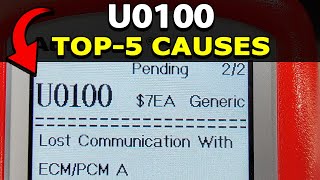
🎬 Watch: Diagnosing a U0100 no-start condition on a Toyota.Diagnostic Flowchart
Tap your situation to follow the diagnostic path that matches what you're seeing on this vehicle.
Symptoms You May Notice
- Engine will not start or is very hard to start
- Engine stalls while driving
- Check Engine Light is on
- Multiple other warning lights may illuminate (ABS, Traction Control, Airbag, etc.)
- Transmission may not shift correctly or may be stuck in one gear (limp mode)
- Significant drop in engine performance or entry into 'limp mode'
- Low or no fuel pressure reading during diagnosis
- Speedometer or other gauges may behave erratically or not work at all
- Replacing the fuel pump. While low fuel pressure is a symptom, it's often because the corroded ECM isn't commanding the fuel pump relay to turn on. The root cause is the ECM communication failure, not the pump itself.
- Replacing other control modules. Because the ECM is offline, other modules (like the TCM or ABS unit) will log communication fault codes. It's easy to mistakenly blame a secondary module when the primary failure is the ECM not communicating.
- Clearing the code and hoping it stays away. A U0100 code, especially with a no-start condition, indicates a hard fault that will almost certainly return until the root cause is fixed.
Most Likely Causes

- Corrosion in A43 ECM Connector due to Water Intrusion 🔴 High Probability As documented in Toyota TSBs T-SB-0072-19 and T-TT-0462-17, poorly sealed aftermarket windshield de-icer harnesses allow water to wick down the wiring and pool in the ECM connector. Toyota notes that genuine windshields have specific seals to prevent this that aftermarket versions may lack.
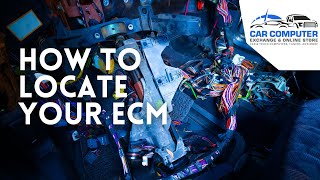
How to confirm: Locate the ECM behind the glove box. 🎬 See this video for help locating your vehicle's ECM. Disconnect the battery, then unplug the A43 connector. Visually inspect the pins and wiring on both the harness and ECM side for blue-green corrosion or signs of moisture. Per TSB T-TT-0462-17, you can also inspect the A33 de-icer connector in the engine bay for corrosion as the entry point.
Typical fix: If corrosion is minor, cleaning the connector pins with a specialized electronic cleaner and small brush may work. 🎬 Watch: How to properly clean corrosion from electrical connectors. If severe, the connector pigtail and terminals will need to be replaced, along with the ECM if its pins are damaged. The source of the water leak (usually the windshield seal or de-icer harness) must be repaired to prevent recurrence.
Est. part cost: $20-$150 for a connector pigtail or terminals, $400-$1200 for a replacement ECM. - Failed Engine Control Module (ECM) 🟡 Medium Probability The ECM often fails as a direct result of the water intrusion and corrosion described above, which shorts internal circuits. It can also fail from age, vibration, or voltage spikes, though this is less common for this specific vehicle's U0100 issue.
How to confirm: This is typically diagnosed by exclusion. If the wiring, power, and grounds to the ECM are all confirmed to be good, and the A43 connector is clean, but the module still does not communicate, the ECM is condemned. Sometimes a burnt smell can be detected from the unit itself.
Typical fix: Replace the Engine Control Module. A new or used ECM must be programmed to the vehicle's VIN and immobilizer system by a dealer or qualified shop with Toyota Techstream software.
Est. part cost: $400-$1200 - CAN Bus Wiring Issues ⚪ Low Probability
How to confirm: Visually inspect the wiring harnesses for physical damage (chewed by rodents, chafing, etc.). Use a multimeter to check for continuity and shorts to power or ground on the CAN high and CAN low wires. Network resistance between Pin 6 (CAN-H) and Pin 14 (CAN-L) at the OBD-II port should be approximately 60 ohms with the battery disconnected.
Typical fix: Repair the damaged section of the wiring harness.
Est. part cost: $5-$50 for wiring repair supplies. - Poor ECM Power or Ground Connection ⚪ Low Probability
How to confirm: A weak or failing 12V battery is a common cause of communication codes. Test the battery first. If the battery is good, use a multimeter and a vehicle-specific wiring diagram to verify that the ECM is receiving proper battery voltage on all power pins and has a solid ground connection with less than 0.1 ohms of resistance.
Typical fix: Clean or repair the faulty power or ground circuit connection. Replace a weak battery.
Est. part cost: $1-$20 for cleaning supplies or terminals; $150-$300 for a new battery.
Rare But Worth Checking
- Clogged A/C Condensation Drain Tube:
Diagnosis Steps

- Check for Toyota Technical Service Bulletins (TSBs). T-SB-0072-19 and T-TT-0462-17 are directly relevant and should be reviewed first.
- Scan for all DTCs in all modules. Note any other 'U' codes or the engine performance codes listed above.
- Test the 12V Battery. A weak or failing battery can cause various communication faults. Ensure it is fully charged and healthy before proceeding.
- Locate the ECM behind the glove compartment.
- Inspect for Water Intrusion Source. Check if an aftermarket windshield has been installed. Per TSB T-TT-0462-17, inspect the A33 de-icer connector in the engine bay for corrosion. Also check the passenger floor for dampness, which could indicate a clogged A/C drain.
- Inspect the A43 ECM Connector. Disconnect the battery. Unplug the A43 connector and perform a thorough visual inspection for any signs of water damage or blue-green corrosion on the pins and in the connector housing.
- If corrosion is found, the source of the water leak MUST be repaired before replacing parts.
- If no corrosion is visible, check the ECM's main power and ground circuits using a multimeter and wiring diagram to ensure it's receiving power and has a solid connection to ground.
- Test the CAN bus network. With the battery disconnected, measure the resistance between Pin 6 (CAN-H) and Pin 14 (CAN-L) at the OBD-II port. A healthy network will read approximately 60 ohms.
- If wiring, power, grounds, and the connector are all good, the ECM itself is the most likely failed component.
Parts You'll Likely Need

- Engine Control Module (ECM)
(OEM #89661-0E610)— The ECM is often damaged beyond repair by the water intrusion that causes this code. Replacement is the only fix. Note: Part number is extremely specific. 89661-0E610 is for a 2016 Highlander 3.5L AWD built from 06/2014. Always verify the part number with your VIN.
Trusted brands: Toyota (OEM)
Related Codes That Often Appear With This One
- P1604 — Stands for 'Startability Malfunction'. The ECM sets this when the engine fails to start, which is a direct consequence of the U0100 communication loss.
- P1605 — Stands for 'Rough Idling Malfunction'. This is another symptom-based code logged when the ECM is failing or has lost communication, leading to poor engine control.
- P1603 — Indicates an 'Engine Stall Malfunction'. This is logged when the ECM detects an unintended engine shutdown, a common result of losing communication.
- P0300, P030x — These are random and specific cylinder misfire codes. Without proper communication and control from the ECM, the ignition and fuel systems cannot operate correctly, leading to misfires.
- P0171 — System Too Lean (Bank 1). The ECM's inability to control fuel injectors properly due to communication loss can cause this fuel trim fault.
- U0101 — Lost Communication with TCM. This often appears with U0100 because the Transmission Control Module is on the same CAN network and is a primary partner for the ECM.
Technical Service Bulletins (TSBs) & Recalls
- T-SB-0072-19: Notes that various drivability concerns and DTCs including U0100 can be caused by corrosion/water in the A43 ECM connector (or A9 connector on Hybrids) due to aftermarket windshield de-icer harnesses.
- T-TT-0462-17: A Tech Tip that details how water from aftermarket windshields wicks through the harness to the A43 ECM connector, causing corrosion and a variety of DTCs, including U0100. Recommends checking for genuine Toyota markings on the glass.
Platform-Specific Known Issues
- Toyota TSB T-SB-0072-19 and T-TT-0462-17 specifically identify water intrusion from a poorly sealed aftermarket windshield de-icer harness as the primary cause of corrosion in the A43 ECM connector, leading to U0100 and other drivability DTCs.
- For Highlander Hybrid models, TSB T-SB-0072-19 also points to potential corrosion in the A9 inverter water pump connector from the same water leak source.
Mechanic-Grade Diagnostic Values
- CAN Bus Network Resistance — expected: Approximately 60 Ω between Pin 6 (CAN-H) and Pin 14 (CAN-L) of the OBD-II port with the battery disconnected.. Failure: A reading of 120 Ω suggests an open circuit or a missing terminating resistor. A reading significantly less than 60 Ω suggests a short between the CAN lines.
- CAN Bus Voltage (Key On, Engine Off) — expected: CAN High (Pin 6) to ground: ~2.6V. CAN Low (Pin 14) to ground: ~2.4V.. Failure: Significant deviation from these voltages indicates a bus problem, such as a short to power or ground.
- ECM Keep-Alive Power — expected: 9V to 14V at the 'BATT' pin on the ECM connector at all times, measured to ground.. Failure: Voltage below 9V points to a problem with the battery, a fuse, or the wiring providing constant power to the ECM.
- ECM Switched Power — expected: 11V to 14V at the 'IGSW' (Ignition Switch) pin on the ECM connector when the ignition is ON.. Failure: No voltage when the key is on indicates a fault in the ignition switch circuit, IG2 relay, or related fuses.
- ECM Ground Circuit Resistance — expected: Below 1.0 Ω between the 'E1' (ground) pin on the ECM connector and a clean chassis ground point.. Failure: Resistance higher than 1.0 Ω indicates a poor ground connection, which can cause unpredictable module behavior and communication faults.
Scan Tool Commands That Help
- Toyota Techstream: CAN Bus Check — This function provides a live overview of all modules on the CAN network. It color-codes each module to indicate its communication status (communicating, not communicating, or intermittent). This is one of the fastest ways to confirm that the ECM is the module that is offline and that other modules are still active.
Wiring & Ground Locations

- ECM — Located behind the glove box assembly on the passenger side of the dashboard.. This is the module that has lost communication. Access is required for inspection of the A43 connector and for power/ground testing.
- A43 Connector — The main electrical connector plugged into the Engine Control Module (ECM).. This is the specific connector identified in Toyota TSBs as the collection point for water wicking down the harness, leading to corrosion and the U0100 code.
- A33 Connector — The windshield de-icer harness connector, located in the engine bay.. This is the water entry point identified by Toyota. Inspecting this connector for corrosion can confirm the water intrusion path before disassembling the dashboard to access the ECM.
- ECM Ground (E1) — A specific pin on the ECM connector (often designated E1 in Toyota diagrams) which is wired to a chassis ground point. A primary ground point is often located behind the right side of the dashboard.. A poor ground connection at this point can cause the ECM to malfunction and lose communication, triggering a U0100 code even if power supplies are good. Verifying low resistance (<1 ohm) is a critical diagnostic step.
OEM Part Supersession History
89661-0E610→No supersession found in searches.— N/A
Heads up: This part number is specific to 2014-2016 models with the 2GR-FE engine. The 2017+ models use the 2GR-FKS engine and require a different ECM. Part numbers are not interchangeable across this mid-generation engine update. Always verify with VIN.
Model Year Variations Within This Range
- 2017-2018: For the 2017 model year, the Highlander's V6 engine was updated from the 2GR-FE to the 2GR-FKS. This new engine features D-4S (both direct and port fuel injection) and requires a different Engine Control Module (ECM) with unique software. While the water leak TSB applies to the full 2014-2018 range, the replacement ECM part number will be different for 2017 and 2018 models compared to the 2014-2016 models.
Helpful Videos

We Have This Part in Stock



The information in this article is provided for general reference and educational purposes only. Vehicle specifications, procedures, and part compatibility can vary by production date, trim level, and region. Always consult your vehicle's factory service manual and verify part numbers before purchasing or performing repairs. Safety-critical components such as airbags, seat belts, and braking systems should be installed by a qualified professional.
- Toyota HIGHLANDER:
- 🎬 Helpful Videos
- 🛍️ Shop This Part
- What's Unique About the 2014-2018 Toyota HIGHLANDER
- Diagnostic Flowchart
- Symptoms You May Notice
- Most Likely Causes
- Rare But Worth Checking
- Diagnosis Steps
- Parts You'll Likely Need
- Related Codes That Often Appear With This One
- Technical Service Bulletins (TSBs) & Recalls
- Platform-Specific Known Issues
- Mechanic-Grade Diagnostic Values
- Scan Tool Commands That Help
- Wiring & Ground Locations
- OEM Part Supersession History
- Model Year Variations Within This Range
- 🎟️ Get 5% Off