

U0100 on 2008-2017 Mitsubishi Lancer: Lost Communication with ECM Causes and Fixes
On a 2008-2017 Lancer, code U0100 often points to a weak battery or a failing ETACS-ECU (body control module), especially on 2009-2010 models which had a recall for this part. Always check the battery, its terminals, and all related fuses first. If those are good, the ETACS-ECU and its wiring are the next most likely culprits before suspecting the ECM itself.
- Code U0100 on a 2008-2017 Lancer is a critical network failure that can cause a no-start or stalling condition.
- Before any complex diagnostics, test the 12V battery. Low voltage is the most common and simplest cause.
- For 2009-2010 models, a faulty ETACS-ECU is a very high probability due to a factory recall. Check if the recall applies to your vehicle.
- Do not immediately replace the Engine Control Module (ECM). The problem is more likely the battery, wiring, or the ETACS-ECU.
- Diagnosis is complex and best left to a professional with a proper scan tool if the battery and fuses are not the issue.
What's Unique About the 2008-2017 Mitsubishi Lancer
The 2008-2017 Lancer (tenth generation) and its platform-mate, the Outlander, have a known weakness in the body control module, which Mitsubishi calls the ETACS-ECU. A safety recall (NHTSA 14V569000 / Mitsubishi SR-15-002) was issued for 2009-2010 models because of internal manufacturing defects that cause high electrical resistance and voltage instability. This defect can disrupt the entire CAN network, causing widespread communication failures. Therefore, unlike in many other vehicles where this code points first to a wiring issue, a faulty ETACS-ECU is a highly probable cause on this specific platform, especially if accompanied by other seemingly unrelated electrical problems like malfunctioning wipers or headlights.
Generation note: The 2008-2017 year range covers the tenth generation of the Mitsubishi Lancer (often called the Lancer X). While the platform is consistent, a key difference is the safety recall for the ETACS-ECU on certain 2009-2010 models, making that module a primary suspect for those years. The ETACS part number and connector locations also differ between pre-facelift (before 2011) and post-facelift models, which is critical when sourcing replacements.
Symptoms You May Notice
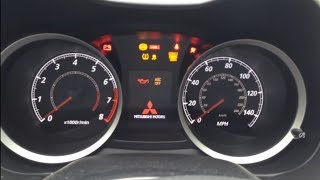
- Engine will not crank or start 🎬 Watch: Troubleshooting a Lancer that won't crank or start
- Engine cranks but will not start
- Engine stalls while driving, sometimes intermittently
- Vehicle enters 'limp mode' with reduced power
- Check Engine Light is on
- Multiple warning lights on the dashboard may illuminate simultaneously (ABS, Airbag, Brake, etc.)
- Headlights, wipers, or other electronics may malfunction (if ETACS-ECU is the cause)
- Scan tool cannot communicate with the ECM, or shows 'No Communication'
- Cooling fans run constantly with the key on
- Replacing the ECM first. The ECM is an expensive component and is often mistakenly blamed when the actual fault lies in the wiring, a fuse, the battery, or another module on the network like the ETACS-ECU.
Most Likely Causes
- Weak or Faulty 12V Battery 🔴 High Probability Modern ECUs are extremely sensitive to voltage. A drop in voltage during startup is a very common cause for interrupting communication between modules before the engine even starts. This should always be the first check.
How to confirm: Test the battery with a multimeter. A healthy, fully charged battery should read approximately 12.6 volts with the engine off. If it's below 12.2 volts, it's low and needs charging. A load test is essential to confirm the battery's health, as a battery with good voltage can still fail under load.
Typical fix: Recharge or replace the 12V battery. Clean any corrosion from terminals.
Est. part cost: $100-$250 - Faulty ETACS-ECU (Body Control Module) 🔴 High Probability A known weak point, with a safety recall (NHTSA 14V569000) for 2009-2010 models due to manufacturing defects causing high electrical resistance and voltage instability. This can disrupt the entire CAN network. Water intrusion into the driver's footwell can also cause corrosion and failure of this module.
How to confirm: Use a professional scan tool (like Mitsubishi's M.U.T.-III) to check for communication with the ETACS-ECU. If it's offline and has proper power and ground, it's likely faulty. Check if the vehicle's VIN is part of the recall. Visually inspect the unit under the driver's dash for signs of water damage or corrosion.
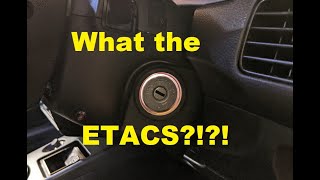
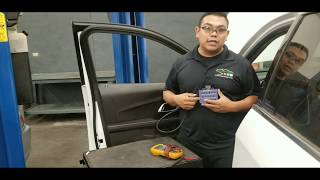
Typical fix: Replace the ETACS-ECU. 🎬 Watch: A guide on inspecting and fixing the ETACS ECU This part must be programmed to the vehicle's VIN by a Mitsubishi dealer or a specialized shop with appropriate tools.
Est. part cost: $300-$600 - CAN Bus Wiring or Connector Issue 🟡 Medium Probability Physical damage can cause a short or open in the network wiring. One owner on Reddit reported their exhaust system breaking and tearing the O2 sensor wiring, which is on the CAN bus, causing a U0100 code. Rodent damage and corrosion at connectors are also possible.
How to confirm: Visually inspect the wiring harness for damage, corrosion, or loose connections, especially near the ECM, ETACS-ECU, and under the vehicle near the exhaust. With the battery disconnected, check for 60 ohms of resistance between Pin 6 (CAN-H) and Pin 14 (CAN-L) at the OBD-II port. A reading of 120 Ohms indicates an open circuit or missing terminating resistor. A reading near 0 Ohms indicates a short circuit.
Typical fix: Repair the damaged section of the wiring harness or clean/re-seat the affected connector.
Est. part cost: $10-$100 for repair materials - Blown Fuse or Faulty Relay ⚪ Low Probability
How to confirm: Check all fuses related to the ECM, ETACS, and instrument cluster in the interior and under-hood fuse boxes. Pay special attention to the IOD (Ignition Off-Draw) fuse.
Typical fix: Replace the blown fuse or relay. If a fuse blows repeatedly, there is an underlying short circuit that must be found.
Est. part cost: $1-$20
Rare But Worth Checking
- Failed Engine Control Module (ECM): While this is the module being reported as 'lost,' it's more often the victim of a communication breakdown than the cause. All wiring, power, ground, and other primary modules (like ETACS) should be ruled out before condemning the ECM.
- Failed Combination Meter (Instrument Cluster): The instrument cluster is an important module (node) on the CAN bus that can set code U0100 if it loses communication with the ECM. In rare cases, an internal failure within the cluster itself can disrupt network traffic and cause communication loss codes.
- Interrupted ECU Software Flash: If a software update to the ECM is interrupted (often by low battery voltage or a poor connection), the ECM can be left in an inoperable or 'bricked' state, causing a total loss of communication.
Diagnosis Steps
- Check Battery Health: Verify battery voltage is above 12.4V and that terminals are clean and tight. Perform a load test to ensure the battery is not failing under load. This is the most common and easiest fix.
- Inspect Fuses: Check all fuses related to the engine control (ECM), ETACS, and instrument panel systems in both the interior and under-hood fuse boxes.
- Check for Recalls: Enter the vehicle's VIN into the NHTSA database to check for open recalls, specifically campaign 14V569000 (Mitsubishi SR-15-002) related to the ETACS-ECU on 2009-2010 models.
- Scan All Modules: Use a capable scan tool (ideally a M.U.T.-III) to perform a full network scan. Note which modules are reporting 'Lost Communication' and which modules are not responding at all. This helps pinpoint the source of the failure.
- Inspect Wiring and Grounds: Perform a thorough visual inspection of the main wiring harnesses between the ECM (in the engine bay) and the ETACS-ECU (under the driver's side dash). Look for any signs of chafing, corrosion, or damage. Check for rodent damage. Pay special attention to the main engine and chassis ground straps.
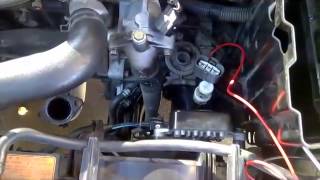
- Test the CAN Bus Resistance: Disconnect the battery. At the OBD-II port, measure the resistance between Pin 6 (CAN High) and Pin 14 (CAN Low). 🎬 Watch: How to test a CAN bus network with a multimeter A healthy network should read approximately 60 Ohms. A reading of 120 Ohms indicates an open circuit or a missing terminating resistor. A reading near 0 Ohms indicates a short circuit.
- Isolate the Faulty Module: If wiring and power are good, the issue is likely a failed module. Based on Lancer-specific issues, the ETACS-ECU is the most likely culprit. A technician may disconnect modules one by one to see if communication on the network is restored. If disconnecting a module allows the others to communicate, that module is likely the one causing the fault.
Parts You'll Likely Need
- ETACS-ECU (Body Control Module)
(OEM #8637A826 (for recalled 2009-10 models), 8637A644 (common for 2011+), 8637A824 (Outlander). Part numbers vary significantly by year and trim. Always verify with VIN.)— This is a known high-failure part on this platform, with a recall specifically for manufacturing defects. It acts as a central gateway for the CAN bus, and its failure can take down the whole network.
Related Codes That Often Appear With This One
- U0141 — Lost Communication With Body Control Module (ETACS). If the ETACS-ECU is the source of the network failure, this code will often appear alongside U0100 in other modules like the ABS ECU.
- U0001 — High Speed CAN Communication Bus. This is a general CAN bus failure code that points to a problem with the network itself (like a short or open circuit), rather than a single module.
- U0101 — Lost Communication with TCM. This often appears with U0100 because the Transmission Control Module is on the same primary CAN bus and also needs to talk to the ECM.
Technical Service Bulletins (TSBs) & Recalls
- Mitsubishi Safety Recall SR-15-002 / NHTSA 14V569000: This recall addresses a manufacturing defect in the ETACS-ECU on certain 2009-2010 Lancer and Outlander models. High electrical resistance inside the unit can cause voltage instability, leading to failure of headlights, wipers, and CAN bus communication. The fix involves inspecting the ETACS production date and replacing units built between October 1, 2008, and August 31, 2010.
Platform-Specific Known Issues
- Safety Recall SR-15-002 (NHTSA Campaign ID: 14V569000) was issued for certain 2009-2010 Lancer models because the ETACS-ECU was built with components that could develop high electrical resistance, leading to voltage instability and communication failures.
Mechanic-Grade Diagnostic Values
- CAN Bus Voltage (Key On, Engine Off) — expected: CAN High (Pin 6 at OBD-II): ~2.5V to 3.5V. CAN Low (Pin 14 at OBD-II): ~1.5V to 2.5V. The two voltages should be a mirror image of each other and add up to ~5V.. Failure: Voltage stuck high or low, or no voltage, indicates a short or open in the CAN wiring.
- ETACS-ECU System Voltage (Operating Condition) — expected: 10-16 Volts. Failure: If the supply voltage to the ETACS-ECU is outside this range, it may not operate correctly and can set communication codes.
- U0100 Set Condition (Timeout) — expected: Communication from ECM must be present.. Failure: If communication from the ECM is lost for 600 milliseconds or more, other modules like the Combination Meter will log code U0100.
- Cooling Fan Control Module Signal Wire Voltage — expected: Key On, Engine Off (Fans Off): ~0 Volts. Fans Commanded On (via scan tool or high temp): ~5 Volts.. Failure: Voltage present when fans should be off, or 0V when commanded on, points to a fault in the fan control module or the wiring from the ECM.
Scan Tool Commands That Help
- Mitsubishi M.U.T.-III: CAN Bus Diagnosis / Read all DTCs and FFD — This is the first step in network diagnosis. It polls all possible ECUs on the vehicle and reports their status as 'OK' (communicating), 'TC' (has trouble codes), or 'NC' (no communication). This quickly identifies which modules are offline.
- Mitsubishi M.U.T.-III: Coding Information & Copy — This function must be used BEFORE replacing the ETACS-ECU. It reads and saves the vehicle's specific configuration (like keyless entry type, auto headlights, etc.). This data is then written to the new module.
- Mitsubishi M.U.T.-III: ECU Reprogramming (SDB) — Used to update the software on an existing module (to fix a known bug, per a TSB) or to program a brand new, blank module.
- Mitsubishi M.U.T.-III: Actuator Test — Allows the technician to command specific components to turn on or off, such as the cooling fans. If the fans run constantly due to a U0100, this test can help determine if the ECM can still control the fan module directly, helping to isolate the fault.
Wiring & Ground Locations
- ETACS-ECU Connectors — Located behind the driver's side lower dash / kick panel area.. Key connectors like C-301, C-309 (to instrument panel), C-311, and C-312 (to floor/front harnesses) are critical points for checking power, ground, and CAN bus signals directly at the module. Corrosion or loose pins here are common failure points.
- Main Engine Ground — Typically a thick strap from the engine block or transmission housing to the chassis frame rail in the engine bay.. A poor engine ground can cause a voltage differential between modules, disrupting the sensitive CAN bus communication signals and leading to U-codes. It's a common cause of bizarre, seemingly unrelated electrical issues.
- CAN Bus Joint Connector — Often located in the driver's side kick panel area, designated as B-24 in some service documents. It's a small box where multiple CAN wires join together.. This is a central hub for the CAN network. A failure, corrosion, or poor connection within this single connector can take down multiple modules at once, causing a U0100.
Real Owner Repair Stories
- Reddit user in r/CarHelp (2008 Lancer GTS) — Engine lost power, would not crank or start, code U0100 present.
❌ Tried (didn't work) Initial visual inspection showed no obvious damage.
✅ What actually fixed it The exhaust hanger broke, causing the exhaust pipe to fall. This fall tore the oxygen sensor wiring. Since the O2 sensor is on the CAN bus, the damaged wires created a short circuit that brought down the entire network, causing the U0100 code. Repairing the O2 sensor wiring resolved the issue. - EvolutionM forum user (2008 Lancer Evolution MR) — Car won't crank, cooling fans run constantly, codes U0100, P1870, P1871 present.
❌ Tried (didn't work) Initial start attempts failed.
✅ What actually fixed it The user had attempted to flash a new ROM to the ECU. The battery voltage was too low due to cold weather and leaving the ignition on, causing the flash to fail and 'brick' the ECU. The fix was to fully charge the battery and then successfully re-flash the ECU ROM. This restored communication and fixed the U0100 code. - Owner of a platform-mate Outlander — An owner reported that the transmission service required light came on with codes P0776, C1560, U0114, and U0100 (NHTSA ODI #11587366).
"I Checked Everything" — The Actual Cause
- A common pattern for U0100 is when the CAN bus resistance checks out at 60 ohms, and all visible wiring seems fine, but the fault persists. In these cases, the cause is often an electrically 'noisy' or internally shorted module. An aftermarket stereo improperly wired into the CAN system can inject garbage data onto the network, causing communication to fail despite the physical wiring being intact. Similarly, a failing cooling fan control module can short internally, disrupting network communication as a side effect of its own failure.
OEM Part Supersession History
1355A098→1355A245— Update/revision for the engine cooling fan wiring harness.
Heads up: This is relevant if wiring damage near the fans is suspected. Using the latest part number ensures compatibility with any minor changes.N/A→8637A826— This is the replacement ETACS-ECU part number specified for the 2009-2010 Lancer, Lancer Ralliart, and Lancer Evolution models covered under safety recall SR-15-002.
Heads up: This part is NOT interchangeable with the Outlander (8637A824) or Lancer Sportback (8637A825) ETACS units from the same recall campaign.
Model Year Variations Within This Range
- 2009-2010: These model years were subject to a safety recall (NHTSA 14V569000) for a defective ETACS-ECU, making this module the primary suspect for a U0100 code on these specific vehicles.
- 2014-2017: Wiring harnesses for aftermarket stereos are different for later models, especially those with the Rockford Fosgate amplifier and factory navigation. For example, an XTRONS harness for a 2007-2014 model is AK/PST10LSM/RF01, while a 2014-2017 model requires AK/PST10LSM/RF02, indicating wiring changes at the head unit.
- 2008-2017: A technical service bulletin (TSB-18-54-003) was issued to address a dome light flicker by reprogramming the ETACS-ECU. This confirms that the ETACS software was revised over the years and that the module is flashable to fix operational bugs, which could potentially resolve some communication glitches.
Diagnostic Flowchart
Other Known Issues on This Vehicle
Issues unrelated to this code that are worth knowing about as an owner of this generation:
- CVT Transmission Hesitation or Failure 🔴 High — Commonly reported, especially on 2008-2016 models. Issues like shuddering, delayed engagement, or whining can appear after 80,000 km. A class-action lawsuit was filed alleging defects causing these symptoms. (Ref: Recalls were issued for some 2015-2016 models for hesitation issues. Software updates (TSBs) exist for some models to improve performance.)
- Clear Coat / Paint Peeling 🟠 Medium — Widespread issue, particularly on darker colors and red. The clear coat develops white spots and begins to peel or flake, especially on horizontal surfaces like the roof and trunk. This is often considered wear and tear by the manufacturer outside of warranty.
- Engine Overheating Due to Failed Fan Controller 🔴 High — A common failure point where the radiator fan control module stops working, preventing the cooling fans from activating. This leads to overheating, especially in slow traffic or when using A/C.
- Front Subframe Corrosion/Rot 🔴 High — Primarily affects 2008 models in regions that use road salt. The front subframe, which supports the engine and suspension, can rust severely, compromising structural integrity. (Ref: A recall was issued for this issue on some 2008 Lancer units.)
- ACD/AYC Pump Failure (Evolution & Ralliart Models) 🔴 High — The hydraulic pump for the Active Center Differential and Active Yaw Control systems is prone to failure. It is located behind the right-rear wheel, where it is exposed to water and road debris, leading to corrosion and motor failure.
Used vs. New Parts: Buying Guide for This Vehicle
When a used part is the smart pick: For this specific U0100 code, used parts are generally not recommended for the main culprits (ECM, ETACS-ECU) due to programming complexities. However, a used wiring harness pigtail for a connector repair or a used cooling fan module could be a cost-effective choice.
Donor-vehicle mileage cap: roughly under 150000 miles for the part to have meaningful remaining life.
What to inspect on the donor part:
- For any electronic module, check for zero signs of water intrusion or corrosion on the case and connector pins.
- Ensure the donor vehicle was not in a flood or have a salvage title for water damage.
- If possible, get the VIN of the donor car to cross-reference its original equipment and options.
OEM-only on this vehicle (don't cheap out):
- ETACS-ECU
- ECM (Engine Control Module)
Aftermarket brands forum-validated for this vehicle:
- For aftermarket radio integration that prevents CAN bus issues: iDatalink Maestro (ADS-MSW), PAC, Axxess, or vehicle-specific decoders from brands like XTRONS are required.
Brands owners have reported issues with on this vehicle:
- Avoid generic, non-CAN-aware wiring harnesses for stereo installations. Splicing directly into factory wiring without a proper interface module is a common cause of this fault code.
Real Owner Stories
Aggregated from forums and TSBs cited above. Mileages and costs reflect what owners reported in those sources.
2008 Mitsubishi Lancer GTS
Symptoms: The exhaust hanger broke, causing the exhaust to fall. Immediately after, the engine lost power and the U0100 code was triggered.
What fixed it: Repairing the wiring for the downstream O2 sensor which had been damaged by the falling exhaust.
Source hint: Reddit r/CarHelp: 2008 Lancer GTS U0100 CODE after exhaust fell off ??
2008 Mitsubishi Lancer
Symptoms: Vehicle had a no-start condition. Troubleshooting revealed a faulty fuel pump relay within the ETACS. Attempted replacement with used modules led to further complications and a damaged ECM.
What fixed it: The owner highlighted the necessity of VIN programming and warned against using used modules with incorrect part numbers or existing corrosion.
Source hint: Mitsubishi Forum: ETACS and ECU problems. Help is appreciated
Mitsubishi Lancer (Evolution X / Ralliart)
Symptoms: While attempting to flash the ECU in cold weather, the ignition was left on too long, causing battery voltage to drop. This resulted in a no-crank, then a crank-no-start condition with code U0100.
What fixed it: Re-flashing the ECU after connecting a fully charged battery.
Source hint: EvolutionM.net: Dtc u0100
Mitsubishi Outlander (Platform-Mate)
Symptoms: An owner reported that the transmission service required light illuminated. Diagnostic scans revealed codes P0776, C1560, U0114, and U0100.
Source hint: NHTSA ODI #11587366
Related OBD-II Codes
Frequently Asked Questions
Is there a recall for the ETACS-ECU on my 2009 Mitsubishi Lancer?
Can a low battery really cause a U0100 code on a Lancer?
Why are my cooling fans running constantly while the U0100 code is active?
Can I replace the ETACS-ECU myself with a used part from another Lancer?
How can an exhaust problem cause a U0100 communication code?
What is the 'IOD' fuse I keep seeing mentioned for communication issues?
Helpful Videos
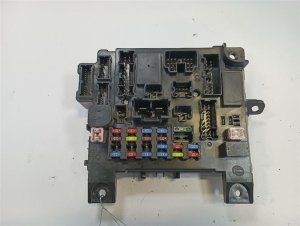
We Have This Part in Stock


The information in this article is provided for general reference and educational purposes only. Vehicle specifications, procedures, and part compatibility can vary by production date, trim level, and region. Always consult your vehicle's factory service manual and verify part numbers before purchasing or performing repairs. Safety-critical components such as airbags, seat belts, and braking systems should be installed by a qualified professional.
- Mitsubishi Lancer:
- 🎬 Helpful Videos
- 🛍️ Shop This Part
- What's Unique About the 2008-2017 Mitsubishi Lancer
- Symptoms You May Notice
- Most Likely Causes
- Rare But Worth Checking
- Diagnosis Steps
- Parts You'll Likely Need
- Related Codes That Often Appear With This One
- Technical Service Bulletins (TSBs) & Recalls
- Platform-Specific Known Issues
- Mechanic-Grade Diagnostic Values
- Scan Tool Commands That Help
- Wiring & Ground Locations
- Real Owner Repair Stories
- "I Checked Everything" — The Actual Cause
- OEM Part Supersession History
- Model Year Variations Within This Range
- Diagnostic Flowchart
- Other Known Issues on This Vehicle
- Used vs. New Parts: Buying Guide for This Vehicle
- Real Owner Stories
- 2008 Mitsubishi Lancer GTS
- 2008 Mitsubishi Lancer
- Mitsubishi Lancer (Evolution X / Ralliart)
- Mitsubishi Outlander (Platform-Mate)
- Related OBD-II Codes
- Frequently Asked Questions
- 🎟️ Get 5% Off