

U0100 on 2020-2025 Jeep Wrangler: Lost Communication with ECM/PCM Causes and Fixes
On a 2020-2025 Jeep Wrangler, code U0100 means the Engine Control Module (ECM/PCM) has lost communication. This often causes a no-start, stalling, or a dashboard full of warning lights. The most common causes are a weak main or auxiliary battery, a faulty CAN bus junction block (STAR connector) behind the glovebox, or a wiring issue. Start by testing both batteries before moving to more complex diagnostics.
- U0100 is a critical code on a Jeep Wrangler that indicates a loss of communication with the engine computer; do not drive the vehicle.
- Before suspecting an expensive PCM failure, always start by testing the battery and checking its connections. Low voltage is a very common trigger.
- A known weak point on the 2020-2025 Wrangler is the CAN bus junction block (STAR connector) behind the glovebox. This inexpensive part is a frequent cause of this code.
- Thoroughly inspect wiring harnesses for damage, especially if the vehicle has been used off-road.
- If the code is accompanied by many other codes, it points strongly to a network-wide issue (battery, ground, junction block) rather than a single failed module.
What's Unique About the 2020-2025 Jeep WRANGLER

The Jeep Wrangler JL platform (2018-present) has a complex electrical system with numerous control modules. Its design, which encourages off-road use and has removable components, can make it more susceptible to wiring and connector issues. Forum discussions among JL owners frequently point to specific weak points, such as the CAN bus junction blocks (STAR connectors) located behind the glovebox. These connectors are known to develop bad internal connections, with owners reporting cracked solder joints on nearly every pin. This causes a cascade of communication failures that light up the dashboard like a 'Christmas tree'.
Diagnostic Flowchart

Tap your situation to follow the diagnostic path that matches what you're seeing on this vehicle.
Symptoms You May Notice

- Check Engine Light is on
- Vehicle will not start or crank
- Engine stalls while driving
- Multiple warning lights on the dashboard simultaneously (ABS, traction control, etc.), often called a 'Christmas Tree' dash
- Transmission may not shift or seems stuck in one gear
- Loss of power steering
- Wipers turn on by themselves
- Radiator fan runs at high speed constantly
- Radio may ask for an anti-theft code because it cannot communicate with the PCM
- Replacing the Transmission Control Module (TCM) or ABS module when the root cause is a wiring, power, or PCM issue.
- Replacing the PCM when the actual problem is a weak auxiliary battery or a faulty $80 CAN bus junction block.
Most Likely Causes

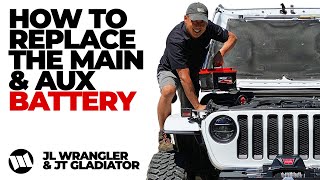
- Weak or Failing Battery (Main and/or Auxiliary) 🔴 High Probability The JL Wrangler has a significant electrical load and uses a dual-battery system (main and a smaller auxiliary for the start-stop system). A failure or low voltage in either battery is a very common cause of module communication drop-out and a host of electrical gremlins. The typical lifespan of the OEM batteries is cited by owners as being only around 3 years. 🎬 See this easy way to replace your auxiliary battery.
How to confirm: Test the voltage of both the main and auxiliary batteries separately with a multimeter. A healthy, fully charged battery should read at least 12.6 volts with the engine off. Perform a load test on both batteries, as a battery can show good voltage but fail under load.
Typical fix: Recharge or replace the faulty battery. It is often recommended to replace both batteries at the same time, 🎬 Watch: Step-by-step guide to replacing both batteries. especially if they are of similar age.
Est. part cost: $150-$400 - Faulty CAN Bus Junction Block (STAR Connector) 🔴 High Probability Multiple owner reports on forums definitively identify the CAN bus junction blocks (STAR connectors) as a known failure point. These blocks, typically a green and a white/tan connector located behind the glove box, can develop cracked or faulty internal solder joints, causing intermittent or total loss of network communication. Some owners attribute this to changes in solder composition (RoHS standards) leading to more brittle connections.
How to confirm: Access the connectors by removing the glove box. With the vehicle experiencing symptoms, gently wiggling the connectors or their attached wiring may cause the symptoms to change, appear, or disappear, confirming a bad connection. Some owners have disassembled the connector to find visibly cracked solder joints on the internal pins.
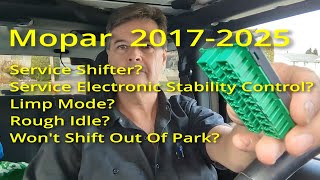
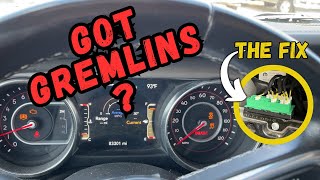
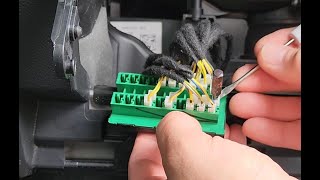
Typical fix: Replace the faulty CAN bus junction block(s). The most commonly cited failing part is the green connector, Mopar Part # 68321746AA. 🎬 Watch: How to fix the CAN-C Star Connector gremlins. Some owners with soldering experience have successfully repaired the cracked joints internally.
Est. part cost: $60-$90 - Damaged or Corroded Wiring/Grounds 🟡 Medium Probability Off-road use can lead to chafed or pinched wiring. A known chafe point exists behind the passenger-side fender liner where a harness can rub against an exhaust pipe flange, causing shorts. Additionally, loose or corroded ground straps can disrupt module communication.
How to confirm: Perform a thorough visual inspection of wiring harnesses, especially near hot exhaust components or moving parts. Specifically check the area behind the passenger front fender liner. Inspect main body and engine ground connections for tightness and corrosion. Key ground points are located near the battery and on the fender wells.
Typical fix: Repair the damaged section of the wiring harness with solder and heat shrink. Secure the harness away from the chafe point using zip ties. Clean and tighten any loose or corroded ground connections.
Est. part cost: $10-$100 - Faulty Powertrain Control Module (PCM) ⚪ Low Probability While less common, the PCM itself can fail internally due to moisture intrusion, cracked solder joints, or internal component failure. This is often a diagnosis of last resort after all other possibilities (battery, STAR connectors, wiring, grounds) have been exhaustively ruled out.
How to confirm: Requires advanced diagnostics to confirm the PCM has proper power and ground at its connector pins but is still not communicating. This is typically performed by a professional with access to wiring diagrams and a breakout box. The PCM is a covered component under the 8-year/80k-mile federal emissions warranty.
Typical fix: Replace the PCM. This requires programming the new module to the vehicle's VIN and security system, which is usually done at a dealership.
Est. part cost: $800-$1200
Rare But Worth Checking
- Software Glitch: As noted in TSBs #23-033-25 and #18-109-20, communication codes can be part of a larger pattern of issues that may be resolved with a software update to the PCM or other modules. This should be investigated by a dealer, especially if other seemingly unrelated codes are present.
- Faulty TIPM / Fuse Box: The Totally Integrated Power Module (TIPM), or main fuse box, controls power distribution. An internal fault or corroded connector can cause widespread electrical problems, including communication codes. Check for power at the OBD-II port fuse as a starting point.
- Faulty ABS Module or Other Module: A single faulty module on the CAN bus, such as the ABS module, can broadcast corrupt data or short the network, bringing down communication for all other modules and setting a U0100 code. This can sometimes be diagnosed by unplugging modules one by one to see if communication is restored.
- Aftermarket Accessories: Improperly installed aftermarket electronics, especially radios or remote start systems that tap into the CAN bus, can cause interference, data collisions, or voltage draws that trigger communication codes.
Diagnosis Steps
- Check for other stored trouble codes. A 'Christmas tree' of codes points towards a network-wide failure.
- Fully charge and load test BOTH the main and auxiliary batteries. A voltage reading alone is not sufficient. Low voltage is a primary cause of communication faults.
- Inspect all fuses related to the PCM, TCM, and BCM (Body Control Module).
- Perform a thorough visual inspection of the engine wiring harness. Pay close attention to the area behind the passenger front fender liner for chafing against the exhaust.
- Inspect the main engine and body ground connections for tightness and corrosion. Key ground points are located near the battery and in the driver/passenger footwell kick panels.
- Access the CAN bus junction blocks (STAR connectors) by removing the glove box. There are typically two (one green, one tan/white). Inspect for loose connections or damage. With the ignition on, gently wiggle the connectors to see if symptoms appear or disappear.
- If a scan tool cannot communicate with the PCM at all, check for power (Pin 16) and ground (Pins 4 and 5) at the OBD-II port itself.
- If the above steps do not reveal the issue, use an advanced scan tool like wiTECH to view the network topology and see which modules are offline.
- A professional should perform a CAN bus resistance test with a multimeter. With the battery disconnected, measure resistance between Pin 6 (CAN-H) and Pin 14 (CAN-L) at the OBD-II port. A healthy network should read approximately 60 ohms. A reading of 120 ohms suggests a missing terminating resistor or a break in the bus, while a reading near 0 ohms indicates a short between the two lines.
- If wiring, grounds, batteries, and STAR connectors are confirmed to be good, suspect a faulty PCM.
Parts You'll Likely Need
- Battery (AGM, Main and/or Auxiliary) — Low system voltage from one or both failing batteries is the most common and simplest cause of network communication errors on the JL platform.
Trusted brands: Mopar, Odyssey, NorthStar
OEM price range: $250-$400
Aftermarket price range: $200-$350 - CAN Bus Junction Block / STAR Connector (Green)
(OEM #68321746AA)— This green connector, located behind the glovebox, is a widely documented failure point on the JL/JT platform, with internal solder joint cracks causing network failure.
Trusted brands: Mopar
OEM price range: $60-$90
Related Codes That Often Appear With This One
- U0101 — Lost Communication with TCM. The TCM is on the same CAN bus network, so a network-wide failure will often set both codes. [TSB #23-033-25]
- U0121 — Lost Communication with ABS Control Module. The ABS module is also on the primary CAN bus and is a common companion code.
- P0607 — ECU Internal Performance. This code can accompany U0100, indicating the PCM may have an internal fault. [TSB #23-033-25]
Technical Service Bulletins (TSBs) & Recalls
- 23-033-25: Lists U0100-00 as part of a group of communication and performance codes.
- 18-109-20: Associates U0100-00 with engine performance and misfire codes.
Platform-Specific Known Issues
- TSB #18-109-20: Notes that U0100-00 can appear alongside various misfire and sensor codes. A PCM software update may resolve these conditions, preventing unnecessary hardware replacement.
- TSB #23-033-25: Lists U0100-00 as one of several communication codes (including with the TCM and Transfer Case Module) that can be set along with internal performance codes like P0607-00. This points to either a software issue requiring an update or a more complex network problem.
- The 'Christmas Tree' Dash and the STAR Connector: A very common complaint on owner forums is the dashboard suddenly lighting up with multiple warning lights, wipers activating, and loss of power steering. This is frequently traced back to the failing STAR connectors behind the glove box. Many owners have confirmed the fix by replacing the green connector (68321746AA).
Mechanic-Grade Diagnostic Values
- CAN Bus Network Resistance — expected: Approximately 60 Ω. Failure: 120 Ω indicates an open circuit or missing terminating resistor; ~0 Ω indicates a short between CAN High and Low wires.
- PCM Connector C1 CAN Bus Voltage (Key On) — expected: CAN+ (Pin 57) should be ~2.7V and CAN- (Pin 33) should be ~2.3V. The two should add up to approximately 5V.. Failure: Voltages that are identical, missing, or do not add up to ~5V indicate a bus or module problem.
- PCM Connector C1 Power and Ground — expected: Battery voltage at Pin 87; near zero resistance to ground at Pins 82, 83, and 84.. Failure: Missing voltage or high resistance on ground pins indicates a wiring issue supplying the PCM.
Scan Tool Commands That Help
- wiTECH (Dealer Tool): Network Test / View Topology — This function provides a visual map of all modules on the CAN bus and shows which ones are actively communicating and which are offline. It is the fastest way to confirm if only the PCM is offline or if multiple modules are affected.
- wiTECH (Dealer Tool): ECU Reset & Reflash — If TSBs indicate a software update is available to fix communication glitches, this function is used to flash the PCM or other modules with the new software.
Wiring & Ground Locations

- CAN Bus STAR Connectors — Behind the glove box. Typically one green and one white/tan connector block.. These are central junction points for the CAN bus. They are a known high-failure item due to internal cracked solder joints, causing a total network collapse.
- G905A, G906A, G908A — Located in the driver-side dash/footwell area.. These are primary dash harness grounds. A loose or corroded ground here can affect multiple interior modules that need to communicate with the PCM.
- G902A, G901A — Main battery ground points in the engine bay, on the body near the battery.. A poor main ground connection can cause system-wide low voltage and communication errors.
Real Owner Repair Stories
- jlwranglerforums.com user (2020 Jeep Wrangler JL Sport) — No crank, no start, radio asking for anti-theft code.
❌ Tried (didn't work) Initial assumption was a dead battery, but the radio still powered on.
✅ What actually fixed it The user was advised that the 3-year-old original batteries were the most likely cause, as battery failure is extremely common and causes widespread electrical issues on this platform. The final resolution was not posted, but the strong consensus pointed to battery replacement. - Reddit user r/Jeep (Jeep Wrangler JL/JT (specific year not mentioned)) — Dashboard lit up 'like a Christmas tree', loss of power steering and speedometer on the highway.
❌ Tried (didn't work) Wiggling wires confirmed the issue was related to the STAR connector.
✅ What actually fixed it The user disassembled the green STAR connector and found cracked solder joints on almost every pin. They re-soldered the pins, which resolved all issues. This confirms the internal failure mode of the connector. - jlwranglerforums.com user (Jeep Wrangler JL (year not specified)) — Dashboard lit up, would not shift out of park, limited to 15 MPH.
❌ Tried (didn't work) Replacing the auxiliary battery helped for a day or two, then the problem returned., Replacing the main battery also only helped for a day or two.
✅ What actually fixed it After replacing both batteries failed to provide a permanent fix, the user was advised to check the STAR connectors. Pushing on the connectors temporarily fixed it. The user then replaced both the green and white CAN bus connectors, which permanently resolved the issue.
When the Usual Fixes Don't Work
- While weak batteries and faulty STAR connectors are the most common culprits, there are confirmed cases where the problem was resolved only by replacing the PCM itself, even after other parts were tried. In one documented case on a similar platform (Jeep JK), a user experienced a no-crank with U0100 after trail riding. After verifying the battery was good and inspecting wiring, the final fix was a PCM replacement. This underscores the importance of diagnosing and not just replacing the most common parts.
OEM Part Supersession History
68321746AA→68321746AA (current)— No supersession found. This part number appears to be the original and currently active part for the green STAR connector.
Model Year Variations Within This Range
- 2020-2025 (with 4xe PHEV option): The 4xe Plug-in Hybrid model has additional high-voltage systems and control modules (Hybrid Control Processor, Battery Pack Control Module). While U0100 still points to a loss of communication with the main PCM, the diagnostic path is more complex as there are more modules on the network that could potentially cause interference. The dual-battery system is also different from the standard 3.6L model.
Helpful Videos

We Have This Part in Stock



The information in this article is provided for general reference and educational purposes only. Vehicle specifications, procedures, and part compatibility can vary by production date, trim level, and region. Always consult your vehicle's factory service manual and verify part numbers before purchasing or performing repairs. Safety-critical components such as airbags, seat belts, and braking systems should be installed by a qualified professional.
- Jeep WRANGLER:
- 🎬 Helpful Videos
- 🛍️ Shop This Part
- What's Unique About the 2020-2025 Jeep WRANGLER
- Diagnostic Flowchart
- Symptoms You May Notice
- Most Likely Causes
- Rare But Worth Checking
- Diagnosis Steps
- Parts You'll Likely Need
- Related Codes That Often Appear With This One
- Technical Service Bulletins (TSBs) & Recalls
- Platform-Specific Known Issues
- Mechanic-Grade Diagnostic Values
- Scan Tool Commands That Help
- Wiring & Ground Locations
- Real Owner Repair Stories
- When the Usual Fixes Don't Work
- OEM Part Supersession History
- Model Year Variations Within This Range
- 🎟️ Get 5% Off