

U0100 on 2017-2022 Honda CR-V: Lost Communication With ECM/PCM Fixes
On a 2017-2022 CR-V, code U0100 is most often caused by a weak battery, often due to a known software flaw causing parasitic drain. The fix is typically a battery replacement and a dealership software update for the Powertrain Control Module (PCM).
- Before any complex diagnostics, test your battery. A weak battery is the #1 cause of U0100 on a 2017-2022 CR-V.
- If your battery keeps dying, you likely have the parasitic drain issue described in Honda TSB A19-039. The fix is a software update at a dealership.
- Do not immediately assume the expensive PCM has failed. The problem is almost always related to its power supply (battery, grounds) or software, not the hardware itself.
- This code is serious and can leave you stranded. Do not drive the vehicle until the issue is resolved.
What's Unique About the 2017-2022 Honda CR-V

The 2017-2022 CR-V is particularly susceptible to battery-related issues that can trigger a U0100 code. A known software bug in the Powertrain Control Module (PCM) can prevent it from fully going to sleep after performing an evaporative system leak check. This causes a continuous parasitic drain that kills the battery. This issue is so common that Honda released Technical Service Bulletin (TSB) A19-039 for a software update to fix the drain. Additionally, many owners and class-action lawsuits allege the original Group 51R battery is undersized for the vehicle's electrical demands, making it more prone to voltage drops that disrupt CAN bus communication.
Symptoms You May Notice

- Engine will not start (no crank or cranks but won't fire)
- Multiple warning lights on the dashboard simultaneously (Check Engine, VSA, ABS, Power Steering, etc.), often called a 'Christmas tree' effect. 🎬 Watch: What to do if your dashboard looks like a Christmas tree.
- Engine stalling intermittently while driving.
- Reduced engine power or erratic performance.
- Transmission may not shift correctly.
- Scan tool cannot communicate with the PCM, or shows a 'No Communication' error.
- Driver-assist systems (like cruise control, LKAS) become unavailable.
- Replacing the PCM when the root cause is a weak battery or a simple wiring issue.
- Replacing individual sensors or modules (like the ABS module) when the network communication itself is the problem.
- Replacing the battery without performing the TSB software update, leading to the new battery also draining.
Most Likely Causes

- Weak or Dead Battery due to Parasitic Drain 🔴 High Probability A documented software flaw in the PCM prevents it from shutting down correctly after an EVAP system check, causing it to constantly communicate with the VSA module and drain the battery. This is described in Honda TSB A19-039. This issue, combined with a battery many consider undersized (Group 51R), makes low voltage faults very common.
How to confirm: Test the battery voltage after the vehicle has been sitting for several hours. A reading below 12.4V indicates a weak charge. A professional can perform a parasitic draw test, which should be under 50mA after the vehicle has fully gone to sleep (which can take up to 30 minutes). Readings higher than this confirm an abnormal drain. 🎬 See how to perform a parasitic drain test yourself and save money.
Typical fix: Charge or replace the battery and have a Honda dealership perform the PCM software update per TSB A19-039. Many owners opt for a higher-capacity battery (e.g., Group 24F or 35) instead of the stock Group 51R. This requires a new battery tray (Honda P/N: 31521-TK8-A00) and potentially new J-hooks. 🎬 Watch this guide on upgrading to a larger 24F battery tray.
Est. part cost: $150-$300 for a new battery. $20-$30 for the upgraded battery tray. - Loose or Corroded Battery Terminals/Grounds 🟡 Medium Probability Honda is known to use relatively thin ground wires that attach to the transmission and fender, which can become corroded and cause poor connections.
How to confirm: Visually inspect the battery terminals for white or blue-green corrosion. Attempt to twist the terminals by hand; they should not move. Inspect the main engine and chassis ground straps for tightness and corrosion. Pay close attention to the ground point on the transmission housing, which can be accessed after removing the air box.
Typical fix: Clean the battery posts and terminals with a wire brush and a baking soda solution. Ensure all connections are tight. Replace corroded ground straps.
Est. part cost: $5-$30 for cleaning supplies or new ground straps. - CAN Bus Wiring Fault ⚪ Low Probability Rodent damage is a known cause of wiring harness issues. Wires can also chafe against chassis components or get damaged from previous repairs.
How to confirm: This requires professional diagnosis. A technician will inspect the wiring harness for physical damage and use a multimeter to check for proper resistance between pins 6 (CAN-H) and 14 (CAN-L) on the OBD-II port. The resistance should be approximately 60 ohms with the battery disconnected. An oscilloscope can be used to check for a clean signal waveform.
Typical fix: Repair the specific section of damaged wiring. This can be labor-intensive.
Est. part cost: $10-$50 for wiring repair supplies. - Failed Powertrain Control Module (PCM) ⚪ Low Probability
How to confirm: This is a last resort after all other possibilities (power, ground, wiring, and software) have been exhaustively ruled out by a professional. The technician will try to communicate directly with the PCM using a high-level scan tool. If the PCM has power and ground but does not communicate, it is likely faulty.
Typical fix: Replace the PCM and have it programmed to the vehicle by a dealership or specialized service. This is required to sync with the immobilizer system.
Est. part cost: $800-$1200 for a new, programmed PCM. Used or remanufactured units can be cheaper but still require programming.
Rare But Worth Checking
- Faulty Body Control Module (BCM): The BCM acts as a network gateway. If it fails, it can disrupt communication between other modules, including the PCM, triggering a U0100 code.
- Faulty Alternator: An alternator that is failing or producing unstable voltage (AC ripple) can cause widespread electrical issues, including communication faults between modules.
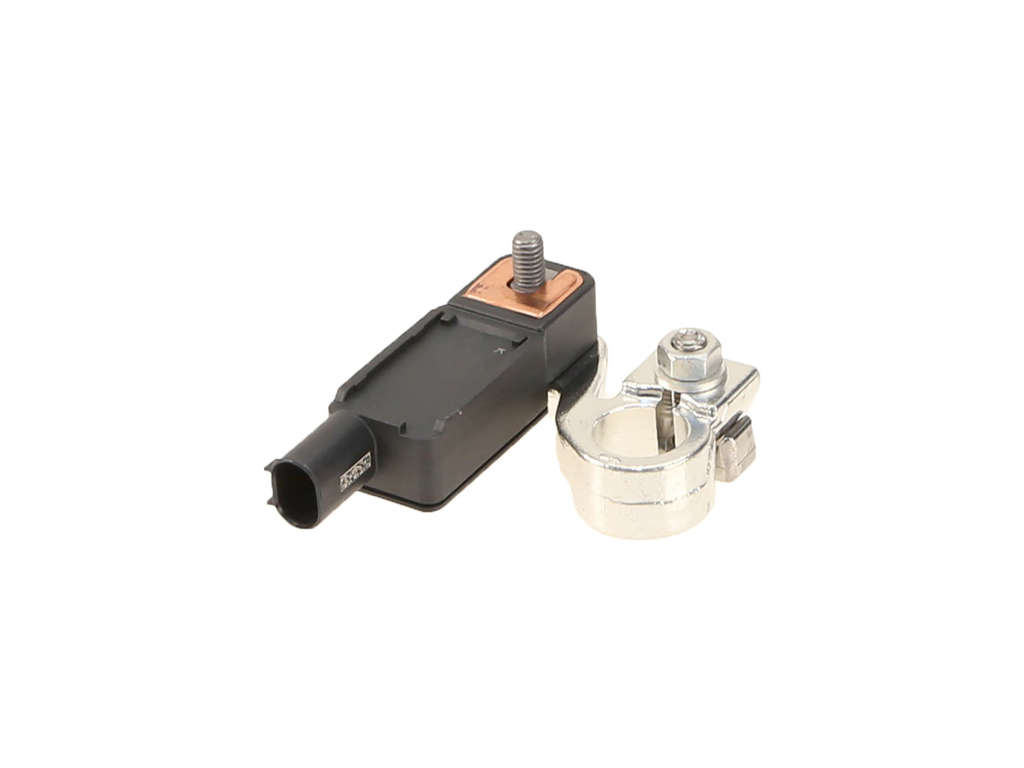
- Faulty Battery Sensor: A faulty battery sensor, often integrated into the negative terminal clamp, can misreport the battery's state of charge, leading to improper charging and eventual low voltage conditions that trigger communication codes.
- Multipurpose Camera Unit Software: A manufacturer service bulletin, Bulletin #A18-006, notes that an internal software issue with the multipurpose camera can cause an "Auto High Beam Problem" message and a possible DTC U0100-F1, indicating lost communication with the PCM.
Diagnosis Steps
- Check Battery Health: Start by fully charging and testing the battery. A healthy, fully charged battery should read at least 12.6 volts when the engine is off. Due to the known issues with this CR-V, a weak battery is the most likely cause.
- Inspect Battery Terminals and Grounds: Clean any corrosion from the battery posts and terminals. Ensure all connections are tight. Visually inspect the main ground straps from the battery to the chassis and from the engine/transmission to the chassis for tightness and integrity.
- Scan for All Codes: Use a quality OBD-II scanner that can read codes from all vehicle modules (BCM, VSA, etc.), not just the engine. Note if other 'U' codes, especially U0122, are present.
- Research TSBs: Specifically mention TSB A19-039 to your mechanic or dealership. This bulletin directly addresses a parasitic drain from the PCM that causes a dead battery and can lead to the U0100 code.
- (Professional) Check PCM Power and Ground: A technician should verify that the PCM is receiving proper voltage and has a solid ground connection at its wiring harness connector. A good ground connection should measure less than 1.0V.
- (Professional) Inspect CAN Bus: If power and ground are good, the next step is to inspect the CAN bus wiring. With the battery disconnected, check resistance between Pin 6 (CAN-H) and Pin 14 (CAN-L) of the OBD-II port; it should be ~60 ohms. An oscilloscope can check for clean, opposing square wave signals on the CAN High and CAN Low lines.
- (Professional) Isolate Modules: If the bus wiring is intact, a technician may disconnect other modules on the network one by one to see if communication with the PCM is restored. This can identify a faulty module that is disrupting the entire network.
- (Professional) Condemn the PCM: If all other steps fail, and the software has been updated, the PCM itself is the likely culprit.
Parts You'll Likely Need
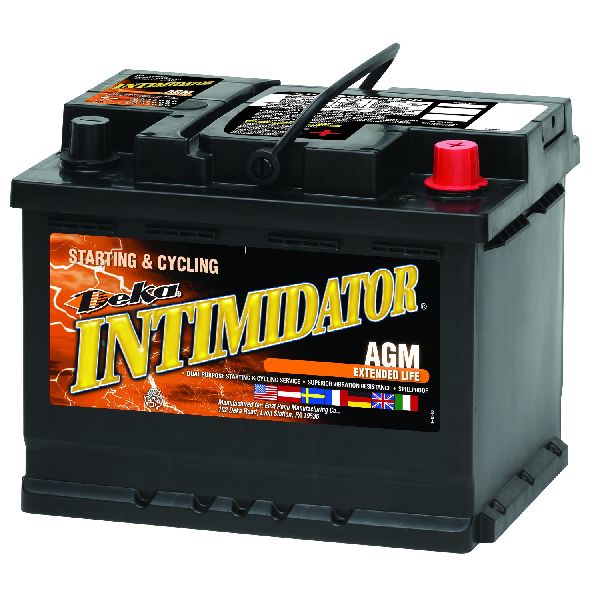
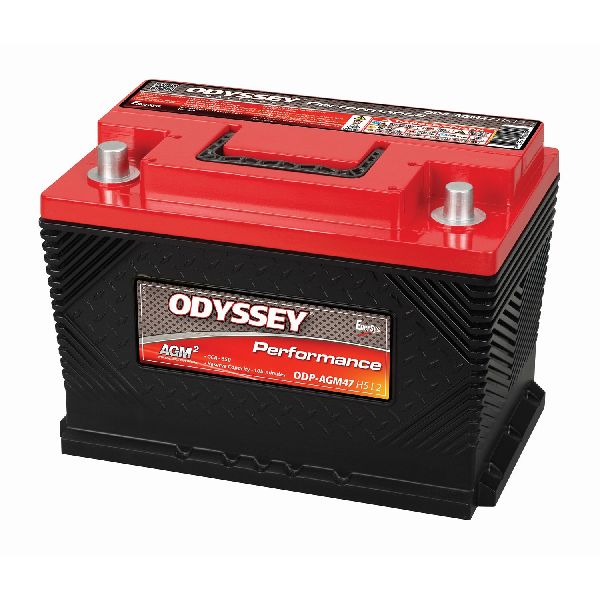
- Battery — A weak or failing battery is the most common trigger for the U0100 code on this vehicle, often due to a known parasitic drain issue. Many owners upgrade from the stock Group 51R to a larger Group 24F or 35 for better capacity.
Trusted brands: Interstate, DieHard, Duralast, EverStart
OEM price range: $200-$350
Aftermarket price range: $150-$250 - Powertrain Control Module (PCM)
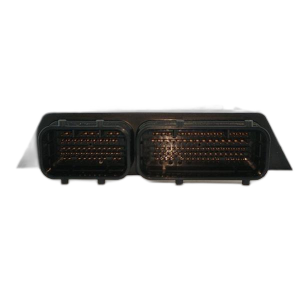
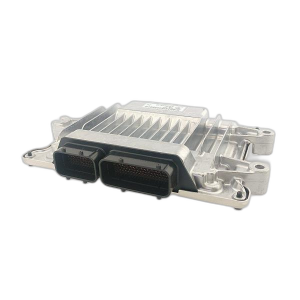
(OEM #37820-5PA-AD3 (2017-18 1.5L AWD, example), 37820-5PA-662 (2018 example))— This is the final step if all wiring, power, ground checks, and software updates fail. It is rarely the cause but is the only remaining component if communication cannot be restored.
Trusted brands: Honda (OEM)
OEM price range: $800-$1200
Aftermarket price range: Not Recommended
Related Codes That Often Appear With This One
- U0122 — Stands for 'Lost Communication With Vehicle Dynamics Control Module'. On Hondas, this is the VSA/ABS module. It often appears with U0100 because the known software bug involves unwanted communication between the PCM and the VSA module over the F-CAN bus, causing both to report errors.
Technical Service Bulletins (TSBs) & Recalls
- A19-039 / NHTSA 10169977: Describes a parasitic battery drain caused by a PCM software flaw where the module fails to return to sleep mode after an EVAP system check. This is a common root cause for code U0100 on this vehicle.
- Bulletin #A18-006: Addresses an internal software issue with the multipurpose camera unit which may trigger a U0100-F1 code and an "Auto High Beam Problem" message.
Platform-Specific Known Issues
- TSB A19-039 and Parasitic Drain: Honda Technical Service Bulletin (TSB) A19-039 (NHTSA ID 10169977) was released to address a software issue in the PCM. The bulletin describes how the PCM may not enter sleep mode after an EVAP leak test, causing a continuous parasitic draw that drains the battery. The fix is a software update performed by a Honda dealership.
Mechanic-Grade Diagnostic Values
- CAN Bus Network Resistance — expected: ~60 Ohms. Failure: 120 Ohms indicates a missing terminating resistor or an open in the circuit. Less than 57 Ohms may indicate a short in the wiring or a faulty module.
- CAN Bus Voltage (Key ON, Engine OFF) — expected: CAN-H: ~2.6V to 3.5V; CAN-L: ~1.5V to 2.4V.. Failure: Voltages stuck high, low, or at 0V indicate a short to power or ground. Both lines reading ~2.5V could indicate a short between CAN-H and CAN-L.
- PCM Power Supply Ground — expected: Less than 1.0 V. Failure: Voltage significantly higher than 0V indicates a poor ground connection.
- Resistance from CAN line to Ground — expected: Mega-ohms or an open circuit (OL).. Failure: Low resistance (e.g., under 10k Ohms) indicates a short to ground on the CAN line.
Scan Tool Commands That Help
- Honda Diagnostic System (HDS): F-CAN Bus Connected Unit Check — This function, found under the CAN gateway settings, actively polls all modules on the Fast CAN bus (F-CAN). It helps a technician quickly see which modules are communicating and which are not, directly identifying the source of the 'lost communication' without having to manually test each one.
Wiring & Ground Locations

- G101 — Typically located on the engine or transmission housing, often near the thermostat housing.. This is a primary ground point for the PCM and other critical engine sensors. Corrosion or a loose connection here can interrupt power to the PCM, causing it to lose communication.
- G502 / G503 / G504 — Located under the middle of the dashboard.. These are interior chassis grounds that serve multiple control units, including the Body Control Module (BCM) and Gauge Control Module. A fault here can disrupt the network gateway or cause other modules to report communication errors.
- F-CAN Bus Wires — The Fast CAN bus wires are a twisted pair, typically White (CAN-H) and Red (CAN-L), accessible at the OBD-II Data Link Connector at pins 6 and 14 respectively.. These are the primary communication lines between the PCM, VSA module, and BCM. All diagnostic resistance and voltage tests for the U0100 code are performed on these wires.
- Main Battery Ground — The negative battery cable splits into a 'Y'. The main, thicker path connects to the engine/transmission, while a secondary, thinner wire bolts to the fender/chassis.. The connection point on the transmission and the fender are both known to corrode, creating a poor ground path for the entire electrical system and causing low voltage issues that trigger communication codes.
OEM Part Supersession History
37820-5PA-A88, 37820-5PA-A89, 37820-5PA-AD1, 37820-5PA-AD2→37820-5PA-AD3— Standard part revision by the manufacturer to address potential hardware or software issues.37820-5PA-AF1, 37820-5PA-AF2→37820-5PA-AF3— Standard part revision by the manufacturer.
Model Year Variations Within This Range
- 2017-2018: Early models with the 1.5L AWD engine used a series of PCMs (e.g., 37820-5PA-A89) that were eventually superseded by part number 37820-5PA-AD3.
- 2019-2020: Models with the 2.4L AWD engine use a different PCM, such as part number 37820-5PH-A11.
- 2021-2022: Later models with the 1.5L AWD engine use a different series of PCMs, such as 37820-5PA-AF3.
Diagnostic Flowchart
Real Owner Stories
Aggregated from forums and TSBs cited above. Mileages and costs reflect what owners reported in those sources.
Honda CR-V
Symptoms: Had to replace a blown fuse to the ECM and immediately got a bunch of dashboard warnings, mostly related to cruise control and LKAS. A test drive reset the dash systems, but the U0100 code remained on the scanner.
What fixed it: Replaced the blown ECM fuse and performed a test drive to reset the driver-assist systems.
Source hint: Reddit r/MechanicAdvice
2017-2022 Honda CR-V
Symptoms: Experienced the 'Christmas lights' dashboard effect with multiple warning lights illuminating simultaneously, accompanied by a dead battery and the U0100 code.
What fixed it: Upgraded the stock Group 51R battery to a larger Group 24F battery and had the dealership perform the TSB A19-039 software update.
Source hint: crvownersclub.com
Honda CR-V
Symptoms: Wanted to prevent the common low-voltage communication codes and dead battery issues associated with the undersized factory battery.
What fixed it: Swapped the factory Group 51R battery for a larger Group 24F battery using the upgraded Honda battery tray (P/N: 31521-TK8-A00).
Cost: $170-$330
Source hint: bobistheoilguy.com thread titled 'Upgrading Honda CR-V Battery'
Documented NHTSA Reports
Honda Owner Reports
An owner reported in NHTSA ODI #11442354 a "LOST COMMUNICATION WITH ECM/PCM 'A'" error and requested the manufacturer address the issue. Another report, NHTSA ODI #11589674, describes a vehicle that rebooted and cleared errors, but a dealership found multiple logged codes including U0100-00, U0100-F1, U0122-00, and U0131-00. In a similar case involving fuel system repairs, NHTSA ODI #11670114 notes that an OBD-II scanner revealed codes P0172, U0038, and U0100, which persisted even after fuel injectors were replaced. Additionally, NHTSA ODI #11496856 lists a series of permanent gateway and powertrain codes including U0100, U0111, and U0416-68.
Related OBD-II Codes
Frequently Asked Questions
Does TSB A19-039 apply to my CR-V's U0100 code?
Why is my dashboard lighting up like a 'Christmas tree' with the U0100 code?
Should I upgrade my CR-V's battery to prevent the U0100 code?
What parts are required to install a Group 24F battery in my CR-V?
Can a bad ground wire cause the U0100 code on this vehicle?
Is the Honda Civic prone to this same U0100 communication issue?
Helpful Videos
![How to [EASILY] Replace the Battery - Honda CR-V (2017-2022)](https://img.youtube.com/vi/TkIVHhmEtUs/mqdefault.jpg)
Used OEM Parts in Stock



New Aftermarket Parts Available


The information in this article is provided for general reference and educational purposes only. Vehicle specifications, procedures, and part compatibility can vary by production date, trim level, and region. Always consult your vehicle's factory service manual and verify part numbers before purchasing or performing repairs. Safety-critical components such as airbags, seat belts, and braking systems should be installed by a qualified professional.
- Honda CR-V:
- 🎬 Helpful Videos
- 🛍️ Shop This Part
- What's Unique About the 2017-2022 Honda CR-V
- Symptoms You May Notice
- Most Likely Causes
- Rare But Worth Checking
- Diagnosis Steps
- Parts You'll Likely Need
- Related Codes That Often Appear With This One
- Technical Service Bulletins (TSBs) & Recalls
- Platform-Specific Known Issues
- Mechanic-Grade Diagnostic Values
- Scan Tool Commands That Help
- Wiring & Ground Locations
- OEM Part Supersession History
- Model Year Variations Within This Range
- Diagnostic Flowchart
- Real Owner Stories
- Honda CR-V
- 2017-2022 Honda CR-V
- Honda CR-V
- Documented NHTSA Reports
- Honda Owner Reports
- Related OBD-II Codes
- Frequently Asked Questions
- 🎟️ Get 5% Off