

U0100 on 2007-2014 GMC Yukon XL: Lost Communication with ECM Causes and Fixes
U0100 on a 2007-2014 Yukon XL means the Engine Control Module (ECM) is offline. This is most often caused by bad grounds (specifically G110 and G108), corroded or chafed wiring under the driver's side floor or near the transmission, or a faulty Transmission Control Module (TCM). Start by cleaning all major engine and chassis grounds, paying close attention to wires breaking inside the insulation at the terminal, before suspecting expensive parts.
- U0100 is a critical network communication code, not a simple sensor failure. Do not drive the vehicle.
- The most likely causes on this specific truck are bad grounds or corroded/chafed wiring, not a failed ECM.
- Always start diagnostics by checking the battery, cleaning all major ground connections, and inspecting known problem areas for wiring (under driver's floor, near park brake).
- A professional diagnosis is recommended due to the complexity of CAN bus systems.
- If code U0101 is also present, the Transmission Control Module (TCM) becomes a strong suspect.
What's Unique About the 2007-2014 Gmc YUKON XL
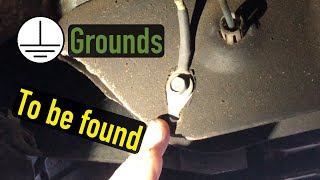
On the GMT900 platform, which includes the 2007-2014 Yukon XL, U0100 is frequently not an ECM failure. Instead, these trucks are known for specific wiring and ground issues. A critical ground point, G110, located on the driver's side of the engine block, is a common culprit where wires break internally from engine torque and vibration. 🎬 Watch: How to find and identify all engine wiring grounds. Additionally, GM TSB #08-07-30-021H specifically details problems with the 16-pin transmission harness connector (X214) and chafing of the main engine harness where it passes over the valve cover. The Transmission Control Module (TCM) located inside the hot oil pan of the 6-speed automatic transmission is another well-documented failure point that can bring down the network and trigger this code.
Diagnostic Flowchart
Tap your situation to follow the diagnostic path that matches what you're seeing on this vehicle.
Symptoms You May Notice
- Check Engine Light is on
- Vehicle will not start or stalls while driving, especially when shifting into reverse.
- Transmission may not shift or is stuck in a single gear (limp mode).
- "Stabilitrak Off" message on the dashboard.
- Various warning lights on the instrument panel may illuminate.
- Intermittent door lock cycling or chimes.
- Loss of power steering assist.
- Tachometer and other gauges may drop to zero or fluctuate wildly.
- Gear position indicator (PRNDL) may be blank on the dash.
- Replacing the Engine Control Module (ECM) without first thoroughly checking all power, ground (especially G110), and network wiring.
- Replacing the battery without testing the alternator's output, which might be the actual cause of the low voltage.
- Replacing the TCM without first inspecting the transmission harness connector (X214) and associated wiring for damage as outlined in TSB 08-07-30-021H.
Most Likely Causes
- Poor or Corroded Ground Connections 🔴 High Probability Ground straps on the engine and chassis are exposed to the elements. Specifically, ground G110 (driver's side front of engine block) and G108 (rear of driver's side cylinder head) are known failure points. Wires often break inside the insulation right at the ring terminal due to engine vibration.
How to confirm: Locate G110 and G108. Disassemble, clean all contact surfaces to bare metal, and re-secure. Crucially, physically tug on each wire at the crimped ring terminal; a broken wire will pull out. A voltage drop test from the terminal to the negative battery post should show less than 0.1 volts.
Typical fix: Cleaning the ground points and replacing the ring terminal on the broken wire. In some cases, the entire ground strap needs replacement.
Est. part cost: $10-$50 - Damaged or Corroded CAN Bus Wiring 🔴 High Probability TSB #08-07-30-021H points to terminals backing out of the 16-pin transmission connector (X214). Other common chafe points include the harness rubbing on the driver's side valve cover, shock tower bolt, or the ECM/TCM bracket. Water intrusion under the driver's side sill plate can also corrode the CAN bus splice packs.
How to confirm: Visually inspect the harness at all known chafe points. Disconnect and inspect the X214 connector at the transmission for corrosion or backed-out pins. Pull up the driver's side sill plate and check the wiring channel for moisture and green corrosion.
Typical fix: Repairing the damaged section of the wiring harness by splicing in new wire and using heat-shrink connectors. Reseating or replacing terminals in the X214 connector.
Est. part cost: $20-$100 - Faulty Transmission Control Module (TCM) 🟡 Medium Probability On models with the 6L80/6L90 6-speed automatic, the T43 TCM is located inside the transmission oil pan. It is subjected to constant heat cycles and vibration, leading to a high failure rate. A faulty TCM can short out the CAN bus, causing other modules, including the ECM, to lose communication.
How to confirm: This is difficult without a high-end scan tool. If code U0101 (Lost Communication with TCM) is also present and grounds/wiring are good, the TCM is a primary suspect. The module is part of the valve body assembly.
Typical fix: Replacing the TCM/valve body assembly inside the transmission. The new module requires programming by a dealer or a specialized shop with a J2534 device.
Est. part cost: $300-$700 - Low Battery Voltage or Failing Alternator ⚪ Low Probability All modern control modules require a stable voltage (typically above 10-12 volts) to communicate properly. While not specific to this platform, low system voltage is a common cause for a flood of communication codes.
How to confirm: Test the battery with a digital multimeter. A healthy, fully charged battery should read approximately 12.6 volts with the engine off. With the engine running, the alternator should be charging at 13.7 to 14.7 volts.
Typical fix: Recharge or replace the battery. Replace the alternator if it is not charging correctly.
Est. part cost: $150-$500
Rare But Worth Checking
- Faulty Engine Control Module (ECM): While U0100 directly points to the ECM, the module itself is often not the root cause. Its location in the engine bay exposes it to heat and moisture, which can cause failure, but all other possibilities, especially wiring and grounds, should be exhausted before replacing the ECM.
- Corroded Underhood Fuse Block (UBEC): The main fuse block in the engine bay can suffer from water intrusion or develop loose internal connections. Wiggling the fuse block while monitoring symptoms can sometimes identify it as the culprit, as it serves as a major junction for power and data lines.
- Failed CAN Bus Terminating Resistor: The high-speed CAN bus has two 120-ohm terminating resistors. On this platform, one is typically integrated into the ECM. The other is a standalone resistor often located in the wiring harness near the BCM or fuel pump control module above the spare tire. If one fails, the total network resistance will read 120 ohms instead of the correct 60 ohms at the OBD-II port (pins 6 and 14), causing communication to fail.
Diagnosis Steps
- Check Battery Health: Ensure the battery is fully charged (12.6V+) and the terminals are clean and tight. With the engine running, verify alternator output is between 13.7V and 14.7V.
- Scan for All Codes: Use a scan tool capable of reading codes from all modules (ECM, TCM, BCM, ABS, etc.). Note which modules are not communicating. A professional scanner can show which module is reporting the loss of communication.
- Inspect Fuses: Check all fuses related to the ECM, TCM, and other non-communicating modules in the underhood and interior fuse panels. Check for power at the OBD-II port.
- Inspect Grounds: Locate, remove, and thoroughly clean the main engine grounds G108 (rear driver's side head) and G110 (front driver's side block). Physically pull on the wires at the terminal to check for internal breaks.
- Inspect Wiring Harnesses: Follow TSB 08-07-30-021H. Inspect the harness for chafing over the driver's valve cover and near the transmission. Pull up the driver's side sill plate and check the wiring channel for moisture and corrosion.
- Check CAN Bus Resistance: With the battery disconnected, measure the resistance between Pin 6 (CAN High) and Pin 14 (CAN Low) at the OBD-II port. A healthy network should read approximately 60 Ohms. A reading of 120 Ohms indicates an open circuit or a failed terminating resistor. A reading near 0 Ohms indicates a short between the two CAN wires.
- Isolate Modules: If resistance is incorrect or communication is still down, you can try unplugging modules one by one (start with the TCM by disconnecting the X214 connector) to see if communication is restored. This can help identify a module that is shorting the network. This is an advanced step.
- Test Module Power/Ground: If a specific module is suspected (like the ECM), use a multimeter and wiring diagrams to verify it is receiving correct battery voltage, ignition voltage, and has a solid ground connection at its connector pins.
Parts You'll Likely Need
- Transmission Control Module (TCM) — A common failure point on 6-speed models. Located inside the transmission, its failure can bring down the entire CAN bus network, causing a U0100 code.
Trusted brands: ACDelco
OEM price range: $350-$550
Aftermarket price range: $250-$450 - Engine Control Module (ECM) — While less common than wiring or TCM issues, the ECM can fail internally. It should only be replaced after all other potential causes have been ruled out.
Trusted brands: ACDelco
OEM price range: $400-$600
Aftermarket price range: $300-$500 - Battery Cables / Ground Straps — Corrosion on ground straps is a very common cause of communication issues. Replacing them is a cost-effective diagnostic step.
Trusted brands: ACDelco, Standard Motor Products
OEM price range: $40-$120
Aftermarket price range: $20-$80
Related Codes That Often Appear With This One
- U0101 — Lost Communication with TCM. This often appears with U0100 because the TCM and ECM share the same high-speed CAN bus and often the same power/ground circuits. A fault in one module or its wiring can easily disrupt the other.
- U0073 — Control Module Communication Bus 'A' Off. This is a general code indicating the entire high-speed network has shut down, often pointing to a major wiring short, a failed terminating resistor, or a fault in a primary module like the ECM or TCM.
- P0700 — Transmission Control System (MIL Request). The ECM sets this code when the TCM detects a fault and requests the Check Engine Light. It's an indicator that the root problem is within the transmission's control system, often pointing towards a failing TCM when seen with U0100/U0101.
Technical Service Bulletins (TSBs) & Recalls
- Loss of High Speed GMLAN Communications, Intermittent No Crank, IP Gage Fluctuation, etc.: This is the primary TSB for U0100 on this platform. It lists a wide range of electrical symptoms and points technicians toward inspecting and repairing terminals in the transmission harness connector (X214), checking for open/shorted CAN bus circuits, and verifying terminating resistors before replacing any modules. It covers the Yukon, Tahoe, Silverado, Sierra, and Escalade.
- Diagnostic Information Request for Loose G110 Ground Connections: This Preliminary Information bulletin indicates that GM was actively investigating loose connections at ground G110 as a specific cause for communication issues, highlighting its importance as a known failure point.
Platform-Specific Known Issues
- TSB 08-07-30-021H addresses multiple communication codes, including U0100, caused by the instrument panel wiring harness contacting the park brake mechanism, leading to chafed wires. [Bulletin #08-07-30-021H]
- Corrosion in the wiring harness channel under the driver's side door sill plate is a well-known issue on the GMT900 platform, causing a multitude of electrical and communication problems.
Mechanic-Grade Diagnostic Values
- CAN Bus Network Resistance — expected: ~60 Ohms (measured between Pin 6 and Pin 14 of OBD-II port with battery disconnected). Failure: A reading of ~120 Ohms indicates an open in the circuit or a faulty/missing terminating resistor. A reading near 0 Ohms indicates a short between the CAN High and CAN Low wires.
- CAN Bus Voltage (Key On, Engine Off) — expected: CAN High (Pin 6 to Ground): ~2.6V DC | CAN Low (Pin 14 to Ground): ~2.4V DC. Failure: Voltages that are stuck high (5V), low (0V), or are identical on both lines indicate a short to power, short to ground, or a short between the CAN wires.
- Module Ground Circuit Integrity — expected: Less than 10 Ohms between the ground circuit terminal at the module connector and a known good chassis ground.. Failure: Resistance greater than 10 Ohms indicates an open or high resistance in the ground circuit, which is a common cause of this code.
Hidden / Shadow Codes Worth Checking
- State of Health (SOH) Message Status: A U0100 code is set by other modules (e.g., TCM, BCM) when they stop receiving the periodic 'State of Health' broadcast from the ECM. The code itself doesn't have a sub-code, but its presence in multiple modules points to the ECM as the source of the silence. (see via A dealer-level scan tool like a GM Tech2 or GDS2 can perform a network scan and show which specific modules are reporting the loss of communication with the ECM. This confirms the ECM is the 'silent' module and not a network-wide failure.)
Scan Tool Commands That Help
- GDS2 / Tech2: Network Scan / Module Status — This is the first step in diagnosing a U-code. The tool attempts to communicate with every module. If the ECM is 'Not Found' or 'Offline' while other modules on the high-speed bus are communicating, it isolates the problem to the ECM's power, ground, wiring, or the module itself.
- GDS2 / Tech2: Crankshaft Position System Variation Learning Procedure — This procedure is mandatory after replacing the ECM. If not performed, the engine may run poorly, and a P1336 code may be stored, even if the U0100 code is resolved.
Wiring & Ground Locations
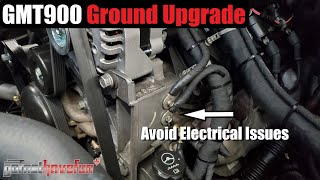
- G110 — On the driver's side of the engine block, near the front, located behind the power steering pump. It is a common ground point for the ECM and TCM.. This is arguably the most common failure point for U0100 on this platform. The wires, especially the one for the ECM, are known to break inside the insulation at the ring terminal due to engine vibration and torque.
- G108 — On the rear of the driver's side cylinder head. A ground strap often connects from here.. This is another primary engine ground. A poor connection here can cause a host of electrical issues, including communication codes.
- X214 Connector — The main 16-pin electrical connector for the transmission, located on the passenger side of the transmission case.. TSB #08-07-30-021H specifically mentions that terminals can back out or corrode in this connector, disrupting communication between the ECM and TCM and causing U0100/U0101.
- CAN Bus Terminating Resistor (Secondary) — While one resistor is inside the ECM, the second 120-ohm resistor is often a separate component taped to the wiring harness in the rear of the vehicle, typically above the spare tire near the Fuel Pump Control Module (FPCM).. If this resistor or its wiring fails, the total network resistance becomes 120 Ohms instead of the required 60 Ohms, which will shut down network communication and set U-codes.
Real Owner Repair Stories
- YouTube video 'u0100 and u0101 2015 GMC Yukon...' (2015 GMC Yukon (Similar K2XX platform, but identical failure mode to GMT900)) — Intermittent no-start, no tachometer, no power steering assist, PRNDL display blank. Codes U0100 and U0101 stored. Symptoms would sometimes change when shifting the vehicle in and out of gear.
❌ Tried (didn't work) The owner noted the intermittent nature made it hard to diagnose. The key clue was the problem changing when the powertrain torqued from shifting gears.
✅ What actually fixed it The mechanic located ground G110 on the driver's side of the engine. The connection was physically tight but likely had high resistance. The mechanic removed the bolt, thoroughly cleaned the ring terminals and the mounting surface on the block, and re-secured the connection. This permanently resolved all symptoms and codes.
"I Checked Everything" — The Actual Cause
- The most common 'all tests clean' scenario for U0100 on these Yukons involves the main engine grounds G108 and G110. A technician may visually inspect the ground, see that the bolt is tight, and even perform a basic resistance check that passes. However, the actual failure is one of the ground wires being broken *inside* the insulation right at the crimped ring terminal. The connection appears intact but separates intermittently under engine vibration or torque, causing the ECM to lose its ground and shut down communication. This requires a voltage drop test under load or physically tugging on the wire to reveal the break, which is often missed during a standard visual inspection.
Helpful Videos

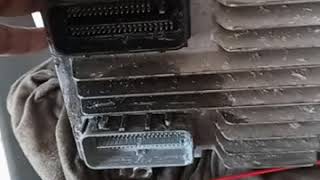
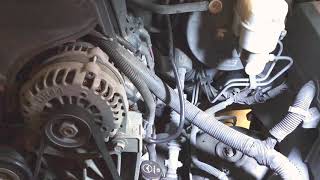
Used OEM Parts in Stock


New Aftermarket Parts Available


The information in this article is provided for general reference and educational purposes only. Vehicle specifications, procedures, and part compatibility can vary by production date, trim level, and region. Always consult your vehicle's factory service manual and verify part numbers before purchasing or performing repairs. Safety-critical components such as airbags, seat belts, and braking systems should be installed by a qualified professional.
- Gmc YUKON XL:
- 🎬 Helpful Videos
- 🛍️ Shop This Part
- What's Unique About the 2007-2014 Gmc YUKON XL
- Diagnostic Flowchart
- Symptoms You May Notice
- Most Likely Causes
- Rare But Worth Checking
- Diagnosis Steps
- Parts You'll Likely Need
- Related Codes That Often Appear With This One
- Technical Service Bulletins (TSBs) & Recalls
- Platform-Specific Known Issues
- Mechanic-Grade Diagnostic Values
- Hidden / Shadow Codes Worth Checking
- Scan Tool Commands That Help
- Wiring & Ground Locations
- Real Owner Repair Stories
- "I Checked Everything" — The Actual Cause
- 🎟️ Get 5% Off