

U0100 on 2007-2014 GMC Yukon: Lost Communication With ECM Fixes
Code U0100 on a 2007-2014 GMC Yukon means the Engine Control Module (ECM) has stopped communicating on the vehicle's network. This often causes a no-start, stalling, or the transmission getting stuck in gear. The most common causes are bad grounds (specifically G110 and G108), corroded wiring connectors at the transmission or under the fuse box, and chafed wiring harnesses near the driver's side valve cover.
- U0100 on a 2007-2014 Yukon is a serious communication error, not a simple sensor failure.
- Before suspecting the expensive ECM, thoroughly inspect all engine ground connections, especially G110 on the driver's side of the engine block.
- Carefully examine the engine wiring harness for signs of chafing or melting, as this is a known issue on these trucks.
- Do not drive the vehicle. A sudden stall or loss of power steering is a significant risk.
- Diagnosis is complex and best left to a professional with the right tools if you are not experienced with electrical troubleshooting.
What's Unique About the 2007-2014 Gmc YUKON

The GMT900 platform, which includes the 2007-2014 Yukon, is well-documented for having electrical issues that can trigger a U0100 code. A key GM Technical Service Bulletin (#08-07-30-021H) points to specific wiring and connector problems, particularly around the transmission harness and various ground points, that cause widespread communication failures. Owners often experience a cluster of seemingly unrelated electrical problems—like gauges fluctuating, door locks cycling, and transmission shifting issues—all stemming from this single network communication fault. Specific trouble spots include chafing of the engine harness on the ECM/TCM bracket and driver's side shock tower, and broken ground wires inside the harness loom near the engine block ground stud.
🎬 See an easy solution for GMC lost communication faults.Diagnostic Flowchart

Tap your situation to follow the diagnostic path that matches what you're seeing on this vehicle.
Symptoms You May Notice

- Check Engine Light is on.
- Engine stalls intermittently or will not start.
- Transmission may not shift or may be stuck in a default gear (limp mode).
- Instrument panel gauges fluctuate wildly or go dead.
- "Service StabiliTrak", "Service Traction Control" or other messages on the Driver Information Center (DIC).
- Various warning lights illuminated (ABS, Airbag, etc.).
- Power steering assist may be lost.
- Door locks cycle intermittently.
- Voltage gauge drops suddenly.
- Replacing the ECM without first thoroughly checking all grounds and wiring. Many U0100 codes are caused by simple wiring or ground issues that are much cheaper to fix.
- Replacing the battery without checking the alternator's output, which could be the root cause of the low voltage.
Most Likely Causes

- Poor Ground Connection 🔴 High Probability Corrosion and vibration can loosen or break critical ground points. Specific grounds G110 (left rear of engine compartment) and G108 (rear of driver's side cylinder head) are known failure points. A broken ground wire inside the harness leading to the G110 stud is a very common owner-reported failure, causing intermittent stalling and communication loss.
How to confirm: Locate the main engine and module ground points, especially G110 behind the power steering pump. Disconnect, clean all contact surfaces until shiny, and securely re-fasten them. Tug on the individual wires going into the ground lug; a common failure is a broken wire inside the insulation. A voltage drop test across the ground can also confirm a poor connection.
Typical fix: Cleaning the ground connection, or cutting back the harness to crimp a new ring terminal on a broken ground wire.
Est. part cost: $0-$15 - Damaged or Corroded Wiring/Connectors 🔴 High Probability GM TSB #08-07-30-021H specifically calls out issues with terminals backing out of the 16-pin transmission harness connector (X214) and chafing of the main engine harness. Common chafe points are where the harness passes over the driver's side valve cover, rubs against the ECM/TCM bracket, the upper control arm, and the shock tower bolt. Another known issue is a loose connector under the underhood fuse block.
How to confirm: Visually inspect the engine wiring harness for chafing, melting, or corrosion. Pay close attention to the large connector at the transmission and the harness section on the driver's side of the engine. Disconnect the transmission connector and check for any pins that have pushed back into the connector body. Check for loose connections under the fuse block.
Typical fix: Repairing the damaged section of the harness with new wire and heat shrink. Securing the harness away from sharp edges with sleeves and zip ties. Reseating or replacing damaged connector terminals.
Est. part cost: $10-$100 - Faulty Engine Control Module (ECM) 🟡 Medium Probability While less common than wiring issues, the ECM (GM E38 type) can fail internally due to heat, vibration, or moisture intrusion.
How to confirm: This is typically a process of elimination. If all power, ground, and network wiring to the ECM test good (proper voltage, good ground, 60-ohm resistance on CAN bus), but the module still won't communicate, the ECM itself is the likely culprit.
Typical fix: Replacing the ECM and programming the new unit to the vehicle's VIN. Several online retailers offer pre-programmed modules.
Est. part cost: $300-$800 - Low Battery Voltage or Faulty Alternator ⚪ Low Probability Control modules on these vehicles are sensitive to low voltage and can stop communicating, setting U-codes. A failing battery or alternator can cause system voltage to drop below the 9-12 volt threshold required for stable communication.
How to confirm: Test the battery with a multimeter. A healthy, fully charged battery should read around 12.6 volts with the engine off. With the engine running, the alternator should be putting out 13.7 to 14.7 volts.
Typical fix: Recharging or replacing the battery, or replacing the alternator.
Est. part cost: $150-$400
Rare But Worth Checking
- Faulty Serial Data Gateway Module (SDGM): A separate GM TSB (#20-NA-212) mentions that a faulty SDGM can stop communicating on all CAN channels, leading to a host of U-codes, including U0100. This can be caused by an internal error or bad connector terminals at the module.
- Faulty Transmission Control Module (TCM): A shorted or failed TCM can disrupt the entire high-speed CAN bus, preventing the ECM from communicating. Since the TCM is located inside the transmission on 6-speed models (6L80/6L90), this is a more involved repair. This often throws a U0101 code alongside the U0100.
- Shorted CAN Bus Terminating Resistor: The CAN bus has two 120-ohm terminating resistors. One is typically inside the ECM. If one of these resistors or the wiring to it fails, the total network resistance will change from 60 ohms to 120 ohms, causing communication failures. This can be tested at the OBD-II port.
Diagnosis Steps
- Check and charge the battery. Ensure battery terminals are clean and tight. A weak battery can cause numerous communication codes.
- Use a scan tool to see which modules are and are not communicating. If only the ECM is offline, focus on its power, ground, and wiring. If multiple modules are offline, suspect a network-wide wiring issue.
- Inspect all fuses related to the ECM, TCM, and BCM in the underhood fuse block.
- Locate and inspect the G110 ground on the driver's side rear of the engine compartment and the G108 ground on the rear of the driver's side cylinder head. Disassemble, clean, and re-secure them. Physically tug the wires at the crimp as they can break internally.
- Visually inspect the main engine harness for any signs of chafing, rubbing, or melting, especially where it crosses the driver's side valve cover and rubs on the ECM/TCM bracket or shock tower.
- Inspect the large 16-pin connector at the transmission for corrosion or backed-out pins, as noted in TSB 08-07-30-021H.
- With the battery disconnected, measure the resistance between pins 6 (CAN High) and 14 (CAN Low) on the OBD-II port. A healthy network should read approximately 60 ohms. A reading of 120 ohms indicates an issue with a terminating resistor or a break in the circuit, and near 0 ohms indicates a short circuit between the two lines.
- If a wiring issue is suspected, wiggle sections of the harness with the engine running to see if the fault can be duplicated. A common area is the harness that runs past the power steering pump.
- If all wiring and grounds are confirmed to be good, the ECM is the most likely failed component.
Parts You'll Likely Need
- Engine Control Module (ECM)
(OEM #12630500, 12628989 (Part numbers vary by year and specific configuration, always verify with VIN))— If all wiring, grounds, and power sources are verified as good, the ECM itself may have failed internally.
Trusted brands: ACDelco (OEM)
OEM price range: $400-$800
Aftermarket price range: $250-$500 - Wiring Harness Repair Supplies — Often, the fix is repairing a chafed wire or corroded connector in the engine or transmission harness. This includes ring terminals, butt connectors, heat shrink tubing, and Tesa tape.
Trusted brands: 3M, Tesa
OEM price range: $10-$50
Aftermarket price range: $5-$30
Related Codes That Often Appear With This One
- U0101 — Lost Communication with TCM. The TCM and ECM work closely together and often lose communication at the same time due to a shared wiring, ground, or power issue, especially related to the transmission harness connector.
- U0073 — Control Module Communication Bus 'A' Off. This is a general network code indicating the entire high-speed CAN bus has shut down, often due to a short in the wiring or a fault in one of the main control modules.
- P0700 — Transmission Control Module (TCM) Requested MIL Illumination. This code is set by the ECM when the TCM has detected a fault and wants the Check Engine Light turned on. It often accompanies communication codes like U0100 and U0101.
Technical Service Bulletins (TSBs) & Recalls
- 08-07-30-021H: Loss of High Speed GMLAN Communications, Intermittent No Crank, IP Gage Fluctuation, Transmission May Not Shift, and various communication DTCs including U0100.
- PIE0548: Engineering Information request for pictures of loose ground connections at G110.
- 20-NA-198 / 18-NA-191: While not directly for U0100, these TSBs describe engine wire harness chafing on various brackets and the cylinder head, which can cause a wide variety of DTCs, including communication codes.
Platform-Specific Known Issues
- TSB #08-07-30-021H is the most relevant document for this issue, outlining a pattern of high-speed GMLAN communication loss due to wiring and connector problems, especially at the transmission connector. Symptoms include stalling, no-start, fluctuating gauges, and transmission issues.
- Another TSB, #PIE0548, requests information from dealers regarding loose connections specifically at ground G110, indicating it is a known and monitored problem area.
- A common failure point found by owners is a broken ground wire inside the harness loom leading to the G110 ground stud on the driver's side of the engine block. The wire breaks from vibration but the insulation remains intact, making it hard to spot visually without tugging on the wire.
Mechanic-Grade Diagnostic Values
- CAN Bus Network Resistance — expected: Approximately 60 Ω. Failure: A reading of 120 Ω indicates an open circuit or a problem with one of the two terminating resistors. A reading near 0 Ω indicates a short between the CAN High and CAN Low wires.
- CAN Bus Voltage (Key On, Engine Off) — expected: CAN High (Pin 6 at DLC) should be ~2.5-3.5V. CAN Low (Pin 14 at DLC) should be ~1.5-2.5V. Both should total ~5V.. Failure: Voltages outside this range, or a total not equal to ~5V, indicate a short to power, ground, or a faulty module pulling the voltage down.
- ECM Power Supply Voltage — expected: 12.0–14.5 V at the ECM connector power pins (e.g., Pin 20 on X1 connector for E38 ECM).. Failure: Voltage dropping below 10V during cranking or being consistently low suggests a battery, alternator, or wiring supply issue that must be fixed before condemning the ECM.
- ECM Ground Circuit Resistance — expected: Less than 10 Ω, ideally less than 0.2 Ω, between the ECM ground pins and a clean chassis ground.. Failure: Resistance higher than this indicates a corroded, loose, or broken ground connection, which is a very common cause of this code.
Hidden / Shadow Codes Worth Checking
- State of Health (SOH) Message: On GM vehicles, modules constantly broadcast a 'State of Health' message on the CAN bus. A U0100 code is set by other modules (like the TCM or BCM) when they stop receiving the SOH message from the ECM. A dealer-level scan tool (Tech2/GDS2) can show which specific modules are reporting the loss of communication, helping to confirm that the ECM is the silent module. (see via GM Tech2 or GDS2 scan tool. A generic OBD-II reader will only show the U0100 code but not which module set it.)
Scan Tool Commands That Help
- GDS2 / High-End Bidirectional Scanner: Network Scan / Module Status — This is a primary diagnostic step. The tool attempts to communicate with every module on the network. If the ECM does not respond and other modules do, it strongly points to an issue with the ECM's power, ground, or the module itself.
- GDS2 / Tech2: Crankshaft Position System Variation Learning Procedure — This procedure is often required after replacing the ECM. Failure to perform it may leave a P1336 trouble code stored and can affect engine performance, even if the U0100 code is resolved.
Wiring & Ground Locations
- G110 / G108 — Both are located at the left rear of the engine compartment, on a stud on the back of the driver's side cylinder head.. These are primary ground points for the ECM and other critical components. A common failure is for the wires to break inside the insulation right at the ring terminal due to engine vibration, causing intermittent communication loss.
- X214 Connector — The 16-pin transmission harness connector, located on the driver's side of the transmission case.. TSB #08-07-30-021H specifically identifies this connector as a source of problems due to terminals backing out or corrosion, which can interrupt communication between the ECM and TCM, causing U0100 and U0101.
- Underhood Fuse Block (UBEC) — Driver's side of the engine bay.. The fuse block itself can develop internal corrosion or loose connections. Wiggling the fuse block while monitoring for symptoms can sometimes identify it as the culprit. It's a junction for many power and data lines, including those for the ECM.
- E38 ECM Connector X1 — The main connector for the Engine Control Module.. Key pins for testing include Pin 19 (Ignition 1 Voltage), Pin 20 (Battery Positive Voltage), and various ground pins. The High-Speed GMLAN lines are also in this connector.
Real Owner Repair Stories
- WillPowered Garage on YouTube (2008 Chevrolet Tahoe) — Intermittent stalling, especially when shifting into reverse. Gauges acting erratically. Low oil pressure warning followed by stall. Eventually set U0100/U0101.
❌ Tried (didn't work) Initial diagnosis focused on oil pressure issues, including dropping the oil pan to check the pickup tube screen.
✅ What actually fixed it The technician found that wiggling the main harness on the driver's side could induce a stall. The root cause was a broken ground wire inside the insulation, right at the ring terminal connecting to the engine block ground stud (G110/G108). The wire would lose connection when the engine torqued, causing the communication loss and stall. - Forum user reports (2007-2014 GM Truck/SUV) — No crank, no start, multiple warning lights, U0100.
❌ Tried (didn't work) Replacing battery, alternator, starter, and ECM.
✅ What actually fixed it A blown large, square J-type fuse in the underhood fuse block. Specifically, a fuse related to the brake pedal position sensor or other critical systems can sometimes cause a cascade of communication failures that manifest as U0100. - GM truck owner video on YouTube (GM Truck (GMT900 platform)) — Intermittent non-start and other weird electrical issues.
❌ Tried (didn't work) General troubleshooting of fuses and relays.
✅ What actually fixed it The smaller wire that branches off the main negative battery cable and grounds to the frame was found to be pinched and smashed between the frame and a body mount, likely from a previous auto body repair. This created a poor and intermittent ground for multiple systems, causing widespread electrical problems.
"I Checked Everything" — The Actual Cause
- The most common 'all tests clean' scenario for U0100 on these Yukons involves the main engine grounds (G108/G110). A technician may visually inspect the ground, see that the bolt is tight, and even perform a basic resistance check that passes. However, the actual failure is one of the ground wires being broken *inside* the insulation right at the crimped ring terminal. The connection appears intact but separates intermittently under engine vibration or torque, causing the ECM to lose its ground and shut down communication. This requires a voltage drop test under load or physically cutting open the harness to find.
When the Usual Fixes Don't Work
- While many U0100 faults are traced to wiring and grounds, it is critical not to immediately rule out the ECM. In cases of a persistent no-start and no-crank condition where the Check Engine Light does not illuminate at all during the key-on bulb check, this is a strong indicator that the ECM is not powering up or has failed internally. If a high-end scan tool attempts to poll all vehicle modules and cannot establish any communication with the ECM while other modules respond, the ECM itself becomes the primary suspect, assuming its power and ground circuits have been verified.
OEM Part Supersession History
Varies by year/model→Varies— Hardware revisions and software updates.
Heads up: The E38 ECM has many variations. When replacing, the 'Service Number' (e.g., 12625455) is more critical than the 'Hardware Number' (e.g., 12630500). Using an ECM from a different model (e.g., an Escalade ECM in a Yukon) even with the same service number may not work without being flashed first by a dealer tool like a Tech 2, as the internal operating systems can differ. A simple 'Write Entire' with tuning software may not be sufficient.
Model Year Variations Within This Range
- 2007-2014: The location of the Transmission Control Module (TCM) depends on the transmission. Models with the 4-speed automatic (early in the generation) have an external TCM. Models with the 6-speed 6L80/6L90 automatic have the TCM (called a TEHCM) located inside the transmission oil pan. A TEHCM failure can take down the CAN bus but is a much more labor-intensive repair than an external module.
Helpful Videos

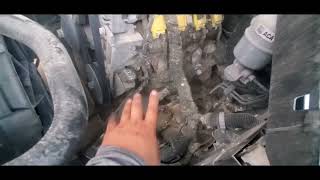
Used OEM Parts in Stock


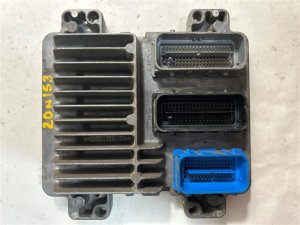

New Aftermarket Parts Available

The information in this article is provided for general reference and educational purposes only. Vehicle specifications, procedures, and part compatibility can vary by production date, trim level, and region. Always consult your vehicle's factory service manual and verify part numbers before purchasing or performing repairs. Safety-critical components such as airbags, seat belts, and braking systems should be installed by a qualified professional.
- Gmc YUKON:
- 🎬 Helpful Videos
- 🛍️ Shop This Part
- What's Unique About the 2007-2014 Gmc YUKON
- Diagnostic Flowchart
- Symptoms You May Notice
- Most Likely Causes
- Rare But Worth Checking
- Diagnosis Steps
- Parts You'll Likely Need
- Related Codes That Often Appear With This One
- Technical Service Bulletins (TSBs) & Recalls
- Platform-Specific Known Issues
- Mechanic-Grade Diagnostic Values
- Hidden / Shadow Codes Worth Checking
- Scan Tool Commands That Help
- Wiring & Ground Locations
- Real Owner Repair Stories
- "I Checked Everything" — The Actual Cause
- When the Usual Fixes Don't Work
- OEM Part Supersession History
- Model Year Variations Within This Range
- 🎟️ Get 5% Off