

U0100 on 2014-2016 Ford Fiesta: Lost Communication Causes and Fixes
On a 2014-2016 Ford Fiesta with a DPS6 PowerShift automatic transmission, code U0100 almost always points to a failed Transmission Control Module (TCM). This is a very common and well-documented issue. Ford acknowledged the problem with an extended warranty program (14M02). Expect a repair cost of $500-$1500+, depending on whether you use a new, remanufactured, or rebuilt part and where the service is performed.
- For a 2014-2016 Ford Fiesta with an automatic transmission, U0100 is a strong indicator of a failed Transmission Control Module (TCM).
- This is a well-known, widespread problem with the DPS6 transmission, acknowledged by Ford through TSBs and an extended warranty program (14M02).
- Diagnosis should confirm the TCM is the fault by checking for co-occurring codes (U0101, P0606) and ruling out simpler issues like bad grounds or wiring.
- Repair involves replacing and programming a new TCM, which is a job for a professional with the correct diagnostic tools.
- Always check with a Ford dealer using your VIN to see if any warranty extension programs still apply to your vehicle before paying for repairs.
What's Unique About the 2014-2016 Ford FIESTA

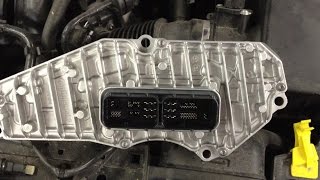
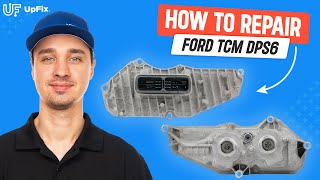
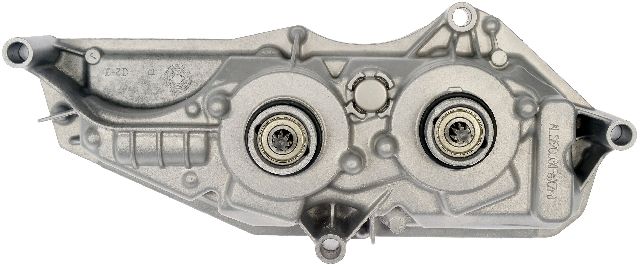
The 2014-2016 Ford Fiesta uses the DPS6 'PowerShift' dual-clutch automatic transmission, which is notorious for problems. 🎬 Watch: Common symptoms of a failing Powershift TCM. The Transmission Control Module (TCM) mounted externally on this transmission is a very common failure point. Failures are often due to internal electronic faults, such as cracked solder joints on critical component pins, which are exacerbated by heat and vibration. This specific, widespread TCM issue is the primary reason a Fiesta owner will encounter the U0100 code, often accompanied by other communication codes like U0101 (Lost Communication with TCM).
Diagnostic Flowchart

Tap your situation to follow the diagnostic path that matches what you're seeing on this vehicle.
Symptoms You May Notice
- Intermittent loss of power while driving.
- Transmission gets stuck in gear or drops into neutral.
- No-start or intermittent no-start condition.
- Harsh, jerky, or delayed gear shifts.
- Shuddering or vibration on acceleration.
- Flashing PRNDL/S gear selector light on the instrument cluster.
- Check Engine Light is on.
- Dashboard messages like 'Hill Start Assist Not Available'.
- Replacing the entire transmission when only the TCM is faulty.
- Replacing the PCM when the TCM or wiring is the actual problem.
- Replacing shift forks or actuators when the root cause is the TCM sending incorrect signals.
Most Likely Causes

- Faulty Transmission Control Module (TCM) 🔴 High Probability The DPS6 transmission's TCM is a known weak point, prone to internal electronic failure from heat and vibration. Ford issued multiple TSBs and a warranty extension program (14M02) specifically for this part due to the high failure rate.
How to confirm: A professional scan tool will show a loss of communication with the TCM. The presence of codes U0101, U1013, and P0606 alongside U0100 is a strong indicator of TCM failure, as noted in TSB 16-0129. The PCM may be unable to see that the transmission is in Park or Neutral, preventing the engine from cranking.
Typical fix: Replace the Transmission Control Module. The new module must be programmed to the vehicle using Ford's diagnostic software (IDS) and undergo an adaptive learning process. Some specialists offer a more robust rebuild of the original module with soldered connections instead of the original compliant pins.
Est. part cost: $300-$900 - Damaged Wiring Harness or Connectors 🟡 Medium Probability The wiring harness between the PCM and TCM can rub through or suffer from corrosion, causing an open or short in the CAN bus communication lines. While less common than outright TCM failure, it's a necessary check.
How to confirm: Visually inspect the wiring harness for any signs of chafing, melting, or corrosion, particularly where it runs near the battery, under the airbox, and down to the transmission. Check for pin tension and corrosion at the TCM and PCM connectors.
Typical fix: Repair the damaged section of wire or replace the affected connector. Ensure the harness is properly secured away from heat sources or sharp edges.
Est. part cost: $20-$200 - Weak or Faulty Battery / Poor Grounds ⚪ Low Probability Low system voltage can cause unpredictable communication errors between modules on any modern vehicle. The Fiesta has several key ground points that can become corroded or loose, disrupting communication.
How to confirm: Test the battery voltage with a multimeter; it should be above 12.4 volts with the engine off. Check battery terminals and main chassis/engine ground points for corrosion or looseness. Key ground locations on the Fiesta include the main battery-to-chassis ground, ground points near the brake master cylinder, and the ECM ground on the frame rail below the air box.
Typical fix: Recharge or replace the battery. Clean all corrosion from terminals and ground points (G103, G104, etc.) and ensure connections are tight and making good contact with bare metal.
Est. part cost: $100-$250
Rare But Worth Checking
- Faulty Powertrain Control Module (PCM): While possible, the PCM is far less likely to fail than the TCM on this platform. This should only be considered after the TCM and all wiring have been proven to be good. The presence of code P0606 (PCM Processor Fault) makes this a slightly higher possibility, though even TSBs with this code point to replacing the TCM.
Diagnosis Steps
- Check battery voltage and clean battery terminals and ground connections. Ensure voltage is above 12.4V.
- Inspect key ground strap locations for tightness and corrosion: battery to chassis, engine block to chassis, and grounds near the airbox.
- Scan for all DTCs in all modules. Note if U0101, P0606, or U1013 are present, as this strongly points to the TCM per TSB 16-0129.
- Perform a visual inspection of the wiring harness between the PCM and the TCM. Look for any signs of rubbing, melting, or physical damage, especially near the battery tray and under the airbox.
- Inspect the electrical connectors at both the TCM and PCM for corrosion, moisture, or damaged pins.
- Using a multimeter, check for correct resistance on the CAN bus at the DLC (pins 6 and 14). It should be approximately 60 ohms with the battery disconnected.
- If wiring, grounds, and power are all good, the Transmission Control Module (TCM) is the most probable cause of the fault.
Parts You'll Likely Need
- Transmission Control Module (TCM)
(OEM #AE8Z-7Z369-F)— This is the most common failure point on 2014-2016 Fiestas with the DPS6 automatic transmission that causes code U0100. The part number AE8Z-7Z369-F supersedes previous versions like AE8Z-7Z369-B, AE8Z-7Z369-D, and AE8Z-7Z369-E.
Trusted brands: Motorcraft (OEM), Dorman, Cardone
OEM price range: $600-$900
Aftermarket price range: $300-$600
Related Codes That Often Appear With This One
- U0101 — Stands for 'Lost Communication with TCM'. This code is more specific and almost always appears with U0100, confirming the communication break is with the transmission module.
- P0606 — Stands for 'PCM Processor Fault'. This code can be triggered by the communication failure and is listed in Ford's TSBs for this issue, often pointing to the need to replace the TCM.
- U1013 — Stands for 'Invalid Internal Control Module Monitoring Data'. This is another network code that points to data corruption or loss, commonly seen with TCM failure.
Technical Service Bulletins (TSBs) & Recalls
- TSB 16-0129: Supersedes TSB 16-0044. It addresses no-start, loss of power, and flashing gear selector lights with DTCs U0100, U0101, U1013, and/or P0606, instructing technicians to replace the TCM. It explicitly covers 2011-2016 Fiesta and 2012-2016 Focus models.
- TSB 16-0044: An earlier bulletin covering the same issue of no-start or loss of power on DPS6-equipped Fiestas with code U0100, also pointing to a faulty TCM.
Platform-Specific Known Issues
- Ford issued Customer Satisfaction Program 14M02, which extended the warranty on the DPS6 Transmission Control Module to 10 years or 150,000 miles for affected vehicles due to the high failure rate. While this program's original terms may have expired for many vehicles based on age, it is worth checking with a Ford dealer using your VIN, as supplements and updates have been issued.
- Due to the high demand and semiconductor shortages, there have been periods where new OEM TCMs were on national backorder for months, leading owners and shops to seek out used or refurbished units.
Mechanic-Grade Diagnostic Values
- CAN Bus Network Resistance — expected: Approximately 60 Ohms. Failure: A reading of 120 Ohms indicates an open circuit or a missing terminating resistor (likely a failed module). A reading lower than 60 Ohms suggests a short between the CAN High and CAN Low wires.
- CAN Bus Test at DLC — expected: Approximately 60 Ohms between Pin 6 (CAN-H) and Pin 14 (CAN-L) with the battery disconnected and the network asleep.. Failure: A 120 Ohm reading points to a break in the CAN lines or a failure in one of the two terminating modules (PCM or TCM).
- TCM Power Supply Voltage — expected: Greater than 10 volts at the TCM harness connector (pins C1458A-4, C1458A-5, C1458A-12) with the ignition on.. Failure: Voltage below 10 volts indicates an open in the power supply circuit from the Battery Junction Box (Fuse 5 or 24, both 10A).
- TCM Ground Circuit Resistance — expected: Less than 5 Ohms. Failure: Resistance greater than 5 Ohms indicates a poor ground connection, which can cause communication faults.
Scan Tool Commands That Help
- Ford IDS (Integrated Diagnostic System): TCM Adaptive Learning — This function is required after replacing the Transmission Control Module. It allows the new module to learn clutch touchpoints and shift drum positions for proper transmission operation.
- Ford IDS (Integrated Diagnostic System): Powertrain -> Transmission -> TCM Adaptive Learning — This is the specific menu path within the Ford IDS software to initiate the relearn process for the DPS6 transmission after a TCM replacement. The process includes learning clutch travel, touch points, and gear positions.
- Ford IDS or equivalent: Clear Adaptations / TCM Reset — As a preliminary diagnostic step, resetting the TCM can sometimes resolve temporary glitches by clearing learned driving habits. If symptoms persist after a reset, a hardware fault is more likely.
Wiring & Ground Locations

- G103 / G104 — Located on the left front of the engine compartment.. These are primary chassis grounds. Corrosion or looseness at these points can disrupt power to multiple modules, including the PCM and TCM, causing communication codes like U0100.
- TCM Main Connector — On the side of the transmission, under the battery tray and airbox assembly.. This is the direct communication and power interface for the TCM. Pins can corrode or back out, and the harness is susceptible to damage in this area, leading to a loss of communication.
- Large Connector in front of Battery — A large wiring harness connector located in the engine bay, in front of the battery.. This connector is a junction for multiple circuits, including the main power feed for the ECU/PCM. Corrosion within this connector can cause a loss of power to the control module, directly causing a U0100 code.
- DLC (Data Link Connector) — Under the driver's side dashboard.. This is the primary diagnostic port. Pin 6 (CAN-H) and Pin 14 (CAN-L) are used to test the resistance and integrity of the entire CAN bus network.
Real Owner Repair Stories
- YouTube user 'mechanic shorts' (Ford Fiesta (year not specified, but relevant body style)) — Car won't start, won't turn over, Engine Management Light (EML) on. Codes U0100 and P1607 were present.
❌ Tried (didn't work) Initial diagnosis pointed towards a faulty PCM.
✅ What actually fixed it The technician performed a pin-out test on the ECU and found no power. The root cause was a corroded wire at the large connector in front of the battery. Repairing the corroded wire and reprogramming the keys resolved all issues. - YouTube user 'The Fix Finder' (2014 Ford Focus (shares the same DPS6 transmission and TCM)) — Car acting 'really funny', Check Engine Light on, then would not move in Drive or Reverse.
❌ Tried (didn't work) Attempted to order a new TCM from a Ford parts website, but it was on indefinite backorder with 44,000 other orders.
✅ What actually fixed it The owner sourced a used TCM from a junkyard for $40. He installed it himself and then had a mechanic shop with Ford-capable computers 'flash' or 'erase' the used module to work with his vehicle. This resolved the issue without waiting for a new part.
OEM Part Supersession History
AE8Z-7Z369-B, AE8Z-7Z369-D, AE8Z-7Z369-E→AE8Z-7Z369-F— Revisions to improve reliability and address the high failure rate of the original components.
Heads up: AE8Z-7Z369-F is the latest, most recommended version for replacement. While earlier versions exist, installing the -F part is best practice. A new genuine Ford module requires programming with IDS.
Helpful Videos

We Have This Part in Stock


The information in this article is provided for general reference and educational purposes only. Vehicle specifications, procedures, and part compatibility can vary by production date, trim level, and region. Always consult your vehicle's factory service manual and verify part numbers before purchasing or performing repairs. Safety-critical components such as airbags, seat belts, and braking systems should be installed by a qualified professional.
- Ford FIESTA:
- 🎬 Helpful Videos
- 🛍️ Shop This Part
- What's Unique About the 2014-2016 Ford FIESTA
- Diagnostic Flowchart
- Symptoms You May Notice
- Most Likely Causes
- Rare But Worth Checking
- Diagnosis Steps
- Parts You'll Likely Need
- Related Codes That Often Appear With This One
- Technical Service Bulletins (TSBs) & Recalls
- Platform-Specific Known Issues
- Mechanic-Grade Diagnostic Values
- Scan Tool Commands That Help
- Wiring & Ground Locations
- Real Owner Repair Stories
- OEM Part Supersession History
- 🎟️ Get 5% Off