

U0100 on 2021 Chrysler Pacifica: Lost Communication with ECM/PCM Causes and Fixes
On a 2021 Chrysler Pacifica, U0100 indicates a communication failure with the engine computer (PCM). Common causes include low battery voltage (from either the main or auxiliary battery), poor ground connections, or a faulty CAN bus star connector located behind the glove box. This is a serious code that can cause a no-start, stalling, or a 'Service Shifter' message, and professional diagnosis is highly recommended.
- U0100 on a 2021 Pacifica is a critical code indicating a loss of communication with the main engine computer, which can make the vehicle unsafe or impossible to drive.
- Before suspecting expensive components, always check the simplest things first: the battery's state of charge and the condition of all main power and ground connections.
- A known weak point on this platform is the CAN bus star connector located behind the glove box; a loose connection here can cause this code.
- A specific TSB points to the Telematics Box Module (TBM) as a possible source for this code.
- Due to the complexity of network diagnostics, professional service with the right tools is strongly recommended to avoid costly misdiagnosis.
What's Unique About the 2021-2021 Chrysler PACIFICA

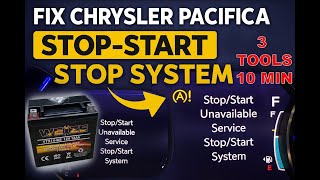
The Chrysler Pacifica is a technologically advanced vehicle with dozens of interconnected computer modules communicating over multiple networks (like CAN-C and CAN-IHS). Communication issues often stem from the complex network itself rather than a single failed part. A widely documented failure point on Pacificas is the 'star connector' (also called a CAN bus hub or junction block), which acts as a router for module communications. A loose pin or poor connection at this specific point, confirmed by technicians to be located behind the glove box, can cause 🎬 Watch: Diagnosing common CAN bus communication issues on a Pacifica. a flood of communication codes, including U0100. Furthermore, non-hybrid models use a dual-battery system (main and auxiliary) to manage the Engine Stop-Start (ESS) feature; a failure in the smaller auxiliary battery can cause widespread electrical issues and communication codes even if the main battery seems fine.
Diagnostic Flowchart

Tap your situation to follow the diagnostic path that matches what you're seeing on this vehicle.
Symptoms You May Notice

- Check Engine Light is on
- Vehicle will not start or has a hard start condition
- Engine stalls intermittently while driving
- Multiple other warning lights may appear on the dashboard (e.g., for ABS, traction control, or shifter)
- Transmission may be stuck in Park or enter 'limp mode'
- Message on dash such as 'Service Shifter'
- Instrument cluster gauges fluctuating erratically or going dead
- Dashboard lights up intermittently when the vehicle is off, indicating a parasitic draw
- Replacing the PCM when the root cause is a weak auxiliary battery or a bad ground connection.
- Replacing a module that is reporting the U0100 code (like the ABS or Transmission module) instead of diagnosing why it lost communication with the PCM.
- Overlooking a faulty star connector pin and replacing an entire wiring harness unnecessarily.
Most Likely Causes

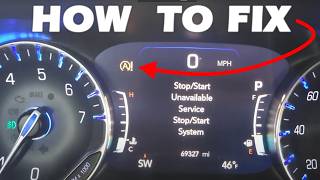
- Low Battery Voltage or Failing Auxiliary Battery 🔴 High Probability Modern vehicles like the Pacifica are extremely sensitive to voltage. The Stop-Start system relies on a main and an auxiliary battery. A failing auxiliary battery can cause modules to stay 'awake' when the vehicle is off, creating a parasitic draw that drains the main battery and leads to communication faults. Parasitic draws from the Uconnect system or door modules are also common.
How to confirm: Test the main battery voltage with a multimeter; it should be at least 12.4V with the engine off. Perform a parasitic draw test to see if current draw drops below 50mA after the vehicle has been off for several minutes. The auxiliary battery must be load-tested separately.
Typical fix: Recharge or replace the main and/or auxiliary battery. Identify and fix the source of any parasitic draw.
Est. part cost: $5-$450 - Faulty CAN Bus Star Connector 🟡 Medium Probability Numerous forum and video reports from technicians confirm the star connectors on Pacificas can develop poor pin retention, leading to intermittent network failures. Wiggling wires near the connector behind the glove box may temporarily restore function, confirming the issue. The failure is often due to a loose female pin in one of the connectors plugging into the star block.
How to confirm: A technician can use an oscilloscope to see corrupt data signals at the star connector. Visually inspecting for loose pins or corrosion is also necessary. A common diagnostic step is to unplug modules one by one from the star connector to see if the network communication is restored.
Typical fix: Replacing the faulty female pin connector or the entire star connector block. A potential Mopar part number for the star connector is 68321746AA.
Est. part cost: $30-$90 - Damaged Wiring or Corroded Connector 🟡 Medium Probability The CAN bus wiring harness runs throughout the vehicle. A single chafed or corroded wire can take down the network. A known issue on Pacificas involves the wiring harness for the power sliding door, which can corrode inside its rubber boot and send false signals, keeping modules awake and causing a battery drain.
How to confirm: Visually inspect all accessible wiring harnesses for damage, paying close attention to the power sliding door harnesses. A technician will use a multimeter to check for continuity and shorts in the CAN High and CAN Low circuits.
Typical fix: Repairing the specific section of damaged wire or replacing a corroded connector pigtail.
Est. part cost: $10-$100 - Faulty Powertrain Control Module (PCM) ⚪ Low Probability
How to confirm: This should be the last resort after all wiring, power, and ground issues have been ruled out. A technician will verify stable power and ground at the PCM connector and confirm the network is functional before condemning the module. Sometimes a PCM software reflash can resolve communication glitches.
Typical fix: Replacing the PCM, which requires programming specific to the vehicle's VIN. A compatible part number for a 2021 Pacifica 3.6L Gas engine is 68434928. Another is P68330910AA.
Est. part cost: $700-$1200
Rare But Worth Checking
- Faulty Telematics Box Module (TBM): Chrysler TSB #S2008000184 specifically mentions that a fault in the TBM can cause it to log a U0100 code. If other symptoms relate to GPS or Uconnect/telematics services, this module should be investigated.
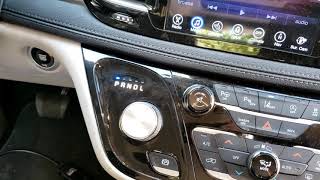
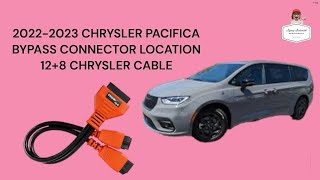
- Faulty Gateway Module (SGM): The gateway module (SGM) acts as a bridge between different CAN bus networks and provides security against unauthorized access via the OBD-II port. A failure here can prevent the PCM from communicating with other essential modules. On the Pacifica, the SGM is located behind the climate control/shifter panel. 🎬 Watch: How to locate and access the 12+8 bypass connector.
Diagnosis Steps
- Check and charge the battery. Ensure it holds a charge above 12.4 volts. Clean any corrosion from the terminals. If the vehicle has a dual-battery system, both must be tested.
- Perform a parasitic draw test to rule out modules staying awake. A draw over 50-100mA after 10-15 minutes indicates a problem.
- Inspect all visible engine and chassis ground straps for tightness and corrosion.
- Use a professional scan tool with a Security Gateway Module (SGM) bypass cable (12+8 adapter) to see which modules are reporting 'no communication'. This helps pinpoint the scope of the problem.
- Visually inspect the wiring harness to the PCM and around the star connector (located behind the glove box) for any signs of chafing, melting, or rodent damage.
- If accessible, gently wiggle the connectors at the star connector to see if communication is restored, which would indicate a poor pin connection.
- Using a multimeter, check for 60 ohms of resistance across pins 6 (CAN-H) and 14 (CAN-L) at the OBD-II port with the battery disconnected. This verifies the integrity of the network's terminating resistors.
- If the above steps do not identify the issue, advanced diagnostics with an oscilloscope are needed to check the CAN signal waveform for noise, shorts, or incorrect bias voltage.
- As a final step, verify power and ground supplies directly at the PCM connector before considering PCM replacement.
Parts You'll Likely Need
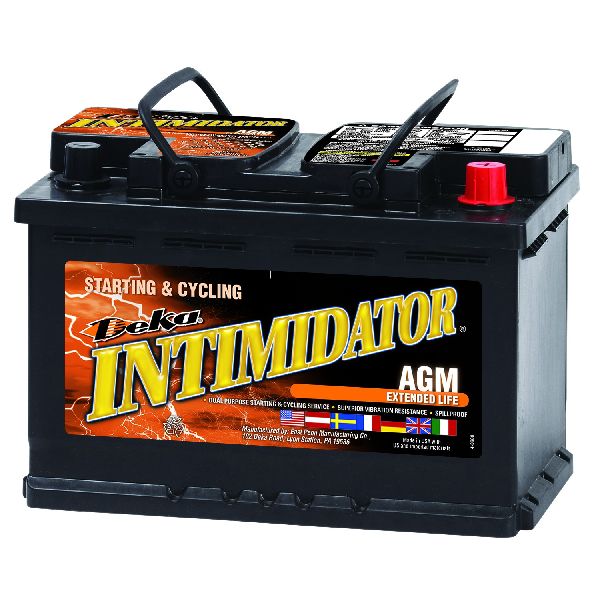
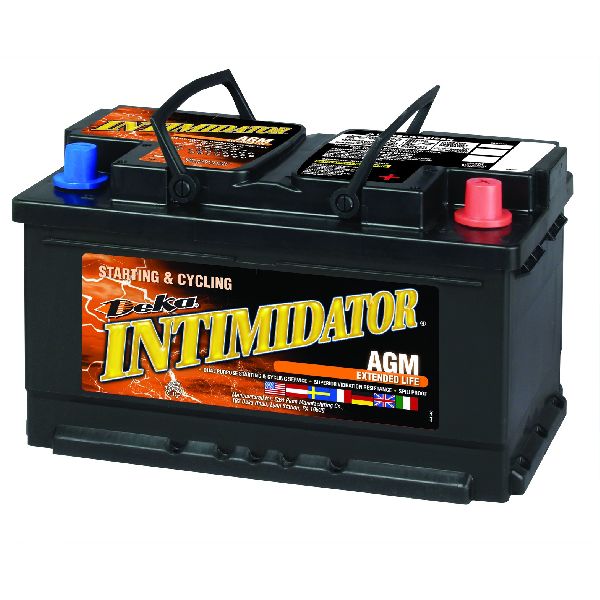
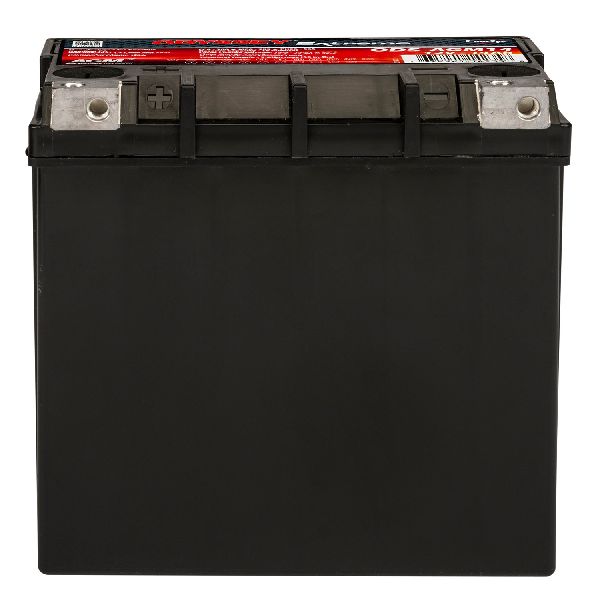
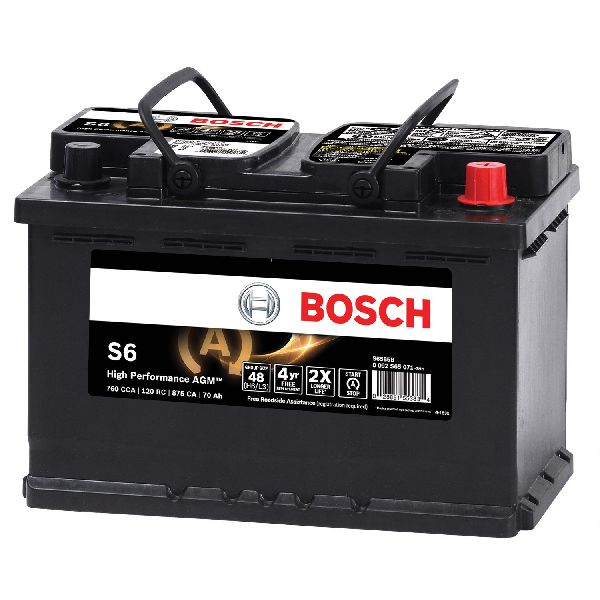
- Battery (Main or Auxiliary) — A weak or failing battery (either main or the auxiliary one for the start-stop system) is a very common cause of communication codes on modern, voltage-sensitive vehicles.
Trusted brands: Mopar, Interstate, Duralast
OEM price range: $250-$400
Aftermarket price range: $180-$350 - CAN Bus Star Connector
(OEM #68321746AA (potential part, verify with VIN))— This is a known failure point on the Pacifica platform that can cause intermittent and widespread communication issues due to poor pin retention.
Trusted brands: Mopar
OEM price range: $30-$90 - Powertrain Control Module (PCM)
(OEM #68434928 or P68330910AA (verify with VIN))— This is the cause if the module itself has failed internally and must be replaced. It requires programming to the vehicle.
Trusted brands: Mopar
OEM price range: $800-$1200
Aftermarket price range: $500-$900
Related Codes That Often Appear With This One
- U0101 — Indicates 'Lost Communication with TCM' (Transmission Control Module). Since the TCM and PCM are on the same high-speed CAN-C network, a network-wide issue like a bad star connector will often cause both codes to appear simultaneously.
- U-codes (various) — A flood of other U-codes (e.g., U0121 for ABS, U0140 for Body Control Module) strongly suggests a systemic network problem like a bad star connector, wiring issue, or power supply fault, rather than a single failed module.
Technical Service Bulletins (TSBs) & Recalls
- S2008000184: TBM (Telematics Box Module), DTC U0100-00 Lost Communication With ECM/PCM
Platform-Specific Known Issues
- Chrysler issued Technical Service Bulletin S2008000184 for the 2021 Pacifica, which notes that the Telematics Box Module (TBM) can set the code U0100-00, 'Lost Communication With ECM/PCM'.
- A faulty auxiliary battery is a common cause of parasitic draw and communication codes on non-hybrid models with the Engine Stop-Start system.
- The CAN-C star connector, located behind the glove box, is a frequent point of failure due to poor pin connections, leading to a cascade of U-codes.
- Corroded wiring in the power sliding door harness can create a parasitic draw that leads to dead batteries and communication faults.
Mechanic-Grade Diagnostic Values
- CAN Bus Network Resistance — expected: ~60 Ohms. Failure: A reading of ~120 Ohms indicates an open circuit or missing terminating resistor. A reading significantly below 60 Ohms indicates a short circuit.
- CAN Bus Voltage (Oscilloscope, Idle) — expected: Both CAN-H and CAN-L lines should rest at a bias voltage of 2.5V.. Failure: A bias voltage near zero or a 'sawtooth' pattern on the waveform indicates a corrupt bus.
- CAN Bus Voltage (Oscilloscope, Communicating) — expected: CAN-H toggles between 2.5V and 3.5V. CAN-L toggles between 2.5V and 1.5V.. Failure: Voltages that do not toggle within these ranges or show excessive noise indicate a network problem.
- CAN Bus Voltage (Multimeter, Communicating) — expected: Average of ~2.6V on CAN-H and ~2.4V on CAN-L.. Failure: Significant deviation from these average voltages can indicate a problem, though a multimeter can miss intermittent issues.
- Module Programming Voltage — expected: 13.2V to 13.5V. Failure: Voltage dropping below 13.2V or climbing above 13.5V during a flash can cause the procedure to fail and potentially corrupt the module.
Hidden / Shadow Codes Worth Checking
- Detailed Fault Status: Advanced scan tools can reveal status bytes or additional information about a DTC that generic scanners cannot. This includes whether the fault is 'confirmed', 'pending', or if it actively requested the check engine light, which helps prioritize diagnosis. (see via Using dealer-level software like wiTECH 2.0 or advanced aftermarket tools like AlfaOBD.)
Scan Tool Commands That Help

- wiTECH 2.0: View Network Topology — This is a primary diagnostic step to get a visual map of all modules on the network. Modules that are not communicating will be highlighted (typically in red), immediately showing the scope of the failure.
- wiTECH 2.0: Flash ECU / Reprogram PCM — Used to install updated software from the manufacturer that may resolve known communication glitches. This is often performed after checking for relevant TSBs.
- AlfaOBD: Active Diagnostics / Connect to Individual ECU — Allows a technician to bypass the gateway and attempt to communicate with each module individually. This helps determine if the fault lies with a single module (like the PCM) or if the entire network is down.
Wiring & Ground Locations
- CAN Bus Star Connector — Located behind the passenger side glove box.. This is the central hub for the CAN-C network. Poor pin retention in the female connectors that plug into this block is a documented cause of intermittent U0100 and other communication codes.
- CAN Bus at DLC — Pin 6 (CAN-H) and Pin 14 (CAN-L) at the OBD-II diagnostic port under the dashboard.. This is the primary access point for testing the overall health of the CAN bus, such as measuring the total network resistance of 60 ohms.
- PCM Connectors (C1, C2, etc.) — At the Powertrain Control Module (PCM) in the engine bay.. These are the final points to test for stable power and ground going into the PCM itself. Verifying power/ground at these pins is the last step before condemning a potentially faulty PCM.
Real Owner Repair Stories
- Professional Technician Video (Pine Hollow Auto Diagnostics) (2017 Chrysler Pacifica) — Instrument panel chiming, multiple warning lights, electronic shifter would stop working, widespread communication codes.
❌ Tried (didn't work) The video notes that the common but incorrect approach is to replace modules that are reporting lost communication, without diagnosing the network itself.
✅ What actually fixed it The root cause was poor pin retention in the female terminals of the connectors plugging into the CAN bus star connector behind the glove box. Wiggling the wires would cause the fault to appear and disappear on an oscilloscope. The correct fix was to replace the individual faulty female pin terminals. - Jeep Gladiator Forum User (Jeep Gladiator (JT), which uses the same star connector part.) — Dashboard lights up with numerous errors: 'Park Assist Disabled', 'Traction Control Not Available', ABS light, speedometer at zero, 'Service Shifter', 'Service 4WD'.
❌ Tried (didn't work) Living with the intermittent problem before identifying the common cause on forums.
✅ What actually fixed it Replacing the entire CAN bus star connector (Mopar Part #68321746AA) completely resolved the intermittent flood of communication error messages.
"I Checked Everything" — The Actual Cause
- A common misdiagnosis pattern for U0100 on this platform is when basic electrical tests appear normal. A technician might measure the CAN bus resistance and get a perfect 60 ohms, and check for power and ground at the PCM, finding no issues. The actual cause is often poor pin retention (a loose female terminal) in a connector at the star junction block. This creates a micro-interruption in the connection that is too fast for a multimeter to detect but causes massive corruption on the high-speed data bus, which is only visible by wiggling the connector while watching the signal on an oscilloscope.
OEM Part Supersession History
TE Connectivity 2-2272352-5→Mopar 68321746AA— Mopar branding for the same component manufactured by TE Connectivity.
Heads up: These parts are direct replacements for each other.
Helpful Videos
Used OEM Parts in Stock


New Aftermarket Parts Available


The information in this article is provided for general reference and educational purposes only. Vehicle specifications, procedures, and part compatibility can vary by production date, trim level, and region. Always consult your vehicle's factory service manual and verify part numbers before purchasing or performing repairs. Safety-critical components such as airbags, seat belts, and braking systems should be installed by a qualified professional.
- Chrysler PACIFICA:
- 🎬 Helpful Videos
- 🛍️ Shop This Part
- What's Unique About the 2021-2021 Chrysler PACIFICA
- Diagnostic Flowchart
- Symptoms You May Notice
- Most Likely Causes
- Rare But Worth Checking
- Diagnosis Steps
- Parts You'll Likely Need
- Related Codes That Often Appear With This One
- Technical Service Bulletins (TSBs) & Recalls
- Platform-Specific Known Issues
- Mechanic-Grade Diagnostic Values
- Hidden / Shadow Codes Worth Checking
- Scan Tool Commands That Help
- Wiring & Ground Locations
- Real Owner Repair Stories
- "I Checked Everything" — The Actual Cause
- OEM Part Supersession History
- 🎟️ Get 5% Off