

U0100 on 2015-2020 Chevrolet Tahoe: Causes and Fixes for Lost Communication with ECM/PCM
On a 2015-2020 Tahoe, code U0100 is most often caused by a poor Body Control Module (BCM) ground at location G218, a known issue cited in GM Technical Service Bulletin PIT5405C. Before suspecting expensive computers, inspect and clean this ground, which is a very low-cost fix. Other common causes specific to this platform include a chafed wiring harness above the spare tire (TSB PIT5556A) and issues with the Serial Data Gateway Module (SDGM).
- U0100 on a 2015-2020 Tahoe is a network communication code, not necessarily a failed ECM.
- Before any expensive repairs, always inspect and clean the BCM ground G218 under the driver's side dash. This is a known issue documented by GM and is a very common, low-cost fix.
- Other likely causes are a chafed wiring harness above the spare tire or an issue with the Serial Data Gateway Module (SDGM).
- Do not drive the vehicle with this code present, as it can stall or lose critical functions without warning.
- If multiple 'U' codes are present, it strongly indicates a wiring, ground, or network-level problem, not a single failed module.
What's Unique About the 2015-2020 Chevrolet TAHOE

On this generation of Chevrolet Tahoe and its K2XX platform mates (including the Suburban, Silverado, Sierra, Yukon, and Escalade), the U0100 code is frequently a symptom of specific, well-documented electrical issues rather than a failed ECM. Multiple GM Technical Service Bulletins point towards problems like a poor Body Control Module ground (G218), issues with the central Serial Data Gateway Module (SDGM), or chafed wiring harnesses as the root cause. Owners often experience a cascade of warning lights like "Service StabiliTrak" and seemingly unrelated electrical problems, all stemming from these known weak points in the vehicle's communication network.
Diagnostic Flowchart
Tap your situation to follow the diagnostic path that matches what you're seeing on this vehicle.
Symptoms You May Notice

- Check Engine Light is on
- Multiple warning lights on the instrument panel, such as for StabiliTrak, Power Steering, Park Assist, or Trailer Brake.
- "Service StabiliTrak" message is very common.
- Engine may stall, sometimes when turning at low speeds.
- No-start or hard-starting condition.
- Instrument panel gauges may drop to zero, go blank, or fluctuate intermittently.
- Radio or HVAC controls may become inoperative or go blank.
- Turn signal sounds or other chimes may be absent.
- Vehicle may enter a reduced power "limp mode".
- Replacing the Engine Control Module (ECM) without first checking grounds, wiring, and the Serial Data Gateway Module.
- Replacing the Transmission Control Module (TCM) when U0101 is also present, as the root cause is likely a shared network problem like the G218 ground or chafed harness.
- Replacing the battery without confirming that all main power and ground connections are clean and tight.
Most Likely Causes

- Poor Body Control Module (BCM) Ground at G218 🔴 High Probability GM Technical Service Bulletin PIT5405C directly identifies a poor connection at ground G218 as a primary cause for U0100 and a host of other electrical issues. The factory sound-deadening material can get trapped under the ground terminal, preventing a solid connection over time.
How to confirm: Visually inspect ground G218. It is located on the driver's side A-pillar, behind the plastic kick panel and often near the speaker or parking brake release lever. Check if the 10mm nut is loose or if black insulation material is caught under the terminal ring. A voltage drop test from the terminal to a clean chassis point can confirm high resistance.
Typical fix: Remove the nut (typically 10mm), pull the ground ring terminal off the stud, and carefully trim away any interfering insulation material from around the stud. Clean the terminal and body surface with a wire brush or sandpaper to ensure bare metal contact, then securely retighten the nut.
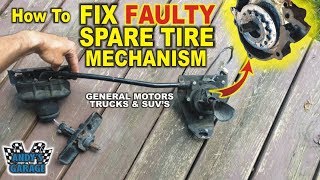
Est. part cost: $0-$5 - Chafed or Shorted Chassis Wiring Harness 🟡 Medium Probability TSB #PIT5556A notes that the chassis wiring harness can chafe and short out where it passes over the frame crossmember above the spare tire. Body and frame flex during driving can cause intermittent contact and a flood of communication codes, including U0100.
How to confirm: Lower and remove the spare tire. Visually inspect the large wiring harness in the area directly above where the tire sits, looking for any signs of rubbing, exposed copper wires, or damage where it contacts the metal frame crossmember.
Typical fix: The damaged section of the harness must be repaired by soldering and heat-shrinking the affected wires. The harness should then be wrapped in high-quality anti-abrasion tape and repositioned or secured away from the sharp edge of the frame to prevent future damage. 🎬 Watch: How to find and repair a damaged chassis wiring harness.
Est. part cost: $10-$50 - Serial Data Gateway Module (SDGM) Issue 🟡 Medium Probability TSB #PIT5586B and #PIT5586G instruct dealers to check the SDGM for issues like logic lock-ups or poor connector contact when U0100 is present with other codes. The SDGM acts as a central router for all vehicle network traffic, making it a critical point of failure. Later versions of the TSB note that a software update may be required to fix logic lock-up issues.
How to confirm: A technician can perform a hard reset (disconnecting the battery for 20+ minutes) to clear a logic lock. The connectors on the SDGM, located above the gas pedal, can be inspected for loose pins or corrosion.
Typical fix: Reseating the connectors or performing a hard reset may fix the issue. In some cases, the SDGM may require a software update or complete replacement by a dealer if it has failed internally. Replacement requires programming.
Est. part cost: $0-$250 - Low Battery Voltage or Poor Battery Cable Connections ⚪ Low Probability Modern vehicles are highly sensitive to voltage. A weak battery or corroded/loose battery terminals can cause unpredictable communication errors between modules. TSB #PIT5405C also lists a faulty battery and high resistance in battery cables as a possible cause.
How to confirm: Test the battery with a multimeter; it should read at least 12.4 volts with the engine off. Inspect battery terminals for corrosion and ensure the cable clamps are tight and cannot be moved by hand. Perform a loaded voltage drop test on the main power and ground cables as outlined in TSB PIT5405A.
Typical fix: Clean the battery terminals and cable clamps thoroughly. If the battery fails a load test, it must be replaced. Ensure all cable connections at the battery and fuse block are torqued to spec.
Est. part cost: $0-$250
Rare But Worth Checking
- Failed Engine Control Module (ECM/PCM): While this is the component named in the code's definition, outright failure is uncommon. All wiring, ground, and power supply issues must be ruled out before condemning the ECM.
- Loose Bolts on Underhood Fuse Block (UBEC): TSB PIT5756 for 2019-2020 models indicates that loose main power bolts on the fuse block (X50A) can cause widespread electrical issues, including setting code U0100. The bolts should be torqued to 53 lb-in (6 Nm).
Diagnosis Steps
- Scan all vehicle modules for stored Diagnostic Trouble Codes (DTCs). Note all 'U' codes present, as they provide clues to the scope of the communication failure.
- Inspect the battery. Ensure it is fully charged (12.4V+ engine off) and that the terminals are clean and tight. A weak battery is a common cause of network codes.
- Locate and inspect the BCM ground G218 on the driver's side under the dash, behind the kick panel. Check for looseness (10mm nut) and trapped insulation material. Clean and tighten the connection regardless of appearance, as this is the most common fix.
- Inspect the main power and ground connections at the underhood fuse block to ensure they are tight. For 2019-2020 models, specifically check the X50A fuse block bolts and torque to 53 lb-in (6 Nm) per TSB PIT5756.
- If the issue persists, lower the spare tire and thoroughly inspect the chassis wiring harness for chafing where it passes over the frame crossmember. Repair any damaged wires.
- Inspect the connectors at the Serial Data Gateway Module (SDGM), located above the accelerator pedal, for any backed-out pins or corrosion.
- If no physical faults are found, advanced diagnostics are required. With the battery disconnected, use a multimeter to check for 60 ohms of resistance across Pin 6 (CAN High) and Pin 14 (CAN Low) at the OBD-II port. A reading of 120 ohms suggests a break in the circuit or a missing terminating resistor, while a reading near 0 ohms indicates a short between the two lines.
- If all wiring and connections are confirmed to be good, suspect a failed module (SDGM, BCM, or ECM) as the final step. This often requires dealer-level diagnostic tools to isolate.
Parts You'll Likely Need
- Nut and Star Washer for Ground G218 — Often the only 'part' needed is to clean and re-secure the existing hardware. A new nut or washer may be needed if the original is lost or damaged.
- Serial Data Gateway Module (SDGM)
(OEM #13542838, 13599318 (numbers supersede; verify with VIN))— If the module has an internal failure or requires an update that doesn't resolve a logic lock, it may need replacement. Requires programming. - Anti-Abrasion Wiring Harness Tape — Essential for protecting the repaired wires in the chassis harness near the spare tire to prevent a repeat failure.
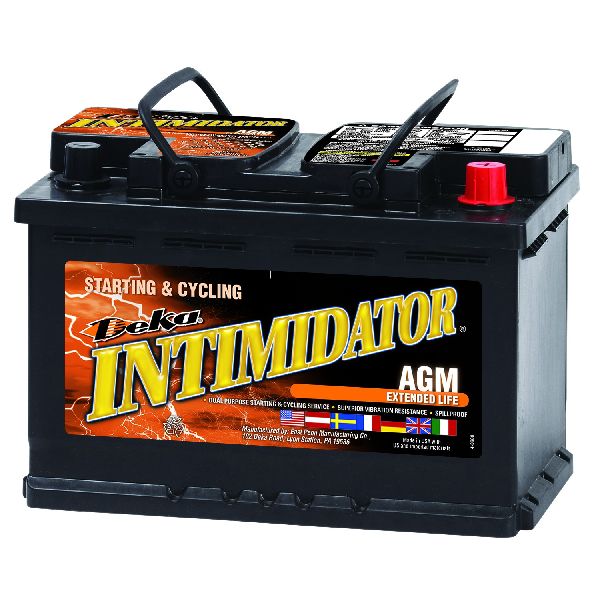
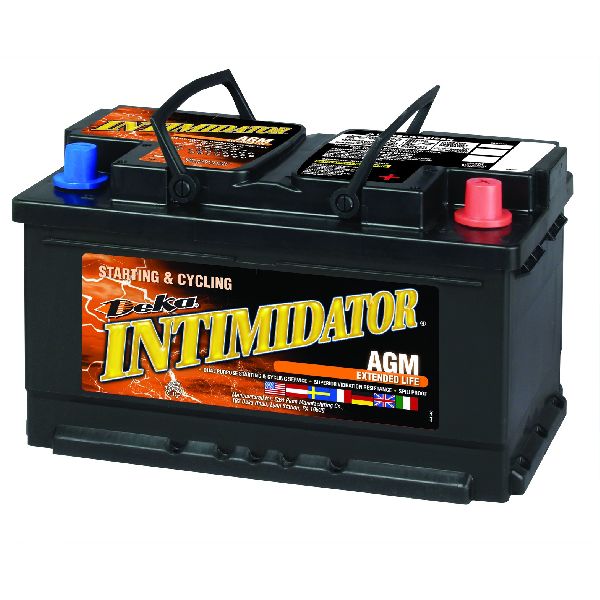
- Battery — If the current battery fails a load test, it can be the root cause of numerous communication codes.
Related Codes That Often Appear With This One
- P0700 — This code means the Transmission Control Module (TCM) has requested the check engine light. It often appears with U0100, indicating the TCM has lost communication with the ECM. An owner complaint (ODI #11309210) confirms this pairing.
- U0101 — Lost Communication with TCM. If both U0100 and U0101 are present, it strongly suggests a network-wide problem (like a wiring or ground issue) rather than a failure of either individual module.
- U0140 — Lost Communication with Body Control Module (BCM). This code is frequently seen with U0100 and points directly to issues with the BCM or its connections, such as the G218 ground.
- U0073 — Control Module Communication Bus 'A' Off. This is a general code indicating the entire high-speed CAN bus is malfunctioning, which is consistent with the causes of U0100.
Technical Service Bulletins (TSBs) & Recalls
- PIT5405C
- PIT5586G
- PIT5586B
- PIT5556A
- PIT5756
- 21-NA-149
Platform-Specific Known Issues
- Poor BCM Ground (G218): TSB PIT5405C specifically calls out this ground as a cause for U0100 and numerous other intermittent electrical problems. Dash insulation getting caught under the terminal is a common finding.
- SDGM Logic Lock/Connector Issues: TSBs PIT5586B and PIT5586G point to checking the Serial Data Gateway Module connector and for module logic lock-ups as a diagnostic step for a wide range of communication codes, including U0100.
- Chafed Rear Harness: TSB PIT5556A identifies a spot above the spare tire where the main chassis harness can rub against the frame, causing intermittent shorts that trigger U0100 and other communication failures.
Mechanic-Grade Diagnostic Values
- High-Speed CAN Bus Network Resistance — expected: Approximately 60 ohms (± 5 ohms). Failure: A reading of ~120 ohms indicates an open circuit or a missing terminating resistor. A reading near 0 ohms indicates a short between the CAN High and CAN Low wires.
- CAN High (Pin 6 at DLC) Voltage to Ground — expected: Approximately 2.7 volts (Key On, Engine Off). Failure: Significant deviation from 2.7V, or 0V, can indicate a short or open on the CAN High line.
- CAN Low (Pin 14 at DLC) Voltage to Ground — expected: Approximately 2.3 volts (Key On, Engine Off). Failure: Significant deviation from 2.3V, or 0V, can indicate a short or open on the CAN Low line.
- Ground Circuit Resistance — expected: Less than 0.1 ohms. Failure: Higher resistance indicates a poor ground connection, which is a common cause of communication failures.
Scan Tool Commands That Help
- GDS2 (GM Global Diagnostic System 2): Module Diagnostics > [Module Name] > Display DTCs — To view not just the primary codes but also any history or symptom codes stored in individual modules that a generic scanner might miss.
- GDS2 (GM Global Diagnostic System 2): Control Functions > Clear Secured High Voltage DTCs — This specific command is required to clear certain persistent communication codes that cannot be erased with a standard 'Clear Codes' function, particularly after a module has been locked out due to an error.
- GDS2 (GM Global Diagnostic System 2): Serial Data Authentication Configuration (SDAC) — This procedure is required after replacing or reprogramming a module to ensure a proper security handshake between all modules on the network. Failure to run this can result in a U1962 code and prevent modules from communicating.
- Data Bus Diagnostic Tool: High Speed LAN diagnostics — As of 2015, this tool, available through GM's service information portal, can be used to analyze network traffic and assist in diagnosing high-speed LAN issues before resorting to manual circuit testing.
Wiring & Ground Locations

- G218 — Located on the driver's side A-pillar, behind the plastic kick panel. It is a stud with a 10mm nut securing one or more ground ring terminals.. This is the primary ground for the Body Control Module (BCM). TSB PIT5405C identifies a poor connection here (often due to trapped insulation) as a root cause for U0100 and other communication codes.
- CAN Bus Terminating Resistor (Rear) — On 2015 models, one of the two 120-ohm terminating resistors is located under the truck, near the spare tire area, taped to a harness near the fuel pump control module and above the muffler.. The CAN bus requires two 120-ohm terminating resistors to function. If this resistor or its wiring is damaged (often in the same area as the chafed chassis harness), the total bus resistance will read 120 ohms instead of 60, causing communication to fail.
- Serial Data Gateway Module (SDGM) — Located under the driver's side dash, typically above and to the right of the accelerator pedal.. This module is the central hub for network traffic. TSBs point to logic lock-ups and connector pin issues at this module as a cause for U0100.
- Underhood Fuse Block (X50A) — Located in the engine compartment on the driver's side.. TSB PIT5756 (for 2019-2020 models) notes that the main power bolts on this fuse block can become loose, causing low voltage to multiple modules and triggering communication codes like U0100.
Real Owner Repair Stories
- YouTube Commenter on 'G218 Ground Issue Fix' video (2014-2018 GM Truck (platform mate to Tahoe)) — Unspecified 'ground issue' causing a 'huge headache'.
❌ Tried (didn't work) Hours of online research
✅ What actually fixed it Following the video's instructions to access and clean the G218 ground behind the driver's side kick panel resolved the issue in 30 minutes.
OEM Part Supersession History
13518851, 13524378, 13524379, 13524970, 13526301, 13526314, 13532107, 13532121, 13533150→13534928— Standard part evolution and updates by the manufacturer.
Heads up: Replacement of the Serial Data Gateway Module (SDGM) requires programming with dealer software (GDS2) to function. A service update (N212353390) notes that even dealer-replaced modules may need to be reprogrammed to ensure they are registered correctly on the network and capable of Over-The-Air (OTA) updates.
Model Year Variations Within This Range
- 2015-2018: Primarily equipped with a 5.3L V8 and a 6-speed automatic transmission. Some higher trims may have an 8-speed.
- 2019-2020: The 6.2L V8 engine paired with a 10-speed automatic transmission became more widely available, particularly in Premier and RST trims. TSB PIT5756 regarding loose fuse block bolts specifically applies to 2019-2020 models.
- 2017-2020: Models with IO5/IO6 infotainment systems may require an SDGM bypass harness or wiring modification for certain aftermarket diagnostic or programming tools to communicate properly with the vehicle networks.
Helpful Videos


We Have This Part in Stock


The information in this article is provided for general reference and educational purposes only. Vehicle specifications, procedures, and part compatibility can vary by production date, trim level, and region. Always consult your vehicle's factory service manual and verify part numbers before purchasing or performing repairs. Safety-critical components such as airbags, seat belts, and braking systems should be installed by a qualified professional.
- Chevrolet TAHOE:
- 🎬 Helpful Videos
- 🛍️ Shop This Part
- What's Unique About the 2015-2020 Chevrolet TAHOE
- Diagnostic Flowchart
- Symptoms You May Notice
- Most Likely Causes
- Rare But Worth Checking
- Diagnosis Steps
- Parts You'll Likely Need
- Related Codes That Often Appear With This One
- Technical Service Bulletins (TSBs) & Recalls
- Platform-Specific Known Issues
- Mechanic-Grade Diagnostic Values
- Scan Tool Commands That Help
- Wiring & Ground Locations
- Real Owner Repair Stories
- OEM Part Supersession History
- Model Year Variations Within This Range
- 🎟️ Get 5% Off