

U0100 on 2013-2019 Chevrolet Silverado 3500: Lost Communication Causes and Fixes
U0100 on a Silverado 3500 means a critical loss of communication with the engine computer (ECM). This often causes a no-start, stalling, or limp mode. Before replacing the expensive ECM, inspect common, well-documented causes like faulty wiring, poor ground connections (especially G218), and issues with the Serial Data Gateway Module (SDGM), as noted in multiple GM service bulletins.
- U0100 is a critical communication failure, not necessarily a failed ECM. Do not drive the vehicle.
- Diagnosis must begin with the basics: check the battery, fuses, and all major power/ground connections.
- On the 2013-2019 Silverado 3500, pay close attention to the wiring and connectors for the ECM and Serial Data Gateway Module (SDGM), as these are known problem areas identified in TSBs.
- Due to the complexity of network diagnostics, professional help is strongly recommended if the initial basic checks do not resolve the issue.
What's Unique About the 2013-2019 Chevrolet SILVERADO 3500
On this generation of Silverado HD trucks (GMT K2XX platform), the U0100 code is frequently tied to specific, well-documented issues that go beyond a simple ECM failure. General Motors has issued multiple Technical Service Bulletins (TSBs) that point to problems with wiring connectors, specific ground points, and the Serial Data Gateway Module (SDGM). For example, TSB #PIT5586C and its successor #20-NA-212 direct technicians to check the SDGM connectors (X1 and X2) for loose or backed-out pins. TSB #PIT6198 highlights a potential loss of power on the ECM's 'wake up' circuit, particularly on 2020+ models but relevant to the diagnostic principle. TSB #PIT5405C identifies a poor ground at location G218 as a primary cause for a host of communication DTCs, where dash insulation gets trapped under the ground terminal. These known issues make a thorough wiring and ground inspection the most critical first step.
Diagnostic Flowchart
Tap your situation to follow the diagnostic path that matches what you're seeing on this vehicle.
Generation note: The 2013-2019 range covers the end of the second generation (GMT900, through 2014) and the third generation (K2XX, 2015-2019). While the underlying cause is often similar (wiring, grounds, modules), the exact location of components and grounds can differ. For GMT900 models, the G218 ground is often under the driver's side dash. For K2XX models, it can be on the driver's or passenger's side A-pillar/kick panel area. The Serial Data Gateway Module (SDGM) is a key component in K2XX trucks. The provided TSBs cover vehicles in both generations, indicating the problem is common to the platform.
Symptoms You May Notice
- Engine will not crank or start.
- Engine starts and then immediately stalls.
- Engine stalls while driving.
- Check Engine Light is on (may be intermittent or not on at all if the ECM isn't communicating).
- Multiple warning lights illuminated (e.g., Service StabiliTrak, ABS, Airbag, Service Trailer Brake System).
- Transmission may not shift correctly or may be stuck in one gear ('limp mode').
- Instrument panel gauges fluctuate wildly or go dead.
- Intermittent door lock cycling or chime operation.
- Loss of power steering assist.
- Driver Information Center (DIC) may go blank or display warning messages.
- Replacing the ECM without first performing a thorough diagnosis of the wiring, grounds, battery system, and other modules on the network.
Most Likely Causes
- Poor Ground Connections (G218, G110, etc.) 🔴 High Probability Ground connections, especially G218 (BCM ground) and G110 (engine block ground), are notorious failure points. TSB #PIT5405C specifically calls out G218, where sound-deadening insulation often gets trapped under the ground terminal from the factory, causing high resistance. Engine and chassis grounds can also loosen or corrode over time.
How to confirm: Visually inspect ground G218, located behind the A-pillar/kick panel trim (driver's or passenger's side depending on year), for trapped insulation, looseness, or corrosion. Inspect the main engine block ground (G110) and battery-to-chassis grounds. Perform a voltage drop test on the ground circuits; anything over 200-300mV under load indicates a problem.
Typical fix: Disconnect the battery. Remove the ground nut and terminal. Clean the terminal eyelet and the stud/body surface to bare metal with a wire brush or sandpaper. Trim away any interfering insulation. Reassemble securely.
Est. part cost: $0-$25 - Wiring Harness or Connector Issues 🟡 Medium Probability Vibrations, heat, and exposure can cause wires to chafe or pins in connectors to become loose, corroded, or backed-out. TSBs #PIT5586C and #08-07-30-021H specifically call out checking module connectors (like the SDGM and transmission) and the high-speed GMLAN circuits for opens or shorts. 🎬 See a diagnostic walkthrough for U0100 and high-speed bus issues.
How to confirm: Visually inspect the wiring harness going to the ECM, TCM, and Serial Data Gateway Module for any signs of rubbing, melting, or physical damage. Unplug connectors (with the battery disconnected) and check for corroded, bent, or backed-out pins. A 'wiggle test' on the harness with the engine running may induce the fault.
Typical fix: Repair the damaged section of wire using a sealed, weatherproof splice. Clean or replace corroded connector pins or the entire connector pigtail. Secure the harness away from sharp edges or heat sources.
Est. part cost: $15-$100 - Faulty Serial Data Gateway Module (SDGM) 🟡 Medium Probability The SDGM acts as a router for vehicle communications. TSB #PIT5586C and its successor #20-NA-212 indicate these modules can suffer from internal 'logic lock' errors or have poor connector integrity, causing them to stop communicating and bring down the network. Its location under the dash can make it susceptible to being kicked or disturbed.
How to confirm: This is difficult without a high-end scan tool. Diagnosis involves checking for communication with the SDGM itself and following the specific checks in TSB #PIT5586C at the X1 (black) and X2 (gray) connectors. Sometimes, temporarily pulling the SDGM fuse (e.g., F26DL in the underhood fuse block) can reset the module and restore communication. 🎬 Watch: Understanding the Serial Data Gateway Module and common recalls.
Typical fix: If the module has a software lock-up, reprogramming (reflashing) by a dealer may resolve it. If the module is faulty, it needs to be replaced and programmed to the vehicle.
Est. part cost: $150-$400 - Low Battery Voltage or Poor Battery Connections ⚪ Low Probability While not specific to this truck, all modern vehicles with complex electronics are sensitive to low voltage. A weak or dying battery, or corroded/loose terminals, can cause a variety of unpredictable communication codes, including U0100.
How to confirm: Test the battery with a multimeter. A healthy, resting battery should be above 12.4 volts. Perform a load test to confirm its health. Check the charging system output; it should be between 13.7 and 14.7 volts with the engine running. Ensure battery terminals are clean and tight.
Typical fix: Charge or replace the battery. Clean or replace battery terminals.
Est. part cost: $150-$300
Rare But Worth Checking
- Failed Engine Control Module (ECM): While this is what the code directly points to, it's often not the root cause. The ECM is a robust component. All other possibilities, especially wiring, grounds, and power supply, should be exhausted before condemning the expensive ECM.
- Open/Shorted CAN Bus Terminating Resistor: The CAN bus network has a 120-ohm resistor at each end. One is typically internal to the ECM, and the other may be a standalone resistor taped into the harness (often near the rear of the vehicle by the Fuel Pump Control Module) or integrated into another module like the SDGM. If one fails, it will disrupt all communication. Diagnosis involves measuring the resistance between CAN High (pin 6) and CAN Low (pin 14) at the OBD-II port (should be ~60 ohms with the battery disconnected).
- Aftermarket OBD-II Devices: Some plug-in devices like insurance trackers or AFM/DFM disablers can interfere with the CAN bus network and cause communication errors, including U0100.
Diagnosis Steps
- Check the battery. Ensure it is fully charged (above 12.4V), terminals are clean and tight, and it passes a load test.
- Scan for all DTCs from all modules with a professional-grade scan tool. Note which modules are not communicating. A long list of U-codes points to a network-wide issue.
- Inspect all relevant fuses in the under-hood and in-cabin fuse boxes, particularly those for the ECM, BCM, TCM, and SDGM.
- Inspect and clean ground G218. This is a top priority. Locate it behind the kick panel/A-pillar trim, remove the nut, clean all mating surfaces to bare metal, trim any interfering insulation, and tighten securely.
- Inspect other major grounds, including the main engine block ground (G110) and battery-to-chassis straps.
- Perform a thorough visual inspection of the wiring harness between the ECM, TCM, and the firewall. Look for any signs of chafing, melting, or damage, especially near sharp edges or exhaust components.
- Following TSB #PIT5586C/#20-NA-212, inspect the X1 and X2 connectors at the Serial Data Gateway Module
Parts You'll Likely Need
- Engine Control Module (ECM)
(OEM #e.g., ACDelco E92 family, specific P/N varies greatly by year/engine/calibration)— This is the module that is offline. It is the last resort after all wiring, power, ground, and network issues have been ruled out. Replacement requires programming.
Trusted brands: ACDelco (GM Genuine)
OEM price range: $800-$1200
Aftermarket price range: $400-$800 - Serial Data Gateway Module (SDGM)
(OEM #e.g., 84619127 (terminated lead for connector repair), module P/N varies)— A known failure point on these trucks that can cause a U0100 code by locking up or having connector issues, as noted in TSBs. Replacement requires programming.
Trusted brands: ACDelco (GM Genuine)
OEM price range: $150-$400
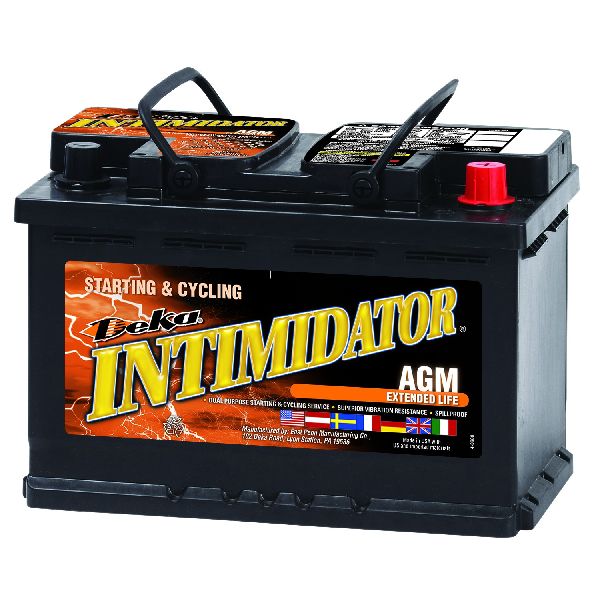
Aftermarket price range: $100-$250 - Battery — A weak or failing battery is a common source of various electrical and communication faults in modern vehicles.
Trusted brands: ACDelco, Optima, Odyssey
OEM price range: $200-$350
Aftermarket price range: $150-$300
Related Codes That Often Appear With This One
- U0073 — Stands for 'Control Module Communication Bus 'A' Off'. This is a general code indicating the entire network has shut down, often appearing with U0100 when a major ground or module fault occurs.
- U0101 — Stands for 'Lost Communication with TCM'. The Transmission Control Module (TCM) is on the same high-speed network as the ECM, so a network-wide failure will cause both codes to set.
- U0140 — Stands for 'Lost Communication with BCM'. The Body Control Module (BCM) is a central hub, and its loss often points to a widespread network or power/ground issue, specifically the G218 ground.
Technical Service Bulletins (TSBs) & Recalls
- PIT6198: Diagnostic tip for an SES MIL at startup with DTC U0100, instructing dealers to test the accessory wake up circuit to the ECM.
- 20-NA-212: Supersedes PIT5586. Addresses various communication DTCs caused by SDGM logic lock-up or connector terminal issues. May require reprogramming or terminal repair.
- PIT5586C: Predecessor to 20-NA-212, instructs technicians to check the Serial Data Gateway Module X2 connector for faults causing numerous U-codes.
- PIT5405C: Points to a poor BCM ground at G218 as a cause for stalling, no-start, and a wide range of communication codes, including U0100, due to trapped dash insulation.
- 08-07-30-021H: Pertains to older models but is relevant for general diagnostics. Notes intermittent electrical issues and communication DTCs can be caused by backed-out terminals in the transmission harness connector or chafed wiring.
Platform-Specific Known Issues
- TSB #PIT6198 points to a potential loss of power on the accessory wake-up circuit to the ECM, causing a U0100 at startup.
- TSB #PIT5586C identifies issues with the Serial Data Gateway Module (SDGM) X2 connector as a cause for U0100 and many other communication codes.
- TSB #08-07-30-021H describes a wide range of communication DTCs, including U0100, caused by opens/shorts in the GMLAN wiring, poor connections, or faulty terminating resistors.
Mechanic-Grade Diagnostic Values
- CAN Bus Network Resistance — expected: ~60 Ohms. Failure: A reading of ~120 Ohms indicates an open circuit or a failed terminating resistor. A reading near 0 Ohms indicates a short between the CAN High and Low wires.
- CAN Bus Voltage (Key On, Engine Off) — expected: CAN High (Pin 6): ~2.5-3.5V, CAN Low (Pin 14): ~1.5-2.5V. Failure: Voltages stuck high, low, or at 0V indicate a short to power, short to ground, or an open circuit.
- Ground Circuit Voltage Drop — expected: < 200-300 mV. Failure: A reading higher than 300mV under load (e.g., during engine cranking) indicates high resistance in the ground circuit.
- Battery Voltage During Cranking — expected: > 10.0 V. Failure: Voltage dropping below 10V while cranking can cause modules to shut down and lose communication.
Scan Tool Commands That Help
- GDS2 (GM Global Diagnostic System 2): Module Diagnostic (Scan) / DTC Display — To see which specific modules are not communicating on the network. A list with many 'U' codes and missing modules like the ECM points to a network-wide fault.
- GDS2 (GM Global Diagnostic System 2): Control Functions / Output Controls — To command other modules on the network (like lights, windows, etc.) to verify if they are online and responding, helping to isolate the fault to the ECM section of the network.
- GDS2 (GM Global Diagnostic System 2): Module Reprogramming (SPS) — Used as a fix for a 'logic lock' condition in the Serial Data Gateway Module (SDGM) or to program a new module after replacement, as specified in TSBs.
Wiring & Ground Locations
- G218 — Behind the A-pillar/kick panel trim. Location can be on the passenger side for K2XX models (2015-2019) or driver's side for GMT900 models (2013-2014).. This is a primary ground for the Body Control Module (BCM). High resistance here due to trapped insulation is a well-documented cause of network-wide communication failures, including U0100.
- G110 — An engine block ground. On K2XX trucks, this is a key body harness ground point on the engine. On older GMT900 trucks, it's often on the rear of the driver's side cylinder head.. This is a critical ground for the engine's electrical system. A loose or corroded G110 can cause the ECM to lose its ground reference, shutting it down and triggering U0100.
- Serial Data Gateway Module (SDGM) — Under the driver's side dash, often described as a small 'hockey puck' sized box with a gray (X2) and black (X1) connector.. This module acts as a router for network traffic on K2XX models. Connector pin issues or internal 'logic lock' can bring down the entire CAN bus, causing U0100.
- CAN Bus Terminating Resistor (External) — On K2XX models, this 120-ohm resistor is often taped into the wiring harness above the spare tire, near the Fuel Pump Control Module.. The CAN bus requires a 120-ohm resistor at each end to function. If this external resistor or its wiring is damaged, network resistance will be incorrect (~120 ohms instead of ~60 ohms), causing communication to fail.
Real Owner Repair Stories
- YouTube channel 'Tio's Auto Diagnostics' (2015 Chevrolet Silverado 1500) — No crank, no start, no communication with most modules. Only HVAC and steering angle sensor were communicating.
❌ Tried (didn't work) Scanning the vehicle initially showed almost no modules online., Checking the external terminating resistor showed it was good.
✅ What actually fixed it A wire in the harness had popped loose from its pin. The technician unplugged the brake control module, which allowed the truck to start and other modules to come online, helping to isolate the circuit. The final fix was soldering the broken wire back into its connector. - Reddit user in r/Silverado (2015 Silverado 1500LT) — Service Stabilitrak message, radio and A/C would randomly shut off and turn back on.
❌ Tried (didn't work) Checking grounds in the engine bay.
✅ What actually fixed it The G218 ground behind the passenger side A-pillar trim had dash insulation interfering with the connection. The user removed the trim, cleaned the ground connection by removing the interfering insulation, and the problems were resolved.
"I Checked Everything" — The Actual Cause
- A common scenario is an engine ground wire breaking internally inside the crimped ring terminal. A visual inspection, wiggle test, or even a basic continuity test might pass if the wire ends are touching at rest. The connection only separates when the engine torques under load, causing an intermittent U0100. The definitive test is to physically pull the wire from the crimped lug; if it's broken, it will pull out.
- When all wiring, power, and ground tests appear normal, the root cause can be a software 'logic lock' within the Serial Data Gateway Module (SDGM). The module's hardware is fine, but its processor has frozen, halting all network traffic. This cannot be found with a multimeter and requires a dealer-level scan tool (GDS2) to diagnose by seeing a total lack of communication from the SDGM and then attempting a software reflash.
Model Year Variations Within This Range
- 2013-2014 (GMT900 Platform): These models do not typically have a Serial Data Gateway Module (SDGM). Network diagnostics focus more on direct ECM/TCM/BCM communication. The critical G218 ground is usually located on the driver's side, under the dash near the hood release.
- 2015-2019 (K2XX Platform): These models use a Serial Data Gateway Module (SDGM) as a central network router, which is a common point of failure (logic lock, connector issues). The critical G218 ground is typically located on the passenger side A-pillar/kick panel area.
Helpful Videos

Used OEM Parts in Stock
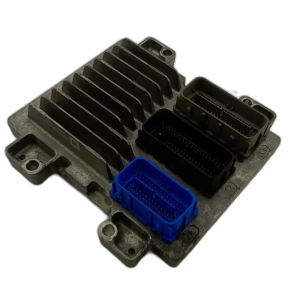


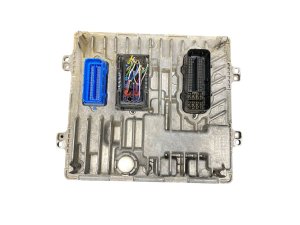

New Aftermarket Parts Available


The information in this article is provided for general reference and educational purposes only. Vehicle specifications, procedures, and part compatibility can vary by production date, trim level, and region. Always consult your vehicle's factory service manual and verify part numbers before purchasing or performing repairs. Safety-critical components such as airbags, seat belts, and braking systems should be installed by a qualified professional.
- Chevrolet SILVERADO 3500:
- 🎬 Helpful Videos
- 🛍️ Shop This Part
- What's Unique About the 2013-2019 Chevrolet SILVERADO 3500
- Diagnostic Flowchart
- Symptoms You May Notice
- Most Likely Causes
- Rare But Worth Checking
- Diagnosis Steps
- Parts You'll Likely Need
- Related Codes That Often Appear With This One
- Technical Service Bulletins (TSBs) & Recalls
- Platform-Specific Known Issues
- Mechanic-Grade Diagnostic Values
- Scan Tool Commands That Help
- Wiring & Ground Locations
- Real Owner Repair Stories
- "I Checked Everything" — The Actual Cause
- Model Year Variations Within This Range
- 🎟️ Get 5% Off