

U0100 on 2007-2010 Chevy Silverado 2500: Causes and Fixes for Lost Communication with ECM
On a 2007-2010 Silverado 2500, code U0100 is most often caused by a poor ground connection at location G218 under the driver's side dash, where sound insulation material gets trapped under the terminal. Other common causes include corroded wiring (especially at the 16-way transmission connector), chafing near the parking brake assembly, or a weak battery. Before suspecting a costly ECM failure, inspect and clean all major ground connections and check for known wiring issues outlined in GM TSB #0
- Code U0100 on a 2007-2010 Silverado 2500 indicates a critical communication failure with the Engine Control Module.
- Before attempting any expensive repairs, your first step should be to locate, clean, and tighten the G218 ground under the driver's side dash.
- Thoroughly check the battery, its connections, and all major wiring harnesses for damage or corrosion, as these are also common, low-cost fixes.
- Driving with this code is unsafe due to the high risk of the engine stalling or the vehicle not starting.
- Do not replace the ECM unless all other possibilities (grounds, wiring, other modules) have been professionally ruled out.
What's Unique About the 2007-2010 Chevrolet SILVERADO 2500

The GMT900 platform (2007-2014), which includes the Silverado, is notoriously sensitive to electrical ground issues. Multiple GM Technical Service Bulletins (TSBs) point directly to a specific ground point, G218, as a primary culprit for a host of communication failures, including U0100. TSB #PIT5405A explains that sound-deadening insulation material often gets trapped under the G218 ground terminal from the factory, leading to a poor connection. Additionally, TSB #08-07-30-021H details common problems with chafed wiring and backed-out terminals in the main transmission harness connector, which also cause this code.
Diagnostic Flowchart
Tap your situation to follow the diagnostic path that matches what you're seeing on this vehicle.
Symptoms You May Notice
- Check Engine Light is on (or no Check Engine Light at all when key is ON)
- Vehicle will not start or cranks but won't fire.
- Engine stalls while driving, sometimes when turning or shifting.
- Transmission may not shift correctly or may feel like it's stuck in one gear (limp mode).
- Various instrument panel warning lamps illuminated (e.g., 'Service Stabilitrak', 'Service Brake System').
- Gauges on the instrument cluster fluctuate erratically or drop to zero.
- Intermittent cycling of door locks and chimes.
- A/C controls may be inoperative. [Bulletin #PIT5586E]
- Driver Information Center (DIC) may display various service messages.
- Replacing the Engine Control Module (ECM) without first verifying all power and ground circuits, and the integrity of the CAN bus wiring.
- Replacing the Transmission Control Module (TCM) when the communication loss is due to a shared wiring or ground problem, as described in TSB #08-07-30-021H.
- Replacing the Body Control Module (BCM) when the actual fault is just its poor ground connection at G218.
Most Likely Causes

- Poor Body Control Module (BCM) Ground at G218 🔴 High Probability This is a well-documented issue on the GMT900 platform. TSB #PIT5405A and its successors directly instruct technicians to check this ground for a host of communication codes, including U0100. The design allows for sound insulation material to get trapped between the ground eyelet and the body stud, causing a high-resistance connection.
How to confirm: Locate ground G218 under the driver's side dashboard, behind the plastic kick panel near the A-pillar or hood release lever. Visually inspect for trapped insulation material, looseness, or corrosion. A voltage drop test across the ground while the system is under load can confirm a poor connection.
Typical fix: Disconnect the battery. Remove the 10mm ground nut, pull the terminal(s) off the stud, and cut or trim away any interfering insulation mat. Clean all contact surfaces (the terminal, the chassis stud, and the nut) down to bare metal with a wire brush or sandpaper, and re-secure it tightly. Applying dielectric grease can help prevent future corrosion.
Est. part cost: $1-$10 - Damaged or Corroded Wiring Harness 🟡 Medium Probability TSB #08-07-30-021H notes that the GMLAN (CAN bus) wiring can chafe against chassis components, and connectors can become corroded. Common problem areas are the 16-way transmission pass-through connector (corrosion or backed-out pins), the harness rubbing near the parking brake assembly, and where the engine harness passes over the driver's side valve cover or against the shock tower bolt.
How to confirm: Visually inspect wiring harnesses, especially at the known chafe points. Disconnect and inspect the large round transmission connector for green corrosion or pins that are not fully seated. Also check the connectors under the under-hood fuse block (UBEC) for corrosion.
Typical fix: Repair the damaged section of wire using the same gauge wire and proper soldering/sealing techniques. If a connector is damaged, it may need to be repinned or replaced. For backed-out terminals, reseat them until they click and ensure the terminal position assurance (TPA) lock is engaged.
Est. part cost: $10-$100 - Low Battery Voltage or Faulty Battery Terminals 🟡 Medium Probability Modern control modules are sensitive to voltage. A weak battery, poor connection at the terminals, or a failing alternator can cause unpredictable communication errors across the network as modules shut down. Forum users have reported fixing U0100 and other 'U' codes simply by replacing an old battery or cleaning corroded terminals.
How to confirm: Test the battery with a multimeter; a healthy, fully charged battery should read around 12.6 volts with the engine off. Perform a load test to check its health. Check that battery terminals are clean and tight. With the engine running, voltage should be between 13.7 and 14.7 volts.
Typical fix: Clean battery terminals and cable ends with a wire brush. If the battery is old or fails a load test, replace it.
Est. part cost: $150-$300 - Faulty Serial Data Gateway Module (SDGM) ⚪ Low Probability TSB #PIT5586E suggests the SDGM can suffer from a "logic lock" or have poor pin connections at its X2 connector, causing a flood of communication codes. The SDGM acts as a router between different CAN bus networks, and its failure can isolate the ECM.
How to confirm: After ruling out grounds and wiring, inspect the SDGM connectors (located under the driver's dash) for backed-out or bent terminals. A high-end scan tool may be needed to see if the module is responsive. In some cases, a 'hard reset' by disconnecting the battery for 30 minutes may temporarily resolve a logic lock.
Typical fix: Repair the connector terminals or replace the SDGM. Replacement requires programming by a dealer or qualified shop with access to GM's software.
Est. part cost: $150-$400
Rare But Worth Checking
- Faulty Engine Control Module (ECM/PCM): This is a rare cause. The ECM is often replaced mistakenly when the actual problem is a simple wiring or ground issue. All other possibilities, especially power, ground, and network wiring integrity, should be exhausted before condemning the ECM.
- Accessory Wake-Up Circuit Issue: TSB #PIT6198 points to a specific diagnostic tip for U0100 at startup, instructing dealers to test the accessory wake-up circuit (often a purple wire) to the ECM for proper power. A break in this wire can prevent the ECM from 'waking up' with the rest of the modules.
- Open Terminating Resistor: The CAN bus network has two 120-ohm terminating resistors. If one of the modules containing a resistor fails or the circuit to it is open, the total network resistance will change from 60 ohms to 120 ohms, causing communication instability. On these trucks, one resistor is often in the ECM and the other in the Electronic Brake Control Module (EBCM).
Diagnosis Steps
- Check Battery Health: Ensure the battery is fully charged (approx. 12.6V) and that the terminals are clean and tight. Perform a load test.
- Scan for All Codes: Use a quality OBD-II scanner to pull all codes from all modules, not just the engine. Note which modules are not responding.
- Inspect Ground G218: Locate and inspect the BCM ground G218 under the driver's side dash. Disconnect the battery, then disassemble, clean all surfaces (eyelet, stud, nut) to bare metal, trim away any interfering insulation, and re-tighten. This is the most critical step for this vehicle.
- Inspect Other Grounds: Check the main engine-to-chassis ground straps (G110, G108) and the battery negative cable connection to the body for tightness and corrosion.
- Inspect Wiring Harnesses: Visually inspect harnesses for chafing, especially near the parking brake pedal, steering column, over the driver's side valve cover, and the main 16-way transmission connector.
- Check Fuses: Inspect all fuses related to the ECM, BCM, and TCM in both the under-hood and in-cabin fuse blocks.
- Inspect Module Connectors: Check the connectors at the ECM, TCM, SDGM, and under-hood fuse block for corrosion or backed-out pins.
Parts You'll Likely Need
- Ground Straps and Terminals — The most common fix is cleaning existing grounds, but sometimes the terminal ends or straps themselves are corroded beyond repair and need replacement.
Trusted brands: ACDelco, Dorman
OEM price range: $15-$40
Aftermarket price range: $5-$25 - Engine Control Module (ECM)
(OEM #12629009 (for 2009 6.0L, example))— This is a last resort. It is only needed if the module has failed internally, which is rare. All wiring, grounds, and power inputs must be confirmed good before replacement. Replacement requires VIN programming.
Trusted brands: ACDelco (OEM), Cardone, Flagship One
OEM price range: $400-$600
Aftermarket price range: $250-$450
Related Codes That Often Appear With This One
- U0073 — Control Module Communication Bus 'A' Off. This is a general CAN bus failure code that often accompanies specific module communication loss codes like U0100. It is explicitly mentioned in TSBs #08-07-30-021H and #PIT5405A.
- U0101 — Lost Communication with TCM. The TCM and ECM are on the same high-speed CAN bus, so a network problem often affects both, as noted in TSB #08-07-30-021H.
- U0140 — Lost Communication with Body Control Module. The BCM is a central hub for communication. A fault with the BCM or its ground (G218) can disrupt the entire network, triggering U0100. [13, Bulletin #PIT5405A]
- P0700 — Transmission Control System (MIL Request). This code is set by the ECM when the TCM has detected a fault. It often appears with U0101 and U0100 during network failures as the TCM reports its own trouble.
Technical Service Bulletins (TSBs) & Recalls
- PIT6198: Diagnostic tip for U0100 at startup, points to testing the accessory wake up circuit to the ECM.
- PIT5586E / PIT5586B: Addresses multiple communication DTCs, including U0100, caused by a logic lock or connector issue at the Serial Data Gateway Module.
- PIT5405A: Instructs to check the body control module ground at G218 when U0100 and other communication codes are present.
- 08-07-30-021H: A comprehensive bulletin for loss of communication codes (U0073, U0100, U0101, etc.) caused by wiring issues, bad connectors, or faulty terminating resistors.
Platform-Specific Known Issues
- G218 Ground Insulation Interference: A key manufacturing/design flaw on the GMT900 platform is the installation of the dash sound insulation mat over the G218 ground stud. Over time, vibration and temperature changes cause the connection to degrade, leading to high resistance and a flood of communication codes. TSB #PIT5405C specifically instructs technicians to cut away this insulation material as part of the repair.
- Transmission Harness Connector (X214) Fretting/Corrosion: TSB #08-07-30-021H points to the 16-way round connector for the transmission harness as a major source of GMLAN communication failures. Terminals can back out, or water intrusion can cause corrosion (fretting), leading to an open or shorted connection for the CAN bus signals that pass through it. This often triggers U0100 and U0101 simultaneously.
Mechanic-Grade Diagnostic Values
- CAN Bus Network Resistance — expected: Approximately 60 Ohms. Failure: A reading of 120 Ohms indicates an open circuit or a problem with one of the two terminating resistors. A reading near 0 Ohms indicates the CAN High and CAN Low wires are shorted together.
- CAN High Voltage to Ground — expected: Approximately 2.6V - 2.7V (during active communication). Failure: Significant deviation, or a steady 2.5V, can indicate a lack of communication. A reading of 0V or battery voltage indicates a short.
- CAN Low Voltage to Ground — expected: Approximately 2.3V - 2.4V (during active communication). Failure: Significant deviation, or a steady 2.5V, can indicate a lack of communication. A reading of 0V or battery voltage indicates a short.
- Accessory Wakeup Serial Data Voltage — expected: Approximately 12V. Failure: A low or 0V reading will prevent modules from waking up and communicating, which can cause a U0100 at startup.
Wiring & Ground Locations

- G218 — Under the driver's side dashboard, behind the plastic kick panel, near the A-pillar.. This is the primary ground for the Body Control Module (BCM). TSB #PIT5405A directly links a poor connection here (due to trapped insulation) to code U0100 and other communication failures.
- G101 — On the lower front of the engine block.. Serves as a primary ground point for both the Engine Control Module (ECM) and the Transmission Control Module (TCM). A poor connection here directly affects the main powertrain computers.
- G103 — On the cowl in the engine compartment, above the brake booster.. Grounds the BCM, Instrument Panel Cluster (IPC), and the Data Link Connector (DLC) itself. A fault here can prevent a scan tool from communicating and cause widespread interior electronic issues.
- G108 — On the left side of the firewall.. This is another major engine compartment ground point that is cited as a potential problem area for communication issues on GMT900 trucks.
- Underhood Fuse Block (UBEC) — Driver's side of the engine bay.. The UBEC is a major junction for power and data lines. Corrosion can develop on the underside of the block or in its connectors, creating high resistance and intermittent communication loss to the ECM and other modules.
- X214 Connector — The 16-pin transmission harness connector, located on the driver's side of the transmission case.. TSB #08-07-30-021H specifically identifies this connector as a source of problems due to terminals backing out or corrosion, which can interrupt communication between the ECM and TCM.
Real Owner Repair Stories
- Reddit user in r/MechanicAdvice (2008 Chevy Silverado 5.3L) — U0100 code, engine spins but will not fire. When turning the key to ignition, the truck goes dead and throws the code.
❌ Tried (didn't work) Replacing the neutral safety switch, Replacing the TCM, Replacing ignition relays, Replacing the battery, Jumping the vehicle
✅ What actually fixed it The user was advised by others to focus on ground connections (especially under the driver's dash and on the engine block), check for corrosion in the firewall maxi fuse block, and disconnect any aftermarket remote start or alarm systems. The collective advice points to these areas as the solution after common parts replacement fails.
OEM Part Supersession History
Varies (e.g., 12625455)→Varies (e.g., 12629209 for a 2009 5.3L)— Hardware revisions and software updates by the manufacturer.
Heads up: The ECM used in these trucks is typically an ACDelco E38. While multiple part numbers may physically interchange, they are not plug-and-play. The replacement ECM must be programmed with the vehicle's specific VIN and the latest GM operating system to function. Failure to program will result in a no-start condition and communication codes.
Model Year Variations Within This Range
- 2007: GM sold both the new GMT900 platform and the previous generation GMT800 platform as a 'Classic' model in 2007. The GMT900 has a one-piece headlight assembly, while the GMT800 'Classic' has a two-piece headlight with a horizontal bar. Wiring, module locations, and parts are not interchangeable between the two platforms.
- 2007-2008 vs 2009-2010: Earlier models (2007-2008) were commonly equipped with the 4-speed 4L60-E automatic transmission, while many 2009 and later models received the 6-speed 6L80. This changes the specific TCM involved and may alter diagnostic paths related to U0101 (Lost Communication with TCM) when seen with U0100.
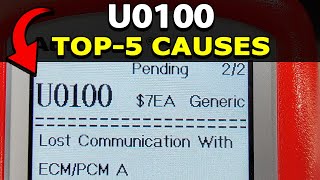
Helpful Videos

Used OEM Parts in Stock


New Aftermarket Parts Available

The information in this article is provided for general reference and educational purposes only. Vehicle specifications, procedures, and part compatibility can vary by production date, trim level, and region. Always consult your vehicle's factory service manual and verify part numbers before purchasing or performing repairs. Safety-critical components such as airbags, seat belts, and braking systems should be installed by a qualified professional.
- Chevrolet SILVERADO 2500:
- 🎬 Helpful Videos
- 🛍️ Shop This Part
- What's Unique About the 2007-2010 Chevrolet SILVERADO 2500
- Diagnostic Flowchart
- Symptoms You May Notice
- Most Likely Causes
- Rare But Worth Checking
- Diagnosis Steps
- Parts You'll Likely Need
- Related Codes That Often Appear With This One
- Technical Service Bulletins (TSBs) & Recalls
- Platform-Specific Known Issues
- Mechanic-Grade Diagnostic Values
- Wiring & Ground Locations
- Real Owner Repair Stories
- OEM Part Supersession History
- Model Year Variations Within This Range
- 🎟️ Get 5% Off