

U0100 on 2010-2017 Chevrolet Equinox: Causes and Fixes for Lost ECM Communication
U0100 on a 2010-2017 Equinox means the Engine Control Module (ECM) has lost communication. This often causes a no-start or stalling. Before replacing the expensive ECM, check for common wiring issues, especially corroded connectors like X411 and chafed harnesses near the engine or transmission, as highlighted in GM service bulletins. The platform-mate GMC Terrain shares these exact vulnerabilities.
- U0100 on a 2010-2017 Equinox indicates a serious communication failure with the Engine Control Module that makes the vehicle unsafe to drive.
- Before assuming the ECM has failed, thoroughly inspect the battery, ground connections, and wiring harness.
- Pay special attention to known problem areas: the X411 connector for corrosion (TSB PIT5427B) and the engine harness for chafing near the valve cover (TSB PI1004).
- This is a complex electrical issue; professional diagnosis is strongly recommended to avoid costly misdiagnosis.
- The problem is almost always related to wiring, connectors, or power supply, not the expensive ECM itself.
What's Unique About the 2010-2017 Chevrolet EQUINOX

The second-generation Equinox (2010-2017) and its sibling, the GMC Terrain, are known to have specific vulnerabilities that can trigger a U0100 code. General Motors has issued several Technical Service Bulletins (TSBs) that point to wiring problems. TSB PI1004A identifies a spot where the engine wiring harness on 2.4L models can chafe against the corner of the engine or valve cover, damaging the CAN bus communication wires (circuits 2500 and 2501). Similarly, TSB PIT5427B points technicians to inspect the X411 connector, located under the rear of the vehicle near the fuel tank, for corrosion which can disrupt the network and cause a flood of communication codes, including U0100. A particularly unique and destructive issue on the 2.4L engine is oil from a leaking sensor (like the oil pressure switch or VVT solenoids) wicking up through the wiring harness and directly into the ECM connectors, shorting the module internally.
Diagnostic Flowchart

Tap your situation to follow the diagnostic path that matches what you're seeing on this vehicle.
Symptoms You May Notice

- Check Engine Light is on
- Service StabiliTrak message on the dash
- Engine will not crank or start
- Engine stalls intermittently while driving
- Transmission shifts hard or erratically
- Reduced engine power (Limp Mode)
- Power steering warning message or loss of power steering assist
- Erratic or fluctuating gauges on the instrument panel
- AWD Off message displayed
- Replacing the ECM without first thoroughly inspecting the wiring harness (per TSB PI1004A) and connectors (especially X411, per TSB PIT5427B). Many U0100 codes are caused by simple wiring faults that are much cheaper to fix.
- Replacing the battery without checking for bad grounds or alternator issues that could be the root cause of the low voltage.
- Replacing VVT solenoids repeatedly for codes like P0010/P0011 without realizing the driver circuit inside the ECM has failed.
Most Likely Causes

- Chafed or Damaged Engine Wiring Harness 🔴 High Probability GM TSB PI1004A specifically calls out that the engine harness on the 2.4L engine can rub against the right rear corner of the engine or cam/valve cover. This friction damages the CAN bus wires (circuits 2500 and 2501), causing a loss of communication. This is a well-documented failure point discussed frequently by owners.
How to confirm: Visually inspect the engine wiring harness, particularly where it runs near the right rear corner of the engine/valve cover. Look for any signs of rubbing, exposed wires, or damage to the protective conduit. The chafe point may be difficult to see without moving the harness.
Typical fix: Repair the damaged wires using proper splicing techniques. Re-wrap the harness with anti-abrasion woven polyester electrical tape (PET tape is preferred by GM) and reroute or secure the harness with zip ties to ensure it does not make contact with sharp engine components again.
Est. part cost: $5-$25 - Corroded or Damaged X411 Connector 🟡 Medium Probability TSB PIT5427B points to the X411 connector as a major source of communication issues across multiple modules. Its location under the vehicle, behind and to the left of the fuel tank, exposes it to moisture and road salt, leading to severe corrosion on the pins and terminals.
How to confirm: Locate the X411 connector near the driver's rear wheel well area. Disconnect it and inspect the pins and terminals on both sides for any green or white corrosion, bent pins, or signs of water intrusion. The corrosion can be extensive.
Typical fix: Clean the connector and pins with an electrical contact cleaner and a small brush. If corrosion is severe, the affected terminals or the entire connector pigtail may need to be replaced. Apply dielectric grease upon reassembly to prevent future moisture intrusion.
Est. part cost: $10-$75 - Weak Battery or Poor Ground Connections 🟡 Medium Probability Low system voltage can cause unpredictable communication errors between modules. An owner complaint filed with the NHTSA mentions replacing the battery twice while dealing with a U0100 code, suggesting a link between power supply and this fault. Forum users frequently report that a weak or failing battery was the first sign of trouble before communication codes appeared. A failing alternator can also cause system voltage to drop, triggering communication faults.
How to confirm: Test the battery with a multimeter; it should read at least 12.4 volts with the engine off. Perform a load test to check its health. Inspect and clean the battery terminals and all major ground points (battery to chassis, engine to chassis). A critical PCM ground is located on a stud under the alternator.
Typical fix: Replace the battery if it fails a load test. Clean or replace corroded ground straps and battery terminals. Replace the alternator if it is not charging correctly.
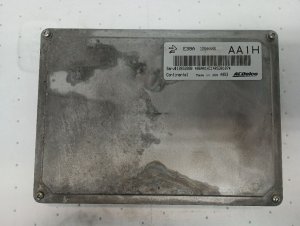
Est. part cost: $150-$250 - Failed Engine Control Module (ECM) ⚪ Low Probability The ECM on the 2.4L Equinox/Terrain (ACDelco E39/E39A) is known for several failure modes. It is mounted directly on the engine, exposing it to heat and vibration which can fry internal drivers for components like VVT solenoids. More uniquely, oil from leaking VVT solenoids or oil pressure sensors can wick through the wiring harness via capillary action and flood the ECM connectors, shorting the module.
How to confirm: This should be the last resort after all wiring, connectors, and power/ground sources have been confirmed to be good. Unplug the ECM and inspect the connectors for any signs of engine oil. If oil is present, the ECM is almost certainly compromised. An advanced scan tool showing no communication with the ECM, while other modules are responsive, also points to a failed ECM.
Typical fix: Replace the ECM. The new module will require programming to the vehicle's VIN and specific configuration. A crankshaft position (CASE) relearn and immobilizer (Passkey) relearn must also be performed. The source of any oil leak must also be repaired to prevent repeat failure. Note that these vehicles use a GM Global A architecture, meaning a used ECM must be 'cloned' rather than simply reprogrammed.
Est. part cost: $400-$900
Rare But Worth Checking
- Faulty CAN Bus Termination Resistor: The CAN bus network has two 120-ohm resistors. If one or both fail, it can disrupt all communication and cause a U0100. This can be tested with a multimeter at the OBD-II port (with the battery disconnected), where a healthy network should read approximately 60 ohms. A reading of 120 ohms suggests a break in the circuit or a single faulty resistor.
- Oil Intrusion into Wiring Harness: Specific to the 2.4L engine, leaking VVT solenoids or oil pressure sensors can allow engine oil to enter the wiring harness. Through capillary action, this oil can travel all the way to the ECM connector, fouling the pins and causing communication loss and eventual ECM failure. If replacing the ECM, it is critical to find and fix the oil leak and thoroughly clean or replace the affected harness section.
Diagnosis Steps
- Check the battery voltage and perform a load test. Ensure it is fully charged and healthy. A voltage below 12.4V can cause issues.
- Inspect and clean the battery terminals and main chassis/engine ground connections. Ensure they are tight and free of corrosion. Pay special attention to the PCM ground located under the alternator on a stud above the AC compressor on 2.4L models.
- Scan for all DTCs in all modules. Note any other 'U' codes that are present, as they can help pinpoint the location of the network fault.
- Carefully inspect the engine wiring harness for chafing, especially near the right rear of the engine cover on 2.4L models, as per TSB PI1004A.
- Locate and inspect the X411 connector for any signs of corrosion or damage, as recommended by TSB PIT5427B. It is located under the rear of the vehicle, near the driver's side wheel well.
- Unplug the ECM connectors and inspect for any signs of oil contamination. If oil is found, trace it back to the source (likely VVT solenoids or oil pressure sensor) and plan to replace the leaking part.
- With the battery disconnected, measure the resistance between Pin 6 (CAN High) and Pin 14 (CAN Low) on the OBD-II port. A reading of approximately 60 ohms indicates the main bus wiring and termination resistors are likely intact. A reading of 120 ohms or an open circuit points to a wiring break or faulty resistor.
- If wiring, connectors, and power/grounds are all confirmed to be good, and the ECM connectors are clean, the ECM itself becomes the primary suspect. Confirm with a professional scan tool that cannot establish communication with the ECM.
Parts You'll Likely Need
- Engine Control Module (ECM)
(OEM #12653998, 12651807, 12655476 (Verify with VIN))— This is the part to replace if it is confirmed to have failed internally, after all wiring and connection issues have been ruled out. The 2.4L engine uses the ACDelco E39 or E39A module. It must be programmed to the vehicle.
Trusted brands: ACDelco (OEM)
OEM price range: $500-$900
Aftermarket price range: $300-$600 - Wiring Harness Connector Terminals — Needed to repair corroded pins in connectors like the X411 without replacing the entire harness.
Trusted brands: ACDelco
OEM price range: $5-$15 per terminal
Aftermarket price range: $2-$10 per terminal - Woven Polyester Electrical Tape — Specifically recommended by GM in TSBs for repairing chafed harnesses to provide superior anti-abrasion protection compared to standard vinyl electrical tape.
Trusted brands: Tesa, 3M
OEM price range: $10-$20 per roll
Aftermarket price range: $5-$15 per roll
Related Codes That Often Appear With This One
- U0073 — Stands for 'Control Module Communication Bus A Off'. It often appears with U0100 because it indicates a general failure of the high-speed communication network, which is the root cause.
- U0101 — Stands for 'Lost Communication with TCM'. If the network is down due to a wiring fault, communication with both the engine and transmission modules is often lost simultaneously.
- P0700 — This is a general transmission fault code requested by the TCM. It often gets stored when the TCM loses communication with the ECM (U0100).
Technical Service Bulletins (TSBs) & Recalls
- PIT5427B: Addresses corrosion in the X411 connector causing multiple communication DTCs, including U0100.
- PI1004A: Addresses engine wiring harness chafing on the 2.4L engine, leading to communication DTCs.
Platform-Specific Known Issues
- A known issue on this platform is corrosion or damage to the X411 connector, which can cause a loss of communication between multiple modules, including the ECM. TSB PIT5427B specifically calls out this connector as a primary inspection point for U0100 and other related communication codes. A technician video shows its location near the driver's rear wheel and the process of inspecting it.
- The engine wiring harness on models with the 2.4L engine is susceptible to chafing against the engine/valve cover, as detailed in TSB PI1004A. This is a very common cause for U0100 on both the Equinox and GMC Terrain.
- A unique and severe issue for the 2.4L engine is oil wicking from leaking VVT solenoids or oil pressure sensors through the wiring harness directly into the ECM, causing internal shorts. This is a catastrophic failure that requires replacing both the ECM and the leaking sensor, plus cleaning the harness.
Mechanic-Grade Diagnostic Values
- CAN Bus Network Resistance — expected: ~60 Ω. Failure: A reading of ~120 Ω indicates an open circuit or one of the two termination resistors is offline. A reading near 0 Ω indicates a short between the CAN High and CAN Low wires.
- CAN Bus Voltage (Key On, Engine Off) — expected: CAN High (Pin 6 to ground): ~2.6V. CAN Low (Pin 14 to ground): ~2.4V.. Failure: Voltages that are stuck high, low, or are missing entirely indicate a network fault, short to power/ground, or a module pulling the bus down.
- PCM Ground Circuit Resistance — expected: < 1.0 Ω (ideally < 0.1 Ω). Failure: High resistance indicates a poor ground connection, which can cause intermittent module operation and communication faults.
Scan Tool Commands That Help
- Test Light and Jumper Wire: Manual Network Wake-Up Test — In advanced cases where modules on the CAN bus fail to 'wake up' and communicate, a technician can manually apply voltage via a current-limited test light to the serial data wake-up signal circuit. If modules come online during this test, it can help isolate the fault to the module responsible for sending the wake-up signal (like the BCM).
Wiring & Ground Locations
- Primary PCM Ground (2.4L) — On a stud on the engine block, located under the alternator and just above the A/C compressor.. This is a primary ground for the Powertrain Control Module. Corrosion or a broken wire at this specific, hard-to-see location is a known cause of PCM-related codes, including U0100.
- G203 — Lower center of the dash, near the instrument panel fuse block.. This is a major interior ground point for multiple modules and components in the dashboard area. A loose or corroded G203 can cause widespread communication issues.
- G207 — Behind the right side of the dashboard / kick panel area.. Serves as a ground point for various instrument panel components. A fault here can disrupt communication between the instrument cluster and other modules.
- X115 — Main body-to-engine harness inline connector, often located in the engine compartment.. This is a critical junction for many circuits running between the main chassis and the engine, including power, ground, and data lines for the ECM. Corrosion or pin damage here can sever communication.
- Data Link Resistor — On some models, one of the 120-ohm terminating resistors is a separate component located on the differential support beam.. If this external resistor fails or its wiring is damaged, the CAN bus resistance will read 120 ohms instead of 60, causing network instability and U0100.
Real Owner Repair Stories
- Reddit user, r/MechanicAdvice (2011 Chevrolet Equinox) — U0100 and U0101 codes, dash lights flickering, door locks cycling, 'StabiliTrak system activated' message.
❌ Tried (didn't work) A transmission rebuild was performed prior to the issue returning.
✅ What actually fixed it The AAMCO shop diagnosed a bad alternator. The owner replaced the alternator, and the vehicle began running fine again, resolving the communication codes. - ScannerDanner Forum user (2017 Chevrolet Equinox) — No communication with multiple modules (Fuel Pump Control Module, ABS, PCM, TCM). Scan tool showed codes for lost communication.
❌ Tried (didn't work) Disconnecting modules one-by-one to find a short; the short-to-ground reading remained., Checking for a wiring short to ground.
✅ What actually fixed it The fault was an internal short-to-ground within the Body Control Module (BCM) on the module wake-up signal circuit. The technician proved this by using a test light connected to battery positive to manually send a wake-up signal down the wire, which brought all the other modules online. Replacing the BCM was the ultimate fix.
OEM Part Supersession History
ACDelco E39 / E39A family (e.g., 12643248, 12648906)→Various, including 12651994, 12653998— Internal revisions and updates by the manufacturer.
Heads up: These ECMs are part of GM's Global A architecture. A used ECM from another vehicle cannot be reprogrammed to a new VIN using standard dealer tools (SPS). The immobilizer and VIN data from the original ECM must be 'cloned' to the replacement unit by a specialized service for it to be plug-and-play.
Model Year Variations Within This Range
- 2016-2017: The 2016 model year received a significant facelift, including revised front and rear fascias, new headlamps, and interior changes. Lower trims received a 7-inch touchscreen as standard, and new safety systems like Blind Spot Monitoring became available. While no specific change is directly linked to causing U0100, the addition of new features and revised wiring harnesses means diagnostic procedures and wire locations may differ slightly from 2010-2015 models.
We Have This Part in Stock



The information in this article is provided for general reference and educational purposes only. Vehicle specifications, procedures, and part compatibility can vary by production date, trim level, and region. Always consult your vehicle's factory service manual and verify part numbers before purchasing or performing repairs. Safety-critical components such as airbags, seat belts, and braking systems should be installed by a qualified professional.
- Chevrolet EQUINOX:
- 🛍️ Shop This Part
- What's Unique About the 2010-2017 Chevrolet EQUINOX
- Diagnostic Flowchart
- Symptoms You May Notice
- Most Likely Causes
- Rare But Worth Checking
- Diagnosis Steps
- Parts You'll Likely Need
- Related Codes That Often Appear With This One
- Technical Service Bulletins (TSBs) & Recalls
- Platform-Specific Known Issues
- Mechanic-Grade Diagnostic Values
- Scan Tool Commands That Help
- Wiring & Ground Locations
- Real Owner Repair Stories
- OEM Part Supersession History
- Model Year Variations Within This Range
- 🎟️ Get 5% Off