

U0078 on 2014-2019 GMC Sierra 1500: Control Module Communication Bus Off Fixes
U0078 on a 2014-2019 Sierra indicates a serious communication failure on the low-speed data network. This often causes blank screens, multiple warning lights, and a no-start condition. The most common causes are a software glitch in the Serial Data Gateway Module (SDGM), a poor BCM ground at G218, or a chafed wiring harness near the starter or rear bumper.
- U0078 is a critical network failure code on your Sierra; do not drive the vehicle until it is repaired.
- Symptoms are severe and often include blank instrument, radio, and HVAC screens, plus a possible no-start condition.
- Before attempting expensive repairs, check for simple fixes: perform a battery hard reset, check the SDGM fuse, and inspect the BCM ground G218.
- The official GM fix for many of these cases is a software update for the Serial Data Gateway Module (SDGM), which must be done by a dealer or qualified shop.
- Do not replace modules like the radio or instrument cluster without confirming they are the root cause; the problem is often in the shared network wiring or a different module entirely.
What's Unique About the 2014-2019 Gmc SIERRA 1500

On the K2XX platform (2014-2018/19), these trucks have a complex network architecture with a central Serial Data Gateway Module (SDGM) that acts as a traffic cop between different networks. GM has issued Technical Service Bulletins (TSBs) acknowledging that this module can suffer from software errors or 'logic lock', causing a total network shutdown. Other common platform-specific issues include a poor ground connection for the Body Control Module (G218) and chafed wiring near the starter, both of which can disrupt the entire network.
Diagnostic Flowchart
Tap your situation to follow the diagnostic path that matches what you're seeing on this vehicle.
Generation note: This range covers the third generation (K2XX platform, 2014-2018) and the start of the fourth generation (T1XX platform, 2019). Note that 2019 was a split year, with both the new 'T1' and the old 'K2' (as 'Limited') models sold. The cited TSBs primarily address the K2XX platform, which is well-documented for these communication issues.
Symptoms You May Notice

- Instrument panel cluster (IPC) is blank or gauges fluctuate wildly.
- Radio and HVAC displays are blank and controls are inoperative.
- No-crank or no-start condition.
- Engine stalls after starting.
- Multiple warning messages like 'Service Airbag', 'Service Suspension', 'Service Park Assist'.
- Wipers may not park in the correct position.
- Loss of power steering assist.
- Alarm sounds when locking doors or door locks cycle randomly.
- Steering wheel controls (SWC) are not illuminated or are inoperative.
- Replacing the radio or HVAC control head when the screen is blank, without realizing the root cause is a network-wide failure.
- Replacing the instrument panel cluster because the gauges are dead, when the cluster itself is fine but is not receiving data.
- Replacing the battery without properly testing it and the charging system, assuming it's the cause of the electronic glitches.
- Replacing the starter motor for a no-crank condition without first checking for communication codes and network issues.
Most Likely Causes

- Serial Data Gateway Module (SDGM) Logic Lock 🔴 High Probability A documented software anomaly in the SDGM can cause it to stop communicating on all CAN channels, as detailed in GM TSB #20-NA-212.
How to confirm: A temporary fix is to perform a hard reset by disconnecting the battery. If communication is restored, a logic lock was likely the issue. A dealer-level scan tool is needed to confirm if a software update is available.
Typical fix: Reprogramming the SDGM with updated software from the manufacturer is the permanent solution. In some cases, the module itself may need replacement if it fails internally.
Est. part cost: $0 (if only reprogramming) - $350 - Poor Body Control Module (BCM) Ground (G218) 🟡 Medium Probability TSB #PIT5405C and its successors specifically call out a poor connection at ground G218, often due to the dash insulator mat being trapped under the ground terminal during assembly.
How to confirm: Locate ground G218 on the driver's side A-pillar, behind the trim. Inspect for tightness, corrosion, and ensure the dash insulation is not interfering with the connection. 🎬 Watch: How to locate and fix the G218 ground connection.
Typical fix: Remove the nut and eyelet, cut away the interfering insulation mat, clean the grounding point and terminal, then re-secure the ground connection firmly.
Est. part cost: $0 - Chafed or Damaged Wiring Harness 🟡 Medium Probability Harnesses can chafe against the frame or other components. TSB #PIT5405C points to the harness near the starter motor, where a loose heat shield can cause a short. Another common spot is the harness running to the rear bumper for side object detection sensors, which can be damaged by the elements.
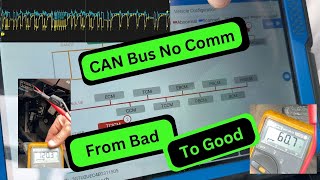
How to confirm: Visually inspect all CAN bus wiring harnesses for signs of damage, pinching, or corrosion, paying close attention to the areas near the starter and along the frame rails to the rear bumper. An oscilloscope can be used to check for a clean data signal, which should be a square wave from 0 to ~5 volts. 🎬 Watch: Diagnosing a bad CAN bus signal causing a no-crank.
Typical fix: Repair the damaged section of wire. This may involve soldering, using heat-shrink butt connectors, and re-looming the harness to prevent future damage.
Est. part cost: $5 - $50 - Loose or Damaged SDGM Connector Terminals ⚪ Low Probability The pins within the X1 or X2 connectors at the Serial Data Gateway Module can become bent, loose, or backed out, causing an intermittent connection. This is mentioned in TSB #PIT5586 and TSB #20-NA-212.
How to confirm: Disconnect the SDGM connectors and carefully inspect the terminals for damage or poor pin tension.
Typical fix: Repair or replace the affected terminal and/or connector housing.
Est. part cost: $10 - $75
Rare But Worth Checking
- Faulty Internal Module: Any single module on the low-speed CAN bus (e.g., radio, HVAC module, passenger presence module) can fail internally and short the entire network. Diagnosis involves unplugging modules one by one until communication is restored. One owner found a short inside the radio was the cause.
- Discharged or Faulty Battery: Low system voltage can cause unpredictable communication errors across multiple modules. TSB #PIT5405C advises performing a full battery and charging system test before diving into complex network diagnostics.
- High Resistance in Battery Cables/Connections: TSB #18-NA-161 and #PIT5405A mention that high resistance or loose connections at the battery terminals, fuse block, or starter can cause a voltage drop sufficient to trigger widespread communication DTCs. A voltage drop test while cranking should not exceed 200mV.
Diagnosis Steps
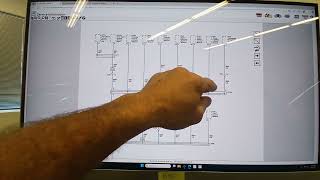
- Perform a full vehicle scan to identify all modules that are not communicating. Note the long list of U-codes, specifically looking for U0078 which indicates the entire bus is down. 🎬 See a professional walkthrough of U0078 CAN network diagnosis.
- Check battery voltage and perform a full battery/charging system test, including a loaded voltage drop test on the main power and ground cables as per TSB #PIT5405A.
- Attempt a 'hard reset' by disconnecting the negative battery terminal for 30 minutes. This can sometimes clear a module's 'logic lock'.
- If the issue persists, check for TSBs related to SDGM software updates (like #20-NA-212) which may require a dealer to reprogram the module.
- Inspect ground G218. Remove the driver's side A-pillar and dash-side trim panels to access the ground stud. Check for tightness and ensure the dash insulation mat is not trapped under the terminal.
- Visually inspect wiring harnesses in known problem areas: around the starter heat shield for shorts, and along the frame rails to the rear bumper for chafing, especially the harness for the side object detection sensors.
- If no obvious issues are found, advanced diagnostics are required. With the battery disconnected, check for 60 ohms of resistance across pins 6 (CAN High) and 14 (CAN Low) at the OBD-II port. A reading of 120 ohms suggests a missing terminating resistor, while a reading near 0 ohms indicates a short circuit.
- Use an oscilloscope to check for a clean, square waveform on the CAN bus. A corrupted or flat-lined signal points to a wiring short or a faulty module broadcasting erratically.
- The final step is to isolate the fault by unplugging modules on the low-speed CAN bus one by one until the correct 60-ohm resistance returns or the oscilloscope signal becomes clean.
Parts You'll Likely Need
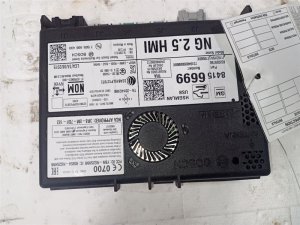
- Serial Data Gateway Module (SDGM)
(OEM #23178278 (example, verify by VIN))— This module is a known failure point due to software glitches ('logic lock') or internal hardware failure, as documented in multiple TSBs.
Trusted brands: ACDelco (GM Genuine)
OEM price range: $250-$350
Aftermarket price range: $180-$280 - Body Control Module (BCM) — While less common than an SDGM issue, a faulty BCM or its ground can bring down the entire network.
Related Codes That Often Appear With This One
- U0073 — Control Module Communication Bus 'A' Off - another general communication failure code often set with U0078.
- U0140 — Lost Communication With Body Control Module - often appears because the BCM is a primary node on the affected network.
- U0155 — Lost Communication With Instrument Panel Cluster (IPC) Control Module - a direct result of the network failure, causing blank gauges.
- U0100 — Lost Communication With ECM/PCM - indicates the network failure is affecting communication with the engine controller.
- U0101 — Lost Communication with TCM - indicates the network failure is affecting communication with the transmission controller.
Technical Service Bulletins (TSBs) & Recalls
- PIT5586G: Addresses SDGM logic lock causing multiple communication DTCs and recommends reprogramming.
- PIT5405B / PIT5405C: Points to BCM ground G218, starter cable shorts, and battery issues as causes for widespread DTCs including U0078.
Platform-Specific Known Issues
- TSB #PIT5405C (and its revisions A, B, and D) is a key document, outlining the G218 ground issue, starter cable shorting, and battery connection problems as primary causes for a host of electrical issues including U0078.
- TSB #20-NA-212 (superseding PIT5586G) directly addresses the SDGM 'logic lock' and loose terminal problems, recommending a software update as the primary fix.
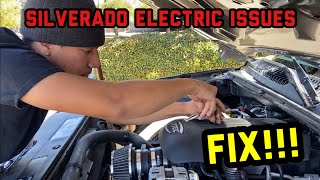
- Owner Experience: A common real-world fix is cleaning and securing ground G218. Multiple YouTube videos show owners accessing this ground behind the driver's side dash trim and finding the insulation mat bunched up under the terminal.
- Owner Experience: A technician in a detailed diagnostic video traced a U0078 code to a chafed wire in the harness leading to the rear bumper's side object detection sensors, demonstrating how a fault far from the main modules can take down the network.
Mechanic-Grade Diagnostic Values

- Low-Speed GMLAN (Single Wire) Bus Voltage — expected: Toggles between ~0.2V (recessive, logic '1') and >4.0V (dominant, logic '0').. Failure: A signal that is stuck high, stuck low, or has a corrupted waveform indicates a short or faulty module.
- High-Speed GMLAN Bus Resistance (at DLC Pins 6 & 14) — expected: Approximately 60 Ohms with the battery disconnected.. Failure: A reading of 120 Ohms indicates an open circuit or a missing terminating resistor. A reading near 0 Ohms indicates a short between the CAN High and CAN Low wires.
- High-Speed GMLAN Bus Voltage (Key On) — expected: CAN High (Pin 6) should average ~2.6V and CAN Low (Pin 14) should average ~2.3V.. Failure: Voltages that are stuck, mirrored, or significantly different from the specification point to a bus fault.
- Battery Cable Voltage Drop (Cranking) — expected: Should not exceed 100 mV on the positive cable or 200mV total.. Failure: Higher voltage drop indicates high resistance in the cable or connections.
- Battery/Ground Cable Nut Torque — expected: Battery fuse block nuts: 15 Nm (11 ft-lb). Negative cable to engine block: 45 Nm (33 ft-lb).. Failure: Loose connections can cause intermittent voltage drops and communication faults.
Scan Tool Commands That Help
- GDS2 (GM Global Diagnostic System 2): Vehicle DTC Information — To perform a full network scan and identify which modules are not responding, which is the first step in diagnosing a U0078 code.
- GDS2: Clear All DTCs — After a repair is performed, to clear all codes from all modules. It's also used after a battery disconnect or 'hard reset' to see if the communication codes return immediately.
- GDS2: Output Controls — To command specific modules (like lights, locks, etc.) to perform an action. If a module on the low-speed bus doesn't respond, it helps confirm it's offline, but this is often obvious from the DTC scan.
- GDS2 / TIS2Web: Module Reprogramming (SPS) — This is the required function to apply a software update to the Serial Data Gateway Module (SDGM) to fix a 'logic lock' condition as described in TSBs.
Wiring & Ground Locations

- G218 — Driver's side A-pillar, behind the side dash trim panel.. This is a primary ground for the Body Control Module (BCM). TSB #PIT5405C identifies that the dash insulation mat can get trapped under this ground during assembly, causing high resistance and bringing down the communication network.
- SDGM Connectors (X1, X2) — The Serial Data Gateway Module is typically located behind the instrument panel, often near the center stack or glove box area.. TSB #PIT5586G mentions that loose, bent, or backed-out terminals in these main connectors for the SDGM can cause a total loss of communication.
- Low-Speed GMLAN Wire — This is a single wire (not a twisted pair) that connects to Pin 1 of the Data Link Connector (DLC). It routes to many modules throughout the vehicle.. This is the specific circuit that has shut down when U0078 is set. Common chafe points are near the starter heat shield and in the harness running to the rear bumper for the side object detection sensors.
- Splice Pack JX304 (Example) — Splice packs group data lines together. Their location varies, but wiring diagrams show them behind the dash or in kick panels. For example, one may be located behind the BCM.. A technician can use a splice pack as a diagnostic junction. By disconnecting the pack and testing segments of the network, they can quickly isolate which branch contains the short or faulty module without unplugging every single component.
Real Owner Repair Stories
- YouTube video by a diagnostic technician (Vehicle similar to a 2014-2019 Sierra) — Multiple 'no communication' codes on the low-speed CAN bus, including U0078.
❌ Tried (didn't work) Scanning the vehicle, which showed over a dozen modules offline.
✅ What actually fixed it The technician found a chafed wiring harness under the vehicle along the frame rail. The harness leading to the rear bumper for the side object detection sensors had rubbed through, and the bare copper of the low-speed LAN wire was shorting. A simple wire repair resolved the issue. - YouTube video from owner (2014-2018 Silverado/Sierra) — Intermittent complete electrical shutdown, flickering dash, multiple warning lights, no-start.
❌ Tried (didn't work) Initial assumption was a bad battery or alternator.
✅ What actually fixed it The problem was the G218 ground on the driver's side A-pillar. The dash insulation was caught under the ground nut, preventing a solid connection. Cleaning the contact surface and re-tightening the ground nut solved all electrical issues. - GM-Trucks.com forum user (2015 GMC Sierra) — Dead instrument cluster, radio, HVAC. Multiple U-codes including U0078.
❌ Tried (didn't work) Checking all fuses., Performing a battery hard reset (disconnecting battery).
✅ What actually fixed it The fault was a failed Side Blind Zone Alert module in the rear bumper. The module had failed internally and was shorting the low-speed data bus. Unplugging the faulty module restored communication to all other modules. The owner replaced the module to fix the issue permanently.
Model Year Variations Within This Range
- 2019: 2019 was a split year. The 'Sierra 1500' was the new T1XX platform, while the 'Sierra 1500 Limited' was the outgoing K2XX platform. The network architecture, module locations, and specific TSBs can differ significantly between these two models, even though they are both '2019' trucks. TSBs like PIT5586G specifically mention the 'Sierra Limited' for 2019.
Helpful Videos

We Have This Part in Stock





The information in this article is provided for general reference and educational purposes only. Vehicle specifications, procedures, and part compatibility can vary by production date, trim level, and region. Always consult your vehicle's factory service manual and verify part numbers before purchasing or performing repairs. Safety-critical components such as airbags, seat belts, and braking systems should be installed by a qualified professional.
- Gmc SIERRA 1500:
- 🎬 Helpful Videos
- 🛍️ Shop This Part
- What's Unique About the 2014-2019 Gmc SIERRA 1500
- Diagnostic Flowchart
- Symptoms You May Notice
- Most Likely Causes
- Rare But Worth Checking
- Diagnosis Steps
- Parts You'll Likely Need
- Related Codes That Often Appear With This One
- Technical Service Bulletins (TSBs) & Recalls
- Platform-Specific Known Issues
- Mechanic-Grade Diagnostic Values
- Scan Tool Commands That Help
- Wiring & Ground Locations
- Real Owner Repair Stories
- Model Year Variations Within This Range
- 🎟️ Get 5% Off